Narco-Trafficking Vessel Destroyed: US Southern Command’s Controversial Strike
Introduction
The U.S. Southern Command (SOUTHCOM) has recently reported a strike against a vessel allegedly involved in “narco-trafficking operations” in the Caribbean Sea, reigniting debates over the tactics employed in the U.S.’s ongoing war on drugs. The incident, part of a broader campaign targeting suspected drug boats in the Caribbean Sea and eastern Pacific, has drawn scrutiny due to the lack of publicly available evidence supporting the allegations and the serious implications of involving designated terrorist organizations. This event underscores the complexities and controversies surrounding U.S. anti-drug operations in international waters, raising critical questions about transparency, proportionality, and the potential for unintended consequences.
The U.S. Southern Command’s Strike
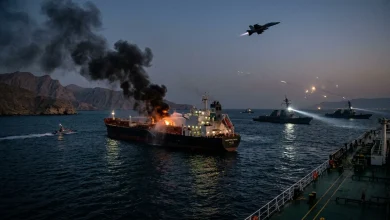
The U.S. Southern Command, responsible for military operations in Central and South America and the Caribbean, announced the strike with standard terminology, stating that the targeted vessel was engaged in “narco-trafficking operations” and was operated by a designated terrorist organization. SOUTHCOM did not provide specific evidence to substantiate these claims, a practice that has become increasingly common in recent years. The announcement was accompanied by a video released on social media, depicting a small vessel at sea before being struck and engulfed in flames. This type of visual evidence, while dramatic, often lacks the context needed to fully assess the legitimacy and justification of the strike. Such operations are part of a sustained effort to disrupt drug trafficking routes that supply the United States, but they also carry significant risks, including potential civilian casualties and the escalation of conflicts in already volatile regions. The incident raises questions about the rules of engagement and the level of oversight applied to these military actions.
Lack of Evidence and Allegations
A major point of contention surrounding the strike is the absence of publicly presented evidence linking the vessel to either drug trafficking or a designated terrorist organization. Critics argue that such operations, conducted without transparent evidence, undermine international law and erode trust in U.S. military actions. The designation of a vessel as being operated by a terrorist organization is particularly serious, potentially broadening the scope of military engagement and increasing the risk of unintended targets. The lack of transparency also fuels speculation and conjecture, potentially leading to a misinformed public perception of the events. Providing verifiable evidence, such as intercepted communications, confiscated drugs, or intelligence reports, would significantly enhance the credibility of SOUTHCOM’s claims and help to justify the use of force. Without such evidence, the operation is open to accusations of being based on unsubstantiated intelligence or politically motivated objectives. This situation is further complicated by the inherent challenges of gathering and presenting evidence in covert operations, which often require the protection of sensitive sources and methods. However, the need for transparency and accountability remains paramount, particularly in operations involving lethal force.
History of Narco-Trafficking Operations
The Caribbean Sea and eastern Pacific have long been major transit routes for illicit drug trafficking, with cartels and other criminal organizations using maritime routes to transport drugs from South America to North America and Europe. The U.S. has a long history of conducting anti-drug operations in these areas, often in collaboration with partner nations. These operations have ranged from interdiction efforts by the Coast Guard and Navy to joint military exercises aimed at disrupting drug trafficking networks. Over the years, the tactics used in these operations have evolved, reflecting changes in drug trafficking methods and the increasing sophistication of criminal organizations. The use of speedboats, submarines, and other specialized vessels has made it more challenging to detect and intercept drug shipments. The involvement of designated terrorist organizations in drug trafficking adds another layer of complexity to the issue. These groups often use drug trafficking to finance their operations, creating a nexus between drug crime and terrorism that poses a significant threat to regional and international security. Addressing this nexus requires a comprehensive approach that combines law enforcement efforts with intelligence gathering and counter-terrorism strategies. The ongoing campaign against alleged drug boats in the Caribbean Sea and eastern Pacific is part of this broader effort, but it also highlights the challenges of combating drug trafficking in a complex and dynamic environment. The blockade tactics used to combat drug trafficking are often criticized.
Social Media and Public Perception
The release of video footage of the strike on social media plays a significant role in shaping public perception of the operation. While such videos can provide a sense of transparency and accountability, they can also be used to manipulate public opinion and present a one-sided view of events. The dramatic imagery of a vessel being engulfed in flames can evoke strong emotions and create a sense of urgency, potentially overshadowing the need for critical analysis and informed debate. The way in which the video is framed and presented can also influence public perception, either reinforcing support for military action or raising concerns about the use of force. Social media platforms have become increasingly important tools for disseminating information about military operations, but they also pose challenges in terms of verifying information and combating misinformation. The rapid spread of unverified claims and conspiracy theories can undermine trust in official sources and create confusion about the true nature of events. Military organizations need to be mindful of these challenges and adopt strategies for engaging with the public in a transparent and responsible manner. This includes providing timely and accurate information, addressing public concerns, and being open to scrutiny and criticism. The collapse of trust in traditional media also shapes the public’s perception of these events.
Legal and Ethical Considerations
The strike raises important legal and ethical questions about the use of force in international waters. Under international law, the use of force is generally prohibited unless it is in self-defense or authorized by the United Nations Security Council. There are exceptions to this rule, such as the right of a state to interdict vessels engaged in drug trafficking with the consent of the flag state. However, these exceptions are subject to strict limitations and must be exercised in a manner that is proportionate to the threat posed. The designation of a vessel as being operated by a terrorist organization further complicates the legal analysis. Under some interpretations of international law, states have the right to use force against terrorist groups, even in the absence of a direct threat. However, this right is also subject to limitations and must be exercised in accordance with the principles of necessity and proportionality. The ethical considerations surrounding the strike include the potential for civilian casualties and the need to minimize collateral damage. Military organizations have a moral obligation to take all feasible precautions to avoid harming innocent civilians and to ensure that the use of force is proportionate to the legitimate military objective. The failure to provide evidence to justify the strike also raises ethical concerns about transparency and accountability. Military organizations have a duty to be open and honest with the public about their actions, particularly when those actions involve the use of lethal force.
International Reaction and Diplomatic Impact
The strike has the potential to generate a range of international reactions, depending on the specific circumstances and the perceptions of other countries. Some countries may support the U.S.’s efforts to combat drug trafficking and terrorism, while others may be critical of the use of force in international waters. The lack of transparency surrounding the strike is likely to fuel criticism and undermine international support. Countries that are concerned about the rule of law and the protection of human rights may be particularly critical of the operation. The incident could also have a negative impact on U.S. relations with countries in the region, particularly if those countries feel that their sovereignty has been violated or that their interests have been ignored. Diplomatic efforts to address these concerns could include providing briefings to foreign governments, sharing intelligence information, and engaging in consultations to address any grievances. The U.S. may also need to work with partner nations to develop a coordinated approach to combating drug trafficking and terrorism in the region. Such cooperation could include joint patrols, intelligence sharing, and capacity building programs. The tensions in the region also affect international reactions.
Alternative Strategies for Combating Drug Trafficking
While military operations can play a role in combating drug trafficking, they are not a panacea. Alternative strategies, such as law enforcement cooperation, intelligence sharing, and demand reduction programs, may be more effective in the long run. Law enforcement cooperation involves working with partner nations to disrupt drug trafficking networks, seize drug shipments, and arrest drug traffickers. This can include joint investigations, extradition requests, and asset forfeiture programs. Intelligence sharing involves sharing information about drug trafficking trends, criminal organizations, and potential threats. This can help to improve situational awareness and enable law enforcement agencies to take more effective action. Demand reduction programs aim to reduce the demand for illegal drugs by providing treatment and prevention services. These programs can help to reduce the profitability of drug trafficking and prevent new users from becoming addicted. In addition to these strategies, addressing the underlying causes of drug trafficking, such as poverty, inequality, and lack of opportunity, can also be effective in the long run. This can involve promoting economic development, improving education, and strengthening social safety nets. The success of these alternative strategies depends on a sustained commitment to addressing the complex and multifaceted nature of drug trafficking. It also requires a willingness to work collaboratively with partner nations and to adopt a holistic approach that addresses both the supply and demand sides of the problem.
Comparison of U.S. Strategies in Combating Narco-Trafficking
| Strategy | Description | Advantages | Disadvantages |
|---|---|---|---|
| Military Operations | Direct strikes and interdiction efforts by military forces. | Can disrupt drug trafficking routes and seize large quantities of drugs. | Risk of civilian casualties, potential for escalation, and limited long-term impact. |
| Law Enforcement Cooperation | Joint investigations and extradition requests with partner nations. | Can dismantle drug trafficking networks and bring drug traffickers to justice. | Requires strong relationships with partner nations and can be hampered by corruption and political instability. |
| Intelligence Sharing | Sharing information about drug trafficking trends and criminal organizations. | Improves situational awareness and enables more effective action. | Requires secure communication channels and can be compromised by leaks and espionage. |
| Demand Reduction Programs | Treatment and prevention services to reduce the demand for illegal drugs. | Reduces the profitability of drug trafficking and prevents new users from becoming addicted. | Requires long-term investment and can be difficult to implement effectively. |
The Role of Designated Terrorist Organizations
The allegation that the vessel was operated by a designated terrorist organization is a particularly serious one, with significant implications for the legal and ethical considerations surrounding the strike. The involvement of terrorist organizations in drug trafficking is a well-documented phenomenon, with many groups using drug trafficking to finance their operations and expand their influence. However, the designation of a group as a terrorist organization is a complex and politically charged process, with different countries and international organizations using different criteria. The U.S. State Department maintains a list of designated foreign terrorist organizations, which are subject to a range of sanctions and restrictions. The designation of a group as a terrorist organization can have significant consequences, including the freezing of assets, travel bans, and criminal penalties. It can also provide a legal basis for military action against the group, even in the absence of a direct threat to the U.S. or its allies. The decision to designate a group as a terrorist organization is often based on a range of factors, including the group’s ideology, its use of violence, its links to other terrorist groups, and its threat to U.S. national security. The process is often shrouded in secrecy, with limited opportunities for public input or judicial review. This can lead to accusations of political bias and arbitrary decision-making. The ties between Iran and other organizations are often investigated.
Long-Term Implications for Regional Security
The strike and the broader campaign against alleged drug boats have potentially significant long-term implications for regional security. The use of force in international waters can contribute to instability and undermine the rule of law. It can also create resentment and animosity among local populations, potentially fueling support for extremist groups. The militarization of the war on drugs can also divert resources from other important security priorities, such as counter-terrorism and maritime security. A more sustainable approach to promoting regional security would involve addressing the underlying causes of instability, such as poverty, inequality, and lack of opportunity. This can involve promoting economic development, improving governance, and strengthening social safety nets. It also requires a commitment to diplomacy and conflict resolution, as well as a willingness to work collaboratively with partner nations to address shared security challenges. The link between Iran and regional security is often investigated. The deployment of advanced weaponry in the region is also a concern.
Conclusion
The U.S. Southern Command’s strike on a vessel allegedly involved in narco-trafficking highlights the complex and controversial nature of U.S. anti-drug operations in international waters. The lack of transparent evidence supporting the allegations, the potential for civilian casualties, and the implications for regional security raise serious questions about the effectiveness and legitimacy of this approach. While military operations can play a role in combating drug trafficking, they should be conducted in a manner that is consistent with international law, respectful of human rights, and transparent to the public. Alternative strategies, such as law enforcement cooperation, intelligence sharing, and demand reduction programs, may be more effective in the long run. A comprehensive and sustainable approach to combating drug trafficking requires addressing the underlying causes of instability and promoting economic development, good governance, and social justice. The incident serves as a reminder of the need for careful consideration of the legal, ethical, and strategic implications of U.S. anti-drug policies and the importance of engaging in open and informed debate about the best way to address this complex and multifaceted challenge.