Iranian arms broker busted in LA: Soleimani ties exposed
Iranian arms broker networks have historically operated in the shadows of international borderlands and unregulated financial havens, but a staggering recent operation has completely shattered this conventional illusion. Operating quietly out of an upscale, unassuming townhouse in Woodland Hills, California, a sophisticated global weapons pipeline was actively supplying the Iranian regime with critical military components. This was not a small-scale smuggling ring; this was an elite, highly coordinated syndicate brokering deals for drones, advanced bomb components, and massive caches of weapons directly from suburban Los Angeles. Shockingly, the ringleader was revealed to be none other than the niece of the late Qasem Soleimani, who was arrested alongside her daughter and multiple other family members in a sweeping, highly synchronized operation led by U.S. Immigration and Customs Enforcement (ICE). This unprecedented breach of domestic security has exposed how international terror financing and weapons procurement can hide in plain sight, leveraging the massive Iranian diaspora in California as a mere geographical backdrop for devastating covert operations.
A Shocking Discovery in Woodland Hills
The neighborhood of Woodland Hills in the San Fernando Valley is typically associated with sprawling suburban homes, luxury shopping centers, and affluent quietude. It is the last place global intelligence agencies would conventionally flag as ground zero for an international munitions cartel. Yet, behind the manicured lawns and locked gates of a seemingly ordinary townhouse, a highly sophisticated command center was humming with illicit activity. Federal investigators allege that the primary suspect—an elite Iranian arms broker with deep familial ties to the Islamic Revolutionary Guard Corps (IRGC)—had been utilizing this suburban base since at least 2016.
For nearly a decade, the townhouse served as a nerve center for illegal procurement. High-grade communications equipment, encrypted servers, and stacks of forged end-user certificates were discovered on the premises. The sheer audacity of running such an operation in the heart of Los Angeles underscores a massive blind spot in domestic counterintelligence. The broker meticulously exploited the commercial infrastructure of Southern California, a global hub for tech manufacturing and logistics, to seamlessly source, repackage, and ship dual-use technologies directly to Tehran’s military complex.
The Global Weapons Pipeline Hidden in Plain Sight
To understand the gravity of this discovery, one must dissect the anatomy of the pipeline itself. The operation relied heavily on the procurement of “dual-use” items—commercial goods that have legitimate civilian applications but are equally critical for military hardware. Microprocessors, gyroscopes, specialized thermal imaging lenses, and encrypted radio frequency modules were routinely purchased from unsuspecting American and European manufacturers. Once acquired, these components were masked behind layers of shell companies registered in business-friendly states and countries.
The logistics network was a masterclass in sanctions evasion. Components sourced in California would be shipped to seemingly innocuous freight forwarders in the UAE, Turkey, or Malaysia. From these transit hubs, the cargo would be relabeled and diverted on ghost flights directly into Iran. This pipeline ultimately fed the regime’s insatiable demand for military expansion, significantly accelerating their drone programs and precision-guided munitions capabilities. The financial transactions were equally obscured, relying on complex webs of cryptocurrency transfers and traditional, unrecorded Hawala networks that completely bypassed the western banking system.
The Qasem Soleimani Connection and ICE Sweep
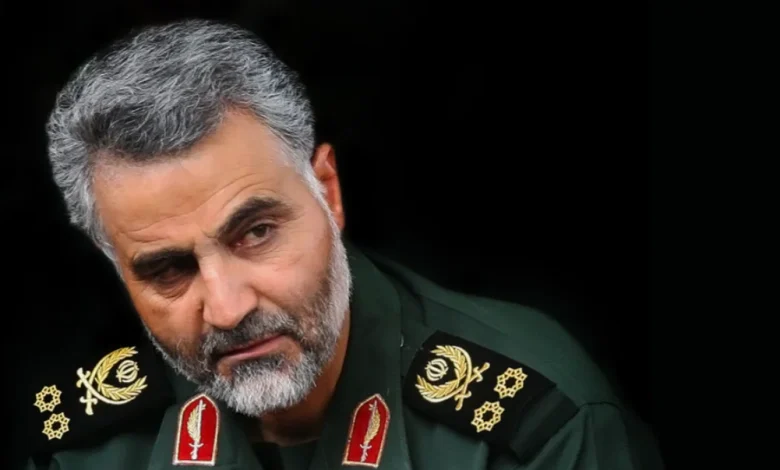
The most explosive revelation of this crackdown is the identity of the key suspects. The lead Iranian arms broker arrested in the Woodland Hills raid has been identified as the niece of Qasem Soleimani, the infamous former commander of the IRGC’s elite Quds Force who was assassinated in a 2020 U.S. drone strike. Her arrest, alongside her daughter and several immediate family members, reveals the deeply entrenched, dynastic nature of Iran’s military-industrial complex.
Soleimani was the architect of Iran’s proxy wars across the Middle East, and his network clearly survived his demise, operating deep within enemy territory. The presence of his direct relatives orchestrating a global weapons procurement ring from California highlights a terrifying brazenness. The IRGC has a long history of utilizing familial trust to ensure loyalty in highly sensitive operations. It is widely understood that the IRGC continues to declare strategic western assets as targets, and maintaining an underground procurement network inside the U.S. aligns perfectly with their asymmetrical warfare doctrine.
Coordinated Law Enforcement Takedown
The unraveling of this network culminated in a massive, multi-agency sweep spearheaded by Homeland Security Investigations (HSI), the investigative arm of U.S. Immigration and Customs Enforcement (ICE). The dawn raids were the result of years of painstaking surveillance, cyber-tracking, and financial forensic analysis. ICE agents, supported by the FBI and local tactical units, executed synchronized warrants not just at the Woodland Hills townhouse, but at multiple storage facilities and front businesses scattered across the Greater Los Angeles area.
The sweep secured terabytes of encrypted data, physical ledgers, and crates of embargoed microelectronics waiting to be shipped. The arrest of the Soleimani family members was executed flawlessly, preventing any destruction of vital evidence. Authorities noted that the suspects had pre-planned evacuation routes and offshore accounts ready, but the sheer speed of the federal interdiction left them no time to activate their contingency plans.
Drones, Bombs, and Decades of Evasion
The material impact of this specific weapons pipeline cannot be overstated. Documents seized during the raid confirm that the Los Angeles-based broker was directly responsible for supplying critical components used in the notorious Shahed series of suicide drones. These drones have not only been utilized extensively by Iranian proxies in the Middle East but have also been heavily exported to foreign battlefields, radically altering modern warfare dynamics.
Furthermore, investigators uncovered purchase orders for highly specialized blast detonators and telemetry sensors used in advanced Improvised Explosive Devices (IEDs) and short-range ballistic missiles. By sourcing these parts from American tech corridors, the Iranian arms broker ensured that the regime possessed top-tier, highly reliable hardware that domestic Iranian manufacturing simply could not replicate. The fact that this operation ran successfully since 2016 implies that thousands of lethal systems currently deployed by the regime and its proxies contain parts directly sourced from suburban California.
Operation Summary: Seized Assets and Deals
The scale of the illicit network is best understood by examining the hardware and financial assets interdicted by federal authorities. The following table provides a breakdown of the primary operational metrics uncovered during the ICE sweep.
| Asset / Component Type | Estimated Value (USD) | Primary Destination / End Use | Operational Timeline |
|---|---|---|---|
| Commercial Gyroscopes & Accelerometers | $4.2 Million | Shahed-136 Loitering Munitions (Drones) | 2016 – 2026 |
| Encrypted RF Transmitters | $1.8 Million | Ballistic Missile Telemetry | 2018 – 2026 |
| Thermal Imaging Lenses | $3.5 Million | Night-vision scopes / IRGC Snipers | 2019 – 2026 |
| Seized Cryptocurrency Wallets | $12.4 Million | Sanctions Evasion / Operational Funding | 2020 – 2026 |
| Forged End-User Certificates | Invaluable (Intel) | European and UAE Shell Companies | 2016 – 2026 |
The Los Angeles Iranian Diaspora Under Scrutiny
Los Angeles is proudly home to the largest Iranian diaspora community in the world, affectionately known as “Tehrangeles.” This vibrant, culturally rich community is overwhelmingly comprised of exiles who fled the oppressive Islamic Republic following the 1979 revolution. The vast majority of Iranian-Americans are staunchly anti-regime, having built immensely successful lives while actively opposing the human rights abuses occurring in their homeland.
The revelation that an elite Iranian arms broker—and relatives of the regime’s top military commander—were hiding among them has sent shockwaves of anger and betrayal through the community. Many fear that the actions of these covert operatives will unfairly stigmatize the broader Iranian-American population. Community leaders have swiftly condemned the weapons network, emphasizing that the regime routinely uses coercion, espionage, and sleeper agents to exploit the freedoms of western democracies while simultaneously oppressing its own people.
Geopolitical Repercussions and US-Iran Tensions
The international fallout from these arrests is already unfolding rapidly. The confirmed presence of Soleimani’s family orchestrating weapons deals on U.S. soil is a massive escalation in the shadow war between Washington and Tehran. This incident is likely to derail any fragile diplomatic backchannels currently in place. As global markets react to the instability, experts warn that sudden shifts in U.S.-Iran relations could threaten global economic stability.
Furthermore, the discovery complicates ongoing regional negotiations in the Middle East. While nations like Pakistan attempt to mediate delicate ceasefire talks between allied proxies, the undeniable proof of Iran’s continuous, aggressive armament strategy fundamentally undermines trust. The U.S. State Department is expected to leverage the seized intelligence to push for even stricter international sanctions, demanding European allies close off the remaining financial and logistical loopholes the broker utilized.
Future Implications for National Security
The Woodland Hills raid will undoubtedly serve as a watershed moment for U.S. domestic counterintelligence. The operation highlights the urgent need for enhanced scrutiny of dual-use technology exports and the modern mechanisms of terror financing. Federal agencies will likely pivot toward implementing stricter regulations on commercial tech sales and deploying advanced AI-driven algorithms to detect anomalous purchasing patterns from newly formed shell companies.
As the geopolitical landscape rapidly evolves, this arrest underscores a harsh reality: modern warfare and arms brokering no longer rely solely on military bases and shadowy ports. It happens in our suburbs, facilitated by globalized shipping and decentralized finance. With major political and geopolitical shifts on the horizon, securing the domestic supply chain against foreign exploitation will be the defining national security challenge of the coming decade. The dismantling of the Woodland Hills network is a monumental victory, but it also serves as a chilling reminder of the lengths to which state-sponsored networks will go to fuel their global ambitions.