Livestreamer “Chud the Builder” Involved in Courthouse Shooting
Introduction
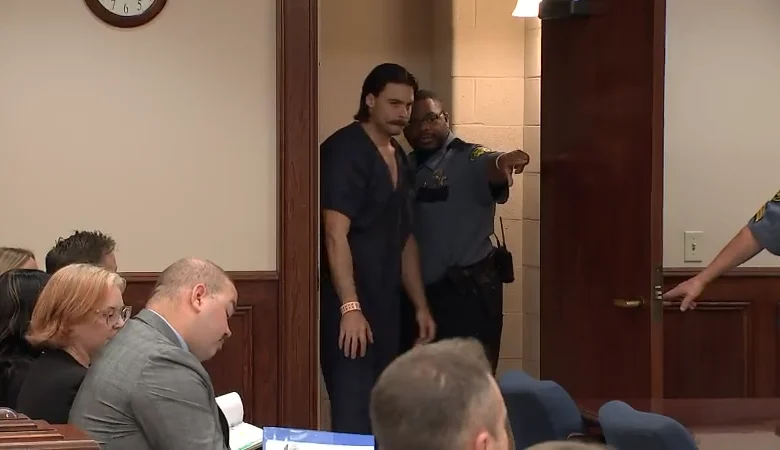
Livestreamer Dalton Eatherly, known online as “Chud the Builder,” found himself at the center of a violent episode on Wednesday outside the Montgomery County Courthouse in Clarksville, Tennessee. The incident, which involved an exchange of gunfire, has ignited a flurry of discussions regarding online personalities, public safety, and the potential consequences of controversial content creation. Eatherly, who has gained notoriety for his use of offensive racial language and divisive commentary, was allegedly involved in a confrontation that resulted in gunshot wounds for both him and another individual. The event prompted an immediate lockdown of the courthouse and a swift response from law enforcement, marking a significant disruption in the local community.
The Incident at Montgomery County Courthouse
The confrontation occurred at approximately 1:20 p.m. local time outside the Montgomery County Courthouse, a location that inherently symbolizes justice and order. According to District Attorney General Robert J. Nash, the altercation involved Eatherly and an “unknown male,” and rapidly escalated from a verbal dispute to an exchange of gunfire. Details regarding the cause of the initial confrontation remain unclear, but the fact that it transpired in such a public and sensitive location has amplified the gravity of the situation. Initial reports suggest that Eatherly was the individual who opened fire, and in the process, appeared to have shot himself in the arm. The other individual involved also sustained gunshot wounds, necessitating immediate medical attention for both parties.
The incident immediately triggered a lockdown of the Montgomery County Courthouse, a standard security procedure designed to ensure the safety of all individuals inside the building. Law enforcement officers, including deputies from the Montgomery County Sheriff’s Office, quickly secured the scene to prevent any further escalation and to begin the process of gathering evidence and interviewing witnesses. The courthouse lockdown caused significant disruptions to scheduled court proceedings and other administrative functions, highlighting the far-reaching impact of such a violent event on the local justice system.
Initial Reports and Law Enforcement Response
The initial reports of the shooting were disseminated rapidly through local news outlets and social media platforms, causing widespread concern and speculation within the Clarksville community. The Montgomery County Sheriff’s Office released a statement confirming that both Eatherly and the other individual involved had sustained gunshot wounds and were receiving medical treatment. The Sheriff’s Office also emphasized that the scene was secure and that there was no ongoing threat to public safety. One person was taken into custody, although their identity and specific involvement in the incident were not immediately disclosed.
The law enforcement response was multifaceted, involving not only securing the immediate vicinity of the courthouse but also initiating a comprehensive investigation into the circumstances surrounding the shooting. Detectives from the Montgomery County Sheriff’s Office were tasked with collecting forensic evidence, interviewing witnesses, and reviewing any available surveillance footage to piece together a clear and accurate account of what transpired. The investigation is ongoing, and authorities have urged anyone with information related to the incident to come forward and cooperate with law enforcement. The thoroughness of the investigation is crucial for determining the precise sequence of events, identifying any potential motives, and ensuring that appropriate legal actions are taken.
Chud the Builder: Identity and Controversies
Dalton Eatherly, the individual behind the “Chud the Builder” online persona, is a 28-year-old livestreamer who has amassed a significant following, as well as considerable controversy, for his online content. Eatherly’s streams often feature offensive racial language, inflammatory commentary, and divisive rhetoric, which have drawn both criticism and support from various online communities. His content frequently touches on sensitive social and political issues, and his outspoken views have made him a polarizing figure in the online world. The use of the moniker “Chud the Builder” itself alludes to a derogatory internet meme, further underscoring the provocative nature of his online presence.
The controversies surrounding Eatherly’s online activities extend beyond mere inflammatory rhetoric. He has been accused of promoting hate speech, inciting violence, and spreading misinformation, allegations that have led to calls for his removal from various online platforms. While Eatherly maintains that his content is intended as satire or social commentary, critics argue that his words have real-world consequences and contribute to a climate of division and hostility. The incident at the Montgomery County Courthouse has only intensified these debates, raising questions about the responsibility of online platforms to regulate harmful content and the potential for online rhetoric to translate into real-world violence.
The incident involving Eatherly echoes concerns about the broader impact of online radicalization and extremism. The Southern Poverty Law Center and other organizations have documented the rise of online communities that promote hate speech and incite violence. These groups often use social media and livestreaming platforms to recruit new members and spread their ideologies. The incident at the courthouse underscores the potential dangers of allowing such content to proliferate unchecked online.
Legal and Investigative Aspects
The legal ramifications of the shooting incident are considerable and involve multiple layers of investigation and potential prosecution. The Montgomery County Sheriff’s Office is working closely with the District Attorney General’s office to determine the precise charges that will be filed against Eatherly and the other individual involved. Potential charges could include aggravated assault, reckless endangerment, and weapons violations, depending on the specific circumstances and evidence gathered. The fact that the shooting occurred near a courthouse, a designated place of justice, could also factor into the severity of the charges.
The investigation will likely involve a thorough examination of Eatherly’s background, including his online activities and any prior interactions with law enforcement. Investigators will also seek to determine the motive behind the shooting and whether it was premeditated or a spontaneous act of violence. The other individual involved will also be subject to scrutiny, and their role in the confrontation will be carefully assessed. The legal proceedings could be lengthy and complex, involving multiple hearings, potential plea negotiations, and possibly a full trial. The outcome of the case will likely have significant implications for Eatherly and the other individual, as well as broader implications for the community and the ongoing debate about online content and real-world violence.
Moreover, the investigation will need to address the issue of self-defense. Tennessee law allows individuals to use deadly force in self-defense if they reasonably believe they are in imminent danger of death or serious bodily injury. However, the specific circumstances of the shooting, including who initiated the confrontation and whether Eatherly reasonably believed he was in danger, will be critical factors in determining whether self-defense applies in this case. The presence of witnesses and video evidence will be crucial in making this determination.
Community Impact and Reactions
The shooting incident has had a profound impact on the Clarksville community, a city of approximately 160,000 residents located in northern Tennessee. The lockdown of the Montgomery County Courthouse caused significant disruptions to daily life and sparked anxiety among residents. The incident also raised broader concerns about public safety and the potential for violence in the community.
Local community leaders have issued statements condemning the violence and calling for unity and calm. Many residents have expressed shock and disbelief that such an event could occur in their city. The incident has also prompted discussions about the need for greater mental health resources and support services in the community. Social media platforms have been flooded with comments and opinions about the shooting, reflecting the wide range of emotions and perspectives within the community.
The shooting has also had an impact on the local legal community. Attorneys and court staff have expressed concerns about safety and security at the courthouse. The incident may lead to increased security measures at the courthouse and other public buildings in the city. Some legal professionals have called for a review of security protocols and procedures to ensure the safety of all individuals who work in or visit the courthouse.
The Role of Online Platforms
The incident involving “Chud the Builder” has reignited the debate about the role and responsibility of online platforms in regulating harmful content. Social media companies and livestreaming services have come under increasing pressure to address hate speech, incitement to violence, and the spread of misinformation on their platforms. Critics argue that these companies have a moral and ethical obligation to protect their users from harmful content and to prevent their platforms from being used to promote violence and extremism.
Proponents of free speech argue that online platforms should not censor or restrict content, even if it is offensive or controversial. They maintain that individuals have a right to express their views, even if those views are unpopular or unpopular. However, this view has been challenged by those who argue that hate speech and incitement to violence are not protected by free speech principles and that online platforms have a responsibility to remove such content.
Many online platforms have implemented policies and procedures to address harmful content, but these efforts have been criticized as being insufficient or inconsistent. Some platforms have been accused of being slow to remove hate speech or incitement to violence, while others have been accused of unfairly censoring legitimate political expression. The incident involving “Chud the Builder” underscores the ongoing challenges that online platforms face in balancing free speech principles with the need to protect their users from harm.
Comparison of Key Details
| Aspect | Details |
|---|---|
| Incident | Shooting outside Montgomery County Courthouse in Clarksville, TN |
| Date and Time | Wednesday, approximately 1:20 p.m. local time |
| Individuals Involved | Dalton Eatherly (aka “Chud the Builder”) and an “unknown male” |
| Injuries | Both Eatherly and the other individual sustained gunshot wounds |
| Law Enforcement Response | Courthouse lockdown, scene secured, one person taken into custody, investigation ongoing |
| Potential Charges | Aggravated assault, reckless endangerment, weapons violations |
| Online Persona | “Chud the Builder” – known for offensive racial language and divisive commentary |
| Community Impact | Disruptions to court proceedings, concerns about public safety, discussions about mental health resources |
Broader Implications and Discussions
The shooting incident involving “Chud the Builder” has sparked a wide range of discussions about online culture, free speech, and the potential for online rhetoric to translate into real-world violence. The incident has also raised questions about the role and responsibility of online platforms in regulating harmful content and protecting their users from harm. The broader implications of the incident extend beyond the specific details of the case and touch on fundamental issues about the nature of online discourse and its impact on society.
One key area of discussion is the extent to which online platforms should be held accountable for the content that is posted on their sites. Some argue that platforms should be treated as publishers and held liable for the content they host, while others argue that platforms should be treated as neutral conduits of information and not held responsible for the views expressed by their users. This debate has been ongoing for years and has become increasingly complex as online platforms have grown in size and influence.
Another important area of discussion is the role of anonymity in online discourse. Many online users hide behind anonymous profiles, which can make it easier for them to engage in hate speech, harassment, and other forms of harmful behavior. Some argue that anonymity should be restricted or eliminated in order to promote greater accountability and civility online, while others argue that anonymity is essential for protecting free speech and allowing individuals to express their views without fear of reprisal.
The debate over online content and its impact on society is likely to continue for years to come. The incident involving “Chud the Builder” serves as a reminder of the potential for online rhetoric to have real-world consequences and the need for ongoing discussions about how to balance free speech principles with the need to protect individuals and communities from harm.
This situation also brings to light the ongoing tensions in the digital age, where freedom of expression clashes with the need for responsible online behavior. The incident highlights the challenges faced by law enforcement in monitoring and responding to potential threats that originate online. Furthermore, it underscores the importance of community engagement in promoting tolerance and understanding, both online and offline.
Gun Violence and Public Safety
The shooting incident outside the Montgomery County Courthouse also highlights the ongoing problem of gun violence in the United States. Gun violence is a pervasive issue that affects communities across the country, and it is a leading cause of death and injury. The incident involving “Chud the Builder” serves as a reminder of the potential for gun violence to erupt in unexpected places and the need for effective measures to prevent it.
There is a wide range of views on how to address gun violence, and there is no single solution that everyone agrees on. Some argue that stricter gun control laws are needed to reduce the availability of firearms, while others argue that such laws would infringe on the Second Amendment rights of law-abiding citizens. Some argue that greater emphasis should be placed on mental health treatment and early intervention programs to identify and help individuals who are at risk of committing violence, while others argue that such programs are ineffective or intrusive.
The debate over gun violence is complex and deeply emotional, and it is unlikely to be resolved anytime soon. However, the incident involving “Chud the Builder” underscores the need for continued dialogue and collaboration among policymakers, law enforcement officials, community leaders, and mental health professionals to find effective ways to reduce gun violence and promote public safety.
The incident also raises questions about security measures at public buildings. Courthouses, in particular, are often targets of violence due to their symbolic role in the justice system. The shooting highlights the importance of having robust security protocols in place to protect court staff, attorneys, and members of the public. These protocols may include metal detectors, security cameras, and trained security personnel. Regular security assessments should be conducted to identify and address any vulnerabilities.
Ongoing Investigation and Future Updates
As of today, May 14, 2026, the investigation into the shooting incident outside the Montgomery County Courthouse is ongoing. The Montgomery County Sheriff’s Office and the District Attorney General’s office are continuing to gather evidence, interview witnesses, and review surveillance footage to determine the precise circumstances of the shooting. The investigation is expected to take several weeks or months to complete, and further updates will be provided as they become available.
The legal proceedings against Eatherly and the other individual involved are also ongoing. It is unclear at this time when the case will go to trial, but it is likely to be a lengthy and complex process. The outcome of the case will have significant implications for all parties involved and for the broader community.
The incident involving “Chud the Builder” serves as a stark reminder of the potential for online rhetoric to translate into real-world violence and the need for ongoing discussions about how to balance free speech principles with the need to protect individuals and communities from harm. As the investigation progresses and the legal proceedings unfold, it is important to remain informed and engaged in these discussions.
As the investigation continues, it is also crucial to consider the broader context of online radicalization and extremism. Law enforcement agencies and online platforms need to work together to identify and disrupt online communities that promote hate speech and incite violence. Public awareness campaigns can also help to educate individuals about the dangers of online radicalization and provide resources for those who are concerned about someone they know.
Conclusion
The confrontation involving livestreamer “Chud the Builder” outside the Montgomery County Courthouse serves as a chilling reminder of the convergence between online rhetoric and real-world violence. The incident has sparked important conversations about the responsibilities of online platforms, the impact of controversial content, and the ongoing challenges of gun violence in our society. As the legal process unfolds and the community grapples with the aftermath, it is essential to foster open dialogue, promote responsible online behavior, and prioritize public safety. The incident also underscores the critical need for continuous evaluation and enhancement of security measures in public spaces, ensuring the safety and well-being of all citizens. Addressing the underlying issues of online radicalization and promoting mental health resources will be crucial steps in preventing similar incidents in the future. The incident involving “Chud the Builder” highlights the complexities of navigating the digital age and the importance of finding solutions that protect both free speech and public safety. In times of crisis, community solidarity and support for victims are paramount. Seeking justice and promoting healing are essential for rebuilding trust and resilience in the face of adversity. The incident at the courthouse serves as a call to action for individuals, communities, and policymakers to work together to create a safer and more inclusive society for all. Consider the implications of the petrodollar crisis, as such global financial shifts can also influence social dynamics and potentially exacerbate tensions.
Moving forward, vigilance and proactive measures are necessary to address the root causes of online radicalization and extremism, fostering a more tolerant and understanding society. The ongoing investigation and subsequent legal proceedings will undoubtedly provide further insights into the circumstances surrounding the shooting, offering opportunities for learning and improvement. The Clarksville community, and indeed the broader online community, must come together to condemn violence, promote responsible online behavior, and support initiatives that build bridges rather than walls. As authorities continue their investigation, staying informed about events such as the report on Buford’s Bar shooting can provide context to the broader landscape of violence and its possible connections.