Iran Defies US Demands, Slams Trump In Fierce Negotiations
The Core of the Diplomatic Stand-off
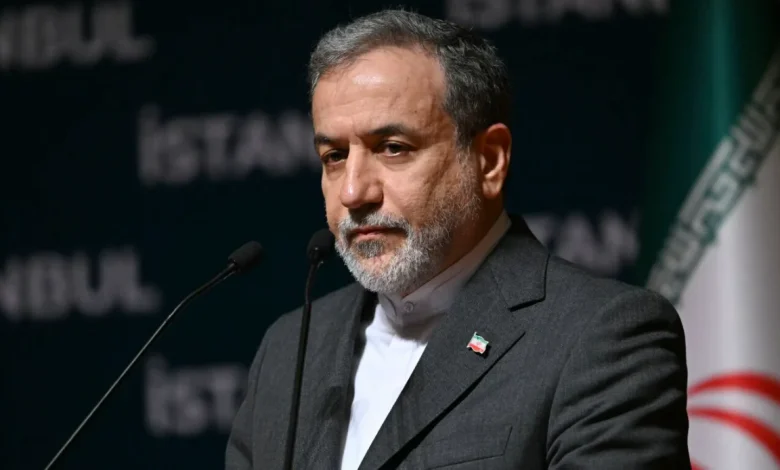
The essence of the current diplomatic deadlock revolves around fundamentally incompatible interpretations of international law and sovereign entitlement. From Tehran’s perspective, the negotiating table is not a place for surrender, but a forum to demand the restoration of rights that have been systematically undermined by unilateral sanctions and aggressive foreign policy maneuvers. Iranian diplomats have repeatedly emphasized that any sustainable deal must be anchored in the principles of the United Nations Charter, particularly concerning national sovereignty and the right to self-determination. They argue that the United States has consistently bypassed these legal frameworks, utilizing economic warfare as a coercive tool to extract political concessions. This stance is a direct rebuke to Western demands that Iran scale back its regional influence and domestic defense initiatives. By framing their position strictly within the confines of international legal paradigms, Iranian negotiators are attempting to seize the moral and legal high ground, portraying the United States as a rogue actor that flouts global norms when convenient.
Unyielding Stance on International Law and Sovereign Rights
When Iranian officials speak of their ‘rights,’ they are referring to a comprehensive spectrum of national interests that include, but are not limited to, the peaceful enrichment of uranium, the development of indigenous defense capabilities, and the unimpeded right to engage in global commerce. The accusation that the U.S. is attempting to weaken diplomacy is rooted in the belief that Washington views negotiations merely as an extension of its ‘maximum pressure’ campaign, rather than a genuine effort to achieve a mutually beneficial resolution. Iran contends that true diplomacy requires mutual respect and a willingness to compromise, elements they claim have been completely absent from recent American outreach efforts. The Iranian foreign ministry’s latest statements reflect a hardened resolve: if the choice is between submitting to coerced agreements or facing continued economic isolation, Tehran is prepared to endure the latter. This unyielding stance signals a significant structural shift in how Iran plans to conduct its foreign policy moving forward, prioritizing absolute adherence to its red lines over the potential relief that might come from a flawed or temporary diplomatic settlement.
Direct Attacks on Trump’s Rhetoric
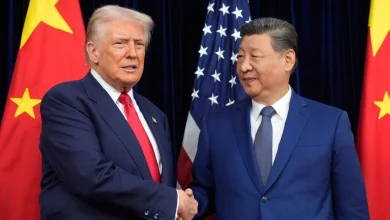
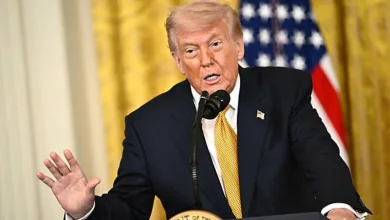
Perhaps the most explosive element of Iran’s newly articulated position is the direct, highly personalized attack on the former U.S. President and current political figure, Donald Trump. The Iranian message specifically targets his communication style and reliability, stating unequivocally that ‘he talks too much and contradicts himself in the same statements.’ This level of direct mockery is highly unusual in formal diplomatic discourse and serves to deliberately undermine Trump’s self-proclaimed image as a master negotiator. By pointing out his contradictions, Iran is attempting to warn the international community—and specifically European allies—that any agreements brokered by or influenced by Trump are inherently unstable. This attack must be contextualized within recent geopolitical maneuvers. For instance, as detailed in recent analyses of how Trump unveils major China-Iran deal to open Strait of Hormuz, the Iranian leadership is highly skeptical of grandiose pronouncements that lack foundational policy support. They view his rhetorical flourishes not as diplomatic openings, but as chaotic noise that actively sabotages serious statecraft.
Contradictions and Betrayals in U.S. Policy
The accusation of betrayal is central to Iran’s current narrative. Iranian officials assert that they entered previous rounds of talks in absolute good faith, prepared to make difficult compromises for the sake of regional harmony and economic normalization. However, they claim that ‘the other side betrayed the process.’ This historical grievance is not just about the withdrawal from the Joint Comprehensive Plan of Action (JCPOA); it encompasses a broader pattern of what Tehran views as American duplicity. From backroom dealings to sudden shifts in sanctions policy, Iran argues that the U.S. has proven itself incapable of honoring its commitments. This sentiment deeply complicates current efforts at backchannel diplomacy US-Iran talks signal 60-day deal, as Iranian negotiators demand ironclad guarantees that any future agreement cannot be casually discarded by subsequent American administrations. The focus on ‘betrayal’ serves both a domestic and international purpose: it unifies the Iranian populace against an external adversary while cautioning other nations about the perils of trusting American diplomatic assurances.
The Siege Warning: Defending the Nation’s Sovereignty
In addition to the fierce rhetorical attacks, Iran’s statement included a chilling and clear warning to its adversaries: no one will be able to impose a siege or force its will on the country. This declaration is a direct response to escalating military posturing and economic containment strategies deployed by the United States and its regional allies. The concept of a ‘siege’ in this context refers to both the suffocating web of international financial sanctions and the literal maritime encirclements that have threatened Iranian shipping routes. By publicly drawing this red line, Tehran is signaling that any attempt to completely cut off its economic lifelines or block its access to international waters will be met with severe and immediate retaliation. This warning is not issued in a vacuum; it directly relates to recent aggressive naval maneuvers. When a blockade U.S. enforces Strait of Hormuz halting Iranian ships becomes a tangible reality, Iran’s defensive posture naturally shifts toward an active deterrence strategy.
Assessing the Threat of Economic and Military Blockades
The logistical realities of attempting to besiege a nation of Iran’s geographic and demographic size are immensely complex. Tehran has spent decades building a ‘resistance economy’ designed specifically to withstand external economic shocks and embargoes. Furthermore, Iran’s strategic positioning along the Persian Gulf grants it significant leverage over global energy transit routes. If a siege were realistically attempted, the resulting disruption to global oil supplies would be catastrophic. The Iranian military establishment has repeatedly demonstrated its capacity to project power across the region, utilizing an extensive network of allied militia groups and advanced asymmetrical warfare tactics. Therefore, the warning against imposing a siege is as much an economic calculation as it is a military one. Global markets are acutely aware of this precarious balance, which is why oil holds below 100 amid deal hopes and Trump-Pakistan talks. Any miscalculation that triggers an actual blockade would instantly shatter this fragile market equilibrium.
Detailed Comparison of U.S. vs. Iranian Negotiating Positions
To fully grasp the magnitude of the current diplomatic impasse, one must examine the specific, divergent objectives of both nations. The table below outlines the core pillars of both the Iranian and American negotiating stances, highlighting exactly why a breakthrough remains so elusive.
| Key Negotiating Issue | Iranian Position | U.S. Position | Primary Deadlock Factor |
|---|---|---|---|
| International Sanctions | Demands immediate, unconditional lifting of all economic sanctions prior to compliance. | Requires verifiable behavioral changes and nuclear compliance before offering any sanctions relief. | Sequencing of actions; neither side is willing to take the first step. |
| Nuclear Program Rights | Asserts the absolute, inalienable right to enrich uranium for peaceful domestic purposes. | Demands strict, long-term caps on enrichment levels and pervasive international oversight. | Definition of sovereignty versus global security requirements. |
| Regional Influence | Considers support for regional allies non-negotiable and essential for national defense. | Demands Iran cease all support for proxy groups across the Middle East. | Fundamentally different views on what constitutes legitimate defense. |
| Diplomatic Guarantees | Requires legally binding assurances that future U.S. administrations will not exit agreements. | Cannot legally bind future Presidents or Congress to executive diplomatic agreements. | Structural limitations of the U.S. constitutional system versus Iranian demands for certainty. |
As illustrated, the gap between the two sides is not merely a matter of differing policy preferences, but a fundamental clash of worldviews and legal interpretations.
Global Geopolitical Reactions and Market Ripples
The international community’s response to Iran’s uncompromising position has been a mixture of alarm and frantic diplomatic scrambling. European nations, long caught in the middle of U.S.-Iran tensions, are increasingly frustrated by the lack of viable off-ramps. Meanwhile, regional powers are actively attempting to mediate before the situation deteriorates into outright conflict. The role of neutral or semi-neutral third parties has never been more critical. For example, recent developments where Pakistan mediates U.S.-Iran talks Lebanon ceasefire hurdles demonstrate how neighboring countries are desperately trying to build bridges where traditional diplomacy has failed. These mediation efforts are highly sensitive, often involving covert messaging and intricate compromises designed to allow both Washington and Tehran to save face while simultaneously de-escalating tensions. However, Iran’s latest public declarations severely limit the maneuvering room for these mediators, as Tehran has explicitly locked itself into a maximalist stance that leaves little room for the creative ambiguity often necessary in high-stakes negotiations.
How the Standoff Impacts the Middle East Framework
The reverberations of this diplomatic standoff are being felt across the entire Middle Eastern geopolitical framework. From the ongoing political crises in Lebanon to the complex power dynamics in Syria and Iraq, Iran’s unyielding posture sends a clear message to its allies and adversaries alike. By drawing a hard line against the United States, Tehran is simultaneously reassuring its regional proxy network that it will not negotiate away their interests in exchange for economic relief. This bolsters the confidence of allied factions but also accelerates the security dilemmas faced by neighboring Gulf states and Israel. The heightened rhetoric increases the likelihood of proxy clashes, as regional actors test the boundaries of this new, more rigid diplomatic reality. Consequently, the Middle East remains on a knife-edge, with the potential for localized conflicts to rapidly spiral into a broader regional conflagration if the diplomatic deadlock persists without any constructive intervention.
What Comes Next in the Diplomatic Process?
Predicting the exact trajectory of these negotiations is incredibly challenging, given the volatile mixture of domestic political pressures and international security concerns. However, Iran’s definitive statement that it will not be forced into submission suggests that we are entering a protracted period of diplomatic attrition. The United States must now decide whether to intensify its pressure campaign, risking further escalation, or recalibrate its approach to address Iran’s demand for international legal adherence. The ball is effectively in Washington’s court, but the internal political dynamics of the U.S., particularly heading into critical election cycles, make sweeping diplomatic concessions highly improbable. Observers should expect a continuation of high-stakes brinkmanship, characterized by aggressive public statements, covert regional maneuvering, and frantic, behind-the-scenes attempts by third-party mediators to prevent a total collapse of the negotiation architecture.
Potential Pathways for Resolution or Escalation
In the immediate future, there are two primary pathways: a gradual de-escalation managed through localized, unwritten understandings, or a sharp escalation triggered by a miscalculation in the Persian Gulf or a breakdown in backchannel communications. If Iran’s warning regarding a ‘siege’ is tested by new U.S. sanctions or naval interdictions, the response will likely be swift and asymmetrical, targeting vulnerable energy infrastructure or global shipping lanes. Conversely, if mediators can establish a narrow framework focusing on mutual, synchronized steps that respect Iran’s red lines on sovereignty while addressing core Western security concerns, a fragile détente might be achievable. Regardless of the outcome, Iran has made its position permanently clear: the days of asymmetrical diplomatic concessions are over. Any future engagement will be conducted on Tehran’s terms, strictly governed by its interpretation of international law, and fiercely defended against any perception of external coercion or bad faith.