Inter-Korean Football: Pyongyang’s Naegohyang FC to Play Suwon FC in Historic Match
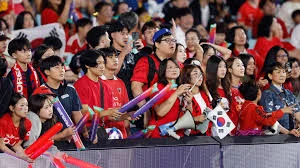
Inter-Korean Football is poised to write a new chapter in a long and often tumultuous history between North and South Korea. A groundbreaking announcement from Seoul’s Unification Ministry confirms that Pyongyang-based Naegohyang Women’s FC is slated to compete against South Korea’s Suwon FC Women in the semifinals of the Asian Football Confederation (AFC) Women’s Champions League. This highly anticipated match, scheduled for May 20 in Suwon, south of Seoul, represents a significant, albeit cautiously viewed, moment of cross-border engagement. The AFC’s notification to South Korea’s soccer body has set the stage for an event that transcends mere sport, carrying profound geopolitical and diplomatic undertones.
While the South Korean government has publicly affirmed the confirmation of Naegohyang FC’s participation, North Korea’s state media has conspicuously remained silent on the upcoming trip. This asymmetry in reporting highlights the delicate balance and inherent complexities that characterize inter-Korean relations, where every interaction, even in the realm of sports, is imbued with political meaning and strategic calculation. The international sporting arena, often touted as a conduit for peace and understanding, once again finds itself a stage for the intricate dance of diplomacy on the Korean Peninsula.
A Landmark Sporting Event: The AFC Women’s Champions League Semifinals
The upcoming AFC Women’s Champions League semifinal between Naegohyang Women’s FC and Suwon FC Women is far more than just a football match; it is a landmark event laden with symbolic weight. For decades, sporting exchanges between the two Koreas have been rare and often fraught with political hurdles. When they do occur, they capture global attention, serving as potential harbingers of broader diplomatic shifts or, conversely, as stark reminders of enduring division.
Unprecedented Participation: North Korean Club on South Korean Soil
The physical presence of a North Korean sports team on South Korean soil for a competitive match, particularly in a high-profile continental tournament like the AFC Women’s Champions League, is an event of rare occurrence. Historically, inter-Korean sports exchanges have often taken place in neutral third countries or involved symbolic joint marches rather than direct competitive encounters on each other’s home turf for a major trophy. This instance signifies a degree of openness, at least from the North Korean side in accepting the invitation, and a proactive stance from the AFC in facilitating such an encounter. The implications are manifold, extending from the logistical complexities of travel and accommodation to the psychological impact on both players and populations. It represents a subtle, yet significant, crack in the often impenetrable barrier that separates the two Koreas.
The Role of the South’s Unification Ministry
The South’s Unification Ministry, the governmental body responsible for inter-Korean affairs, plays a pivotal role in these delicate exchanges. Its confirmation of Naegohyang FC’s participation underscores the South Korean government’s commitment to fostering dialogue and engagement wherever possible. The ministry’s statement, detailing the AFC’s notification, serves as the official imprimatur, signaling that all necessary approvals and arrangements are being made on the South Korean side. This bureaucratic navigation is crucial, as any inter-Korean interaction requires careful coordination across various government agencies, addressing everything from visa requirements and security protocols to public sentiment and diplomatic messaging. The Unification Ministry often acts as a primary facilitator, striving to create an environment conducive to peace and eventual reunification, however distant that goal may seem. Their involvement highlights the official nature and strategic importance attached to this sporting event by Seoul.
Geopolitical Significance: Sports Diplomacy in a Tense Region
The Korean Peninsula remains one of the world’s most geopolitically sensitive regions. Against a backdrop of ongoing nuclear tensions, missile tests, and often fiery rhetoric, any form of positive engagement, no matter how small, is scrutinized for deeper meaning. Sports diplomacy, in this context, becomes a potent, if fragile, tool. It offers a non-political platform where common humanity and competitive spirit can potentially override entrenched ideological divides. Such events can humanize the ‘other’ and open channels for communication that are otherwise shut down.
Historical Precedents of Inter-Korean Sports Exchanges
History is replete with examples of inter-Korean sports exchanges, each carrying its own narrative of hope and disappointment. From unified teams marching together at Olympic opening ceremonies to joint table tennis teams, these moments have periodically pierced through the political ice. The 1991 World Table Tennis Championships, where a unified Korean team competed, and the 2000 Sydney Olympics, where athletes from both Koreas marched under a unified flag, are often cited as high points. These instances, while fleeting, demonstrated the potential for sports to foster a sense of shared identity and create a temporary détente. However, the political will required to sustain such engagements has often waned, leading to periods of prolonged stagnation. This upcoming match will be measured against these historical benchmarks, with observers keen to see if it signals a more enduring shift or merely another isolated incident.
Challenges and Opportunities for Rapprochement
The challenges to rapprochement on the Korean Peninsula are immense, encompassing deep-seated mistrust, fundamental ideological differences, and the pervasive issue of North Korea’s nuclear program. Yet, every instance of inter-Korean contact presents an opportunity. The Naegohyang FC vs. Suwon FC Women match could serve as a vital, if symbolic, step towards de-escalation and dialogue. It allows for direct interaction, even if limited, between citizens of both nations and can project an image of goodwill to the international community. Such an event could be seen as a low-risk, high-reward strategy for both sides: the North gains international exposure and potentially some diplomatic leverage, while the South demonstrates its commitment to peace and engagement. However, the fragility of such efforts is always present, as exemplified by the constant hurdles in regional diplomacy, which often require extensive backchannel diplomacy and careful negotiation. The ongoing complexities of international relations, such as the hurdles in ceasefire negotiations in other tense regions, serve as a stark reminder of the difficulties inherent in bridging divides.
The Teams: Naegohyang Women’s FC and Suwon FC Women
To fully appreciate the significance of this match, it’s essential to understand the teams involved – their backgrounds, playing styles, and what they represent within their respective national footballing landscapes.
Naegohyang Women’s FC: A Glimpse into North Korean Sports
Naegohyang Women’s FC, hailing from Pyongyang, represents the pinnacle of women’s football in North Korea. North Korea has historically had a strong women’s football program, often performing admirably in Asian and even global competitions. Their national team has been a consistent force, having won the AFC Women’s Asian Cup multiple times. Clubs like Naegohyang FC are typically well-funded and supported by the state, drawing from a pool of highly disciplined and dedicated athletes. Their playing style is often characterized by strong physical conditioning, tactical rigor, and a collective work ethic – hallmarks of North Korean sporting philosophy. For many outside observers, this match will offer a rare glimpse into the current state of North Korean athletic prowess and potentially, the morale of its sporting elite. The team’s journey to the AFC Women’s Champions League semifinals is a testament to their domestic dominance and competitive spirit within the continental framework.
Suwon FC Women: South Korea’s Footballing Powerhouse
Suwon FC Women, on the other hand, represents the vibrant and increasingly competitive landscape of South Korean women’s football. Based in Suwon, a major city just south of Seoul, Suwon FC Women is one of the top clubs in the WK League, South Korea’s premier women’s football league. Known for their technical skill, tactical fluidity, and often dynamic attacking play, they embody the modern approach to football prevalent in many developed Asian nations. The team benefits from professional infrastructure, access to international coaching methodologies, and a competitive domestic league that fosters talent. For Suwon FC Women, this match is not just about advancing in the Champions League; it carries an added dimension of national pride and historical significance. Facing a North Korean opponent on their home ground will undoubtedly add an extra layer of intensity and motivation for the South Korean players.
AFC Women’s Champions League Semifinal: Team Comparison
| Feature | Naegohyang Women’s FC (North Korea) | Suwon FC Women (South Korea) |
|---|---|---|
| Origin City | Pyongyang | Suwon |
| Home League | DPR Korea Women’s Football League (unofficial name) | WK League |
| Reported Participation | Confirmed by South Korea’s Unification Ministry and AFC | Confirmed as host team |
| International Visibility | Rare, high symbolic value | Regular, competitive within Asia |
| Anticipated Playing Style | Physical, disciplined, collective | Technical, tactical, dynamic attack |
| Significance of Match | Diplomatic signal, rare international exposure | Sporting achievement, national pride, inter-Korean encounter |
AFC Women’s Champions League: A Platform for Regional Unity
The AFC Women’s Champions League itself is a testament to the growth and professionalization of women’s football across Asia. Launched to elevate the standard of club football and provide a prestigious continental competition, it gathers the best teams from various national leagues. The inclusion of a North Korean team in the semifinals underscores the AFC’s commitment to inclusive participation, even amidst complex political landscapes.
The Growing Prominence of Women’s Football in Asia
Women’s football has experienced a significant surge in popularity and investment across Asia over the past decade. Countries like Japan, South Korea, China, and Australia have become powerhouses, and many other nations are rapidly developing their programs. The AFC Women’s Champions League serves as a crucial incubator for talent and a showcase for the region’s best players. The participation of a North Korean club, a nation with a rich but often insular footballing tradition, further enhances the tournament’s diverse representation and raises its international profile. This growth is vital not just for sport, but for gender equality and empowerment in the region, offering female athletes unprecedented opportunities for professional development and global recognition.
Tournament Structure and Stakes
The AFC Women’s Champions League features a rigorous qualification process, culminating in knockout stages. Reaching the semifinals is a significant achievement for any club, showcasing their dominance within their respective domestic leagues and their ability to compete at an elite continental level. For both Naegohyang Women’s FC and Suwon FC Women, the stakes are incredibly high. Beyond the inter-Korean narrative, a place in the final of Asia’s most prestigious club competition for women’s football is a powerful motivator. It brings prestige, prize money, and further opportunities for international exposure. The intensity of a semifinal match, combined with the unique geopolitical context, guarantees a captivating spectacle for fans and observers alike.
North Korea’s Silence: State Media’s Omission
One of the most intriguing aspects of this development is the complete lack of reporting by North Korea’s state media regarding Naegohyang FC’s expected trip. This silence is not unusual for Pyongyang when it comes to engagements with the South that do not align with its meticulously crafted domestic narrative. Understanding this omission is crucial for interpreting North Korea’s approach to inter-Korean relations.
Interpreting Pyongyang’s Lack of Public Announcement
North Korea’s state media is a tightly controlled apparatus, serving primarily to propagate the regime’s ideology and inform the populace in a highly curated manner. Its silence on the football match could be interpreted in several ways. Firstly, it might indicate a desire to control the narrative internally, preventing any perception among its citizens that Pyongyang is engaging too readily or favorably with Seoul, especially at a time when inter-Korean relations are generally strained. A public announcement might suggest a softening of stance or an acknowledgment of South Korea’s legitimacy, which contradicts the official line. Secondly, it could be a strategic ploy to maintain maximum flexibility. By not publicly committing, Pyongyang retains the option to withdraw without losing face domestically, or to suddenly announce it later if the political winds shift. Finally, it may simply be that such a sporting event, while significant to the outside world, is not deemed important enough for immediate state media coverage, particularly if the regime wishes to downplay its significance to its own people, emphasizing self-reliance over international engagement. This selective communication mirrors how nations sometimes navigate complex diplomatic challenges, as seen in instances where global powers manage international defiance of sanctions by strategically controlling public information.
Domestic Messaging vs. International Engagement
The dichotomy between North Korea’s international engagement and its domestic messaging is a persistent feature of its foreign policy. While North Korea participates in international sporting bodies like the AFC and sends teams abroad, its internal propaganda often paints a picture of isolation and self-sufficiency, framing any external contact in terms of strength and resilience. The current situation perfectly illustrates this disconnect: an international body facilitates an exchange, the South confirms it, but the North remains publicly uncommitted to its own people. This dual approach allows the regime to selectively engage with the outside world for strategic benefits (e.g., prize money, international recognition for its athletes) while maintaining a strict ideological narrative at home. This strategic ambiguity often contributes to the uncertainty and fragility surrounding inter-Korean initiatives, where even seemingly positive steps like a football match are shadowed by the potential for rapid reversal, akin to warnings that a ceasefire could end quickly if underlying issues are not fully addressed.
Broader Implications: Beyond the Pitch
The ripple effects of an event like this extend far beyond the football pitch, touching upon various aspects of inter-Korean relations and regional dynamics.
Economic and Cultural Exchange Potentials
Should the match proceed smoothly, it could potentially pave the way for other forms of non-political exchange. Cultural delegations, academic collaborations, or even small-scale economic interactions, which have historically been limited, might see renewed interest. Such exchanges, even on a modest scale, contribute to building trust and understanding, crucial elements for long-term peace. While direct economic benefits from a single football match are negligible, the symbolic value of opening channels could be immense. It can foster a sense of shared heritage and identity, reminding both Koreas of their common roots despite decades of separation. The cost of failing to find paths to peace is enormous, as seen in expert forecasts on conflicts such as a trillion-dollar Iran war, underscoring the value of even small diplomatic openings.
The Future of Inter-Korean Relations
The future of inter-Korean relations remains unpredictable, heavily influenced by domestic politics in both Koreas, regional power dynamics involving China, the US, and Japan, and the ongoing saga of North Korea’s weapons programs. This football match, while a positive sign, does not fundamentally alter the underlying geopolitical realities. However, it does provide a rare, tangible example of cooperation. Success in this sporting exchange could build momentum for further dialogue, perhaps at higher diplomatic levels. Conversely, any unforeseen incident or last-minute cancellation could exacerbate existing tensions. It serves as a reminder that even small gestures can have outsized impacts in a region where stakes are perpetually high. Observers will be watching not only the score but also the broader conduct around the event for clues about Pyongyang’s longer-term intentions and Seoul’s persistent efforts to engage its northern neighbor.
Expert Analysis and Public Reaction
Experts on Korean affairs often view such events with a mixture of hope and skepticism. While acknowledging the potential for positive symbolism, they caution against over-interpreting isolated incidents. Dr. Lee Sung-yoon, a specialist in North Korean studies, emphasizes the need for caution: “While any inter-Korean contact is noteworthy, we must remember that North Korea uses these engagements primarily for strategic purposes, not necessarily as a genuine step towards reconciliation. The lack of state media coverage is a classic tactic to control internal narratives while reaping external benefits.” Conversely, proponents of engagement, such as Dr. Kim Hyun-wook, a professor of international relations, argue that “even small cracks in the wall are significant. Sports provide a neutral ground, a ‘soft power’ approach that can gradually build trust, even if it doesn’t solve the nuclear issue overnight.” Public reaction in South Korea is also often divided, with some welcoming any form of contact and others wary of North Korean intentions, fearing that such events might be exploited for propaganda purposes without genuine reciprocation.
The global sports community, including the AFC, plays a vital role in upholding the principle of universality and inclusivity in sport. By facilitating North Korea’s participation, the AFC demonstrates its commitment to providing opportunities for all member associations, irrespective of political challenges. This stance aligns with the Olympic spirit and the broader aim of using sport as a bridge between peoples. The AFC’s official channels will likely be the primary source for match details, player statistics, and tournament updates, providing a neutral platform for information dissemination. For more details on the AFC Women’s Champions League, you can visit the AFC official website.
Conclusion: A Cautious Optimism
Inter-Korean Football is about to deliver a moment of profound significance. The upcoming AFC Women’s Champions League semifinal between Naegohyang Women’s FC and Suwon FC Women is a testament to the enduring power of sports to transcend political divides, even if temporarily. While the South Korean government actively champions this rare exchange, North Korea’s characteristic silence underscores the complex and often contradictory nature of inter-Korean relations. This match is not merely a contest of athletic skill; it is a delicate diplomatic dance, a symbolic gesture, and a litmus test for the ever-fluctuating dynamics on the Korean Peninsula. Observers will be watching with cautious optimism, hoping that this historic encounter on the football field might, however subtly, contribute to a broader atmosphere of peace and understanding between two nations that share a common heritage but remain tragically divided.