ICE funding passes Senate after high-stakes battle over Trump’s anti-weaponization fund
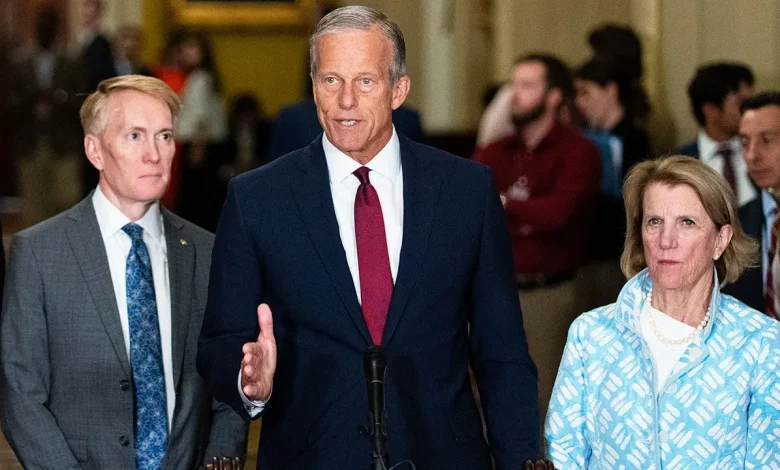
ICE funding passes the United States Senate in a major legislative milestone for President Donald Trump’s administrative agenda, signaling a monumental expansion in immigration enforcement resources and executive border operations. Following a grueling 18-hour marathon voting session known on Capitol Hill as a “vote-a-rama,” lawmakers voted 52-47 along strict party lines to approve the approximately $70 billion homeland security spending package. While the final passage marks a historic victory for Trump’s second-term deportation initiatives, the legislative journey was nearly derailed by an intense, multi-week bipartisan backlash over a controversial $1.8 billion “anti-weaponization” fund. Crucially, the final bill does not include any binding restrictions on how this fund can be utilized, passing the buck to the House of Representatives where a similarly polarized reception awaits. Concurrently, the Senate encountered a dramatic roadblock on national security surveillance, blocking a key vote to start consideration of a long-term extension of the Foreign Intelligence Surveillance Act (FISA) warrantless surveillance authority due to deep-seated frustrations over the acting leadership of the intelligence community.
The Legislative Breakthrough: Senate Approves Massive $70 Billion Package
The core of the newly passed legislation is a staggering $70 billion enforcement package directed at Immigration and Customs Enforcement (ICE) and Customs and Border Protection (CBP). This funding is designed to provide the financial runway required to execute President Trump’s second-term immigration agenda, which includes the physical and logistical expansion of detention facilities, an increased deployment of tactical border agents, and a massive scale-up of administrative courts tasked with expedited removal proceedings. For months, Senate Republicans have charged Democrats with attempting to subtly defund border operations by resisting supplemental appropriations, despite a larger Department of Homeland Security (DHS) spending package enacted last year by the Republican-led Congress.
Democratic lawmakers, however, pointed out that immigration agencies currently hold massive unspent reserves, rendering this supplementary push politically motivated rather than operationally critical. They argued that the influx of funds would be used to build mass internment camps and accelerate deportation operations without adequate civil rights oversight. The debate surrounding this legislation highlights how border policy has evolved from a matter of security into a litmus test for executive authority. These legislative battles and the accompanying shifts in political strategies reflect broader shifts in partisan postmortems, where both parties attempt to redefine their national identities in the lead-up to high-stakes congressional elections.
The $1.8 Billion “Anti-Weaponization” Fund: Catalyst for a Political Storm
While the overall package contains sweeping provisions for ICE and CBP, the true flashpoint of the debate was the inclusion of a $1.8 billion “anti-weaponization” fund (officially established at $1.776 billion). This fund has become one of the most polarizing executive maneuvers of the current administration, drawing fierce condemnation from Democrats and causing significant division among Senate Republicans who fear the legal and constitutional precedents it establishes.
Legal Origins of the Fund: The Settlement and DOJ Actions
The controversial fund was born out of a legal settlement announced by the U.S. Department of Justice under Acting Attorney General Todd Blanche. The settlement resolved a long-standing lawsuit, President Donald J. Trump v. Internal Revenue Service, which the Trump family had filed in the Southern District of Florida following the unauthorized leak of their federal tax returns. Under the terms of the settlement, Trump, Donald Trump Jr., Eric Trump, and the Trump Organization agreed to drop their pending lawsuit with prejudice, alongside administrative claims involving the FBI search of Mar-a-Lago and the federal Russia investigation. In exchange, the federal government issued a formal apology and established the “Anti-Weaponization Fund”.
Drawing its resources directly from the federal Judgment Fund—a permanent congressional appropriation typically reserved for paying court-ordered damages and settling legitimate claims against the United States—the $1.776 billion pool is intended to compensate individuals who claim they were targeted by “lawfare” or government weaponization. Critics immediately labeled this structure as a blatant circumvention of Congress’s constitutional power of the purse. This legal maneuver mirrors previous controversial actions by the executive branch, evoking memories of historical executive order disputes and unconstitutional actions where the administration attempted to redirect federal grants and funds without the explicit legislative consent of Congress.
Bipartisan Opposition and the High-Stakes Vote-a-Rama
Senate Democrats, led by Minority Leader Chuck Schumer, launched a fierce campaign to dismantle the fund, calling it a taxpayer-funded “slush fund” designed specifically to pay off and protect the President’s close political allies. The tension reached a boiling point during the marathon 18-hour vote-a-rama, where Schumer introduced a motion to permanently eliminate the fund. This procedural motion exposed sharp divisions within the Republican ranks. Three prominent moderate Senate Republicans—Susan Collins, Jon Husted, and Dan Sullivan—voted with the Democrats, bringing the chamber to a temporary standstill before the motion eventually failed in a narrow 50-49 vote.
Republican leadership attempted to pacify concerned members by citing congressional testimony from Acting Attorney General Todd Blanche, who assured lawmakers that the Department of Justice did not intend to move forward with the fund’s active payout mechanism. However, this defense was immediately undermined by President Trump himself, who publicly told reporters that he “loved” the fund and considered its establishment “so important”. This executive contradiction left Senate moderates in a difficult position, caught between their constitutional obligations to protect legislative authority and the intense political pressure to support the administration’s core immigration enforcement initiatives.
Senate Voting and Budgetary Breakdown
The legislative outcomes of this high-stakes congressional session highlight the deep-seated divisions across both domestic funding and foreign surveillance priorities. The following data table details the structural and political differences between the successfully passed ICE funding bill and the stalled FISA reauthorization measure:
| Legislative Measure | Primary Objective | Funding Allocation / Authority | Senate Voting Outcome | Core Controversy |
|---|---|---|---|---|
| ICE & Border Patrol Funding Bill | Finance second-term deportation operations and bolster CBP enforcement. | $70 Billion (including the $1.8B anti-weaponization fund) | Passed (52-47, party-line vote) | Bypassing congressional funding authority; potential political payouts. |
| FISA Reauthorization Act | Extend warrantless surveillance of foreign targets under Section 702. | Long-term surveillance authority extension | Blocked (Motion to consider defeated) | Appointment of Bill Pulte as Acting DNI; civil liberties concerns. |
As illustrated by the data, the Republican majority was capable of holding its ranks together to push through the ICE funding bill, but failed to secure the necessary consensus to advance the FISA reauthorization due to a sudden and controversial shift in intelligence community leadership.
FISA Reauthorization Collapses Amid Intelligence Community Standoff
While the administration celebrated the passage of the immigration enforcement package, it suffered a major defeat on the foreign policy and national security front. A coalition of Senate Democrats and civil liberties-minded Republicans blocked a motion to begin consideration of a long-term extension of warrantless surveillance authority under the Foreign Intelligence Surveillance Act (FISA). The block represents a massive setback for the intelligence community, which considers FISA Section 702 an essential tool for identifying global security threats and tracking foreign adversaries.
The Bill Pulte Dilemma: Mortgage Regulator to Acting Intelligence Chief
The primary catalyst for the FISA blockage was President Trump’s sudden, unexpected appointment of businessman and federal housing regulator William “Bill” Pulte as the Acting Director of National Intelligence (DNI). Pulte, the director of the Federal Housing Finance Agency (FHFA), was tapped to replace Tulsi Gabbard, the former Hawaii congresswoman who unexpectedly resigned her post as DNI last month. Pulte is a staunch political loyalist of the President, having previously spearheaded campaigns to pressure the Federal Reserve and investigate the President’s political opponents for housing and mortgage fraud.
The appointment generated immediate outrage among national security experts and Capitol Hill lawmakers because Pulte has absolutely no experience in national security, military operations, international diplomacy, or intelligence gathering. Under the 2004 law that established the Office of the Director of National Intelligence (ODNI), any individual nominated to the post is legally required to possess “extensive national security expertise”. Senate Intelligence Committee Chairman Mark Warner of Virginia denounced the selection, calling it an insult to the thousands of career intelligence professionals who work to keep the country safe.
Bipartisan Backlash and National Security Concerns over FHFA Leader
Democrats and moderate Republicans argued that giving an inexperienced political loyalist control over the nation’s most sensitive surveillance apparatus was an unacceptable risk. FISA Section 702 has long been criticized by privacy advocates for its “backdoor search loophole,” which allows intelligence agencies to query captured foreign communications for the data of American citizens without a warrant. Opponents of the reauthorization argued that under Pulte’s leadership, this powerful surveillance tool could easily be weaponized for domestic political investigations.
Although President Trump sought to ease tensions by clarifying that Pulte would not be nominated as the permanent DNI, his comments to reporters in the Oval Office only heightened anxieties. Trump defended Pulte’s intellect and explicitly noted that during his temporary tenure, Pulte might “find out some things about the rigged elections”. This comment reinforced fears that the administration intends to use the intelligence community to advance domestic political grievances, leading senators to block the FISA bill until a qualified, permanent director is put forward. This administrative instability threatens to create a serious strain on federal defense and security assets, leaving critical intelligence programs vulnerable to legislative expiration.
Strategic Implications for the Trump Administration’s Midterm Outlook
The legislative events of this week carry profound strategic implications for both parties as they navigate a highly polarized political environment ahead of the midterm elections. For the Trump administration, the successful passage of the ICE funding bill represents a powerful campaign talking point, proving to its core base that the President is delivering on his hallmark promise of strict immigration enforcement and mass deportations. By securing the $70 billion allocation, the White House has ensured that its operational capabilities remain funded through the end of the presidential term, insulated from future budgetary standoffs.
However, the political cost of this victory may prove steep. The controversy surrounding the $1.8 billion anti-weaponization fund has alienated moderate Republicans and provided Democrats with a potent talking point regarding executive overreach and the misuse of taxpayer dollars. In swing states and highly competitive districts, moderate Republicans who voted to preserve the fund could face intense criticism for supporting what critics describe as an unconstitutional executive payout mechanism. Furthermore, the administration’s willingness to block its own surveillance priorities by insisting on a highly controversial acting DNI highlights a growing preference for political loyalty over institutional stability.
What Lies Ahead: The Battle Moves to the House of Representatives
With the Senate concluding its marathon session, the legislative focus now shifts to the House of Representatives. House Republican leaders have indicated they plan to take up the ICE funding package next week, but they face a narrow, fractious majority. House Democrats are already organizing a cohesive strategy to target the anti-weaponization fund, aiming to introduce amendments that would legally forbid any Department of Justice agency from utilizing federal funds or the Judgment Fund for non-court-ordered political settlements.
The battle over FISA reauthorization also remains unresolved. As the expiration date for the surveillance authority looms closer, the pressure on both Congress and the White House to reach a compromise on intelligence leadership will continue to build. Whether the administration will nominate a consensus candidate with established national security credentials or continue to push the boundaries of executive appointments remains to be seen. What is certain, however, is that the balance of power between the executive branch, the legislature, and the intelligence agencies will continue to be fiercely contested in the weeks and months to come.