Nuclear weapons tests in Marshall Islands Left Severe Human Cost, UN Finds 2026
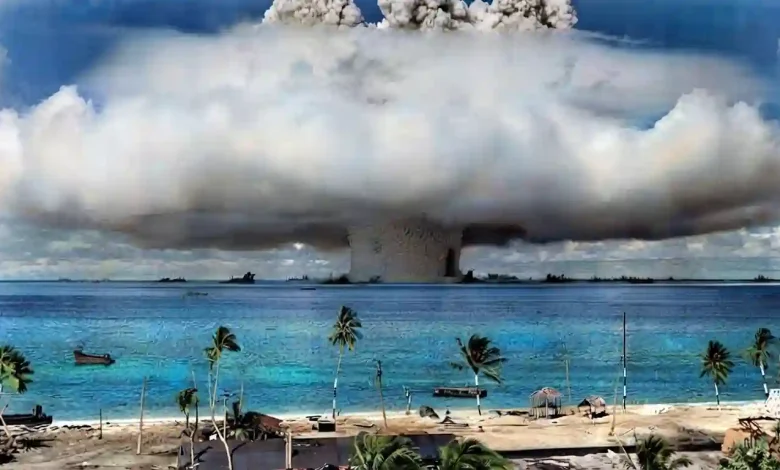
Table of Contents
Nuclear weapons tests conducted by the United States in the Marshall Islands between 1946 and 1958 have inflicted a severe and lasting toll on indigenous populations, leaving unresolved humanitarian wounds and environmental contamination that continue to plague island communities today. A comprehensive assessment published by the United Nations Human Rights Office underlines that six decades after the cessation of atmospheric atomic trials in the central Pacific Ocean, the affected islanders have yet to receive a just settlement or equitable compensation for their profound physical, social, and territorial injuries. As legal representatives and human rights monitors call for international accountability, the diplomatic missions representing the United States have withheld immediate public comment on the scathing review.
UN Human Rights Findings on Pacific Detonations
The United Nations High Commissioner for Human Rights issued an extensive, forensic examination dissecting the long-term aftermath of the 67 atmospheric and underwater atomic trials conducted within the territorial bounds of the Marshall Islands. According to the document, the Pacific Proving Grounds were subjected to nuclear yields equivalent to several thousand Hiroshima-sized explosions over a twelve-year window, irrevocably transforming coral atolls into testing zones. The findings reiterate that the human cost across generations has proven devastating, noting that indigenous populations were routinely treated as peripheral to imperial geopolitical ambitions.
The report details structural deficits in the historical administrative oversight by the United States under its former United Nations Trusteeship mandate. Under that trusteeship, Washington was formally charged with protecting the well-being and land rights of the Marshallese people. Instead, the administering power subjected localized communities to devastating yields of atmospheric fallout. The human rights office observed that international legal bodies, including the mechanisms evaluating justice systems worldwide, recognize persistent human rights violations that arise when administering entities fail to mitigate hazards created under sovereign supervision.
Castle Bravo and the Legacy of Bikini Atoll
Among the sequence of 67 detonations, the March 1, 1954, Castle Bravo thermonuclear test detonated at Bikini Atoll stands as the single largest nuclear explosion ever initiated by the United States government. Yielding 15 megatons—approximately 1,000 times the destructive yield of the atomic device dropped on Hiroshima—the dry-fuel lithium deuteride thermonuclear device far exceeded the initial design estimates of military engineers. The resulting detonation obliterated three entire islands, excavated an artificial crater a mile wide and two hundred feet deep into the coral reef, and projected a colossal radioactive cloud across hundreds of nautical square miles.
Winds diverted radioactive particles far outside the officially designated exclusion zone, showering down fine, snow-like white calcified debris upon unsuspecting civilians living on nearby atolls, including Rongelap, Utirik, and Ailinginae. Residents consumed contaminated drinking water, breathed fallout dust, and absorbed elevated levels of ionizing radiation prior to delayed evacuations. Archival records confirm that military strategists possessed meteorological forewarnings indicating wind trajectories blowing toward inhabited neighboring islands, yet detonated the test regardless, sparking decades of controversy regarding strategic military negligence.
Radiological Fallout and Intergenerational Health Trauma
The health consequences for those subjected to the nuclear fallout have been cataloged across multiple generations. Immediate acute radiation sickness—characterized by severe nausea, hair loss, skin burns, and suppressed bone marrow activity—gave way over ensuing decades to rampant spikes in malignant neoplasms, chronic endocrine disorders, and reproductive complications. Epidemiological data indicates disproportionate occurrences of thyroid cancers, congenital anomalies, miscarriages, and elevated overall neoplastic morbidity among exposed individuals and their direct descendants.
Compounding this traumatic bodily affliction was Project 4.1, a covert medical research study established by the US Department of Defense to monitor radiation effects upon contaminated human subjects. Medical teams gathered extensive radiobiological samples from afflicted Marshallese islanders without securing informed, voluntary consent. Survivors recounted being subjected to invasive bone marrow extractions and blood draws while receiving minimal therapeutic clinical interventions, cementing persistent distrust toward institutional medical authorities.
Forced Relocation, Dispossession, and Environmental Loss
Beyond bodily pathology, the nuclear program engineered systemic cultural, nutritional, and economic dislocation. Entire communities from Bikini and Enewetak were forcibly uprooted and transported to ecologically fragile, unfamiliar atolls with insufficient agricultural productivity, leading directly to periods of acute starvation, malnutrition, and dependency on processed imported foodstuffs. The profound severance from ancestral lands deeply scarred the fabric of a maritime society where identity, clan governance, and spiritual systems are inextricably anchored to inherited soil and ocean reefs.
Centuries-old fishing grounds, coconut plantations, and breadfruit groves were eradicated or rendered persistently toxic. Even today, long-lived radioactive isotopes such as Cesium-137 persist in the local soil profile, being absorbed into root structures and concentrating in staple subsistence foods like coconuts and papayas. The disruption precipitated severe socioeconomic dependency, creating lingering vulnerabilities echoed in broader analyses of structural market dislocations when traditional life-sustaining infrastructure is permanently dissolved.
Data Breakdown: US Detonations in the Pacific Proving Grounds
To contextualize the scope of atomic operations conducted across the Marshall Islands, the following table summarizes the overarching operational campaigns, their primary atoll locations, recorded explosive yields, and enduring legacy impacts on local populations.
| Operation Series | Key Location | Year | Total Tests | Cumulative Yield & Significance |
|---|---|---|---|---|
| Operation Crossroads | Bikini Atoll | 1946 | 2 | Able and Baker detonations (46 kt combined); initial displacement of Bikini islanders. |
| Operation Sandstone | Enewetak Atoll | 1948 | 3 | Proof-testing improved core designs (104 kt combined); complete relocation of Enewetak residents. |
| Operation Greenhouse | Enewetak Atoll | 1951 | 4 | Early thermonuclear fusion experiments (398 kt combined); extensive radiological ground scarring. |
| Operation Ivy | Enewetak Atoll | 1952 | 2 | Included “Mike” test (10.4 Mt); completely eradicated Elugelab Island from the Pacific map. |
| Operation Castle | Bikini & Enewetak | 1954 | 6 | Included Castle Bravo (15 Mt); worst catastrophic fallout disaster in US atmospheric testing history. |
| Operation Redwing | Bikini & Enewetak | 1956 | 17 | High-yield thermonuclear clean-up tests (20.8 Mt combined); further saturated regional atmosphere. |
| Operation Hardtack I | Bikini, Enewetak, Johnston | 1958 | 35 | Final massive atmospheric series (35.6 Mt combined) prior to global testing moratorium. |
The Flawed Compensation Mechanism and Unmet Claims
In 1986, the United States and the Republic of the Marshall Islands entered into the Compact of Free Association (COFA), establishing a $150 million nuclear trust fund intended as a full and final settlement for all past and future radiological damages. A dedicated Nuclear Claims Tribunal was subsequently established to independently adjudicate property loss and personal medical damage claims presented by Marshallese citizens. However, the tribunal rapidly depleted its appropriated finances due to the sheer volume and severity of legitimate medical afflictions presented by claimants.
By the time the tribunal was compelled to conclude its formal adjudications due to lack of solvency, it had recognized and awarded over $2.3 billion in personal injury and land damage compensation. Over $1 billion in awarded property cleanup determinations and hundreds of millions in personal medical claims remain entirely unpaid by the US government. The US judicial system has repeatedly dismissed petitions from Marshallese plaintiffs seeking the enforcement of tribunal awards, holding that sovereign immunity and compact treaty provisions bar American courts from mandating congressional appropriations, a situation that parallels complex disputes over statutory federal obligations.
Accountability Under Modern International Human Rights Law
The contemporary posture of the United Nations Human Rights Office signals a pivotal shift in framing the Marshall Islands situation from an archaic bilateral treaty squabble to an ongoing, justiciable violation of fundamental international norms. The UN report highlights that environmental rights, access to self-determination, and the freedom from severe bodily hazard constitute continuous obligations that cannot be extinguished through inadequate, antiquated fiscal settlements negotiated under stark power imbalances.
Furthermore, climate change has dramatically accelerated the ecological peril facing the archipelago. Rising sea levels now directly threaten the structural integrity of the Runit Dome—a concrete containment structure constructed by the US military on Enewetak Atoll during the late 1970s to encase over 3.1 million cubic feet of radioactive debris and irradiated plutonium soil. Scientific assessments indicate seawater infiltration is weakening the unlined crater floor, threatening to release radioactive contaminants into the open Pacific. The intersection of colonial pollution, oceanic warming, and neglected international oversight mirrors statutory challenges observed in modern environmental management frameworks and oceanic monitoring paradigms like those applied in remote scientific exploration.
Pacific leaders have leveraged these alarming realities at global summits, emphasizing that state actions causing transboundary degradation cannot be buried under historical statutes of limitations. As international security dialogues contend with shifting global alliances and the immense financial expenditures outlined in debates surrounding modern geopolitical conflict costs, the unresolved debt owed to the people of the Marshall Islands remains an open blot on the multilateral system.
Washington’s Response and the Path Forward
Neither the US Mission to the United Nations in Geneva nor the US Department of State provided immediate comment following the formal release of the UN report. In previous bilateral exchanges, American officials have maintained that the initial COFA compact provided an agreed-upon legal resolution to testing liabilities, pointing to ongoing programmatic investments in regional healthcare infrastructure and limited environmental monitoring as evidence of continued good-faith engagement.
However, bipartisan pressure within the US Congress and increasing solidarity from Pacific Island Forum nations continue to erode the sustainability of that historical position. Lawmakers have introduced proposals aimed at providing healthcare coverage for Marshallese living within the continental United States and mandating Department of Energy remediation studies for Runit Dome. As the United States seeks to project moral authority in the Indo-Pacific while enforcing stringent national security statutes, the growing international consensus demands that historical negligence in the Marshall Islands be addressed with full, uncompromised restitution.