Galleri Blood Test Wins FDA Staff Backing as Grail Stock Surges 2026
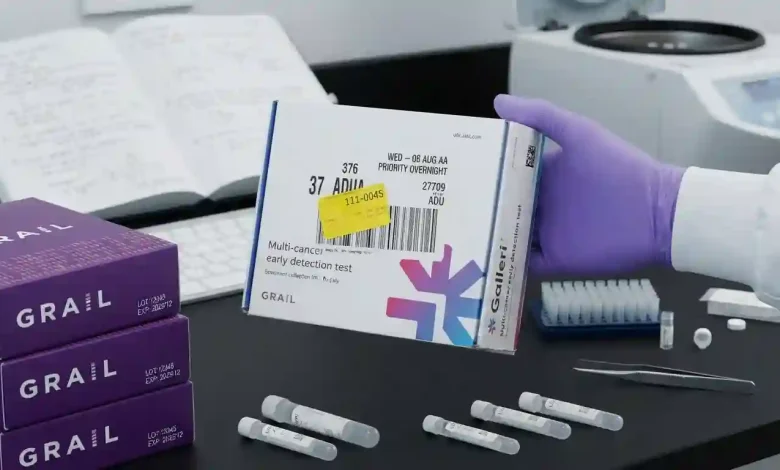
Table of Contents
Galleri blood test evaluation documents published by staff reviewers at the United States Food and Drug Administration (FDA) signaled notable regulatory clarity for Grail Inc., confirming that the groundbreaking multi-cancer early detection (MCED) platform demonstrated acceptable safety characteristics and reliable analytical performance without revealing major unforeseen clinical hazards. The staff assessment immediately revitalized market sentiment around the diagnostics firm, triggering a violent 35% surge in Grail’s share price as institutional investors recalibrated the probability of premarket approval (PMA). The positive regulatory notes precede a high-stakes public assembly of independent oncologists, biostatisticians, and diagnostic specialists tasked with scrutinizing whether a single blood draw capable of screening for more than 50 distinct cancer types is truly mature enough to enter standard preventive medicine.
Galleri Blood Test: FDA Staff Reviewers Offer Favorable Safety Assessment
In briefing materials prepared ahead of the Medical Devices Advisory Committee meeting, FDA reviewers methodically dissected the analytical accuracy, potential harms, and diagnostic reproducibility of the multi-cancer assay. Crucially, the staff reviewers did not flag major deficiencies in the physical testing architecture or the targeted methylation sequencing methodologies that form the backbone of the screen. Instead, the review recognized that the technology successfully isolates circulating cell-free DNA (cfDNA) fragments shed by malignant tumors into peripheral circulation, matching proprietary methylation signatures against extensive genomic libraries to signal both the presence of neoplasia and its tissue of origin.
While federal reviewers acknowledged that liquid biopsies inevitably present complex clinical follow-up pathways when blood results do not immediately align with physical imaging, they stopped short of designating these follow-up procedures as undue physical risks. The staff highlighted that the direct physical risks of the blood draw itself remain negligible, focusing their analytical scrutiny on secondary diagnostic pathways. Such nuanced regulatory treatment provides a vital tailwind for the biotechnology sector, which has recently experienced heightened scrutiny across several healthcare verticals, ranging from cagrisema weight loss formulations to novel oncological gene targets.
Wall Street Reaction: Grail Shares Skyrocket 35% on Early Detection Optimism
The financial markets reacted with immediate euphoria to the absence of severe regulatory criticism. Grail’s stock (ticker: GRAL) spiked 35% in heavy trading volume within hours of the briefing document release, marking the company’s most dramatic single-day appreciation since its spin-off from sequencing heavyweight Illumina. Analysts noted that short sellers were forced into immediate covering positions as the narrative shifted from regulatory skepticism to plausible approval timelines.
Equity analysts across major brokerages upgraded the diagnostic developer, emphasizing that securing premarket approval would unlock critical institutional avenues, including formal guidelines from the United States Preventive Services Task Force (USPSTF) and eventual reimbursement coverage through the Centers for Medicare & Medicaid Services (CMS). The dramatic run-up mirrors similar liquidity inflows seen when biotech ipos surge during unexpected periods of federal backing, reaffirming that biotechnology valuations remain intimately bound to FDA administrative guidance.
The Science of Multi-Cancer Early Detection: Methylation Signatures Decoded
Galleri does not identify cancer by searching for localized cell tissue or traditional protein tumor markers like prostate-specific antigen (PSA) or cancer antigen 125 (CA-125). Instead, the assay leverages next-generation bisulfite-free sequencing combined with machine-learning algorithms to detect abnormal DNA methylation patterns. Methylation represents an epigenetic modification that dictates whether genes are turned on or off. Because malignant transformations drive pervasive alterations across the methylome long before clinical symptoms emerge, these abnormal cfDNA patterns circulate as biological breadcrumbs.
When cell-free fragments from apoptotic or necrotic cancer cells leak into the bloodstream, Grail’s algorithm interrogates thousands of specific methylation sites across the human genome. Beyond generating a binary “Cancer Signal Detected” or “No Signal Detected” readout, the system outputs a Cancer Signal Origin (CSO) prediction with high accuracy. This localization component proves essential: identifying a cancer signal without indicating where the tumor resides would leave clinicians unable to choose between colonoscopy, computed tomography (CT), magnetic resonance imaging (MRI), or endoscopy. This technological leap parallels advances in deep learning applied across high-performance biological pipelines, similar to algorithmic breakthroughs explored in ai safety notification frameworks that govern complex neural networks.
Clinical Validation: Navigating PATHFINDER Data and Real-World Evidence
The foundation of Grail’s regulatory dossier rests upon extensive clinical datasets, including the prospective PATHFINDER study, the subsequent PATHFINDER 2 protocol, and the foundational Circulating Cell-free Genome Atlas (CCGA) investigation. In clinical evaluations encompassing tens of thousands of participants aged 50 and older—or individuals with elevated baseline risk—the Galleri test consistently demonstrated a specificity greater than 99%, an essential parameter designed to avoid overwhelming primary care systems with massive numbers of false alarms.
However, sensitivity rates vary widely depending on disease stage and tumor biology. Galleri exhibits exceptional sensitivity (often exceeding 80% to 90%) in Stage III and Stage IV malignancies, where circulating tumor burden is heavy. Conversely, for localized Stage I cancers, overall sensitivity hovers around 20% to 30%, depending on the histological origin. This discrepancy forms the intellectual core of the regulatory debate. Clinicians argue that even modest early detection rates for notoriously lethal cancers lacking routine screening paradigms—such as pancreatic, ovarian, and esophageal malignancies—could save thousands of lives annually, provided that primary healthcare networks establish clear follow-up protocols.
The Upcoming Advisory Committee Meeting: Key Regulatory Hurdles
When the FDA’s Molecular and Clinical Genetics Panel of the Medical Devices Advisory Committee convenes, the advisory members will vote on three standard questions: whether there is reasonable assurance of the device’s safety, whether there is reasonable assurance of its efficacy, and whether the clinical benefits outweigh the attendant risks. Although the FDA is not legally bound to follow the committee’s recommendations, it historically aligns its regulatory verdicts with panel consensus.
Committee members are expected to interrogate Grail’s executive and scientific leadership on how primary care physicians will handle ambiguous outcomes. A primary concern involves patients who receive a positive signal with an unconfirmed imaging workup—a clinical scenario often dubbed a “diagnostic odyssey.” If an individual is told their blood exhibits a signal for stomach or pancreatic cancer, but an ultrasound and MRI yield no visible lesions, how aggressively should clinicians pursue invasive biopsies or repeat scans? In an era where macroeconomic pressures weigh heavily on healthcare spending and us stock futures climb amid broader healthcare structural reforms, managing systemic healthcare utilization remains a core priority.
Comparative Analysis: Galleri vs Traditional Oncology Screening
To contextualize the transformative nature of multi-cancer early detection, the following table details how the Galleri liquid biopsy compares to standard-of-care screening modalities currently recommended across the medical ecosystem.
| Screening Modality | Target Malignancies | Primary Methodology | Clinical Sensitivity Range | False-Positive Profile |
|---|---|---|---|---|
| Galleri MCED Test | 50+ Types (Pancreatic, Ovarian, Esophageal, etc.) | Targeted cfDNA Methylation & Machine Learning | ~20-30% (Stage I) to 80-95% (Stage IV) | Ultra-Low (~0.5% False-Positive Rate) |
| Low-Dose CT (LDCT) | Lung Cancer | Cross-Sectional Radiographic Imaging | ~85-90% in high-risk smokers | High (Frequent benign pulmonary nodules) |
| Screening Colonoscopy | Colorectal Adenomas & Carcinoma | Endoscopic Visualization & Polypectomy | ~90-95% for invasive cancer | Low (Direct biopsy verification) |
| Digital Mammography | Breast Carcinoma | Low-Energy X-Ray Breast Imaging | ~75-85% (Lower in dense tissue) | Moderate (Requires follow-up biopsies) |
| Serum PSA Test | Prostate Carcinoma | Single Protein Immunoassay | ~70-80% | Very High (Elevated by BPH & prostatitis) |
Diagnostic Odysseys and False Positives: The Clinical Counterarguments
Despite the lack of major regulatory alarm from FDA staff reviewers, academic skepticism persists among prominent epidemiologists. Independent researchers point out that liquid biopsies risk causing severe psychological trauma to healthy adults who receive positive signals that traditional diagnostic workups cannot localize. When extensive cross-sectional scanning fails to detect a tumor, patients may live under prolonged psychological distress, undergoing repetitive, unindicated radiation exposure from whole-body scans.
Furthermore, medical ethicists warn of overdiagnosis—the biological identification of slow-growing, indolent micro-tumors that might never have progressed to cause clinical symptoms or mortality during the patient’s natural lifespan. These debates mirror regulatory friction points documented in other medical segments, such as ongoing litigation and administrative rulings over gender affirming care and drug classifications, where federal agencies must carefully weigh immediate clinical utility against long-term societal outcomes.
Commercial Potential and the Rocky Road to Medicare Coverage
Under its current operational paradigm, Grail sells Galleri as a Laboratory Developed Test (LDT), priced at approximately $949. Because the test has largely operated without full FDA premarket approval, the vast majority of commercial private insurers and state Medicaid programs do not routinely reimburse it, forcing consumers to pay out of pocket or access it through progressive self-insured employer health plans. Achieving a formal PMA from the FDA represents the indispensable prerequisite for unlocking broad public payer adoption.
Legislation such as the Medicare Multi-Cancer Early Detection Screening Coverage Act has repeatedly gathered bipartisan support in Congress, aiming to provide CMS with explicit statutory authority to create coverage determinations for MCED tests once approved by the FDA. Securing this reimbursement pathway would transform multi-cancer screening from an exclusive concierge elective into an accessible cornerstone of preventive clinical medicine. This intersection of regulatory authority, federal expenditure, and legislative mandate reflects the complex dynamics often seen when donald trump invokes emergency authorities or federal policy levers to alter public health structures.
The Broader Liquid Biopsy Revolution in Oncology Diagnostics
The favorable FDA staff documents on Galleri do not merely validate a single commercial corporate entity; they signal a profound transformation across the entire liquid biopsy and precision oncology sector. Competitors such as Exact Sciences, Guardant Health, and Freenome are heavily investing in multi-omic liquid assays combining genomic mutations, fragmentomics, protein biomarkers, and epigenetic methylation to capture cancer at its earliest biochemical onset. The maturation of these platforms promises to redefine the trajectory of public health by treating malignant disease before regional invasion occurs.
Advanced biotechnology infrastructure increasingly relies on high-speed computational clusters and distributed data networks to process complex genetic sequence reads, highlighting the technological convergence between life sciences and digital infrastructure—a trend mirrored in enterprise investments like the massive meta data center alberta designed to power advanced analytical workloads. As automated robotics, represented by developments like the chinese humanoid engineering race, streamline laboratory operations, the cost of processing complex multi-omic sequences will decline sharply.
Ultimately, the upcoming advisory committee hearing stands as a pivotal milestone for Grail, the FDA, and millions of patients worldwide. Should independent panel members mirror the favorable conclusions laid out by FDA staff reviewers, the Galleri assay could soon establish itself as a vital weapon in the fight against human malignancies, forever changing how society approaches the detection and eradication of cancer.