Childhood Vaccine: 5 CRITICAL Facts Parents Need to Know

Table of Contents
Childhood vaccine recommendations under historical shift
Childhood vaccine recommendations have historically served as the definitive baseline for preventive pediatric healthcare in the United States, providing a standardized clinical shield against highly infectious, debilitating, and potentially fatal diseases. However, the federal public health landscape underwent unprecedented disruption starting in mid-2025, triggering a profound rift between the executive branch and America’s leading medical societies. As the Trump administration dismantled established vaccine guidelines, professional organizations like the American Academy of Pediatrics (AAP) and the American College of Obstetricians and Gynecologists (ACOG) found themselves in the unaccustomed role of issuing independent guidelines to counter federal directives. This ideological and clinical standoff has redefined the relationship between state authority, federal advisory boards, and private medical networks.
The core of the dispute lies in the administration’s rapid policy shifts, which bypass the traditional scientific consensus-building process. Rather than relying on the long-established coordination between independent medical experts and federal public health agencies, recent actions have driven a wedge into childhood clinical pathways. For pediatricians and family practitioners, this has created a complex operational environment where federal guidelines diverge significantly from professional medical standards. In navigating these turbulent shifts, understanding how the national medical consensus has decoupled from executive policy is critical to safeguarding pediatric and maternal health.
The Chronology of Federal Rollbacks
The timeline of this legislative and administrative transformation is marked by rapid, centralized interventions. In May 2025, Health and Human Services (HHS) Secretary Robert F. Kennedy Jr. initiated a major shift by removing universal COVID-19 vaccine recommendations for healthy children and pregnant individuals. This move circumvented the rigorous, peer-reviewed evaluation traditionally conducted by the CDC’s Advisory Committee on Immunization Practices (ACIP). This administrative action was quickly followed by a total restructuring of ACIP in June 2025, in which all 17 original committee members were replaced by political appointees, many of whom held critical stances on widespread immunizations.
By December 2025, the newly constituted advisory panel took the step of removing the universal birth-dose recommendation for the hepatitis B vaccine—a standard credited with a 99% decrease in pediatric infections since its introduction in 1991. The disruption culminated in January 2026, when the CDC issued a sweeping directive reducing the universally recommended childhood vaccine schedule from protecting against 17 diseases to only 11. Under this federal memo, universal recommendations for vaccines protecting against influenza (flu), meningococcal disease, COVID-19, and hepatitis A and B were entirely eliminated, shifting them instead to a category of shared clinical decision-making or high-risk recommendation. This fundamental rewrite of government policy on child healthcare sent shockwaves through the medical community.
Medical Organizations Step Into the Void
In response to this rapid federal retreat, the nation’s premier medical organizations took direct, unprecedented action to prevent a vacuum in evidence-based guidelines. The AAP and ACOG refused to endorse the downsized federal schedule, choosing instead to issue their own clinical recommendations. In January 2026, the AAP formally declared that it would no longer support the CDC’s modified immunization list, releasing a standalone 2026 childhood and adolescent schedule that maintained universal protection against all 18 standard infectious diseases. This independent stance was designed to reassure both families and healthcare providers that pediatric medicine remained committed to science-based public safety.
Similarly, ACOG took the historic step of releasing its own maternal immunization schedule, breaking away from federal guidelines for the first time in its history. This move followed ACOG’s formal withdrawal from the CDC advisory committee in early 2026, which was prompted by political interference in the federal vaccine evaluation process. The maternal schedule issued by ACOG emphasized that routine immunizations—including the inactivated influenza vaccine, maternal RSV, Tdap, and updated COVID-19 vaccines—remain crucial during pregnancy to shield both mother and infant. The AAP, the American Academy of Family Physicians (AAFP), and over a dozen other major health organizations quickly endorsed ACOG’s clinical framework. These medical societies underscored that their decisions were not driven by political ideology but rather by decades of peer-reviewed scientific research.
Legal Countermeasures and Executive Actions
The escalating tension between the executive branch and professional medicine quickly moved to the federal court system. In early 2026, a coalition of leading national medical organizations, including the AAP, filed a sweeping lawsuit against HHS. On March 17, 2026, U.S. District Judge Brian Murphy issued a landmark ruling, granting temporary stays that effectively blocked all of the administration’s major vaccine policy changes, including the January 2026 memo. The court’s decision temporarily restored the childhood immunization schedule to its pre-2026 state, ensuring that federal programs and standard medical charts remained aligned with established clinical guidance while the litigation proceeded.
However, the administration sought a legal detour around the court’s intervention. On August 10, 2026, President Trump signed Executive Order 14420, titled “Delivering Gold Standard Childhood Vaccine Recommendations for Americans.” By utilizing direct presidential authority rather than routing the policy through the disputed ACIP structure, the order sought to reinstate the 11-disease limitation. Crucially, the executive order went a step further, calling for the separation of the combined measles, mumps, and rubella (MMR) vaccine into three separate injections administered at three different times. Infectious disease specialists widely criticized this directive, pointing out that split MMR components are no longer manufactured in the United States and that spacing out shots increases the window of vulnerability during which a child could contract these highly contagious diseases.
Comparative Analysis: 18-Disease vs. 11-Disease Schedules
To understand the profound divergence between the federal administration’s current directives and established clinical science, a side-by-side comparison of the core recommendations is essential. The federal government’s “Gold Standard” model relies heavily on comparisons with selected European nations to justify a reduced schedule, whereas American pediatric organizations point out that the U.S. has vastly different socioeconomic realities, healthcare access disparities, and demographic risks.
| Vaccine Target Disease | AAP / ACOG 2026 Guidelines (Universal) | Federal HHS E.O. 14420 Guidelines (Aug 2026) | Clinical Risk of Omission |
|---|---|---|---|
| Influenza (Flu) | Yes (Universal annually, 6 months+) | No (High-risk or shared decision-making) | Severe pediatric hospitalization and secondary pneumonia |
| Hepatitis B | Yes (Universal birth dose and series) | No (High-risk or shared decision-making) | Chronic liver disease, cirrhosis, and liver cancer in adulthood |
| Meningococcal Disease | Yes (Universal adolescent doses) | No (High-risk or shared decision-making) | Rapidly progressing, life-threatening bacterial meningitis |
| COVID-19 | Yes (Universal seasonal updates) | No (High-risk or shared decision-making) | Long COVID, pediatric inflammatory syndromes, transmission risk |
| Hepatitis A | Yes (Universal childhood series) | No (High-risk or shared decision-making) | Acute liver inflammation and localized outbreaks |
| Rotavirus | Yes (Universal infant oral series) | No (High-risk or shared decision-making) | Severe dehydrating diarrheal disease in infants |
The transition of these key immunizations from a “universal recommendation” to a “shared clinical decision-making” model has far-reaching operational effects. When a vaccine is removed from universal status, state Medicaid programs and commercial health insurance companies are no longer federally mandated to cover the administration cost without copays, placing an immediate financial burden on lower-income families.
Public Health Risks and Outbreak Concerns
The primary concern among infectious disease physicians is the imminent threat of localized outbreaks of vaccine-preventable diseases. When immunization rates drop below critical herd immunity thresholds, communities become highly vulnerable to transmission. For example, in mid-2026, Texas experienced its first pediatric measles death in a decade, involving an unvaccinated school-aged child with no pre-existing conditions. Public health officials warned that dismantling established immunization schedules inevitably leads to such avoidable tragedies.
With pediatric clinics facing escalating healthcare costs and parents navigating a maze of conflicting medical advice, professional groups launched a major collaborative effort. On September 2, 2026, a coalition including the AMA, AAP, ACOG, and AAFP unveiled a joint campaign at SpreadTheFacts.org. This initiative seeks to bypass federal confusion by offering direct, science-backed vaccine recommendations to the public. Medical professionals emphasize that clinical guidelines should never be influenced by shifting political campaigns, and that keeping children healthy requires strict adherence to peer-reviewed data.
The Battle Over Insurance and State Autonomy
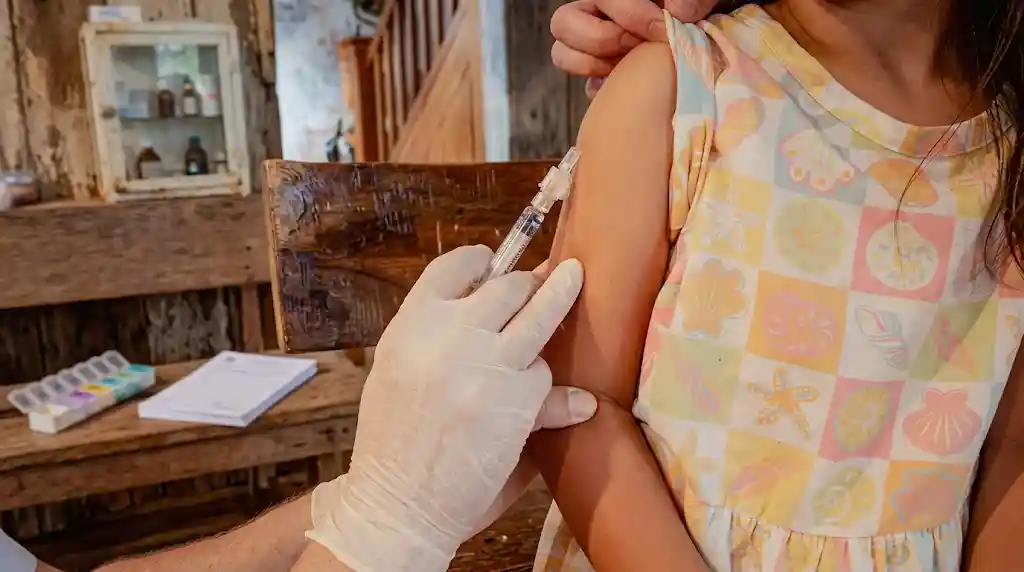
As the federal government continues to scale back its immunization frameworks, individual states are taking independent steps to protect public health access. In early 2026, Maryland Governor Wes Moore introduced the Vax Act of 2026. This legislation allows the state to establish immunization and screening guidelines independent of federal updates, explicitly relying on AAP and ACOG standards to dictate state healthcare requirements and insurance mandates. Similar legislative discussions are emerging across other states as local authorities try to insulate their communities from federal policy volatility.
Furthermore, maintaining these state-level protections requires rigorous oversight. Just as innovative biotech systems face strict FDA oversight and safety standards, vaccine formulations undergo exhaustive trials before achieving medical consensus. The administrative effort to split the MMR vaccine or reduce doses is seen by clinical experts as a rejection of these proven protocols. The clinical community remains steadfast in its defense of established healthcare frameworks, arguing that dismantling these systems threatens both pediatric wellness and the broader healthcare economy.
The broader implications of these policy disputes also intersect with the nation’s political and financial stability. Just as debates during political campaigns reflect divergent views on governance, the healthcare system must find ways to balance fiscal responsibility with community well-being. Changes to immunization rates can have a ripple effect across the national economic landscape, impacting workplace productivity and hospital resource allocation. For clinical practices to thrive under these pressures, implementing sound operational strategies is critical to managing vaccine supply chains and billing procedures. Organizations are increasingly turning to advanced enterprise solutions to streamline patient scheduling, verify insurance coverage rules, and track complex state-specific vaccine requirements.
A Unified Medical Front
The unprecedented divide between the executive branch and America’s medical establishment has highlighted the critical role of independent scientific consensus. By stepping forward to maintain rigorous, science-based childhood vaccine recommendations, organizations like the AAP and ACOG have established a reliable buffer against political shifts. While federal directives continue to evolve, the medical community’s unified front ensures that pediatricians can continue providing evidence-based care. Protecting the health of the nation’s children requires keeping public health decisions firmly in the hands of clinical experts and grounded in verified science.





One Comment