Wildwood Movie: Laika Crafts Its Most Ambitious Stop-Motion Epic 2026
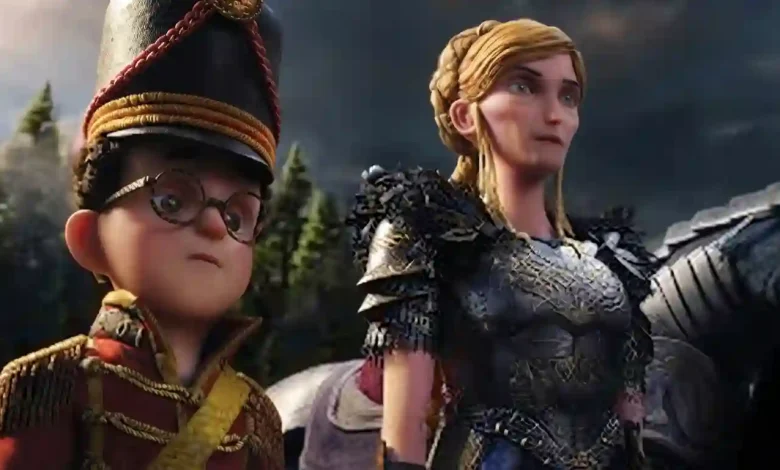
Table of Contents
Wildwood represents the monumental apex of artisanal filmmaking, emerging from an ordinary exploration of the Pacific Northwest into the most complex undertaking ever mounted by Oregon-based animation house Laika Studios. What originally unfolded as a serene stroll through Forest Park on the rugged edges of Portland has transformed into an expansive cinematic odyssey. The animated feature adapts singer-songwriter Colin Meloy’s 2011 bestselling middle-grade fantasy novel, illustrated by his partner Carson Ellis. Across years of painstaking handcraft, proprietary 3D-printing technologies, and daring cinematographic scales, the stop-motion production captures an ethereal urban fairytale while redefining the visual boundaries of physical frame-by-frame animation.
Wildwood Origins in Portland’s Wilderness
The genesis of this fantastical undertaking began not inside a sterile production office, but within the moss-draped canopies and mist-laden groves of Portland’s expansive urban forest. Meloy, widely recognized as the poetic frontman of the indie rock band The Decemberists, often wandered the periphery of the city, captivated by the sudden transition between metropolitan infrastructure and primal woodland. In these secluded environments, local lore and boundless imagination intertwined to give life to the concept of the Impassable Wilderness—an enchanted, forbidden realm nestled alongside modern civil life.
As visual storytellers dissect the transition from page to screen, industry observers often compare the meticulous artisanal discipline seen here to shifts across other media sectors, such as how Giorgio Armani evolution influenced modern industrial and textural aesthetics. For Meloy, the initial inspiration was deceptively simple: what if the dense evergreen canopy that borders ordinary neighborhood streets hid an autonomous, forgotten sovereignty populated by mystical critters, warring bandit factions, and ancient spirits?
Colin Meloy and Carson Ellis: The Creative Spark
In literary discussions surrounding the story’s inception, Meloy has famously reiterated that the beginning was a singular germ of an idea that demanded artistic expression. Working in symbiotic harmony with illustrator Carson Ellis, Meloy sought to craft a fantasy narrative that felt deeply tethered to regional folklore rather than standard European fairy-tale tropes. Ellis provided ink-and-gouache renderings that gave tactile warmth and shadowy mystery to the woods, creating a foundational blueprint that visual directors at Laika Studios would later interpret into three-dimensional space.
The novel follows Prue McKeel, an intrepid young girl whose infant brother Mac is abducted by a murder of crows and carried deep into the forbidden woods. To rescue him, Prue and her awkward classmate Curtis must cross the boundary separating mundane Portland from the enchanted wild. This transition evokes classical literary heroes while maintaining a distinctly modern, regional flavor. Film analysts have observed that narrative risk-taking in animation shares psychological underpinnings with thematic reinventions across entertainment, comparable to how creators dissect historic media moments like when Dolly Parton the story captures generational shifts in American storytelling.
Travis Knight and Laika’s Production Evolution
Directing the sprawling adaptation is Travis Knight, Laika’s President and Chief Executive Officer, whose directorial portfolio includes the acclaimed Kubo and the Two Strings and Bumblebee. Knight recognized early on that bringing Meloy’s 500-page novel to life would demand unprecedented resources from his Hillsboro studio. Previous Laika triumphs, ranging from Coraline and ParaNorman to The Boxtrolls and Missing Link, each pushed specific aspects of mechanical armatures, replacement facial animation, and scale. However, this production dwarfs its predecessors in both breadth and logistical complexity.
The sheer scale of this venture mirrors high-risk corporate and creative gambles observed in modern technology frontiers, where substantial physical investment is necessary to execute radical breakthroughs, not unlike how AI investment spending drives fundamental transformations across computational infrastructure. Knight pushed the studio’s sculptors, riggers, and animators to approach the forest landscape not as an ornamental backdrop, but as an active, breathing protagonist packed with organic environmental friction.
Technical Innovations in Puppet Engineering
Achieving fluid movement on miniature sets required massive leaps in physical puppet fabrication. Handcrafted miniature armatures had to endure thousands of manual micro-adjustments under intense studio lighting without losing structural integrity or material alignment. Thousands of unique face-plates, generated through ultra-high-definition resin 3D printers, allow characters like Prue and Curtis to display micro-expressions containing authentic emotional subtlety.
Costume design proved equally staggering. Miniature garment makers utilized micro-weaving and manual textile distressing to give tiny coats, knit sweaters, and military regalia realistic weight and drape. This attention to tactile realism resembles broader historical milestones in bespoke artistic design, paralleling moments when Chanel S/S 2027 Matthieu showcased intense dedication to material authenticity and structural elegance. In miniature puppet engineering, even the stiffness of a thread can disrupt physical performance, prompting engineers to integrate fine tungsten wires into the hems of costumes to ensure controlled motion frame after frame.
Comparative Analysis of Laika’s Feature Films
To fully contextualize why this project marks a transformative threshold for stop-motion cinema, the table below provides a detailed structural comparison across Laika’s production history, highlighting evolving technical metrics and creative scopes.
| Film Title | Year | Director | Key Technical Milestone | Production Scope |
|---|---|---|---|---|
| Coraline | 2009 | Henry Selick | First stereoscopic stop-motion feature; basic 3D face printing | Small domestic sets; 150,000 unique facial expressions |
| ParaNorman | 2012 | Sam Fell, Chris Butler | Color 3D printing for replacement face animation | Town environments; ghost lighting rig innovations |
| The Boxtrolls | 2014 | Graham Annable, Anthony Stacchi | Rapid prototyping; mechanical under-chassis rigs | Victorian streetscapes; complex crowd sequences |
| Kubo and the Two Strings | 2016 | Travis Knight | 16-foot giant skeleton puppet; origami physics | Epic mythic travelogues; massive storm environments |
| Missing Link | 2019 | Chris Butler | Over 106,000 3D-printed faces; hyper-detailed travel | Worldwide exotic settings; dynamic locomotive sets |
| Wildwood | 2026 | Travis Knight | Macro-ecosystem physics; integrated robotic motion control | Massive forest battlegrounds; hundreds of distinct puppets |
Worldbuilding the Impassable Wilderness
The core worldbuilding of the narrative separates the comfort of urban domesticity from an untamed ecological battleground. Within the story, the Impassable Wilderness is not merely an uninhabited forest; it is an organized ecosystem comprised of political enclaves, military redoubts, and mysterious magical clearings. The Central Wood is inhabited by peaceful mystics, while the outer woods are contested by brutal bandits led by the enigmatic figure Alexandra, the Dowager Governess whose past is intertwined with the founding myths of the sanctuary.
The meticulousness needed to execute multi-layered fantasy factions mirrors strategic systemic planning in complex operational fields, akin to how Meta AI concierge secret infrastructure balances divergent algorithmic streams to produce coherent results. For the miniature construction crews, building the wilderness meant gathering actual moss samples, bark textures, and botanical structures from Oregon’s real forests, then synthesizing them at scale using silicone, painted foams, and hand-cut paper leaves.
Blending Stop-Motion with Cutting-Edge VFX
While the studio’s heart remains rooted in tactile physical craftsmanship, this project boldly embraces digital technology to enhance—rather than replace—the hand-animated illusion. Complex airborne battle sequences featuring hundreds of avian creatures, flocking behaviors, and dynamic atmospheric changes required an unprecedented synthesis of in-camera stop-motion and invisible digital visual effects.
Laika’s visual effects department utilized digital extensions to seamlessly expand the physical edges of physical stages into panoramic mountain vistas and boundless arboreal horizons. This harmonious marriage between traditional artisanal craft and computational power parallels how contemporary institutions modernize without discarding historic value, similar to how fact-check information frameworks incorporate advanced algorithmic verification to uphold journalistic integrity. The digital team diligently matched the imperfect tactile frame-rate, natural lens aberrations, and raw tactile grain of the physical camera rigs to ensure every digital element preserved the unmistakable soul of handmade stop-motion.
Cultural Resonance and Cinematic Future
Beyond its technical wizardry, the adaptation stands as a heartfelt tribute to regional identity, adolescent courage, and environmental stewardship. The narrative forces young protagonists to confront political intrigue, divided loyalties, and existential dilemmas that resist easy moral categorizations. It asks difficult questions regarding conservation, cultural co-existence, and the true cost of unchecked imperial ambitions across fragile ecosystems.
As audiences look forward to its release, the project underscores that stop-motion remains an enduring, irreplaceable medium in modern global entertainment. In an era increasingly saturated by uniform digital software pipelines, the physical presence of handcrafted animation resonates with visceral authenticity. The monumental dedication exhibited by the artists in Hillsboro proves that physical art retains unique storytelling potency, capable of captivating modern cinephiles just as Oprah Winfrey announces cultural milestones that command international attention. Meloy’s early woodland musings have truly flowered into a seminal artistic monument, demonstrating that a singular creative spark can forge an enduring cinematic universe.
The enduring legacy of this production will undoubtedly influence future animators, writers, and digital engineers. It confirms that regional stories, when grounded in specific geography and authentic emotional landscapes, possess universal appeal. By investing boundless patience and uncompromising technical mastery into the forest floor, the creative team has not merely adapted a book; they have revitalized the timeless language of physical animation for generations to come.