Election fraud investigations launched in California by feds
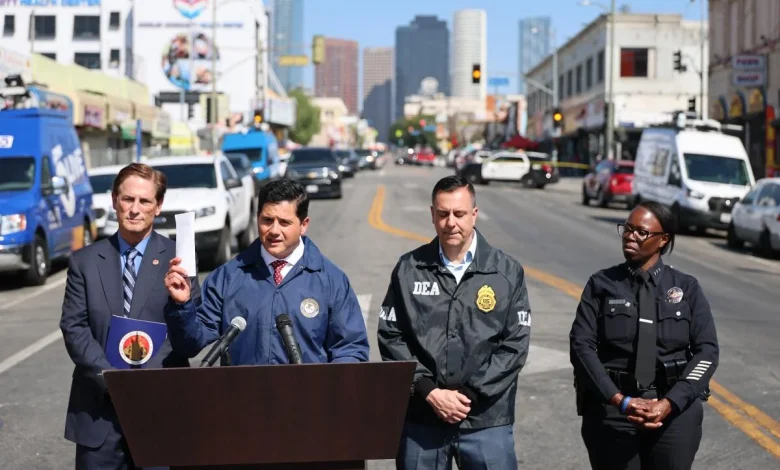
Election fraud investigations have been officially initiated by federal prosecutors in the Central District of California, working in close coordination with the Federal Bureau of Investigation (FBI). The announcement, made on Friday, June 5, 2026, by First Assistant U.S. Attorney Bill Essayli, has sent shockwaves through the state’s political landscape, coming just days after the state’s primary elections on June 2, 2026. The sudden federal intervention follows public, unsubstantiated allegations of "cheating" made by President Donald Trump regarding the tabulation of mail-in ballots. As local election workers continue the painstaking process of counting millions of legally cast ballots, the deployment of federal oversight has sparked an intense debate over election integrity, prosecutorial independence, and the weaponization of the Department of Justice.
Introduction: Federal Investigations and Primary Politics
The Central District of California, which serves a massive and diverse population of approximately 20 million residents across seven counties, has become the epicenter of a highly charged legal and political drama. The announcement on June 5, 2026, has thrown the state’s election administration into the national spotlight. Under the direction of First Assistant U.S. Attorney Bill Essayli, federal prosecutors have opened multiple inquiries into the primary elections held earlier in the week. This move, which Essayli announced publicly via the social media platform X, was coordinated with the Los Angeles field office of the FBI. However, the lack of specific details concerning the nature, scope, or targets of these investigations has led to widespread speculation and criticism. Coming directly on the heels of statements from President Donald Trump accusing state Democrats of "cheating," the timing and public nature of the federal probe have heightened fears regarding the politicization of federal law enforcement during active democratic processes.
The Announcement on X: A Top Prosecutor’s Public Declarations
The public disclosure of ongoing federal investigations represents a significant departure from traditional Department of Justice protocols, which historically emphasize discretion and confidentiality to protect the integrity of active probes and the reputations of those involved. On Friday morning, Essayli took to social media to state that "protecting the integrity of California’s elections is a top priority for my office". He went on to criticize the state’s legislative framework, declaring that "California’s election system has serious structural vulnerabilities". Specifically targeting the state’s universal vote-by-mail system and the lack of a strict photo voter identification requirement, Essayli argued that these policies "create conditions where fraud can go undetected and unpunished, eroding public confidence". While assuring the public that his office would "follow the evidence wherever it leads", the decision to broadcast these structural criticisms alongside news of active, unspecified investigations has drawn criticism from legal experts who view it as an attempt to lend federal credibility to partisan talking points.
The Context of Trump’s Allegations: Primary Night and Slow Counts
The political pressure cooker surrounding California’s June 2026 primary election began intensifying immediately after the polls closed on Tuesday night. As is characteristic of California’s election system, initial counts from in-person voting and early mail-in ballots showed strong performances for several conservative and Republican candidates, including those backed by President Trump in key gubernatorial and Los Angeles mayoral primary matchups. However, as county registrars began the days-long process of processing and counting late-arriving mail-in ballots—which are legally permitted to be counted as long as they are postmarked by Election Day and arrive within seven days—the margins began to tighten significantly. In response to these shifting numbers, President Trump took to social media on Wednesday, June 3, to allege that Democrats were actively "cheating" and trying to "steal" the election. On Friday, during an event in Wisconsin, Trump reiterated these claims without offering any evidence, describing California as a "crooked state" and claiming that "bad things are happening" to his preferred candidates.
Federal Presence at the Los Angeles Ballot Processing Center
The federal escalation shifted from social media rhetoric to physical action on Friday, June 5, when Assistant U.S. Attorney Robert Renner was dispatched to the Los Angeles County Ballot Processing Center, located in the City of Industry. The processing center, which handles the tabulation of ballots for the nation’s most populous county, became the focal point of intense media scrutiny upon the prosecutor’s arrival. Mike Sanchez, speaking on behalf of Los Angeles County Registrar-Recorder/County Clerk Dean Logan, confirmed the federal official’s visit but sought to de-escalate the narrative. Sanchez clarified that Renner was provided with an overview of the facility’s standard public observation program and completed a routine walkthrough of the operations. Under California law, the entire ballot processing and counting procedure is transparent and open to public observation by appointment, meaning the federal prosecutor’s visit, while politically symbolic, occurred within the established boundaries of standard public oversight.
Defending the Count: State and Local Officials Respond
In response to the double-barreled pressure from the White House and the local U.S. Attorney’s office, California’s election administrators have fiercely defended the integrity of their processes. California Secretary of State Shirley Weber issued a strong statement emphasizing that accuracy and voter access are the state’s highest priorities. Weber noted that taking the necessary time to carefully and correctly process millions of ballots is not a sign of failure, but rather a protection of voters’ fundamental rights. California’s system employs rigorous safeguards, including individualized barcode tracking for every mail-in ballot, signature verification conducted by trained election workers, and a secure chain of custody for all physical ballots. Election administrators argue that characterizing the natural, legal tabulation of late-arriving mail-in ballots as "cheating" is a fundamental distortion of how the law is designed to work.
Who is Bill Essayli? Political Background and Legal Controversies
To understand the dynamics of this federal intervention, one must examine the career and unique legal standing of Bill Essayli. Before assuming his current role, Bilal A. "Bill" Essayli was a prominent Republican politician, serving in the California State Assembly representing Riverside County’s 63rd District. (Read more about his political career on Wikipedia.) Appointed by President Donald Trump as the Interim U.S. Attorney for the Central District of California in April 2025, Essayli’s tenure has been marked by fierce legal battles. In October 2025, U.S. District Judge J. Michael Seabright ruled that Essayli’s continued service as acting U.S. Attorney was unlawful under the Federal Vacancies Reform Act, as he had exceeded the statutory time limits for temporary appointments without receiving Senate confirmation. Consequently, Seabright disqualified Essayli from supervising several major federal criminal cases. To bypass this restriction, Essayli was immediately reassigned as the "First Assistant" U.S. Attorney—a maneuver that legal scholars, including Loyola Law School professor Laurie Levenson, noted had little practical effect on his actual authority, allowing him to continue directing the office’s 500-person staff as a close ally of the Trump administration.
The Battle Over Voter Rolls: Harmeet Dhillon and the Ninth Circuit
In his public statements, Essayli also drew attention to an ongoing legal battle involving Assistant Attorney General Harmeet Dhillon. Dhillon, a prominent conservative attorney and political figure, has been working alongside Essayli’s office in an effort to force California to permit a comprehensive federal audit of its voter registration rolls. According to Essayli, the state of California has "stonewalled" federal attempts to verify that only eligible United States citizens are registered to vote. This conflict has culminated in a high-stakes legal case currently pending before the Ninth Circuit Court of Appeals. The state of California defends its position by citing robust privacy protections and existing statutory mechanisms designed to keep voter rolls clean without exposing sensitive citizen data to federal or external partisan entities, setting up a major constitutional clash over state sovereignty and federal election oversight.
Analyzing the Evidence: The Skid Row Voter Registration Case
While declining to provide specific details about the "multiple election fraud investigations" currently underway, Essayli pointed to a federal case filed in May 2026 as proof that election fraud is a reality in California. In that case, federal prosecutors charged a Marina del Rey woman with allegedly paying unhoused individuals living on Los Angeles’ Skid Row to register to vote. According to the indictment, the defendant offered small cash payments, cigarettes, and food in exchange for completed voter registration forms. While state and federal authorities agree that such schemes represent clear violations of election law and must be aggressively prosecuted, election security experts caution against using isolated, low-level registration fraud to justify broad, systemic claims of widespread voting manipulation. Such schemes are historically small-scale, easily detected during routine audits, and incapable of altering the outcome of major statewide elections.
Political Implications of Department of Justice Intervention
The active and public involvement of the U.S. Attorney’s office in the middle of a high-profile primary count raises profound questions about the traditional boundaries of federal prosecutorial power. The Department of Justice’s long-standing "Justice Manual" advises prosecutors to exercise extreme caution in taking public actions or launching visible investigations close to an election, particularly actions that could influence the outcome of the race or erode public confidence in the democratic process. By using social media to highlight active investigations and criticize the state’s voting laws while the votes are still being counted, the Central District of California’s leadership has drawn accusations of violating these core tenets. Legal experts warn that if the public perceives federal prosecutors as acting as political instruments to validate the unsubstantiated claims of a sitting president, the institutional credibility of the Department of Justice could suffer long-term damage, transforming routine administrative processes into battlegrounds of federal overreach.
Comparative Analysis: Allegations vs. Administrative Realities
The debate surrounding California’s vote-counting process reveals a sharp contrast between the public claims made by federal officials and the administrative frameworks implemented by state election authorities. Below is a detailed comparison of these conflicting perspectives:
| Issue / Parameter | Federal Allegations & Criticisms | State Administrative Reality & Defense |
|---|---|---|
| Counting Speed | A slow, prolonged vote count is a sign of "cheating" and manipulation to favor Democrats. | Counting takes time due to rigorous signature verification, processing of postmarked mail ballots, and ensuring voter intent. |
| Mail-In Voting | Universal vote-by-mail without strict photo ID requirements represents a "serious structural vulnerability". | Mail ballots are highly secure, backed by unique barcode tracking, signature-matching algorithms, and secure drop boxes. |
| Voter Rolls Audit | The state is "stonewalling" federal attempts to verify voter eligibility and remove non-citizens. | State laws protect voter privacy and maintain accurate rolls through routine compliance with the National Voter Registration Act. |
| Prosecutorial Presence | Deploying federal attorneys to vote centers is necessary to detect and deter active election fraud. | Visits are routine public observations. Unsubstantiated claims of fraud risk intimidating ballot-processing staff. |