Ebola outbreak response: US Warns Europe of Consequences
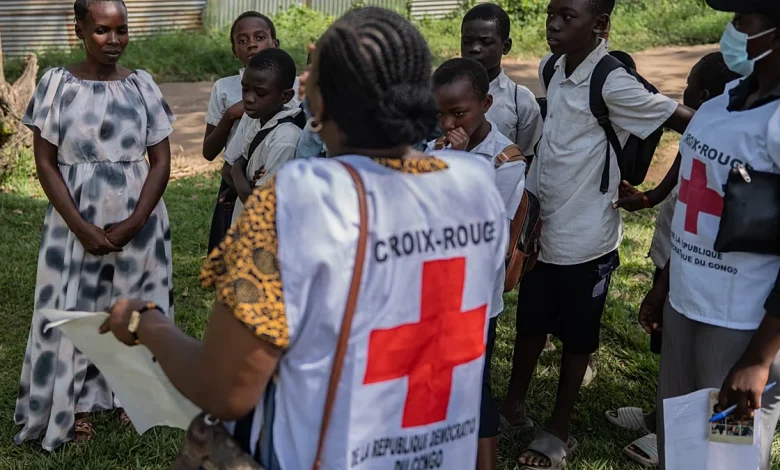
Ebola outbreak response protocols have triggered a major geopolitical confrontation as the United States issues stark warnings to its European allies over their refusal to implement stringent containment measures. As global health officials warn that the current Ebola outbreak in Central Africa is outpacing the international response, the U.S. warned European countries this week that a failure to adopt the administration’s precautions may have consequences, according to a confidential diplomatic cable issued on Monday. The State Department declined to provide further details on what actions the U.S. might take to enforce compliance or penalize non-compliance. In addition to pressuring European capitals, the U.S. is also speaking with countries in the Middle East about their measures to prevent Ebola’s spread, according to a U.S. official who spoke on the condition of anonymity. This escalating diplomatic friction highlights a deep philosophical split between Washington’s aggressive, unilateral border-control strategy and Europe’s adherence to multilateral, science-based guidelines from the World Health Organization.
Introduction: The Escalating Transatlantic Rift over Ebola Containment
The global public health arena has been thrown into disarray following the rapid escalation of the 2026 Central Africa Ebola epidemic. Officially declared in mid-May, the outbreak has quickly ballooned, claiming dozens of lives in northeastern Democratic Republic of the Congo (DRC) and neighboring Uganda. On May 17, 2026, the World Health Organization (WHO) declared the situation a Public Health Emergency of International Concern (PHEIC), recognizing the unique challenges posed by this specific epidemic. Unlike previous outbreaks of the Zaire strain, which were contained using established vaccines and treatments, the current crisis is driven by the rare Bundibugyo virus strain (BVD), for which no approved vaccine or specific therapeutic exists.
As the caseload surpasses historical thresholds, the geopolitical response has fragmented. The United States has adopted a highly defensive posture, implementing strict airport screenings and mandatory travel re-routing for anyone arriving from the affected region. In contrast, the European Union, following its long-standing commitment to multilateral cooperation and the preservation of open trade routes, has refused to institute similar border barriers. This divergence in containment philosophies has escalated from a bureaucratic disagreement into a full-scale diplomatic conflict, marked by explicit warnings from Washington to Brussels. The friction threatens to undermine international solidarity at the precise moment when cohesive cooperation is desperately needed to halt the pathogen’s spread.
The Diplomatic Cable: U.S. Demands Action from European Allies
On Monday, June 1, 2026, the U.S. Department of State dispatched a high-level diplomatic cable to several European governments, conveying deep dissatisfaction with the continent’s containment efforts. The cable, described by officials as uncharacteristically stern, warned that Europe’s failure to mirror Washington’s aggressive precautionary measures would not be tolerated without repercussions. The U.S. administration argues that in an interconnected global economy, a single weak link in airport screening or entry controls can compromise the security of the entire international community. Washington has criticized European airports for maintaining standard processing protocols for passengers arriving from East and Central Africa, claiming that such laxity invites disaster.
The administration’s frustration stems from its own extensive domestic preparations. In mid-May, the U.S. Centers for Disease Control and Prevention (CDC) and the Department of Homeland Security (DHS) instituted mandatory travel restrictions. Under these rules, all air passengers who have recently been in the DRC, Uganda, or South Sudan are automatically rerouted to one of four designated U.S. airports—John F. Kennedy International, Washington-Dulles, Atlanta Hartsfield-Jackson, or George Bush Intercontinental—for comprehensive physical screenings. The U.S. demands that European nations implement a similar centralized routing and screening system, arguing that Europe’s proximity and high volume of direct flights to Africa make it a primary vector for potential global transmission.
Unspecified Consequences: The State Department’s Silence
When pressed for details regarding the nature of the “consequences” outlined in Monday’s cable, the State Department repeatedly declined to comment. This deliberate ambiguity has fueled intense speculation within diplomatic circles in Brussels and Geneva. Public health experts and foreign policy analysts suggest that the U.S. could leverage several mechanisms to enforce compliance. One highly disruptive possibility is the suspension or modification of the Visa Waiver Program (ESTA) for citizens of European nations that refuse to adopt the U.S. guidelines. If Washington begins requiring standard visas or secondary screenings for European travelers arriving in the U.S., it would cause severe disruptions to transatlantic business and tourism.
Another potential avenue for retaliation involves the restriction of cooperative scientific and intelligence sharing. The U.S. possesses some of the world’s most advanced epidemiological modeling and public health surveillance capabilities. Threatening to restrict European access to real-time data or withholding federal research funding could severely hamper the continent’s own disease monitoring networks. By maintaining a policy of strategic silence, the State Department is keeping European governments off-balance, attempting to coerce them into compliance without having to immediately trigger economically damaging diplomatic retaliations that could harm bilateral relations.
European Union Rejection: Why Brussels Says No to Travel Restrictions
Despite the severe pressure from Washington, European Union member states have remained resolute in their refusal to implement broad travel bans. Following an extraordinary video conference of EU health ministers convened on Friday, June 5, 2026, by the Cyprus presidency of the EU Council, the bloc formally coordinated its response. European leaders argued that travel restrictions are not only economically devastating but also scientifically counterproductive. This perspective aligns with the official position of the World Health Organization, which has historically advised against international trade and travel barriers during outbreaks.
The European Centre for Disease Prevention and Control (ECDC) has officially assessed the risk of Ebola importation into the EU/EEA as “very low.” European health officials contend that sweeping border closures incentivize travelers to hide their travel histories, driving the flow of people underground and making contact tracing virtually impossible. Additionally, travel bans isolate affected nations, severely hampering the delivery of essential medical supplies, equipment, and international healthcare personnel. Instead of locking down borders, Brussels is advocating for “exit screening” at source airports in Africa, combined with localized vigilance and robust hospital preparedness within Europe, which they argue is a far more effective and humane methodology.
Internal Division: Italy’s Push for Stricter Controls
While the overall consensus within the European Union remains opposed to the U.S. demands, the crisis has exposed deep internal divisions. Italy, led by its far-right Prime Minister Giorgia Meloni, has broken ranks with the dominant Franco-German coalition. Rome has strongly advocated for tighter border controls and enhanced passenger screening, echoing many of the arguments put forward by the U.S. administration. Meloni’s government has warned that Europe’s open-border Schengen Agreement makes the entire continent vulnerable if even a single member state fails to secure its ports of entry.
This internal friction was a major topic of discussion during Friday’s emergency ministerial videoconference. While Cyprus’s Minister of Health, Neophytos Charalambides, emphasized the value of European solidarity and a unified, science-based approach, Italian delegates pushed for a mechanism that would allow individual nations to opt-out and implement unilateral border closures. The debate highlights how domestic political pressures and populist sentiments can fragment regional health policies, creating a complex patchwork of regulations that complicates both intra-European travel and global containment efforts.
The Core Challenge: The Bundibugyo Strain Epidemic in Central Africa
At the center of this diplomatic storm is a terrifying biological reality: the unique characteristics of the Bundibugyo virus strain (BVD). This is only the third time in history that the Bundibugyo strain has caused a major outbreak, following localized epidemics in Uganda in 2007 and the DRC in 2012. BVD causes severe hemorrhagic fever, with historical case fatality rates ranging between 30% and 50%. What makes this outbreak exceptionally dangerous—and different from the major West African epidemic of 2014–2016 or the DRC outbreak of 2018–2020—is the complete lack of medical countermeasures.
The highly effective Ervebo vaccine, which was deployed to protect over 300,000 people during previous epidemics, targets the Zaire strain of the Ebola virus. Laboratory models indicate that Ervebo provides absolutely no cross-protection against the Bundibugyo strain. Consequently, global health workers are fighting this outbreak with their hands tied, relying almost entirely on primitive, albeit essential, supportive care, physical isolation, and rigorous contact tracing. The difficulty is further compounded by the geopolitical instability of northeastern DRC, where active conflict involving the M23 militia and other armed groups has displaced tens of thousands of people, making it incredibly hazardous for international medical teams to establish treatment clinics or safely conduct surveillance.
The Race for a Vaccine: Funding the 100 Days Mission
Faced with the alarming reality of an unpreventable outbreak, the international scientific community has launched an emergency research campaign. The Coalition for Epidemic Preparedness Innovations (CEPI) recently announced $60 million in rapid-response funding to support three distinct vaccine developers: Moderna, the University of Oxford, and the International AIDS Vaccine Initiative (IAVI). This effort is a real-time test of the “100 Days Mission,” a global initiative designed to compress the timeline for developing safe and effective vaccines against emerging infectious threats.
The candidate vaccines rely on diverse medical platforms, including mRNA and viral vectors, to teach the human immune system to recognize key proteins of the Bundibugyo virus. However, researchers caution that even under the most optimistic scenarios, it will be several months before any of these candidates can be deployed in clinical trials on the ground in Africa. In the interim, clinical focus has shifted to prioritizing experimental therapeutics. The WHO has recommended evaluating three monoclonal antibodies—MBP134, Maftivimab, and the antiviral remdesivir—for compassionate use in confirmed cases. Until these trials yield robust data, the world remains dependent on behavioral and administrative containment, amplifying the political pressure on governments to control the movement of people.
Comparison of Current Global Containment Approaches
The table below outlines the differing containment strategies adopted by key international actors, demonstrating the profound division in global health policy during the 2026 Ebola crisis.
| Jurisdiction / Entity | Travel Restriction Level | Screening Protocols | Primary Containment Philosophy | Vaccine / Therapeutic Strategy |
|---|---|---|---|---|
| United States | High (Mandatory rerouting and entry restrictions for DRC, Uganda, and South Sudan) | Mandatory re-routing to 4 hub airports; physical checks; 21-day self-monitoring | Unilateral border defense and aggressive exclusion | Rapid deployment of federal funds; support for CEPI candidates |
| European Union | Low (Consensus rejection of sweeping travel bans) | ECDC-led aircraft tracing and localized rapid response | Multilateralism, solidarity, and open transportation networks | Funding local health systems and field trials in Central Africa |
| Taiwan | High (90-day suspension of entry visas from DRC and Uganda) | Point-of-entry health questionnaires and thermal imaging | Strict border barrier mitigation | Internal clinical vigilance |
| World Health Organization | None (Strongly advises against any travel or trade barriers) | Exit screening at source points in DRC and Uganda | Localized ring-containment and community engagement | Prioritizing candidate therapeutics and fast-tracking research |
Middle Eastern Expansion: U.S. Reaches Out Beyond Europe
Recognizing that global travel is highly consolidated, the United States is not restricting its diplomatic pressure to Europe. According to an official source, Washington is actively negotiating with several Middle Eastern nations. Major transit hubs in the Persian Gulf, such as Dubai, Doha, and Abu Dhabi, serve as critical connecting points for flights traveling from East Africa to the Americas and East Asia. If these hubs do not implement rigorous screening protocols, the U.S. travel restrictions could be easily bypassed by passengers booking multi-city, indirect itineraries.
The negotiations with Middle Eastern officials are highly sensitive, as they touch upon the operations of state-owned mega-carriers like Emirates, Qatar Airways, and Etihad. These airlines rely on the seamless flow of international transfer passengers, and the imposition of mandatory medical screenings would introduce severe operational delays. Furthermore, the geopolitical dynamics of the Middle East complicate these requests, as regional governments are wary of appearing to bow to unilateral American demands, especially during a period of heightened geopolitical tension. Nevertheless, U.S. officials have made it clear that a failure to secure these transit corridors represents a direct threat to global biosecurity.
International Health Regulations: Science vs. Political Realities
The current dispute exposes a fundamental weakness in the International Health Regulations (IHR), a legally binding treaty signed by 196 countries, including the United States. Under the IHR, signatory nations are required to base their health measures on scientific principles and systematic risk assessments. The treaty explicitly discourages unilateral travel and trade restrictions, recognizing that such measures cause immense economic harm, slow down outbreak responses, and discourage nations from transparently reporting future cases for fear of economic isolation.
However, as demonstrated during the COVID-19 pandemic and reaffirmed in 2026, scientific consensus is often overridden by domestic political realities. When faced with a highly lethal, unvaccinable virus like Bundibugyo Ebola, political leaders find it difficult to justify open borders to their electorates. Proactive travel bans, regardless of their epidemiological efficacy, serve as highly visible symbols of decisive leadership. This tension between international law and national self-preservation threatens to permanently undermine the authority of the WHO, creating a dangerous precedent where global health emergencies are managed through economic coercion and political posturing rather than scientific consensus.
Conclusion: The Future of Global Health Solidarity
The transatlantic diplomatic crisis over Ebola containment represents a critical inflection point for global biosecurity. As the pathogen continues to outpace localized response efforts in the Democratic Republic of the Congo and Uganda, the international community’s inability to present a unified front is deeply concerning. The U.S. administration’s warnings of “consequences” for European allies may succeed in forcing compliance in the short term, but they risk causing long-term damage to the fragile alliances that form the backbone of global health surveillance and cooperation.
To successfully navigate future pandemics, the world must move past unilateral coercion and invest in genuine global solidarity. This means fully supporting initiatives like the 100 Days Mission, funding the rapid development of vaccines for neglected pathogens, and strengthening healthcare infrastructure in vulnerable regions so that outbreaks can be contained at their source. Until global leaders prioritize cooperative, science-based responses over political grandstanding and border isolation, the world will remain perpetually vulnerable to the next microscopic threat.