Ebola in Congo: Cases Top 2,000 as Frontline Workers Strike
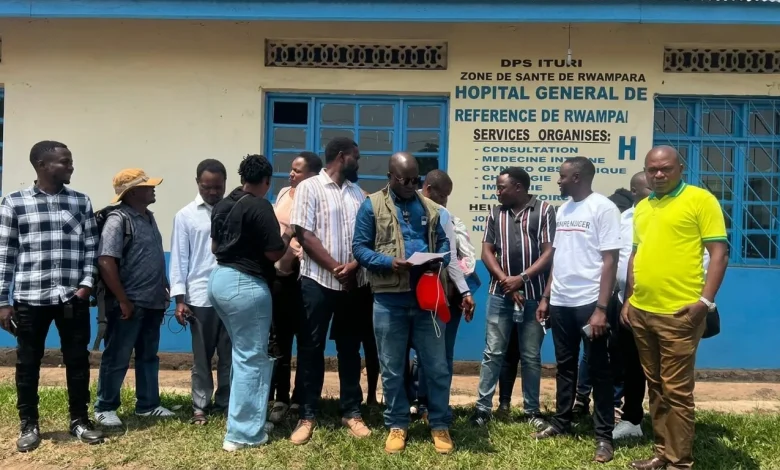
Table of Contents
Ebola outbreak developments in the Democratic Republic of Congo have escalated rapidly, sparking intense concern across the global health community as confirmed infections spike. Confirmed cases of Ebola in Congo have reached 2,011, including 754 deaths, according to government data released overnight in what authorities say is the fastest-growing outbreak on record. The epicenter of the outbreak, located in the northeastern province of Ituri, faces a severe operational crisis as medical personnel reach their breaking points. Health workers at the Bunia General Hospital went on strike on Wednesday, the latest group to have walked off their job at the epicenter over payment issues. This labor action threatens to paralyze the already fragile local response system, creating a vacuum in disease containment efforts at a time when rapid intervention is most critical.
The situation inside the affected health zones is deteriorating by the hour. Health professionals and other frontline workers barricaded the entrance of the hospital, lamenting they haven’t received any compensation despite working under difficult conditions. Meanwhile, clinical teams are struggling to manage patients who are currently in medical custody. A total of 753 patients remain in isolation or in hospitals, while 366 have so far recovered, according to data from Congo’s Ministry of Health. Compounding these systemic breakdowns is the reality that tracking the spread has become nearly impossible. Contact tracing remains a challenge, with coverage of those exposed still at 67%, leaving a massive portion of the population vulnerable to undetected transmissions.
The Rapid Ascent of the Bundibugyo Ebola Strain in Ituri
The Central African nation has been battling the Ebola outbreak caused by the rare Bundibugyo virus since May 15, 2026. This strain represents a distinct clinical and logistical challenge compared to the more common Zaire strain, which has historically been the target of major vaccine campaigns. Two months since the onset, the outbreak continues to spread faster than health officials can track despite an expanding response. The absence of widely distributed, pre-approved immunizations or specific therapeutic treatments for the Bundibugyo variant leaves medical responders reliant primarily on supportive care, rigorous isolation, and rapid tracing—tools that are currently failing due to local administrative and social hurdles.
Epidemiological patterns indicate that the virus is adapting to highly mobile demographic trends. Eastern Congo is characterized by dense forest terrain, active mining sectors, and fluid community borders. As global climates shift and record temperatures shatter historic records across the equator, ecological imbalances may also play a role in altering the transmission dynamics of zoonotic reservoirs. The convergence of climate stresses and an exceptionally virulent pathogen has created a perfect storm, allowing the Bundibugyo virus to entrench itself deep within the urban and rural communities of Ituri and North Kivu.
A Closer Look at the 2,011 Cases and 754 Fatalities
The official statistics released by the Ministry of Health outline a tragic trajectory, yet experts warn that these figures only represent the tip of the iceberg. Out of the 2,011 confirmed cases, the death toll has climbed to 754. Public health teams on the ground report that a significant percentage of these fatalities are occurring outside of formal healthcare facilities. Many victims succumb to the disease in their own homes, surrounded by family members who are subsequently exposed to highly infectious bodily fluids. This dynamic accelerates community transmission and severely limits the accuracy of official data collections.
While international monitoring systems are designed to detect major contagion events, local constraints often blindside field operations. In many global contexts, authorities are accustomed to tracking unidentified public health threats in isolated regions; however, the sheer scale of the Bunia epidemic has overwhelmed standard epidemiological safeguards. The high fatality rate, paired with the rapid speed of transmission, indicates that the virus is spreading unchecked through major regional transit corridors, exposing thousands of individuals daily who remain entirely unaware of their risk status.
The Crisis at Bunia General Hospital: Frontline Workers Strike
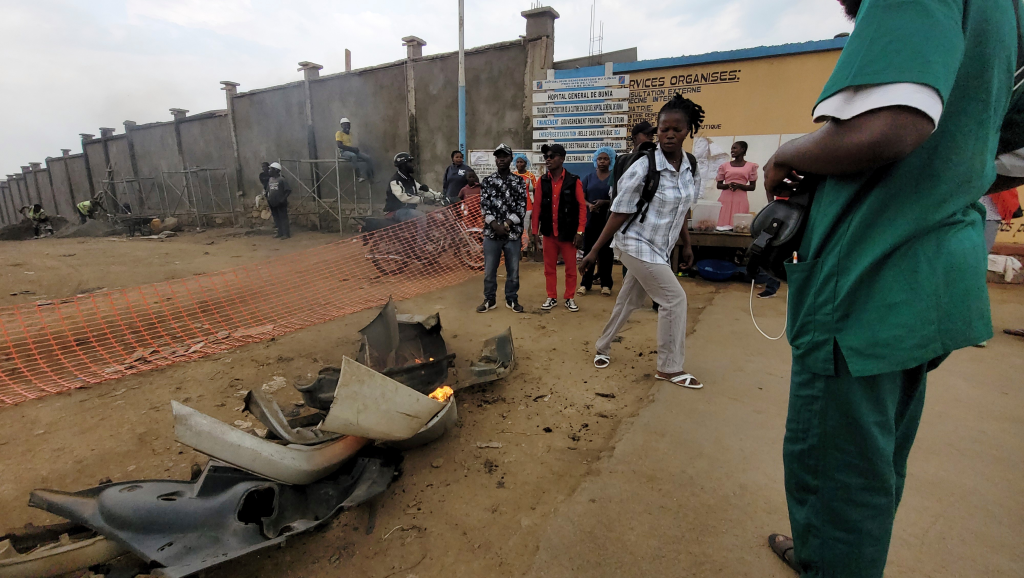
The strike on Wednesday at Bunia General Hospital represents a critical tipping point in the containment effort. Frontline workers—ranging from senior medical doctors and epidemiologists to ambulance drivers and grave diggers—have completely halted their duties. Protesters barricaded the main gates with branches and burned tires, effectively blocking access to one of the largest medical hubs in Ituri. This walkout is not an isolated event; it follows a series of rolling protests across the region, including similar strikes at the Rwampara treatment center earlier in the week.
The root cause of this labor action is a profound sense of exploitation. Frontline responders have been putting their lives on the line daily since the outbreak was declared in mid-May, yet many have not received a single paycheck or hazard bonus. The economic burden on these workers has become unsustainable, leaving them unable to feed their families or secure basic necessities. This localized crisis highlights a broader challenge in global health security: while Western governments struggle with domestic controversies and healthcare funding shortfalls, the absolute breakdown of local payroll services in the DRC represents a literal matter of life and death.
Protesting Amid Peril: Demands for Salaries and Bonuses
The striking staff have issued a strict ultimatum to the Congolese Ministry of Health, demanding immediate disbursement of all backdated wages and safety bonuses. For many workers, the lack of compensation is compounded by a lack of personal protective equipment (PPE). They are forced to perform high-risk procedures—such as intubating patients or handling highly infectious remains—with substandard gear, putting themselves and their families at immense physical risk. The strike is a desperate plea for both economic survival and physical safety in a highly lethal working environment.
In response to the growing unrest, government officials have urged patience, citing administrative hurdles. During a recent provincial visit, Health Minister Roger Kamba explained that the government is actively auditing the payroll lists to ensure that funds are distributed transparently. According to officials, the payrolls have been bloated by the unauthorized addition of “ghost workers” and individuals unrelated to the active clinical response. While the government claims this verification process is necessary to prevent corruption, the delay has left genuine frontline heroes unpaid. This structural inefficiency highlights how financial deficits in public infrastructure can cripple emergency services precisely when they are needed most, leaving critical medical centers entirely unstaffed during a historic outbreak.
The Logistical Nightmare of Undetected Transmission Chains
A deeply concerning revelation from the World Health Organization (WHO) has further darkened the outlook for containment. According to Dr. Chikwe Ihekweazu, the WHO health emergencies chief, approximately 80% of newly confirmed cases are emerging from unknown chains of transmission. This means that the vast majority of people testing positive for Ebola were never on any contact lists, indicating that the virus is circulating freely and silently throughout the community without health workers’ knowledge. Responders are essentially fighting an invisible enemy, unable to predict where the next major cluster of infections will ignite.
The failure to establish a clear epidemiological link for the majority of cases is deeply tied to the geographic and political volatility of eastern Congo. The region has been plagued by decades of armed conflict, which has resulted in millions of displaced citizens. This rapid, chaotic movement of displaced populations fleeing instability complicates any attempt to establish stable contact tracing networks. When an exposed individual flees a conflict zone or migrates to a remote mining camp in search of work, they effectively sever the contact tracing chain, carrying the Bundibugyo virus into entirely new, unprepared territories.
Why Contact Tracing Stalls at Just Sixty-Seven Percent
Contact tracing is the cornerstone of any successful Ebola eradication strategy, yet in the current outbreak, coverage remains stubbornly low at 67%. To successfully break the chain of transmission, epidemiologists agree that tracing coverage must exceed 90%. The remaining 33% gap represents thousands of potentially exposed individuals who are moving freely, attending social gatherings, and utilizing public transport, completely unaware that they may be incubating a deadly pathogen.
Several factors contribute to this dangerous gap. Beyond the physical challenges of navigating active conflict zones, responders face severe logistical limitations. High fuel costs and vehicle shortages prevent tracking teams from reaching remote settlements. These local operations are heavily impacted by global inflationary pressures that have dramatically increased the price of fuel, vehicle maintenance, and communication equipment. Without adequate funding to cover these basic operational costs, contact tracers are left stranded in urban centers, unable to pursue leads that extend into the rural interior of Ituri province.
How Global Strains and Economic Factors Fuel the Outbreak
To understand the full scope of the crisis, it is helpful to analyze the current epidemiological data. The table below outlines the core metrics of the current Bundibugyo Ebola outbreak in the Democratic Republic of Congo, highlighting the immense gap between the scale of the epidemic and the capacity of the current response.
| Outbreak Metric | Current Statistic | Epidemiological Implication |
|---|---|---|
| Confirmed Cases | 2,011 | Fastest-growing Ebola outbreak on record; declared May 15, 2026. |
| Total Deaths | 754 | High mortality rate; heavily driven by community deaths outside clinics. |
| Patients in Isolation | 753 | Severe strain on hospital bed capacity; medical infrastructure is saturated. |
| Recovered Patients | 366 | Requires ongoing clinical follow-ups and long-term mental health support. |
| Contact Tracing Coverage | 67% | Unacceptably low; allows thousands of exposed individuals to go untracked. |
| Unknown Transmission Chains | 80% | Indicates widespread community transmission completely outside the tracking net. |
The data clearly demonstrates that the epidemic is outpacing the humanitarian response. While the World Health Organization has rushed emergency supplies, lab equipment, and clinical personnel to Bunia, the structural deficiencies of the local healthcare system continue to undermine these efforts. The combination of unpaid workers, low contact tracing, and highly mobile populations makes containment an uphill battle that cannot be won through clinical supplies alone.
Mistrust, Misinformation, and Public Disbelief
Perhaps the most insidious obstacle facing health workers in Ituri is the deep-seated mistrust within the local community. Decades of political marginalization and conflict have fostered a profound skepticism toward government institutions and international aid organizations. Many residents in Bunia openly express disbelief in the existence of the virus, viewing the outbreak as a fabricated crisis designed by politicians to secure foreign aid or delay local elections. This skepticism directly translates into resistance against medical interventions, with families hiding sick relatives or refusing safe, dignified burials.
This atmosphere of suspicion is actively fueled by rumors and false narratives. Much like how malicious online rumors can weaponize institutional distrust to disrupt social order in developed nations, local disinformation campaigns in eastern Congo have led to direct violence. Treatment facilities have been stoned, and health workers have faced physical assaults while trying to perform community outreach. This hostile environment makes it incredibly dangerous for response teams to enter certain neighborhoods, further depressing contact tracing rates and allowing the virus to spread silently in closed communities.
International Response and the Fight Against the Outbreak
The international community is scrambling to bolster the response before the Bundibugyo strain crosses international borders in force. While Uganda has already detected a small number of imported cases, the risk of a wider regional epidemic remains high. In Bunia, health agencies have expanded the local treatment capacity to nearly 800 beds and increased the number of operational testing laboratories from one to fourteen. This rapid scale-up has allowed for quicker diagnostic turnarounds, but clinical capacity is meaningless if patients refuse to seek treatment or if health workers are on strike.
To turn the tide of the fastest-growing outbreak on record, immediate action is required on multiple fronts. First and foremost, the Congolese government and its international partners must immediately resolve the payroll crisis, ensuring that every frontline responder is paid fairly and provided with adequate protective gear. Second, intensive community engagement is needed to break down the walls of mistrust and misinformation that isolate affected neighborhoods. Only by supporting the brave health workers at the frontlines and earning the trust of the local population can the Democratic Republic of Congo hope to contain this deadly epidemic and prevent a global health catastrophe.