Curaçao: Incredible Achievement as the Smallest Nation Makes World Cup History in 5 Key Moments
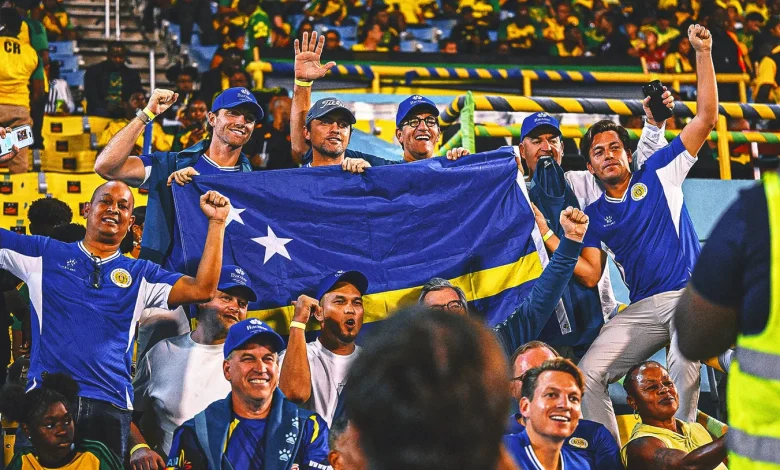
Curaçao, a picturesque Caribbean island nation of approximately 156,000 residents situated 40 miles off the Venezuelan coast, achieved the unthinkable in November 2025 by qualifying for the 2026 FIFA World Cup. This historic feat marked the culmination of a 23-year journey, positioning them as the smallest nation by both population and geographical area ever to reach the men’s global showpiece. For the island’s football federation president, Gilbert Martina, the reality of the achievement hit him all at once on a tense autumn night in Kingston, Jamaica, moving him to what he described as “tears, tears, tears, tears of joy.” To appreciate this athletic miracle, one must examine the extraordinary administrative, tactical, and spiritual transformation that occurred under his guidance.
Curaçao: A Sporting Miracle of Historic Proportions
For decades, the idea of competing on the grandest stage of international football was considered a pipe dream for the island. Curaçao, which became an autonomous country within the Kingdom of the Netherlands in 2010, had always been a baseball-first territory. Major League Baseball legends like Andruw Jones, Kenley Jansen, and Ozzie Albies defined the island’s athletic export pedigree. Football, meanwhile, was treated as a secondary interest, plagued by underfunding, geographic isolation, and administrative instability. Before the historic November night in 2025, the Curaçao national football team, affectionately nicknamed the “Blue Wave,” had never even come close to qualifying for a World Cup.
But the expansion of the 2026 FIFA World Cup to a 48-team format opened a narrow window of opportunity for CONCACAF nations. Under the stewardship of Gilbert Martina, who had spent more than two decades helping the federation raise funds for qualification campaigns that repeatedly fell short, the island launched its most professionalized campaign yet. When the final whistle blew in Jamaica, cementing their historic qualification, the emotional release was overwhelming. “Becoming a father, becoming a husband, those are moments of extreme joy in your life. But this moment is unique,” Martina recounted to NBC News. “You will never, never experience something like that again. I cry like a child.”
The Dual Demands of Gilbert Martina: Healthcare and Football
What makes the Curaçao success story even more remarkable is the profile of the man steering the ship. When Gilbert Martina assumed the presidency of the Federashon Futbòl Kòrsou (FFK), he already had an incredibly demanding full-time job. Martina was the Chief Executive Officer of the Curaçao Medical Center (CMC), the premier state-of-the-art healthcare facility on the island. Managing a modern hospital through its opening phases and the unprecedented operational trials of the COVID-19 pandemic required immense dedication. Yet, instead of treating the football presidency as a ceremonial role, Martina approached it with the rigorous discipline of a corporate turnaround expert.
Martina’s academic and professional background is deeply rooted in organizational transformation. Holding an MBA from Webster University and a postgraduate degree in change management, he understood that success on the pitch was directly tied to the health of the institution off it. His dual-leadership role was highly challenging, often requiring him to split his days between critical hospital board meetings and late-night federation strategy sessions. His contract with the Curaçao Medical Center concluded in June 2025, allowing him to step away from his role as healthcare CEO and devote his full, unmitigated attention to the final stages of the World Cup qualifiers in the autumn. This transition proved to be a masterstroke of timing, providing the federation with absolute focus when it was needed most.
The Road to the 2026 World Cup: The Dramatic Night in Kingston
The journey to the 2026 World Cup came down to a high-stakes encounter in Kingston, Jamaica, in November 2025. Entering the final matchday of the CONCACAF qualification group stage, the Blue Wave knew that a draw would be sufficient to secure their historic ticket to the tournament. What unfolded over the subsequent 90 minutes was a masterclass in defensive resilience, followed by a heart-stopping sequence of administrative and technical drama that will be remembered in Caribbean sporting folklore forever.
As the match ticked into the 94th minute of stoppage time with the score locked at 0-0, American referee Chris Penso blew his whistle, pointing directly to the penalty spot. He had ruled that veteran Curaçaoan defender Cuco Martina had committed a handball inside the box. For a brief, agonizing moment, the dreams of an entire nation appeared to evaporate. However, the modern era of football introduced a crucial safety net: the Video Assistant Referee (VAR). After being prompted to review the footage on the sideline monitor, Penso observed that the contact was minimal and that Cuco Martina’s arm was held tightly in a natural position against his body. The penalty was overturned. Minutes later, the final whistle blew, triggering wild celebrations from Willemstad to Westpunt as a historic 0-0 draw was confirmed.
Tactical Masterclass: The Influence of Dick Advocaat and Fred Rutten
Behind the scenes, the tactical transformation of the Blue Wave was spearheaded by elite European football minds. In early 2024, Gilbert Martina and the FFK made a highly ambitious move by hiring legendary Dutch tactician Dick Advocaat as head coach. Advocaat, a veteran manager who had guided the Netherlands to the quarterfinals of the 1994 World Cup, brought an unprecedented level of professionalism, defensive structure, and elite-level discipline to the Caribbean side. Under his guidance, Curaçao executed an extraordinary qualifying campaign, scoring 28 goals while conceding only three.
The campaign, however, was not without its internal challenges. Just before the crucial final qualifying matches, Advocaat temporarily stepped away to be with his ill daughter, before returning in a dramatic fashion to see the qualification through. Following the successful qualification, the federation transitioned the coaching staff, officially appointing former PSV Eindhoven and Feyenoord manager Fred Rutten to lead the Blue Wave at the 2026 World Cup finals. This continuous pipeline of elite Dutch coaching has ensured that Curaçao’s players—many of whom play professionally in Europe—are exposed to tactical systems that can compete with the absolute best in the world.
A Blueprint of Administrative Excellence: How the FFK Built a Winner
While fans naturally focus on the magic that happens on the grass, football analysts have pointed to Curaçao’s administrative structure as the real catalyst for their success. In many developing football nations, federations are run by political figures or bureaucrats with little understanding of sports science, corporate governance, or modern legal frameworks. The FFK, under Gilbert Martina, completely rejected this outdated model. Instead, they built an executive board populated entirely by highly educated, experienced professionals.
Beside Martina, the federation’s leadership features Vice President Fabi Constansia, who holds a Master of Science in Public Administration from Erasmus University Rotterdam, and General Secretary Jan Peter Dogge, a legal expert and the former Integrity Officer for the Dutch Football Association (KNVB). This high level of administrative competence allowed the FFK to secure crucial corporate sponsorships, optimize player travel logistics, and negotiate a landmark Memorandum of Understanding (MoU) with the KNVB in early 2026. This partnership provides the island with access to elite coaching clinics, referee development, and youth scouting networks, laying a sustainable foundation for the future of the sport on the island.
| Key Milestone | Key Date / Period | Key Figures Involved | Historical & Athletic Significance |
|---|---|---|---|
| First Official Match under FFK | August 18, 2011 | Federashon Futbòl Kòrsou | Marked the birth of the modern Curaçao national team after the dissolution of the Netherlands Antilles. |
| Caribbean Cup Championship | June 2017 | Eloy Room, Cuco Martina | Defeated regional giants Jamaica 2-1 to claim their first-ever Caribbean Cup title. |
| Appointing Dick Advocaat | Early 2024 | Dick Advocaat, Gilbert Martina | Brought elite, world-class European tactical leadership and structured defensive systems to the squad. |
| Historic 0-0 Draw in Kingston | November 2025 | Eloy Room, Chris Penso, Cuco Martina | Secured direct qualification for the 2026 FIFA World Cup, surviving a dramatic 94th-minute VAR review. |
| Fred Rutten Appointed Manager | Early 2026 | Fred Rutten, Dick Advocaat | Appointed to lead the World Cup campaign after Advocaat stepped down due to family health issues. |
The Key Pillars: Who Stepped Up on the Pitch
On the pitch, the historic qualification was secured by a unique blend of experienced veterans and hungry young talents, many of whom possess dual Dutch and Curaçaoan citizenship. For years, the federation had struggled to convince high-profile European-based players of Curaçaoan descent to commit to the national team due to travel costs and administrative disorganization. Martina’s reforms changed that, creating an environment where professional athletes felt secure and valued.
Several key players emerged as national heroes during the campaign:
- Eloy Room: The legendary goalkeeper and long-time number one was actually without a professional club contract when he played the decisive match against Jamaica. Despite this, he delivered a magnificent shutout performance.
- Leandro Bacuna: Serving as the team’s captain and midfield general, Bacuna brought years of Premier League and Eredivisie experience, controlling the tempo of matches and providing critical leadership on and off the field.
- Cuco Martina: The former Everton and Napoli defender anchored the backline with poise, famously maintaining his composure during the late-game VAR penalty drama in Kingston.
- Rangelo Janga: The team’s leading striker, whose physical presence and clinical finishing provided the Blue Wave with the offensive edge required to dominate their qualifying group.
Socio-Economic Awakening: The Blue Wave Effect
The ramifications of this World Cup qualification extend far beyond the borders of the football pitch. The “Blue Wave Effect” has ignited a massive socio-economic and cultural awakening across Curaçao. Historically, the island’s international profile was driven primarily by tourism and its association with the Netherlands. Now, the island is experiencing an unprecedented surge in global search engine queries, media coverage, and international attention. From sports enthusiasts to curious travelers, the world is discovering Curaçao for the first time.
For Gilbert Martina, this journey has always been as much spiritual as it was athletic. Martina, who recently authored the book Healthy Minds, Healthy Nation, views football as a powerful vehicle for collective healing and societal transformation. In his writings and public addresses, he emphasizes how shifting the national mindset from one of historic limitation to one of global possibility can revitalize communities. The island is capitalizing on this momentum by organizing major events, such as the Blue Wave World Cup Tournament at the Blue Bay Resort, combining sports, local hospitality, and national pride to foster economic growth.
The Road Ahead: Preparing for Ecuador, Ivory Coast, and Germany
As the world prepares for the 2026 FIFA World Cup, Curaçao finds itself drawn into a formidable group alongside football powerhouses Germany, Ecuador, and the Ivory Coast. To compete against such established giants, head coach Fred Rutten and his staff are executing a rigorous preparation plan, utilizing the state-of-the-art facilities made available through their partnerships with the KNVB. The objective is not merely to participate, but to show the world that a small, highly organized, and deeply passionate nation can stand toe-to-toe with the elite.
Ultimately, the story of the Blue Wave is a testament to what can be achieved when visionary leadership, tactical discipline, and administrative integrity converge. Regardless of the outcomes in the group stage, Curaçao has already secured its place in the annals of football history. By proving that population size is no barrier to global sporting excellence, this small Caribbean nation has given hope to underdogs everywhere, demonstrating that with a clear vision and a united heart, the wildest dreams can indeed become reality.