AI Filmmaking in China: State Subsidies and Creative Shifts 2026
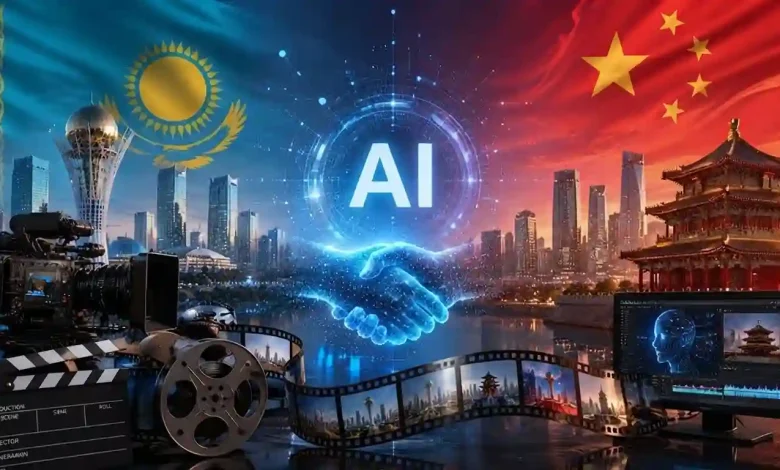
Table of Contents
AI filmmaking in China has rapidly transformed from an experimental niche into a cornerstone of national industrial planning. Across major production centers from Shenzhen to Beijing, regional administrative bodies and private studios are funneling capital into generative entertainment pipelines. These initiatives reflect a broader ambition by state authorities to infuse artificial intelligence across every facet of commerce, turning cinematic production into a testbed for machine learning applications. Rather than treating synthetic video merely as a novelty or cost-reduction mechanism, policymakers are deploying the exact strategic frameworks that previously propelled the nation into market dominance within semiconductors, green energy, and hardware manufacturing.
The momentum behind this digital transformation illustrates how state support intersects with commercial ambition. While Western entertainment industries have engaged in contentious labor disputes and regulatory stalemates regarding digital likeness and copyright integrity, Chinese studios are aggressively encouraged to adopt synthetic automation. As seen in the rapid deployment of the Chinese humanoid robotics initiative, provincial authorities view automated visual storytelling as a vital segment of advanced digital infrastructure rather than an isolated creative field.
The Industrial Policy Playbook Applied to Entertainment
The systemic rise of generative cinematic arts in East Asia relies heavily on a familiar economic blueprint. Over the past two decades, Chinese central planning demonstrated an unmatched capability to build manufacturing dominance by heavily subsidizing targeted domestic sectors until scale drove down marginal production costs. This model established global leads in photovoltaic hardware, battery systems, and electric mobility. Today, synthetic media production is receiving the identical structural backing.
By treating algorithmic entertainment as an engineering discipline rather than solely artistic expression, local governments have structured development zones specifically tailored to algorithmic rendering and virtual production. These tech hubs provide subsidized computing clusters, municipal electricity rebates for cloud processing, and tax relief for software developers specializing in generative models. This rapid institutional backing mirrors broader tensions within the AI race with China, where technological acceleration is explicitly intertwined with national economic prestige.
Municipal Subsidies and Regional Tech Clusters
Provincial authorities across cities like Hangzhou, Shanghai, and Chengdu have launched competitive incentive packages to lure computer vision researchers, digital animation studios, and creative startups. In many jurisdictions, regional film development funds offer direct grants to productions that replace traditional pre-visualization or visual effects workflows with domestic generative software suites. If a studio demonstrates that a significant portion of its rendered runtime utilized localized models, it qualifies for substantial financial reimbursement.
These municipal incentives are designed to foster localized computational ecosystems. Rather than relying on overseas proprietary platforms, these clusters run on domestically built server racks, integrating tightly with native hardware. As domestic suppliers advance toward milestones such as China’s silicon wafer target, the synergy between sovereign semiconductor design and software generation becomes progressively clear. Creative entities operating within these zones gain direct access to localized supercomputing centers at fraction-of-market rates.
Technological Breakthroughs in Generative Video
The technological spine of this movement is rooted in rapid advancements in diffusion models, transformer architectures, and spatial consistency algorithms. Domestic engineering teams have prioritized high-coherence spatio-temporal video generation capable of maintaining character consistency across complex cinematic sequences. While early text-to-video demonstrations struggled with temporal warping and inconsistent physics, newer pipelines combine procedural 3D engines with deep learning upscalers to ensure stable cinematic motion.
The foundational research powering these production houses frequently stems from domestic breakthrough models, particularly the open architecture principles championed by platforms like the DeepSeek AI open-source framework. By leveraging optimized weights and highly efficient reasoning loops, Chinese creators can execute complex frame interpolations and multi-angle camera projections without requiring prohibitive computational budgets. Furthermore, specialized developments in an AI video generator tailored for local dialects, period costuming, and historical architecture give domestic platforms a localized competitive edge over Western counterparts.
Comparative Matrix: Traditional vs. AI Production in China
To understand the sheer magnitude of disruption currently underway across production studios, one must evaluate operational overhead, time-to-market cycles, and capital requirements across differing filming methodologies.
| Production Dimension | Traditional Live-Action Film | Hybrid VFX Pipeline | Pure AI Generative Pipeline |
|---|---|---|---|
| Average Pre-Production Timeline | 6 to 12 Months | 4 to 8 Months | 2 to 4 Weeks |
| Rendering & VFX Cost per Minute | $15,000 – $50,000+ | $8,000 – $25,000 | $300 – $1,500 |
| Location & Practical Set Costs | High (Requires permits, transit) | Moderate (Sound stages, green screen) | Negligible (Digital latent space generation) |
| State Subsidy Eligibility | Standard cultural development tax credits | Selective technological grants | Extensive regional compute & development subsidies |
| Character Consistency Protocols | Physical actors & makeup artists | Motion capture & 3D digital doubles | Algorithmic reference embedding & LoRA checkpoints |
| Post-Production Iteration Speed | Weeks for physical reshoots | Days for CGI adjustments | Minutes to hours for algorithmic regeneration |
Cinemas, Streaming Platforms, and Distribution Shifts
The output of this mechanized production strategy is no longer confined to web novel adaptations or short-form social video feeds. Major theatrical releases are incorporating feature-length sequences generated entirely via procedural neural networks. Multiplexes in tier-one and tier-two cities are screening titles where synthetic crowd rendering, deepfake actor de-aging, and algorithmic background environments form the core visual identity of the project.
Simultaneously, domestic streaming giants are constructing dedicated algorithms to handle hyper-personalized distribution pipelines. These platforms are testing user interfaces that allow audiences to alter cinematic storylines or visual filters in real time using local client-side processing. Because foreign trade balances and international commerce are subject to shifting mutual economic exposure, Chinese entertainment distributors are primarily cultivating massive domestic audiences, insulating their monetization models from external market shocks.
Global Competition and Intellectual Property Frameworks
While Hollywood grapples with stringent union agreements protecting screenwriters, voice actors, and background performers, China has established a starkly distinct legal doctrine regarding synthetic copyright. Domestic courts have increasingly recognized algorithmic outputs as patentable or copyrightable works provided there is demonstrable human direction in prompt architecture and iterative curation. This legal clarity offers domestic production studios substantial operational certainty.
Consequently, Chinese studios can scale production without fear of paralyzing litigation. This dynamic creates an asymmetry in global entertainment economics. Western production companies, encumbered by complex clearance rights and higher wage baselines, find themselves competing against an Eastern apparatus that can generate studio-grade action features at a fraction of standard budgets. Such discrepancies mirror geopolitical friction within the broader AI supply chain between the US and China, where computational supremacy defines cultural output.
State Strategy and Cultural Narrative Projection
Beyond commercial profitability, Beijing views the fusion of artificial intelligence and cinematic storytelling as an indispensable mechanism for soft power and cultural transmission. Historical epics, mythological adaptations, and science-fiction features represent the core vehicles through which national values are communicated. By accelerating production speeds, the state can rapidly respond to socio-political trends, deploying high-production-value narratives into the global information space far quicker than traditional studios.
Furthermore, state oversight boards maintain centralized control over training datasets. Generative models trained within the country are aligned with strict national standards, ensuring that generated historical depictions, civic ethics, and philosophical themes mirror designated historical frameworks. By controlling the foundational checkpoints upon which generative film suites operate, authorities guarantee that scale and ideological alignment advance in tandem.
Future Outlook: Challenging Global Cinema Paradigms
The aggressive expansion of synthetic cinema in China is poised to reshape international media consumption over the coming decade. As visual coherence improves and rendering latency plummets, domestic studios will likely seek greater foreign distribution footprints across Southeast Asia, Latin America, and Africa. By offering high-concept visual spectacle at discounted licensing fees, these digital-native productions may disrupt the global dominance long enjoyed by traditional entertainment conglomerates.
Ultimately, the marriage between municipal capital, industrial planning, and deep generative modeling has transformed synthetic entertainment from a speculative experiment into an operational reality. China’s systematic execution of this media strategy demonstrates that in the modern entertainment era, technological infrastructure is just as critical to creative dominance as artistic pedigree.