Apple Sues OpenAI Over Massive Hardware Trade Secret Theft 2026
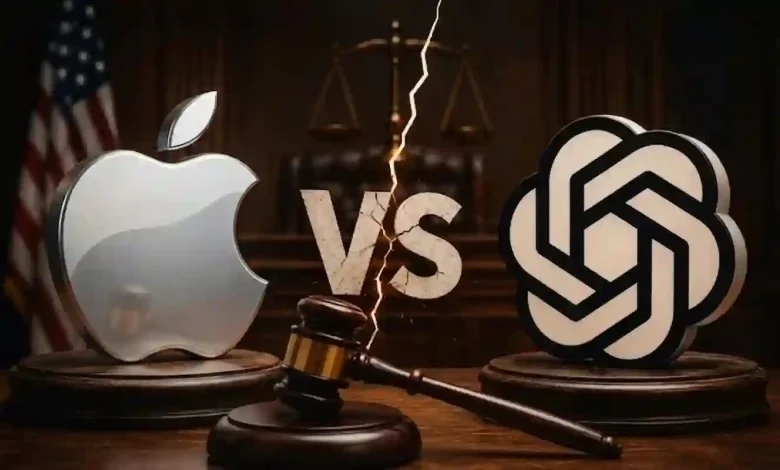
Table of Contents
Apple filed a blockbuster trade secret lawsuit on Friday, July 10, 2026, targeting OpenAI, its hardware subsidiary io Products, and two high-level former employees, alleging a coordinated, systematic campaign to steal proprietary iPhone and Apple Watch designs, manufacturing processes, and supply chain insights. The complaint, lodged in the U.S. District Court for the Northern District of California in San Jose, paints a dark picture of a once-friendly technology partnership that has rapidly deteriorated into a fierce technological rivalry. According to the litigation, OpenAI has leveraged a massive influx of former Apple employees to construct its nascent consumer electronics business on a foundation of stolen intellectual property.
The lawsuit details a multi-layered espionage scheme that Apple alleges was orchestrated from the highest levels of OpenAI’s hardware division. At the center of the dispute is Tang Yew Tan, Apple’s former Vice President of Product Design for the iPhone and Apple Watch, and Chang Liu, a veteran senior system electrical engineer. Apple claims that these individuals, along with dozens of others, systematically downloaded, transferred, and utilized trade secrets to bypass years of expensive research and development. This lawsuit represents one of the most significant legal battles in Silicon Valley’s history, signaling that the battle for artificial intelligence dominance has officially expanded from software algorithms into physical consumer hardware.
Apple Fires Legal Broadside Against OpenAI and Former Design Leaders
The legal filing represents a dramatic escalation in tensions between Cupertino and San Francisco. While the two companies previously announced a historic partnership to integrate OpenAI’s ChatGPT directly into Siri, the relationship has turned adversarial behind closed doors. Industry analysts believe that OpenAI’s long-rumored plans to release its own physical artificial intelligence devices—potentially bypassing traditional mobile operating systems like iOS—pose a direct existential threat to Apple’s hardware ecosystem. According to the complaint, Apple reached out privately to OpenAI leadership in February to resolve the security breaches, but the AI startup chose to ignore those warnings, leaving Apple with no choice but to seek judicial intervention.
In its complaint, Apple asserts that OpenAI’s hardware venture is ‘rotten to its core’ because of its structural dependence on stolen intellectual property. Apple is seeking substantial monetary damages, a full accounting of all misappropriated files, and an immediate court injunction blocking OpenAI and its subsidiaries from using any of Apple’s proprietary hardware technologies. This legal maneuver highlights the rising stakes of intellectual property defense in an era where AI hardware has become the ultimate frontier of technological innovation.
The Core Allegations: Systematic Misappropriation of Trade Secrets
Apple’s legal team laid out a detailed blueprint of how the alleged theft occurred. The complaint alleges that over 400 former Apple employees now work at OpenAI, creating a direct pipeline for talent and proprietary information. While Apple acknowledges that hiring former employees is entirely legal under California’s competitive labor laws, the systematic transfer of physical schematics, supplier contract terms, and manufacturing specifications is a clear violation of state and federal trade secret protections. The intellectual property at stake includes confidential details regarding multi-layer motherboards, advanced thermal management systems, battery chemistry configurations, and unreleased product roadmaps.
The company argues that OpenAI did not merely hire these engineers for their skills; rather, they targeted individuals who had active, highly sensitive access to Apple’s internal databases. This systematic gathering of data allowed OpenAI to build its hardware subsidiary, io Products, which was originally co-founded by legendary designer Jony Ive and subsequently acquired by OpenAI for an estimated $6.4 billion. By bypassing the traditional trial-and-error phase of hardware manufacturing, OpenAI allegedly saved hundreds of millions of dollars and shaved years off its product launch timelines.
Key Defendants Named in the San Jose District Court Filing
The federal lawsuit names several key corporate and individual entities. These include the OpenAI Foundation, OpenAI Group PBC, io Products, and two key former Apple employees who transitioned to high-profile roles at the AI startup. The specific allegations against these individuals reveal a sophisticated breach of corporate protocol that Apple claims was highly coordinated.
Tang Yew Tan and the Controversial ‘Show and Tell’ Interviews
Tang Yew Tan spent over 24 years at Apple, ultimately serving as the Vice President of Product Design for both the iPhone and the Apple Watch. Given his seniority, Tan possessed absolute visibility into Apple’s most sensitive hardware initiatives, manufacturing techniques, and international supply chain partnerships. When he left Apple to help establish io Products (which eventually merged with OpenAI), Apple claims he took a treasure trove of industrial knowledge with him.
Most egregiously, the lawsuit alleges that Tan organized ‘show and tell’ sessions during interview processes at OpenAI. According to the complaint, Tan instructed job candidates who were still actively employed at Apple to bring ‘actual parts’ and physical components—such as specialized circuit boards, customized batteries, and unreleased casing materials—to their job interviews. This allowed Tan and his engineering team at OpenAI to illicitly extract current Apple designs under the guise of talent recruitment. Furthermore, the suit claims Tan used confidential internal project code names to probe candidates and extract details about Apple’s highly secretive future device lineups.
Chang Liu and the Exploded Authentication Bug
Chang Liu, a former senior system electrical engineer who worked at Apple for eight years, is accused of directly siphoning electronic data. According to the court documents, Liu joined OpenAI in early January but refused to return his Apple-issued work laptop, claiming it had been misplaced. Apple alleges that Liu subsequently used a rare, previously undisclosed authentication bug to bypass corporate network security. This exploit allowed him to maintain a remote connection to Apple’s shared network folders even after his official termination.
While connected, Liu allegedly downloaded ‘dozens of Apple’s confidential hardware-related files,’ including highly sensitive engineering presentation slides and technical specifications for next-generation multi-layer motherboards. The suit also implicates an un-sued co-conspirator, Yu-Ting ‘Alyssa’ Peng, who was still employed at Apple at the time. Liu allegedly joked with Peng on encrypted platforms like Line Messenger about how ‘funny’ it was that the authentication exploit worked so seamlessly. Peng eventually left Apple in April 2026 to join OpenAI, further cementing the talent pipeline that Apple is now attempting to dismantle in federal court.
The Role of io Products and Jony Ive’s Hardware Legacy
The involvement of io Products adds another layer of intrigue to this blockbuster lawsuit. Founded by Jony Ive, Apple’s iconic former Chief Design Officer, io Products was established as an elite independent hardware and engineering studio. In 2025, OpenAI acquired io Products for approximately $6.4 billion to serve as the structural foundation of its new hardware division, appointing Tang Yew Tan as its Chief Hardware Officer. While Ive himself is not named as a defendant in the lawsuit, his startup is accused of institutional-level misconduct.
Apple alleges that io Products and OpenAI used their combined influence to mislead a shared manufacturing partner. The lawsuit claims that OpenAI representatives falsely represented that they possessed Apple’s explicit authorization to use a proprietary, highly advanced metal-finishing technique. This unauthorized deployment allowed OpenAI to manufacture physical prototypes with the exact cosmetic and structural characteristics of Apple’s flagship consumer products, bypassing costly proprietary development processes.
Data Comparison Table: Key Discrepancies and Core Allegations
To understand the breadth of this high-stakes legal battle, the following table summarizes the core components of Apple’s lawsuit, highlighting the individual defendants, corporate bodies, and the specific categories of intellectual property that Apple claims were illegally compromised:
| Defendant / Entity Name | Former Apple Role / Corporate Status | Primary Misconduct Alleged by Apple | Specific Files / Materials Compromised |
|---|---|---|---|
| Tang Yew Tan | Former VP of Product Design (iPhone/Apple Watch); current OpenAI Chief Hardware Officer | Emailing supplier information to personal accounts; conducting ‘show and tell’ interviews requiring physical Apple parts. | Internal industry reports, international supplier lists, proprietary component schematics. |
| Chang Liu | Former Senior System Electrical Engineer; currently at OpenAI | Retained company-issued laptop; exploited network authentication bug to access restricted folders after leaving. | Dozens of multi-layer motherboard specifications, unreleased engineering slides, project timelines. |
| OpenAI Foundation & Group PBC | Parent AI organization and commercial arm behind ChatGPT | Orchestrated a systematic campaign to poach over 400 Apple employees; ignored Apple’s warning notices. | Proprietary manufacturing methods, strategic industrial designs, metal-finishing techniques. |
| io Products | Hardware startup co-founded by Jony Ive; acquired by OpenAI for $6.4B | Misled a shared manufacturing partner to unauthorizedly execute Apple’s proprietary metal-finishing processes. | Industrial design blueprints, custom material processing techniques, structural prototypes. |
Broader Context: The Shifting Alliance Between Apple and OpenAI
The timing of this lawsuit is particularly striking, occurring in a landscape where Apple and OpenAI have maintained an active commercial relationship. In 2024, Apple integrated OpenAI’s ChatGPT into iOS to handle complex, specialized queries that Siri was unable to process. This integration was viewed as a win-win: Apple secured a world-class AI engine, while OpenAI gained access to billions of active mobile devices. However, as OpenAI’s ambitions shifted from pure software models to physical products, the partnership quickly devolved into an existential technological rivalry.
This high-stakes legal battle parallels structural trends discussed in our inside scoop on America’s technological and industrial initiatives, highlighting the intense pressure domestic tech leaders face to retain physical intellectual property within the United States. As OpenAI looks to manufacture localized, chip-driven hardware that can process AI models natively, the border between mobile operating systems and localized computing has blurred. This structural overlap has transformed former allies into direct, aggressive competitors in the race to define the next era of personal computing.
Tech Industry IP Security: Protection Standards and Future Legal Fallout
As the legal proceedings unfold in the Northern District of California, the tech industry is closely monitoring how companies manage trade secrets in an increasingly fluid labor market. The theft of intellectual property in hardware-intensive spaces is uniquely damaging because of the physical capital involved. Unlike software, which can be modified or patched within hours, physical hardware requires years of supply chain negotiation, factory tool development, and material testing. The alleged theft of Apple’s proprietary metal-finishing techniques and multi-layer motherboard blueprints represents a shortcut through billions of dollars in capital expenditure.
Such high-stakes technological intellectual property issues parallel international standards in semiconductor security, similar to domestic policy shifts observed under legislative pushes like the Chip Security Act, which aims to protect critical hardware technology from illicit domestic and foreign transfers. As corporate governance rules tighten, other technology companies are expected to implement aggressive post-employment audits, multi-factor hardware restrictions, and stricter non-disclosure enforcement to prevent similar security breaches. OpenAI, meanwhile, has issued a statement rejecting the allegations, maintaining that they respect competitor intellectual property and are focused purely on building original technology, as reported by Al Jazeera.
Conclusion: A New Era of High-Stakes Silicon Valley Litigation
The outcome of the lawsuit in San Jose will likely set a major precedent for how talent acquisitions and corporate intellectual property are governed in the age of generative AI hardware. Silicon Valley is currently undergoing a massive transformation, shaped by changing regulatory environments and corporate governance trends outlined in our Politics Desk analysis. If Apple is successful in securing its requested injunctions, it could severely cripple OpenAI’s upcoming hardware launch, casting a long shadow over its multi-billion-dollar acquisition of io Products and leaving its ambitious hardware designs on incredibly shaky legal foundations.
Ultimately, this case serves as a stark reminder that while software can be iterated at lightning speed, physical hardware development is still governed by the physical world—and the rigid framework of trade secret law. As the court processes unfold, the tech industry will watch carefully to see if OpenAI can defend its hardware aspirations or if its consumer ambitions will be permanently halted by the protective legal barriers of the world’s most valuable consumer electronics company.