Phobos Mission: JAXA H3 Rocket Interplanetary Moon Probe Launch
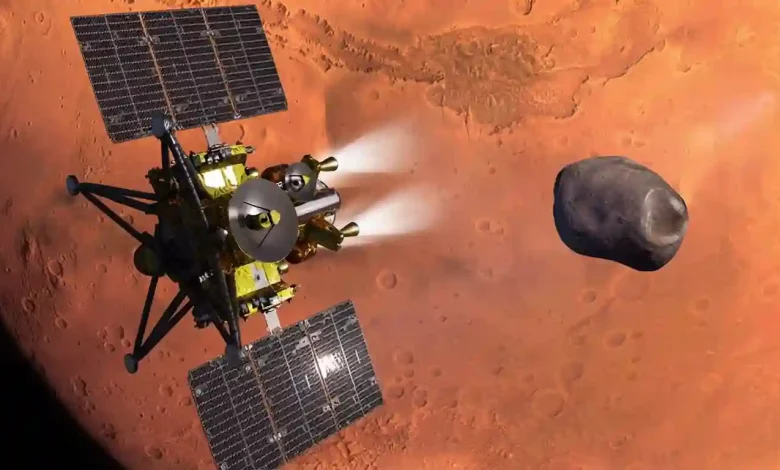
Table of Contents
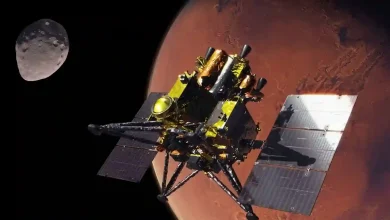
Phobos stands today at the very frontier of deep-space scientific discovery as the Japan Aerospace Exploration Agency (JAXA) embarks on an ambitious interplanetary initiative designed to unlock the primeval secrets of the Solar System. Positioned as the larger of Mars’ two natural satellites, this irregular celestial body has perplexed planetary geologists, dynamicists, and astronomers for generations. By deploying the cutting-edge Martian Moons eXploration (MMX) spacecraft atop Japan’s newly validated H3 launch vehicle, international scientists aim to directly interact with the moon’s regolith and bring pristine extraterrestrial material back to terrestrial laboratories.
Understanding this small moon provides unprecedented clarity regarding the formation of inner planetary systems. While lunar geology has been extensively studied through missions like the Chang’e-7 lunar mission and high-level cooperative frameworks including the NASA Artemis II update, the origin of Mars’ small companions remains unresolved. Whether this irregular body represents an ancient asteroid captured during the dawn of the Solar System or a conglomeration of debris resulting from a catastrophic giant impact on early Mars remains a fundamental question in modern astrophysics.
Phobos and the Dawn of Martian Moon Exploration
Phobos represents one of the most enigmatic natural satellites orbiting any terrestrial planet. With dimensions measuring roughly 27 kilometers by 22 kilometers by 18 kilometers (17 miles by 14 miles by 11 miles), the moon lacks sufficient mass and self-gravity to compress itself into a hydrostatic sphere. Instead, its battered, asymmetrical profile resembles a celestial chunk of charcoal, marked by vast impact depressions, longitudinal fractures, and deep gouges caused by centuries of cosmic impacts.
The current mission spearheaded by JAXA represents the apex of decades of technical design, international partnership, and propulsion engineering. While orbiters such as the Mars Reconnaissance Orbiter and surface rovers like the Curiosity rover have relayed striking images of both Phobos and Deimos from the surface—often highlighted in discussions surrounding how the Curiosity rover captures high-definition imagery across Martian landscapes—none have successfully sampled the surface directly. JAXA’s mission changes that dynamic forever by executing robotic maneuvers down to the very crust of this desolate world.
Orbital Dynamics and Extreme Proximity to Mars
The orbital mechanics governing Phobos are unique among the known satellites of the inner Solar System. Skimming just 6,000 kilometers (approximately 3,700 miles) above the dusty expanses of the Martian surface, Phobos is closer to its primary planet than any other known natural moon in our Solar System. For comparison, Earth’s Moon orbits at an average distance of approximately 384,400 kilometers.
Due to its extreme spatial proximity, Phobos whips around Mars at incredible velocity, completing a full orbit approximately three times every Martian day (sol). To an observer standing on the equator of the Red Planet, Phobos rises in the west, hurtles rapidly across the horizon in just over four hours, and sets in the east, only to re-emerge hours later. This unique orbit sits well inside the synchronous orbital radius of Mars, which introduces severe tidal friction. Over the next 30 to 50 million years, this tidal gravitational pull is predicted to drag Phobos past its Roche limit, where the moon will either disintegrate into a glittering debris ring surrounding Mars or collide directly with the planetary crust.
Geological Profile and Mysterious Origin Theories
The composition and formation history of Phobos continue to generate fierce debate within planetary science circles. Spectroscopic analysis conducted from Earth and Mars orbital probes indicates that its surface has an exceptionally low albedo, absorbing the vast majority of incoming sunlight. Its spectral reflectance signatures closely match those of carbonaceous chondrite (C-type and D-type) asteroids commonly found in the outer asteroid belt.
This composition led many researchers to suspect that Phobos, along with its smaller counterpart Deimos, was a wayward planetesimal captured early by Mars’ gravity. However, dynamicists argue that capturing an asteroid into an almost perfectly circular and equatorial orbit is statistically improbable. The competing hypothesis suggests that a monumental cosmic impact slammed into early Mars—reminiscent of cosmic collisions analyzed when researchers evaluate how a newly forming phoenix planet born from stellar disks develops—ejecting gigantic plumes of molten mantle and crust into orbit that later coalesced into the two moons. Sampling its soils will definitively settle this historical puzzle.
The H3 Flagship Rocket: Technical Redemption and Interplanetary Flight
The successful deployment of JAXA’s robotic probe also marks a pivotal industrial achievement for Japan’s domestic aerospace sector. The flight utilized Japan’s flagship H3 launch vehicle, demonstrating the rocket’s capability to deliver high-mass payloads beyond low-Earth orbit into translunar and interplanetary injection trajectories.
This achievement was earned through rigorous engineering perseverance following early developmental hurdles. During its maiden voyage in 2023, the H3 experienced an abrupt mission failure when the rocket’s second-stage LE-5B-3 engine failed to ignite, forcing flight controllers to initiate a destruct command. Since that high-profile setback, JAXA and primary contractor Mitsubishi Heavy Industries thoroughly redesigned the ignition circuitry, electrical isolation protocols, and stage-separation interfaces. The interplanetary launch provides definitive evidence that the H3 has achieved operational maturity, positioning it alongside other major rocket platforms discussed in reviews of global commercial rocketry, such as the SpaceX and ISRO rideshare missions driving down the cost of access to orbit.
MMX Architecture: Harvesting the Surface of Phobos
The core objective of the MMX mission is to collect at least 10 grams of physical regolith from the surface of Phobos and transport it safely back to Earth. To accomplish this, the spacecraft incorporates redundant sampling architectures designed to mitigate unknown environmental hazards, such as electrostatic charging, microgravity rebound, and unexpectedly deep dust layers.
The probe utilizes two distinct harvesting systems: a core sampling mechanism using a pneumatic robotic arm capable of digging centimeters into the regolith, and a secondary explosive gas-jet canister that fires high-pressure gas into the ground to blast loosened particles into capture chambers. Because Phobos possesses microgravity measuring less than 0.1% of Earth’s surface pull, landing requires meticulous thruster control rather than aerodynamic deceleration. The spacecraft will gently touch down on the moon’s terrain, execute the sample harvest in mere minutes, and fire RCS thrusters to prevent ricocheting away into a uncontrolled heliocentric drift.
Mission Specifications and Technical Breakdown
To contextualize the scale and scientific parameters of the mission, the structural and orbital profile is summarized below:
| Metric / System | Technical Specification | Operational Significance |
|---|---|---|
| Orbital Altitude | ~6,000 km (3,700 miles) above Mars | Closest moon to any planet in the Solar System |
| Orbital Period | 7 hours, 39 minutes | Orbits Mars three times per Martian sol |
| Moon Dimensions | 27 x 22 x 18 km | Irregular, highly porous rubble-pile structure |
| Primary Launcher | H3 Launch Vehicle (H3-24L configuration) | First interplanetary assignment for the launcher |
| Sample Target | Minimum 10 grams of regolith | Pristine return for isotopic and mineral analysis |
| Surface Gravity | ~0.0057 m/s² | Extreme microgravity requiring anchored maneuvers |
| Scientific Payload | Corer, Spectrometers, Rover, LiDAR | Multi-spectral imaging and sub-surface composition |
Scientific Stakes: Deciphering Planetary Evolution
The return of uncontaminated material from Phobos holds transformative scientific value for deciphering how terrestrial planets accumulate volatile elements, water, and organic compounds. Because Phobos has orbited Mars for billions of years without an atmosphere or magnetosphere to shield it, its surface acts as a cosmic sponge. It has absorbed cosmic rays, solar wind ions, and crucially, atmospheric escape particles continuously stripped from Mars itself.
Detailed laboratory studies will employ advanced analytical methodologies, combining isotopic spectroscopy and mass spectrometry similar to complex data processing models utilized in modern telemetry networks like NASA IBM lunar computational modeling. By analyzing isotopic ratios of oxygen, nitrogen, and noble gases trapped within the regolith grains, scientists can reconstruct the atmospheric evolution of ancient Mars, discovering precisely when and how rapidly Mars lost its thicker, warmer atmosphere and surface oceans.
Implications for International Deep Space Exploration
The interplanetary success of this mission reshapes broader international space exploration architectures. As global space programs evaluate long-term roadmaps, Phobos is frequently cited as an optimal staging outpost or orbital waypoint before landing crewed vessels onto the deeper gravitational well of Mars. Because landing and taking off from Phobos requires almost negligible delta-v compared to the Martian surface, established bases on the moon could serve as fuel depots, orbital communication nodes, and radiation shelters.
While corporate roadmaps have fluctuated—such as industry discussions examining whether Mars colonization halted or adjusted priorities toward intermediate staging platforms—robotic sample return missions ensure that human exploration remains grounded in empirical data. In tandem with specialized power and telemetry architectures like those researched under Project Suncatcher, JAXA’s triumphant interplanetary journey proves that international collaborations can reliably extract tangible resources and scientific answers from the most challenging corridors of deep space.