JD Vance Iran War Interview: Demands on Nuclear Enrichment 2026
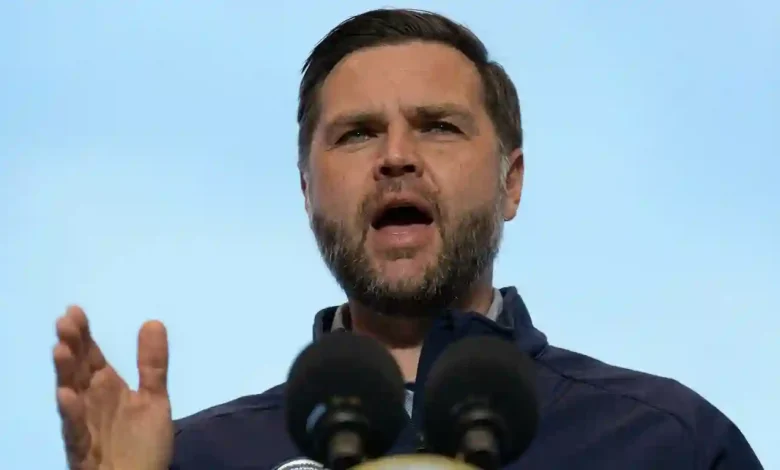
Table of Contents
JD Vance Iran war interview revelations have shed critical light on the administration’s strategic imperatives, establishing that Tehran must execute a verifiable, meaningful reduction in its enriched fissile material stockpiles to bring the protracted seven-month hostilities to a formal close. Speaking candidly about the intractable nature of the confrontation, the Vice President articulated the United States’ core strategic prerequisites while openly acknowledging an acute intelligence deficit regarding how high-level decisions are brokered inside Tehran’s factionalized clerical leadership. Vance, historically characterized by his restraint-oriented foreign policy instincts and outspoken skepticism regarding prolonged American interventions abroad, has paradoxically emerged as the chief diplomatic architect tasked with untangling the conflict.
JD Vance Iran War Interview: Breaking Down the Diplomatic Standoff
The conflict between Washington and Tehran has transformed into a grinding war of attrition, severely straining international logistics corridors and unsettling global macroeconomic equilibrium. During the high-stakes discussion, Vice President Vance stressed that while the Trump administration remains intent on halting continuous hostilities, peace cannot be bought at the cost of nuclear ambiguity. The United States requires concrete, irreversible rollbacks in centrifuge processing, high-purity fissile enrichment, and international inspection compliance.
Vance emphasized that previous diplomatic overtures revealed deep fissures within the Islamic Republic’s governing hierarchy. The administration’s attempts to establish direct backchannels have encountered contradictory signals, leaving American interlocutors unsure whether civilian diplomats possess the binding authority necessary to enforce negotiated terms. As the confrontation enters its eighth month, this ambiguity threatens to perpetuate an escalatory spiral that neither side can smoothly control, directly impacting broader military posturing across the Persian Gulf where carrier strike groups like the USS George Washington maintain round-the-clock combat readiness.
The Nuclear Enrichment Redline: Washington Demands Meaningful Cuts
At the center of Vance’s diplomatic calculus is the absolute demand for verifiable nuclear rollbacks. For the United States to endorse an enduring cessation of hostilities, Tehran must reverse its progress in high-level uranium enrichment, specifically targeting stockpiles processed beyond commercial energy tolerances. Vance articulated that mere freezes or procedural delays no longer fulfill the standard of a viable peace compact; instead, physical dismantling and material transfers out of sovereign Iranian control represent the baseline prerequisite.
Fissile Material Thresholds and Strategic Calculations
Western intelligence agencies have monitored Tehran’s steady accumulation of uranium enriched near weapons-grade purity. In the exclusive interview, Vance remarked that the current conflict has removed any buffer zone that previously allowed for drawn-out technical talks. Washington’s core redline dictates that Iran must degrade its enrichment infrastructure back to strictly commercial energy benchmarks under unhindered oversight. The fear across the White House is that absent a profound concession, any truce would simply provide Tehran with operational sanctuary to harden subterranean research sites, a concern frequently amplified by Iranian atomic leadership making defiant domestic statements regarding sovereignty and non-negotiable scientific advancement.
Verification Protocols and IAEA Monitoring
The Vice President insisted that inspection mechanisms must transcend the limits of previous multilateral pacts. Inspectors from the International Atomic Energy Agency must receive unfettered, immediate access to undeclared facilities, centrifuge assembly centers, and design archives. Vance argued that without comprehensive intrusive verification, any reduction remains purely cosmetic, exposing Washington to strategic betrayal while the armed forces maintain active engagement across regional waterways.
Deciphering Tehran: The Challenge of Iran’s Opaque Governance
One of the most consequential insights offered by Vance centered on the profound difficulty of reading decision-making architecture within the Islamic Republic. The Vice President conceded that American intelligence and diplomatic teams frequently encounter a labyrinthine web of competing authority centers. The Office of the Supreme Leader, the Islamic Revolutionary Guard Corps (IRGC), the Supreme National Security Council, and the executive cabinet led by the presidency often operate with divergent motives, generating immense friction during sensitive negotiations.
This fragmented institutional landscape complicates every stage of diplomatic engagement. Commitments negotiated with foreign ministry envoys are regularly undermined, delayed, or outright rejected by hardline military elements on the ground. This internal dynamic was plainly evident when Iranian presidential representatives gave conflicting public assurances while security agencies simultaneously prepared operational counter-measures, paralyzing confidence-building steps and leaving Western diplomats without a reliable counterpart capable of executing an across-the-board ceasefire.
Anatomy of the June Accord: Why the Previous Truce Collapsed
Vice President Vance’s direct involvement in regional crisis management was underscored during early summer, when he personally helped broker a provisional peace framework designed to halt missile exchanges, secure commercial sea lines, and introduce structured enrichment caps. However, that June accord unraveled within weeks of its informal signing, collapsing under the weight of mutually irreconcilable expectations and rapid tactical violations.
The failure of the June pact demonstrated the fragility of transactional diplomacy during hot hostilities. Western forces interpreted the agreement as a prelude to comprehensive enrichment rollbacks, whereas Iranian military leaders viewed the pause purely as operational relief to rearm coastal defenses, repair logistics lines, and reinforce strategic leverage. The breakdown was further accelerated when asymmetric naval clashes resumed near vital chokepoints, proving that peripheral friction can derail delicate state-level understandings within hours.
Comparative Analysis: Diplomatic Positions and Strategic Redlines
The table below provides a comprehensive comparison between the Trump-Vance administration’s stated negotiation redlines and Tehran’s counter-demands across primary geopolitical domains:
| Strategic Dimension | United States Position (Trump-Vance) | Islamic Republic of Iran Position | Current Impasse Mechanism |
|---|---|---|---|
| Uranium Enrichment | Meaningful, verified rollback of purity; transfer of advanced stockpiles out of country. | Retention of indigenous enrichment capabilities up to sovereign domestic quotas. | Tehran considers enrichment non-negotiable; US views current purity as a breakout risk. |
| Sanctions & Assets | Phased sanctions easing strictly contingent upon verified physical disarmament steps. | Immediate, comprehensive lifting of banking, trade, and energy sanctions upfront. | Sequencing deadlock: Neither party agrees to execute unilateral primary concessions. |
| Maritime Transit | Absolute demilitarization and uninhibited navigation across the Strait of Hormuz. | Retention of sovereignty to inspect and regulate shipping lanes adjacent to its coastline. | Frequent tanker harassment and interdiction threats continually threaten safe transit. |
| Regional Proxies | Total cessation of funding, munitions transfers, and operational coordination with proxy militias. | Proxies viewed as integral asymmetric deterrents necessary for sovereign territorial defense. | Hardline military leaders refuse to decouple deterrence networks across Iraq, Yemen, and Lebanon. |
| Enforcement Protocols | Unfettered, unannounced IAEA access across civilian, industrial, and military installations. | Monitoring restricted exclusively to civilian energy sites previously designated under old treaties. | Fundamental dispute over sovereignty versus intrusive external verification authority. |
Global Energy Turbulence: Oil Chokepoints and Economic Realities
The persistent warfare has unleashed violent reverberations throughout international commodity exchanges. With commercial tanker corridors perpetually vulnerable to kinetic missile strikes and naval harassment, maritime insurance underwriters have escalated risk premiums to historic heights. This sustained geopolitical friction has placed severe upward pressure on benchmark crude contracts, disrupting downstream supply logistics worldwide and rippling through global retail distribution, a development directly mirrored as gasoline prices surge across Western consumer markets.
International oil transit relies heavily on open access through narrow choke zones. Repeated threats to tanker passages have forced major logistics operators to reroute fleets via longer oceanic circuits, inflating freight expenses and compounding inflationary head-winds across import-dependent industrial hubs. While the White House has pushed domestic producers to expand extraction output, structural bottlenecks prevent immediate substitution, making every tremor in Persian Gulf security an immediate stress factor for consumer sentiment and commercial capital investments.
Domestic Political Fallout: Midterm Pressures on the Trump White House
Beyond geopolitical considerations, the seven-month war has morphed into a severe domestic liability for President Donald Trump and congressional Republicans heading into competitive November midterm elections. Initially elected on promises to dismantle foreign entanglement networks, restrain external expenditures, and avoid open-ended regional skirmishes, the administration finds itself prosecuting a protracted and expensive overseas engagement that divides its electoral base.
Electoral Crosscurrents and Base Frustration
Vance’s political posture reflects the delicate balancing act required by the administration. As a standard-bearer for non-interventionist populism, Vance faces direct criticism from conservative voters who view extended military commitments in the Middle East as a betraying departure from America-first domestic priorities. Simultaneously, establishment foreign policy hawks demand decisive, overwhelming military force, asserting that prolonged half-measures undermine global credibility. This internal division complicates messaging across key swing states, coinciding with broader economic volatility as US stocks face severe weekly contractions tied directly to macroeconomic and geopolitical friction.
Fiscal Burdens and Legislative Scrutiny
Congressional appropriators are increasingly vocal regarding the fiscal costs associated with prolonged naval deployments, defensive interceptor expenditures, and regional logistical sustainment. Replenishing precision munitions stockpiles has strained defense procurement budgets, drawing intense scrutiny from legislative opponents who argue that domestic infrastructure, supply chain revitalization, and border security needs are being subordinated to foreign conflict management, particularly as broader indices reveal that US job growth slows down significantly under heightened global economic unpredictability.
Diplomatic Off-Ramps: Multilateral Stakes and Strategic Realism
Resolving the seven-month war requires an unprecedented intersection of rigorous deterrence and subtle diplomatic statecraft. Vice President Vance acknowledged during the interview that military options alone cannot stabilize the region without a parallel political framework capable of surviving internal resistance in Tehran. For Washington, crafting an exit strategy necessitates engaging multilateral intermediaries capable of bridging the trust chasm between the two belligerents.
Regional third-party states continue to serve as essential conduits for diplomatic messaging. Intermediaries across the Gulf and broader non-aligned capitals have attempted to facilitate structured dialogues, yet each proposal faces skepticism regarding verification and sequencing. Even as diplomatic teams draft comprehensive truce roadmaps, deep-seated strategic suspicions remain entrenched, underscoring why regional security forces remain vigilant while hardline defense structures ready broader kinetic responses in anticipation of further escalation.
Ultimately, the Vice President’s candid admission that the administration cannot definitively map Tehran’s internal hierarchy underscores the high-stakes gamble of modern crisis diplomacy. If Vance can successfully translate Washington’s non-negotiable enrichment demands into an enforceable treaty structure, the administration could avert an all-out regional war and secure a landmark diplomatic accomplishment. Conversely, if internal factionalism within Tehran prevents a cohesive agreement, the seven-month conflict threatens to entrench itself as a defining geopolitical quagmire, testing the durability of American foreign policy and shaping the contours of international energy stability for years to come, especially as domestic planners watch closely while money market funds register record defensive inflows amid mounting global uncertainty.