Mutual Economic Exposure Stabilizes US-China Summit Expectations 2026
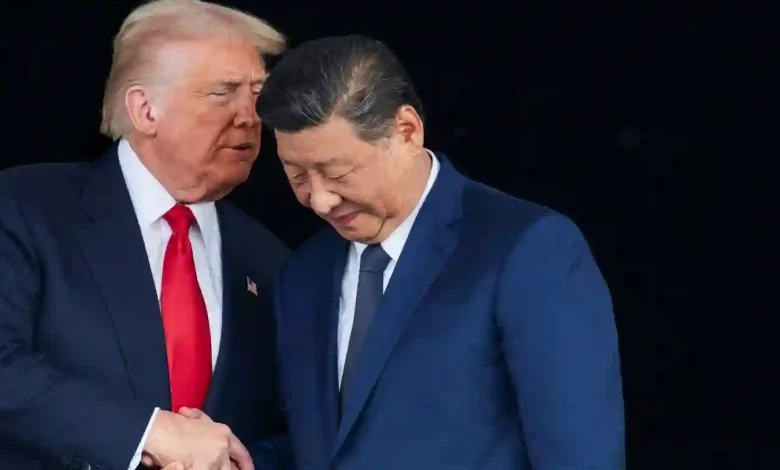
Table of Contents
Mutual economic exposure continues to serve as the critical bedrock preventing an irreversible rupture between the world two largest economies. As Washington and Beijing prepare their delegations for crucial summitry between Donald Trump and Xi Jinping, capital markets have recalibrated their stance away from maximalist breakthroughs toward calculated stabilization. For corporate treasurers, equity analysts, and institutional asset managers, the dense matrix of bilateral trade, cross-border corporate revenues, and sovereign capital flows functions as an indispensable safety cushion. Rather than anticipating sweeping structural reforms or transformative trade accords, international investors recognize that the depth of shared financial vulnerabilities guarantees that neither capital can afford a sudden economic fracture.
A Strategic Financial Cushion for Global Capital
The institutional sentiment surrounding high-level diplomatic engagements has markedly matured. In previous geopolitical cycles, diplomatic summits generated speculative volatility, with equities rallying or tumbling on sudden tariff proclamations and abrupt press releases. Today, the commercial architecture connecting the United States and the People’s Republic of China is understood to possess structural inertia. Even amidst escalating strategic friction over technology access, advanced chipmaking, and international maritime choke points, the reality of mutual exposure restrains policy overreach. Investors operate on the understanding that both administrations possess an overarching structural incentive to avoid actions that trigger systemic market contagions.
Diplomatic preparations reflect this pragmatic containment strategy. Recent preparatory discussions demonstrate that both administrations prioritize preventing acute shocks over engineering dramatic diplomatic deals, a pattern visible in previous high-level contacts like sizing up bilateral counterparts without chasing unfeasible compromises. By setting public expectations intentionally low, policy architects are insulating market participants from disappointment, creating an operational buffer within which routine trade flows can proceed without acute disruptions.
The Tangled Web of Bilateral Interdependence
Decades of commercial integration cannot be unraveled without inflicting historic collateral damage on consumer purchasing power and corporate balance sheets. American enterprise remains intrinsically tied to Chinese manufacturing efficiency, domestic assembly ecosystems, and intermediate goods production. Simultaneously, Chinese state planners rely on the American consumer base to sustain factory utilization and absorb excess capacity amidst sluggish domestic consumer sentiment in East Asia. This persistent dynamic underpins ongoing commodity flows, where agricultural trade and strategic energy shipments, such as vital energy shipments and commercial contracts, continuously tether both economies together despite rhetorical hostility.
Furthermore, capital integration persists across equity markets and foreign direct investment channels. Western consumer brands, medical technology conglomerates, and automotive innovators generate significant margins within Mainland China. Conversely, Chinese corporate leaders actively pursue international distribution channels, listing vehicles, and consumer footprint expansions, exemplified by cross-border retail giants orchestrating complex public offerings like the overseas equity listing pivots that maintain liquidity linkages between Western capital pools and Chinese business enterprises.
Managing Expectations for the Trump-Xi Dialogue
Summit agendas between Donald Trump and Xi Jinping are increasingly stripped of ornamental declarations. Instead, bilateral agendas emphasize tactical guardrails, communication deconfliction, and selective commercial off-ramps. Global market participants are deliberately factoring in a status quo outcome where neither side concedes ground on foundational economic policies. The White House preserves its prerogative to leverage targeted import duties and strategic export controls, while Beijing maintains state subsidies, industrial capacity investments, and stringent oversight over vital components.
This restrained dynamic extends across the broader geopolitical spectrum. Regional flashpoints in Eastern Europe and the Middle East demonstrate that while strategic rivalries intensify, diplomatic channels remain vital to contain systemic economic contagion, as illustrated when diplomatic leadership in mediating geopolitical flashpoints aims to prevent regional instability from dismantling core trade corridors. The summit is consequently designed not to deliver comprehensive resolution, but to codify rules of engagement that prevent localized disputes from spiraling into financial crises.
Tariff Threats Versus Supply Chain Realities
Public posturing often contrasts sharply with boardroom adjustments. While campaign rhetoric frequently weaponizes the specter of universal tariff increases, supply chain logistics reveal an intricate process of diversification rather than outright decoupling. American multinationals have operationalized ‘China Plus One’ sourcing models throughout Southeast Asia and Latin America; yet, a vast share of the upstream capital equipment, chemical precursors, and subcomponents traversing these third-party corridors still originates in Chinese industrial centers. Consequently, blunt fiscal instruments such as universal tariffs risk raising production overhead for domestic manufacturers, a realization that has repeatedly tempered aggressive executive mandates.
Similarly, Beijing’s retaliatory levers carry self-limiting constraints. Aggressive boycotts of American agricultural commodities or restrictions on rare-earth exports provide short-term leverage, but risk permanently accelerating Western friend-shoring and driving capital outflows. The mutual exposure of supply ecosystems functions as an economic deterrent, establishing an equilibrium wherein neither side can deploy maximal economic weapons without incurring self-inflicted systemic pain.
Vulnerability Across Strategic Industrial Sectors
The operational dependencies linking the two economies vary markedly across key commercial sectors, illustrating why a blanket economic confrontation remains deeply impractical:
| Industry Sector | U.S. Strategic Exposure | Chinese Strategic Exposure | Net Stabilization Impact |
|---|---|---|---|
| Semiconductors & Electronics | Critical dependency on assembly, testing, and legacy node components. | Reliance on advanced electronic design automation (EDA) software and lithography tooling. | High; mutual vulnerabilities limit aggressive unilateral blockades. |
| Agriculture & Commodities | High export concentration for soybeans, corn, pork, and specialty agricultural crops. | Demand for consistent food security and livestock feed supplies at predictable prices. | Moderate; provides reliable baseline transactional bargaining currency. |
| Clean Tech & Rare Earths | Reliance on processing capacity for lithium, battery components, and solar materials. | Dependence on international market access and export clearance to monetize production scales. | High; enforces mutual dialogue regarding energy transition timelines. |
| Financial Services | Exposure of major commercial banks to cross-border clearing, underwriting, and licensing. | Need to maintain international dollar access and encourage long-term foreign investment. | Very High; financial plumbing acts as an emergency circuit breaker. |
In critical tech domains, unilateral actions face significant industrial bottlenecks. As domestic industrial planners in East Asia accelerate programs aimed at domestic self-reliance, exemplified by strategic industrial initiatives like domestic chip material quotas, the intermediate dependencies ensure that a sudden, comprehensive technological embargo would disrupt global electronics manufacturing worldwide, including Silicon Valley’s core supply chains.
Market Stability Through Interlocking Financial Exposure
Beyond tangible goods, international currency stability and bond markets cement this interdependence. China remains one of the largest foreign holders of United States Treasury instruments. While Beijing has steadily diversified foreign exchange reserves into bullion and alternative sovereign debt to mitigate geopolitical sanctions risk, rapid liquidation of American paper assets remains virtually impossible without triggering devastating capital losses on Beijing’s own balance sheets. The dollar’s preeminent role in global clearing mechanisms ensures that Beijing must preserve operational liquidity to conduct international trade.
Simultaneously, American financial institutions maintain significant commercial real estate footprints, asset management ventures, and venture capital portfolios tied directly to Asian growth trajectories. This mutual entanglement prevents the deployment of extreme financial sanctions that could threaten the stability of the global banking system. Sovereign lenders and multilateral agencies recognize that maintaining stable bilateral financial channels is non-negotiable for preserving global macro liquidity.
How Global Asset Managers Are Positioning Portfolios
Rather than retreating completely from international exposure, global fund managers are deploying targeted hedging strategies that profit from controlled volatility while relying on structural coexistence. In the technology arena, hedge funds and private equity firms are tracking institutional coordination frameworks, such as multilateral dialogues addressing emerging technology governance standards, which ensure that both powers continue exchanging technical safety guidelines even during competitive standoffs. These communication lines indicate that complete regulatory estrangement remains improbable.
Institutional allocations are increasingly bifurcated: core domestic equity positions remain safeguarded against currency fluctuations, while tactical allocations exploit cross-border valuation disparities. The growing consensus among institutional asset managers is that diplomatic meetings will deliver tactical, micro-level adjustments—such as resolving specific cargo delays, adjusting agricultural import quotas, or clarifying export license processing—rather than grand, historic pacts. This low-expectation framework prevents broad-market selloffs while supporting risk assets that have priced in managed strategic competition.
The Diplomatic Horizon: Coexistence Over Breakthrough
As the diplomatic delegations finalize the summit details, the primary achievement will be the institutionalization of process over outcomes. Bilateral working groups addressing commercial friction, export compliance, intellectual property protections, and strategic tech governance will continue to meet behind closed doors, providing institutional continuity beneath political headlines. Even in advanced scientific and frontier frontiers, where competitive rivalries are sharpest, such as national initiatives governing aerospace developments and orbital operations, administrative frameworks prioritize mutual monitoring over reckless escalation.
Past diplomatic engagements, including previous bilateral dialogues like the high-stakes bilateral negotiations addressing global friction, demonstrate that stable communication channels serve as self-correcting mechanisms during heightened friction. For the global investment community, the upcoming Trump-Xi meeting offers valuable reassurance not because it promises peace, but because it formalizes an enduring economic truth: the cost of disengagement far exceeds the price of guarded, disciplined coexistence. So long as mutual economic exposure persists, financial markets retain their most dependable structural defense against catastrophic macroeconomic decoupling.