Huawei Federal Trial Over Sanctions and Bank Fraud Begins 2026
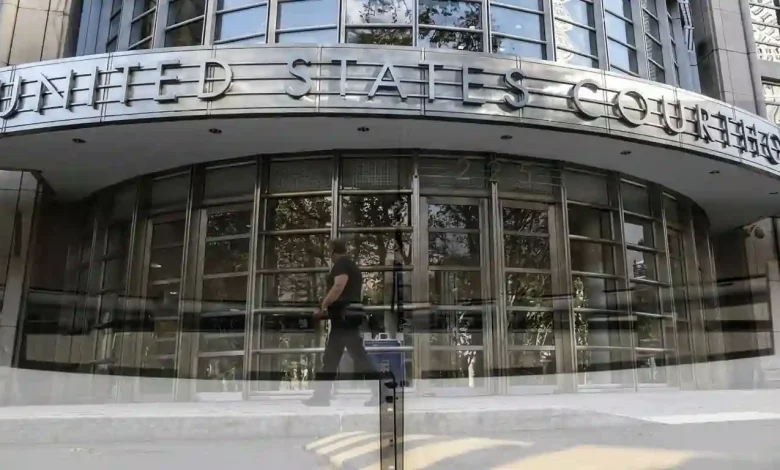
Table of Contents
Huawei Technologies has officially entered a federal courtroom in Brooklyn, New York, marking the long-delayed initiation of one of the most high-stakes corporate trials in U.S. history. This pivotal case, which has been in development for over eight years, places the Chinese telecommunications giant under intense scrutiny. Initially charged under secret indictments, the company now faces a public trial before U.S. District Judge Ann Donnelly. At its core, the prosecution seeks to prove that the company orchestrated a decades-long effort to systematically defraud global financial institutions, violate international embargoes, and steal sensitive intellectual property from major American corporations.
Introduction: A Historic Trial Begins in Brooklyn
The commencement of jury selection on Tuesday, September 8, 2026, marks the end of a long pre-trial phase characterized by complex legal battles, geopolitical sparring, and diplomatic friction. U.S. prosecutors accuse the Shenzhen-based tech giant of utilizing fraudulent corporate structures to conduct illicit business operations in heavily sanctioned countries. This trial is expected to last approximately three months, during which the federal government will present a mountain of evidence, ranging from internal emails to banking transactions, in an attempt to prove that the Chinese firm operated as a racketeering enterprise. This landmark legal battle occurs amid wider global market reactions that have kept international investors cautious about cross-border trade and tech-sector volatility.
For years, the U.S. government has positioned the company not merely as a commercial competitor, but as a direct national security threat. Security experts argue that its telecommunications equipment could be used by Beijing for espionage—a claim that the company has repeatedly denied. By bringing these charges to a federal jury, the Department of Justice aims to solidify its claims and vindicate a decade-long regulatory and legal campaign against the company. This trial serves as a critical test for the application of American criminal law to multinational entities operating primarily beyond domestic borders.
The Timeline of the Case: From Secret Charges to the Courtroom
The origins of this legal saga trace back to a sealed grand jury indictment returned in late 2018. The case erupted into the public spotlight in December of that year when Canadian authorities, acting on an extradition request from the United States, arrested Chief Financial Officer Meng Wanzhou—the daughter of the company’s founder—during a layover in Vancouver. This arrest triggered a major diplomatic crisis involving Washington, Ottawa, and Beijing, which was only resolved in late 2021. Meng entered a deferred prosecution agreement with U.S. authorities, admitting to making false statements regarding business transactions, after which her charges were dismissed and she returned to China.
Despite Meng’s return, the U.S. government continued to pursue criminal charges against the corporate parent itself. Over the years, prosecutors issued several superseding indictments, adding racketeering charges and expanding the scope of alleged intellectual property theft. The company’s legal defense team fought vigorously to have the indictment thrown out, arguing that the U.S. was overreaching its jurisdiction. However, in July 2025, Judge Ann Donnelly cleared the way for the trial, denying the defense’s motion to dismiss the bulk of the charges. This decision set the stage for the current trial as the Department of Justice continues its stricter enforcement of U.S. sanctions on Iran in an era of heightened global friction.
Understanding the Indictment: Racketeering, Fraud, and Theft
The core of the prosecution’s case rests on the Racketeer Influenced and Corrupt Organizations (RICO) Act, a statute originally designed to prosecute organized crime syndicates but increasingly applied to complex white-collar conspiracies. Under this framework, the government alleges that the tech firm operated a structured criminal enterprise. The 12 remaining counts in the active indictment cover wire fraud, bank fraud, money laundering, and conspiracy to commit trade-secret theft from five unnamed American technology companies. These companies are widely understood to include competitors in the fields of internet router design, mobile phone antennas, and specialized robotics.
Prosecutors allege that the company’s corporate culture actively incentivized employees to steal intellectual property from western competitors, offering bonuses and career advancement to those who successfully gathered proprietary data. To safeguard domestic intellectual property, federal authorities have stepped up their vigilance, resulting in high-level federal security audits across corporate America to prevent industrial espionage. In a recent move on September 4, 2026, prosecutors slightly narrowed their case by dropping two export-control counts and removing a specific trade-secret claim linked to Motorola, a strategic adjustment designed to streamline the presentation of evidence during the lengthy trial.
The Skycom Scheme: Bypassing Sanctions via Hong Kong Shells
A central pillar of the bank fraud charges involves Skycom Tech Co. Ltd., a Hong Kong-registered entity that operated in Iran. According to the prosecution, the company falsely portrayed Skycom as an independent business partner, when in reality, it was a fully controlled subsidiary. By concealing this relationship, the parent company allegedly misled international financial institutions, including HSBC, into processing dollar-denominated transactions that violated strict American trade embargos. The indictment asserts that the bank cleared over $100 million in transactions connected to Skycom, exposing the bank to massive regulatory penalties and legal liabilities.
These allegations have already resulted in severe financial and trade fallout across both eastern and western tech sectors, emphasizing the severe operational risks of dealing with blacklisted markets. To facilitate these illicit transactions, the enterprise allegedly set up intricate networks to transport high-tech equipment, using shipping lanes that frequently passed near crucial maritime chokepoints and economic blockades. The government plans to use the admissions made by Meng Wanzhou during her 2021 settlement as key evidence to prove that the bank was systematically defrauded.
Allegations of Surveillance and Lying About North Korea
Beyond bank fraud, the federal indictment details alarming activities involving foreign states. Prosecutors accuse the company of supplying sophisticated surveillance equipment to Iranian state security services. This hardware was allegedly used to monitor, intercept, and track the communications of democratic protesters during the 2009 Green Movement demonstrations in Tehran. This aspect of the prosecution underscores the human rights implications embedded within international technology transfers, portraying the corporation not just as an economic offender, but as an enabler of state-sponsored domestic repression.
Additionally, the company is charged with conducting illicit business operations in North Korea in direct violation of U.S. and United Nations embargoes. The historical backdrop of these regions is marked by long-standing political stalemates that have persisted for several decades, making any unsanctioned trade highly sensitive. The prosecution contends that the company lied to federal investigators about its operations in both North Korea and Iran, compounding its legal jeopardy with charges of obstruction and conspiracy.
How the Case Reshaped the U.S.-China Tech War
The multi-year legal offensive against the Chinese conglomerate has acted as a catalyst for the broader technological decoupling between Washington and Beijing. Following the initial indictments, the U.S. Department of Commerce placed the firm on its Entity List in 2019, effectively blocking it from purchasing advanced American software and microconductors. This restriction devastated the firm’s global smartphone business and forced it to pivot toward domestic supply chains and self-reliance. The fallout of these bans has significantly restructured global electronics supply chains, forcing companies to move manufacturing hubs to neutral territories.
Despite these severe pressures, the company has shown remarkable resilience, launching high-profile consumer products using advanced domestic silicon and navigating the complex investment landscapes that define modern international capitalism. Just hours before jury selection began in Brooklyn, the company held a major product launch in China, unveiling a state-of-the-art tri-fold smartphone to compete directly with American competitors. This parallel narrative of legal prosecution in New York and technological assertion in Shenzhen highlights the high-stakes tech war between the world’s two largest economies.
Corporate Defense and Legal Strategies for Huawei
Attorneys representing the Chinese corporation have consistently maintained their client’s innocence, characterizing the prosecution as a politically motivated assault aimed at hindering a formidable international competitor. The defense is expected to argue that the U.S. government is applying its domestic laws extraterritorially, asserting that many of the events described in the indictment occurred entirely outside the geographic boundaries of the United States and should not be subject to American criminal courts. They will also attempt to minimize the relevance of Meng Wanzhou’s 2021 admissions, arguing they do not constitute a direct confession of corporate guilt.
According to the Reuters news service, the selection of an impartial jury will be highly complex. Prospective jurors in Brooklyn must fill out extensive 27-page questionnaires designed to identify potential biases regarding the governments of China and Iran. The defense will seek to filter out jurors whose views on global geopolitics might prevent them from objectively evaluating the complex technical and financial evidence that will dominate the proceedings.
Summary of the Indictment and Dropped Charges
The following table provides a comprehensive overview of the active charges, the key allegations, and the recent changes made by the prosecution leading into the September 2026 trial:
| Charge Category | Core Allegations | Involved Entities/Regions | Status (September 2026) |
|---|---|---|---|
| Racketeering Conspiracy | Operating a structured criminal enterprise to steal trade secrets and defraud banks. | Global operations, American tech competitors | Active; central charge of the ongoing trial. |
| Bank and Wire Fraud | Deceiving international financial institutions regarding relationships with subsidiaries. | HSBC, Skycom Tech Co. Ltd. | Active; supported by Meng Wanzhou’s 2021 statements. |
| Sanctions Violations | Illicit transfer of U.S.-origin technology and equipment to restricted markets. | Iran, North Korea | Active; two export-control counts dropped on September 4, 2026. |
| Intellectual Property Theft | Conspiracy to steal proprietary hardware designs and robotic technologies. | Five U.S. technology firms | Active; one Motorola-related predicate removed by prosecutors. |
| Unlawful Surveillance Assistance | Providing specialized telecommunications equipment to track protesters. | Iran (2009 Green Movement) | Active; prosecuted under broader conspiracy counts. |
What Lies Ahead: The Stakes of a Three-Month Trial
As the legal teams prepare for opening arguments in the Eastern District of New York, the stakes could not be higher. For the United States, a conviction would vindicate its aggressive stance on national security and set a powerful precedent for prosecuting foreign state-backed corporations. It would also justify the ongoing trade restrictions and export controls that have reshaped global commerce over the last decade. For the Chinese tech giant, an adverse ruling could result in astronomical financial penalties and further isolate it from the international financial system, even as it attempts to maintain its position as a global leader in next-generation communications infrastructure.
Over the next three months, the Brooklyn courtroom will become the primary arena for a trial that blends complex financial litigation with explosive geopolitical theater. Observers from Washington, Beijing, and corporate boardrooms worldwide will be watching closely as a jury of ordinary American citizens decides whether one of China’s premier corporate champions operated as a criminal enterprise.