Maggie Gyllenhaal Confronts Film Industry Inequality at Venice 2026
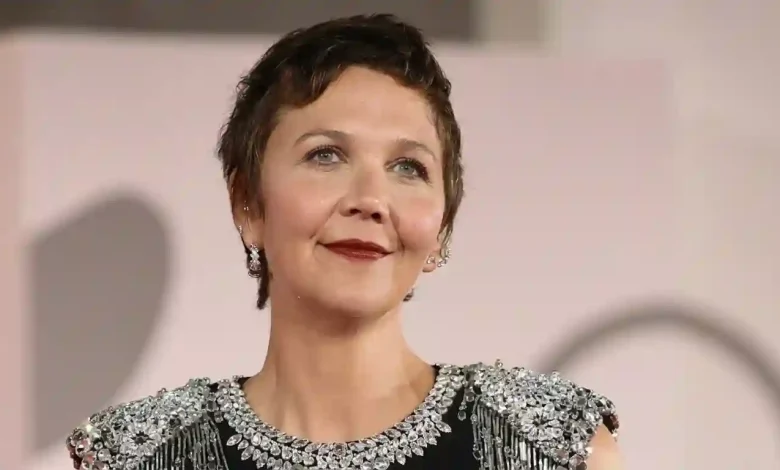
Table of Contents
Maggie Gyllenhaal, leading the prestigious jury of the 83rd Venice International Film Festival, has ignited a fierce global conversation regarding systemic sexism, financing barriers, and the deeply political nature of the cinematic medium. On the opening day of the festival, the acclaimed actor and director utilized her platform as jury president to challenge the film industry’s ongoing gender disparities. Rather than offering standard diplomatic platitudes, Gyllenhaal confronted the critical lack of female filmmakers represented in this year’s main competition lineup, raising a series of philosophical and practical questions that have resonated far beyond the canal-lined shores of the Lido.
Maggie Gyllenhaal and the Venezia 83 Jury Call to Action
As the Venice Film Festival commenced its 83rd edition, attention quickly shifted from the glamour of the red carpet to the pressing issues of representation, representation metrics, and political engagement. Serving as the president of the Venezia 83 international jury, Gyllenhaal is tasked with leading a panel of world-class artists to award the coveted Golden Lion. However, before a single film was screened, Gyllenhaal made it clear that her tenure would not bypass the hard realities facing contemporary creators. Her presence as jury head is itself a milestone, following her award-winning directorial debut with The Lost Daughter at Venice in 2021 and her highly anticipated feature The Bride! in 2026. Her unique position as both an accomplished actor and an independent auteur gives her remarks a profound level of authority, positioning her as a central figure in the ongoing battle for parity behind the camera.
The Unavoidable Politics of Modern Cinema
During the opening press conference, Gyllenhaal was asked whether cinema has an obligation to engage with political realities or if it should serve purely as a form of aesthetic escapism. Her response was immediate and uncompromising, declaring that cinema is “fundamentally, unavoidably political.” In Gyllenhaal’s view, any attempt to separate art from the sociopolitical context in which it is created is not only impossible but also strips the medium of its core value. Films are reflections of human experiences, power structures, and cultural conflicts; therefore, the act of making a movie is inherently an act of political expression.
Art as a Tool for Empathy in Times of Turmoil
This perspective is especially relevant in a time of global instability. Gyllenhaal argued that the true power of cinema lies in its unique ability to foster empathy during periods of severe global discord. At a time when international events are shaped by geopolitical turmoil and rising security concerns, movies offer a vital bridge of understanding. By allowing audiences to step into the lives of others, cinema can cultivate deep emotional connections that transcend geographical and ideological boundaries. Gyllenhaal emphasized that film allows us to confront difficult perspectives, inviting viewers to find empathy even for flawed or highly complex characters. It is this humanizing element that makes cinema such a potent political force, acting as an antidote to division and apathy.
Inside the Gender Disparity Controversy at Venice
The most contentious moment of the opening day occurred when Gyllenhaal was asked to address the glaring lack of female directors in the main competition. This year’s lineup initially featured only one film directed solely by a woman: Danish-Egyptian filmmaker May El-Toukhy’s Woman Unknown. Although the festival subsequently added the documentary Naza—co-directed by Rachel Szor—to the main slate, the near-total absence of female perspectives in the top tier remains a massive point of criticism. For years, major European festivals have faced protests and critical scrutiny over their selection processes, and Venice has frequently been at the center of this storm.
The Sarcastic Critique that Shook the Press Conference
In response to the query regarding this massive gender gap, Gyllenhaal delivered a deadpan, sarcastic remark that immediately captured the room’s attention. “I guess it’s just finally become clear that men make better movies than women do,” she joked, prompting an awkward laugh from Venice artistic director Alberto Barbera, who sat beside her. This sharp sarcasm was not merely a moment of levity; it was a devastating critique of the implicit assumptions that govern festival curation. By saying aloud the absurd logical conclusion of an all-male lineup, Gyllenhaal highlighted the ludicrous nature of the “quality over gender” defense that institutional leaders often deploy to justify exclusionary practices. Artistic expressions are not created in a vacuum, nor are they selected by objective arbiters. Artistic movements have historically utilized political songs in national campaigns and performance art to challenge dominant paradigms, yet cinema continues to struggle with entrenched hierarchies that limit who is permitted to create.
Gender Diversity in Competition Lineups (Comparative Overview)
To better understand the scale of the representation challenge at elite film festivals, consider the comparative data below, showcasing the representation of female-directed films in the main competition slots across key global festivals:
| Festival & Edition | Total Films in Competition | Female-Directed Films | Percentage Representation |
|---|---|---|---|
| Venice Film Festival (83rd Edition – 2026) | 21 | 2 | 9.5% |
| Cannes Film Festival (79th Edition – 2026) | 22 | 4 | 18.2% |
| Berlin International Film Festival (76th Edition – 2026) | 19 | 5 | 26.3% |
| Venice Film Festival (Historical Avg 2018-2025) | ~21 | ~1.8 | ~8.5% |
Systemic Financing Barriers for Women in Film
Moving beyond her sarcastic opening, Gyllenhaal offered a sober and analytical assessment of why this disparity persists. She identified the film financing model as one of the most significant barriers to gender equality in cinema. Securing financial backing is notoriously difficult for independent directors, but for women, the hurdles are systemic. Investors, studio executives, and completion guarantors routinely perceive projects led by women as higher financial risks. This cautious approach to financing is compounded by broader macroeconomic pressures; indeed, as inflation threatens to disrupt indie film production across the globe, financiers become even more risk-averse, defaulting to traditional, male-dominated formulas.
Economic Pressures and the Concept of High Art
These financial difficulties are not merely administrative; they are deeply tied to how cultural value is assigned. Gyllenhaal pointed out that because women have historically had different experiences of being alive in the world, the stories they want to tell and the ways they want to tell them differ from traditional patriarchal narratives. This artistic divergence can lead to women-led projects being dismissed as niche, sentimental, or simply not meeting the subjective standards of “high art.” When the gatekeepers of film financing operate with a narrow, homogenous understanding of what constitutes great cinema, they systematically deny resources to stories that do not fit their preconceived molds.
Demystifying “Who Gets to Decide” which Stories Matter
The core of Gyllenhaal’s critique lies in the question: Who gets to decide what is good and valuable? For decades, film culture has operated under the myth of meritocracy, suggesting that the “best” films naturally rise to the top. However, as Gyllenhaal pointed out, the criteria for “quality” are highly subjective and determined by a very small group of decision-makers. This concentration of cultural power means that the tastes, biases, and commercial interests of a select few dictate the global cinematic landscape. This dynamic has sparked various boycotts of major entertainment spectacles in recent years, as creators and audiences alike express frustration over institutional resistance to change.
To challenge this centralization of power, independent artists have increasingly sought alternative spaces to validate their work. From grassroots festivals to local storytelling initiatives, there is a growing movement to bypass traditional gatekeepers altogether. However, while these alternative avenues are essential for nurturing diverse talent, they do not carry the same industrial weight, funding access, or global distribution networks as major institutions like Venice. To achieve true systemic change, the gatekeepers themselves must be held accountable and their selection criteria must undergo deep deconstruction.
The Composition and Mission of the Venezia 83 Jury
Despite her pointed criticisms of the festival’s lineup, Gyllenhaal expressed immense pride and hope in the composition of the Venezia 83 jury. She is joined on the panel by an extraordinary group of international filmmakers and scholars, including Tunisian director Kaouther Ben Hania, celebrated Hong Kong auteur Johnnie To, Afghan director Shahrbanoo Sadat, French filmmaker Xavier Giannoli, British composer Daniel Blumberg, and Italian film scholar Francesco Casetti. This diverse assembly of artists represents a wide array of cultural, aesthetic, and political viewpoints.
Gyllenhaal noted that having a highly diverse, female-led jury is a crucial counterweight to the male-dominated competition lineup. As they evaluate the films vying for the Golden Lion, this jury has the power to redefine what is considered “valuable” and “high art” in real-time. Their decisions will send a clear message to the industry about which narrative styles, thematic concerns, and structural approaches deserve the highest recognition. In doing so, the jury can actively disrupt the traditional paradigms of prestige cinema, celebrating works that challenge systemic norms rather than those that simply replicate familiar industry formulas.
Historical Precedents and the “Quality vs. Gender” Fallacy
The debate surrounding the 83rd Venice Film Festival is not a novel phenomenon; rather, it is the continuation of a decades-long struggle. Historically, major film festivals have shielded themselves from criticisms of gender bias by hiding behind the shield of “artistic quality.” Festival programmers frequently claim that they do not look at the gender of the filmmaker, only the merit of the film. However, this defense ignores the systemic barriers that prevent women from ever reaching the submission pool in equal numbers. It also assumes that the criteria for judging “quality” are objective, when in reality, they are deeply influenced by the historical canon—which has been almost exclusively written by and for men.
This institutional resistance is not unique to Venice, nor is it confined to the film sector. Across the entire media and cultural landscape, from elite film programming to the way cultural influence and contemporary lifestyle media are curated, the same patterns of exclusion and selective validation emerge. When systemic exclusion is treated as an organic outcome of “taste,” it becomes incredibly difficult to dismantle. True progress requires institutions to recognize that their taste is a reflection of their history and that actively seeking out diverse voices is not a compromise of quality, but an expansion of it.
Looking Forward: The Path to Institutional Reform
Achieving genuine gender equity in cinema requires a multifaceted approach that addresses every stage of the filmmaking pipeline. It begins by supporting the creative pathways of emerging artists, ensuring that young female and non-binary directors have access to mentorship, training, and early-career funding. Without this foundational support, the talent pool will remain artificially restricted, and elite festivals will continue to claim that there are simply not enough high-quality films directed by women to choose from.
Furthermore, it requires a structural overhaul of how major festivals are governed and curated. Festival directors and programming boards must diversify their own ranks, ensuring that those who screen and select the films represent a broad range of life experiences. Over time, leadership transitions in public institutions and cultural organizations have proven to be the most effective catalysts for policy reform. When the leadership changes, the criteria for what is deemed valuable change with them.
As the Venice Film Festival moves forward, Gyllenhaal’s bold opening statements have set a challenging, reflective tone for the entire event. By refusing to stay silent on systemic sexism, she has used her prestige as jury president to demand a more inclusive, empathetic, and politically honest future for global cinema. The world will be watching to see if the industry takes her questions to heart, or if it continues to let the same narrow circle of gatekeepers decide which stories are allowed to matter.



One Comment