The Nelons plane crash: NTSB reveals final cause of 2026 accident
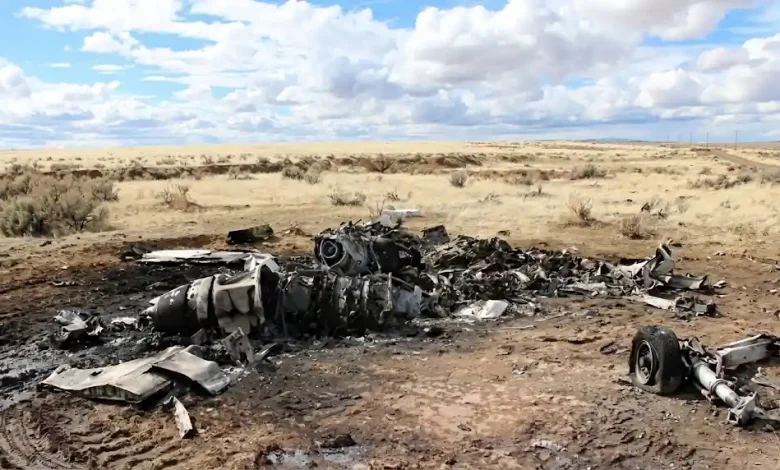
Table of Contents
The Nelons plane crash in northeastern Wyoming, which tragically claimed the lives of seven people on July 26, 2024, was caused by a combination of severe convective weather and a distracting autopilot disconnection, according to the National Transportation Safety Board (NTSB). In its final report released on August 26, 2026, the federal investigative agency outlined the harrowing details of the accident, which claimed three members of the Grammy-nominated southern gospel group The Nelons, along with their family, assistant, and the flight crew. The NTSB’s multi-year probe concluded that the Pilatus PC-12/47E turboprop experienced a sudden disconnect of its autopilot mode due to an extreme atmospheric updraft. Distracted by the unexpected system failure and operating in low-visibility conditions, the pilot suffered spatial disorientation, ultimately losing control of the aircraft and causing it to break apart in mid-air.
This final determination brings a solemn closure to an event that shocked the gospel music community and the aviation industry alike. By exploring the detailed atmospheric metrics and technical mechanics involved, the NTSB’s report serves as a critical educational template for turboprop operations under extreme weather pressures. The findings emphasize that pilot distraction during system failures can have catastrophic results when manual aircraft handling is suddenly required under instrument meteorological conditions.
Introduction to the Tragedy Nelons plane and NTSB Findings
The investigation into the disaster has been a rigorous, multi-year effort involving meteorological simulation, flight data recorder analysis, and physical wreckage reconstruction. For over twenty-four months, aviation experts analyzed how a highly sophisticated aircraft like the Pilatus PC-12 could suffer such a catastrophic structural failure. The released document confirms that structural failure was not a pre-existing mechanical issue but rather the direct result of aerodynamic forces exceeding design limitations after the pilot lost control.
The tragedy highlights a recurring theme in modern aviation safety: the interface between automation and manual piloting. While autopilot systems are highly reliable, they have operational limits. When weather conditions push these systems beyond their technical envelopes, the sudden transfer of control back to the pilot can create a high-workload environment that is extremely difficult to manage without immediate, focused manual inputs.
Chronology of the Flight and Final Moments
The fateful journey began on the afternoon of July 26, 2024, when the Pilatus PC-12/47E, bearing registration N357HE, departed Nebraska City Municipal Airport in Nebraska. The flight’s ultimate destination was Billings Logan International Airport in Montana, where the aircraft was scheduled to refuel. From there, the passengers planned to travel to Seattle, Washington, to join the highly anticipated Gaither Homecoming Cruise to Alaska—a premier event celebrating gospel music that the group had participated in for years.
The aircraft climbed smoothly to its cruising altitude of 26,000 feet, flying under Instrument Flight Rules (IFR) due to localized storms. At approximately 1:00 PM Mountain Time, as the plane entered northeastern Wyoming airspace near Recluse, it encountered severe localized convective storm activity. Flight data indicates that the plane briefly climbed higher before experiencing erratic altitude changes as the pilot fought violent turbulence.
About 15 seconds before entering a heavy precipitation zone, the pilot, Larry Haynie, contacted the Salt Lake City Air Route Traffic Control Center to declare an emergency, reporting the complete loss of the autopilot system. The air traffic controller responded immediately, asking where the pilot wanted to land. However, the pilot was unable to give an initial destination. When the controller repeated the query, Haynie replied that he was “trying to get control of the airplane”. This was the final transmission received from the flight. Radar and radio contact were lost shortly thereafter, and the wreckage was located hours later in a remote, rugged terrain roughly 12 miles northeast of Recluse, Wyoming.
Severe Meteorological Conditions and Convective Updrafts
A central element of the NTSB investigation was the evaluation of the atmospheric conditions surrounding the crash site. Satellite imagery and weather modeling reviewed by meteorologists showed that cloud tops in the area extended up to approximately 28,500 feet. The aircraft was flying directly through a region of active, developing convective storms that produced heavy localized rainfall, severe turbulence, and powerful vertical winds.
Crucially, weather models indicated that the updraft of air caused by this storm activity was extraordinarily powerful, reaching vertical velocities of up to 3,346 feet per minute. Such a severe upward force was beyond the design envelope of the autopilot system on the Pilatus PC-12. When the autopilot attempted to maintain the programmed altitude and attitude against the sudden, violent upward surge of air, the system’s torque and aerodynamic limits were exceeded, triggering an automatic safety disconnect.
Understanding upper-atmospheric winds and severe convective activity at high altitudes is a key focus not only for commercial flight planners but also for advanced high-altitude balloon projects that model stratosphere physics. In this case, the suddenness of the updraft left the pilot with virtually no warning, thrusting the aircraft into manual flight mode within seconds of entering a dense cloud layer with zero external visual references.
The Mechanics of Spatial Disorientation and Autopilot Disconnection
When the autopilot disconnected, the pilot was suddenly required to manually fly a high-performance turboprop aircraft in Instrument Meteorological Conditions (IMC). The NTSB report emphasizes that the pilot became highly distracted by the autopilot’s failure. Instead of focusing entirely on maintaining basic aircraft attitude via the primary flight display (PFD), the pilot likely spent critical seconds attempting to troubleshoot the autopilot disconnect or re-engage the system.
This distraction, combined with the lack of a visible horizon, led directly to spatial disorientation. Spatial disorientation occurs when a pilot’s sensory perceptions (specifically the vestibular system in the inner ear) conflict with the actual physical attitude of the aircraft. Without visual cues from the ground, a disoriented pilot can easily believe they are flying level when they are actually in a steep bank or dive, leading to erroneous control inputs.
In high-consequence environments, the psychological burden on operators mirrors that of business leaders navigating high-stress operations where rapid, clear-headed decision-making is paramount. In this tragic instance, the pilot’s inputs, influenced by disorientation, caused the aircraft to enter a steep, high-speed dive. The extreme aerodynamic forces and velocity exceeded the structural design limits of the Pilatus PC-12, resulting in an in-flight breakup. Witness reports from the ground supported this, with one bystander hearing a “loud whining noise” and another observing the aircraft in a “barrel roll” maneuver as pieces of the structure separated before the impact.
Technical Specifications and Crash Summary Table
To provide a clear overview of the accident details, the table below summarizes the key technical specifications of the aircraft, the environmental factors, and the timeline established by the NTSB.
| Parameter | Details / Data Points |
|---|---|
| Aircraft Model | Pilatus PC-12/47E (Single-Engine Turboprop) |
| Registration Number | N357HE |
| Date & Time | July 26, 2024, approximately 1:06 PM MT |
| Crash Location | Northeastern Wyoming (12 miles NE of Recluse, Campbell County) |
| Cruising Altitude | 26,000 feet |
| Max Storm Updraft | Approximately 3,346 feet per minute |
| Primary Cause | Autopilot disconnect, severe weather, pilot distraction, and spatial disorientation |
| Fatalities | 7 (all occupants onboard) |
Small private and commercial aviation sectors must balance safety with costs, even when faced with challenging consumer landscapes and volatile fuel prices. However, the absolute necessity of rigorous pilot training—particularly in manual handling during sudden autopilot disengagement—remains the highest priority in preventing similar catastrophes.
Honoring the Victims and Their Deep Legacy

The loss of seven lives on that July afternoon sent shockwaves through the southern gospel music world. Among those killed were:
- Kelly Nelon Clark: A foundational member of The Nelons and daughter of the group’s founder, Rex Nelon.
- Jason Clark: Kelly’s husband, a talented vocalist, producer, and primary songwriter for the group.
- Amber Nelon Kistler: Kelly and Jason’s daughter, who carried on the family’s multi-generational vocal legacy.
- Nathan Kistler: Amber’s husband, who assisted the group during their travels.
- Melodi Hodges: A close family friend and administrative assistant who supported the group on tour.
- Larry Haynie: The pilot, who also served as the board chairman for the Georgia Department of Corrections.
- Melissa Haynie: Larry’s wife, who accompanied him on the flight.
Inducted into the Gospel Music Association Hall of Fame in 2016, The Nelons were celebrated for their pristine harmonies, innovative arrangements, and profound faith. The abrupt departure of such influential artists mirrors the legacy of beloved cultural icons lost too soon, leaving fans and the broader industry mourning a profound artistic absence.
For surviving family members, handling sudden trauma and anxiety becomes an agonizing process that requires intense community and emotional support. Autumn Nelon Streetman, the sole surviving daughter of Kelly and Jason who was not on the plane, has expressed deep gratitude for the global outpouring of prayers and love as the family continues to heal.
Recovery Operations and Local Civil Impact in Wyoming
The geographical location of the crash presented severe logistical challenges for emergency responders. The plane went down in a rugged, remote pocket of Campbell County, north of Gillette, Wyoming. Wyoming is a state known for its wide-open, mountainous terrain, frequently hosting major global events such as the Jackson Hole monetary policy forum.
The impact caused a massive crater and sparked a localized wildfire that consumed 38 acres of timberland before local firefighting crews could bring it under control. Campbell County Coroner Paul Wallem noted that the recovery of the remains was incredibly arduous and traumatic for local road and bridge personnel who assisted with the excavation of the site. Fingerprint and DNA analysis were required to formally identify the victims.
In the wake of the tragedy, local and national political figures offered their deep condolences. Among them, Wyoming representative Harriet Hageman expressed sincere grief for the families of the victims and commended the swift, dedicated response of Campbell County’s first responders under such harrowing operational circumstances.
Aviation Safety Takeaways and Light Turboprop Operations
The NTSB’s final report highlights several systemic lessons for the general aviation community. First, the transition from automated flight to manual flight in high-workload situations remains one of the most hazardous phases of flight. Modern turboprops are highly automated, but pilots must remain highly proficient in manual stick-and-rudder skills, especially when operating in instrument meteorological conditions (IMC).
Aviation accidents of this magnitude also prompt legal and structural adjustments, highlighting how complex commercial insurance and risk management practices adapt to technical vulnerabilities in autopilot systems. Regulatory authorities continue to urge operators of high-performance single-engine turboprops like the Pilatus PC-12 to undergo regular simulator training focused on spatial disorientation, recovery from unusual attitudes, and immediate response to autopilot dropouts. By addressing these critical vulnerabilities, the aviation sector hopes to prevent future tragedies and protect the lives of those who travel by air.