Milky Way Devoured Ancient Dwarf Galaxy LKH 11.8 Billion Years Ago
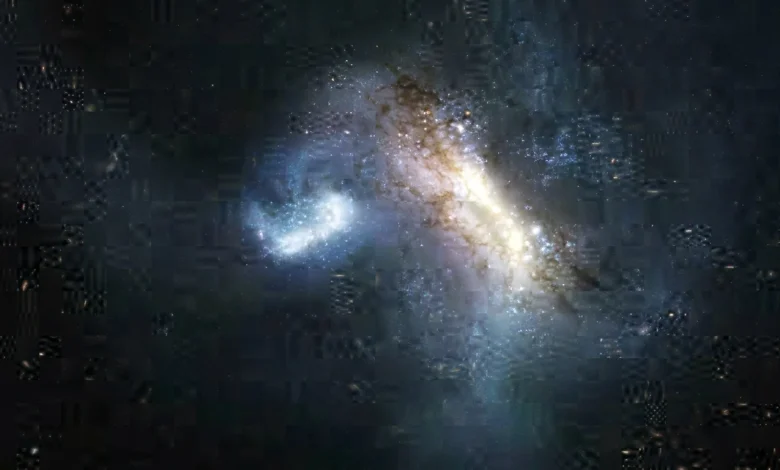
Table of Contents
Milky Way, a large and spiral-shaped galaxy that is home to hundreds of billions of stars including our sun, has taken a long and complicated path to achieve its current dimensions, as illustrated by new research documenting a milestone event early in its history. Scientists observing clusters of stars congregated near the Milky Way’s center have discovered evidence that our galaxy swallowed a smaller galaxy roughly 11.8 billion years ago, when the universe was less than 15% of its current age. The event represents the Milky Way’s earliest-known galactic merger and shows how it grew not only by forming its own stars but by merging with smaller galaxies caught in its gravitational pull.
For millennia, humans have looked up at the band of light stretching across the night sky, wondering about the origins of our celestial home. Today, amateur stargazers, including spectators across Spain and other regions of the world, can observe the majesty of our cosmic neighborhood. Yet, the physical processes that sculpted this barred spiral galaxy have remained largely shrouded in deep-time mystery. Thanks to sophisticated space telescopes, we are finally reconstructing the architectural history of the galaxy, piece by piece, trace by trace.
The latest finding, published in the prestigious journal Nature Astronomy, provides a definitive look at the first significant batch of bricks used to construct our galactic home. This research pushes our understanding of the Milky Way’s merger timeline back by a staggering 1.8 billion years, showing that the galaxy was already a voracious consumer of its smaller neighbors during its infancy.
The Discovery of Low-energy-Kraken-Heracles (LKH)
The captured dwarf galaxy has been officially designated as Low-energy-Kraken-Heracles, or LKH. This scientific moniker serves as an intellectual homage to three preceding, pioneering studies that theorized the existence of a highly ancient, low-energy merger event near the core of the galaxy. By combining these previous hypotheses, astronomers have solidified the existence of LKH as a distinct celestial entity that was completely absorbed by the primordial Milky Way.
Astrophysicists estimate that at the time of the collision, LKH contained a stellar mass equivalent to approximately 500 million times the mass of our Sun. While this may sound incredibly massive, it was a modest dwarf galaxy compared to the burgeoning progenitor of the Milky Way. Specifically, LKH was roughly one-quarter of the size of the Milky Way during that ancient epoch. The collision occurred just two billion years after the Big Bang, a period when the universe was experiencing rapid, chaotic, and highly energetic structural evolution.
Just as ancient civilizations left behind physical ruins that are today showcased in prominent Smithsonian exhibits, the LKH dwarf galaxy left behind a dense cluster of stellar survivors. These stars have survived for nearly 12 billion years, orbiting deep within the gravitational well of the Milky Way, waiting for modern technology to identify their exotic, non-native origins.
Utilizing Globular Clusters as Cosmic Fossils
To identify the remnants of LKH, scientists turned their attention to globular clusters—tightly packed, spherical collections of hundreds of thousands of stars. Globular clusters are among the oldest stellar structures in the universe, making them perfect cosmic fossils. Because these clusters are held together by strong self-gravity, they can survive the violent gravitational shearing of a galactic merger, remaining intact even as the rest of their parent galaxy is ripped apart and dispersed.
The research team, led by astrophysicist Davide Massari of the National Institute for Astrophysics (INAF) in Bologna, Italy, analyzed 39 distinct globular clusters located in the innermost 20,000 light-years of the Milky Way. ‘Our home is the Milky Way galaxy, but we do not know how our house was built,’ Massari remarked. ‘In this paper we discover where the first significant batch of bricks came from.’ By tracing the chemical composition and orbits of these clusters, the team demonstrated that several of them did not form inside the Milky Way but were instead brought in by the ill-fated LKH galaxy.
Teaching younger generations about these astronomical milestones is a critical part of physical science curricula. Just as educational administrators prioritize fundamental physical development by designing balanced healthy school lunches for growing children, scientific literacy programs must nurture the intellectual curiosity of students by introducing them to the grand histories of our physical universe.
Chronology of Milky Way’s Cosmic Cannibalism
Understanding the timeline of galactic growth requires placing the LKH merger within the broader context of the Milky Way’s evolutionary history. Galaxies do not grow in isolation; they are built through a continuous process of accretion, merger, and self-gravitation. The Milky Way has experienced at least three major mergers that have drastically reshaped its stellar disk, halo, and central bulge over billions of years.
To contextualize these monumental cosmic events, astronomers have built detailed chronological records of the Milky Way’s primary mergers. The table below outlines these major cosmic collisions, showcasing how our galaxy transitioned from a chaotic protogalactic cloud into the majestic barred spiral we see today.
| Galaxy Name | Estimated Time of Merger | Stellar Mass Contributed | Primary Structural Impact |
|---|---|---|---|
| Low-energy-Kraken-Heracles (LKH) | ~11.8 Billion Years Ago | ~500 Million Solar Masses | Earliest major merger; supplied primordial central ‘bricks’ |
| Gaia-Sausage-Enceladus (GSE) | ~10.0 Billion Years Ago | ~1 to 5 Billion Solar Masses | Violently deformed and thickened the stellar disk |
| Sagittarius Dwarf Galaxy | ~6.0 Billion Years Ago to Present | ~150 Million Solar Masses | Ongoing accretion; created stellar streams in outer halo |
| Andromeda Galaxy (M31) | ~4.5 Billion Years in Future | ~1 Trillion Solar Masses | Complete structural restructuring into giant elliptical ‘Milkomeda’ |
The Sagittarius Merger and Ongoing Accretion
The most recent significant merger in our galaxy’s history began approximately 6 billion years ago and continues to this very day. The Sagittarius Dwarf Spheroidal Galaxy, a small satellite galaxy, has been repeatedly looping through the Milky Way’s polar regions. Each pass through our galaxy’s dense disk strips Sagittarius of its gas and stars, stretching the dwarf galaxy into long, beautiful stellar streams that wrap around the Milky Way like cosmic ribbons.
This ongoing accretion is a prime example of the dynamical friction and gravitational tidal forces that dominate galactic evolution. As the Milky Way slowly digests Sagittarius, it triggers localized ripples of star formation within our own spiral arms. Some astronomers even theorize that previous passages of Sagittarius may have influenced the solar neighborhood, potentially helping to spur the formation of our own solar system roughly 4.6 billion years ago.
Gaia-Sausage-Enceladus and the Disk Deformation
Prior to the Sagittarius interaction, the Milky Way underwent a much more violent, catastrophic merger approximately 10 billion years ago. This event involved a massive dwarf galaxy known as Gaia-Sausage-Enceladus (GSE). Unlike the slow, gentle shredding of Sagittarius, the collision with GSE was a head-on impact that deeply affected the structural integrity of the young Milky Way.
The gravitational shockwaves from the GSE merger threw existing stars out of their orderly, circular orbits, puffing up the flat primordial galactic disk into a much thicker, more chaotic stellar configuration. This collision is believed to have populated the galactic halo with highly eccentric, metal-poor stars, while simultaneously delivering a massive supply of raw gas that catalyzed a dramatic spike in internal star formation. This event stands as a stark contrast to the quiet, ancient integration of LKH, which occurred when the Milky Way was still in its earliest, most malleable state.
Mapping the Inner Halo with Hubble and Gaia Data
To peer back 11.8 billion years, scientists had to conduct meticulous astronomical archaeology. They relied heavily on historical archives and modern data collected by the orbiting Hubble Space Telescope and the European Space Agency’s Gaia observatory. These advanced instruments allowed researchers to measure the positions, velocities, and chemical compositions of individual stars inside the Milky Way’s innermost 20,000 light-years with unprecedented precision.
Processing these massive astrometric datasets requires incredible computational infrastructure. Supercomputers must simulate the gravitational interactions of billions of stars over billions of years. Interestingly, these computational demands continue to rise even as the global technology sector adapts to supply chain challenges; for instance, even as we see reports where Nvidia scales back some of their hardware development, research institutions must increasingly optimize their software pipelines to squeeze every ounce of performance from existing supercomputing architectures.
These slow, silent galactic transformations stand in stark contrast to the rapid, chaotic changes that characterize human societies. While major geopolitical events or sudden U.S. economic shockwaves can disrupt global trade and restructure human institutions in a matter of days, galactic mergers unfold on timescales so vast that they are entirely imperceptible to any single generation of observers.
Analyzing Velocity, Age, and Chemical Fingerprints
The breakthrough in identifying the LKH merger came from analyzing three distinct characteristics of the globular clusters: their spatial velocities, their ages, and their chemical fingerprints. Stars born within the same parent galaxy share a common chemical profile because they formed from the same parental gas cloud. By measuring the abundance of heavy elements (referred to by astronomers as ‘metallicity’), researchers can distinguish ‘native’ Milky Way stars from ‘immigrant’ stars born in dwarf galaxies.
Using the high-resolution spectrographs on NASA’s Hubble Space Telescope, astronomers determined that the LKH globular clusters possessed distinct chemical signatures, including lower ratios of iron and alpha elements compared to native clusters of the same age. When combined with Gaia’s precise orbital data, which showed that these clusters share a distinct, low-energy orbital trajectory near the galactic core, the evidence became irrefutable. These stars were the ancient, battered remains of a completely absorbed alien galaxy.
The relentless pursuit of these deep-space mysteries represents a unique aspect of human culture. Some critics might view this highly theoretical pursuit of cosmic history as a form of intellectual whimsy-maxxing—investing enormous scientific capital simply to satisfy our curiosity about the ancient cosmos. However, understanding the physical laws that govern our universe ultimately provides the foundational knowledge required for all advanced technological achievements.
The Role of Dark Matter and Interstellar Gas in Galactic Growth
The merger with LKH did not merely add stars to the young Milky Way; it infused our home galaxy with a vast reservoir of raw materials. When a dwarf galaxy is pulled into the gravitational grip of a larger host, its interstellar gas is stripped away through a process known as ram-pressure stripping. This gas is compressed as it merges with the host galaxy’s existing medium, triggering rapid, spectacular bursts of new star formation.
Furthermore, dwarf galaxies like LKH are heavily dominated by dark matter—the invisible, mysterious substance that makes up the vast majority of the universe’s mass. By swallowing LKH, the young Milky Way absorbed its dark matter halo. This additional mass strengthened the Milky Way’s gravitational pull, making it easier for our galaxy to capture subsequent dwarf galaxies over the eons. The acquisition of LKH’s dark matter and gas acted as a vital catalyst, accelerating the growth of the Milky Way and setting it on the path to becoming the massive spiral galaxy we reside in today.
Tracing this complex chain of cosmic events is a monumental task that requires decades of international cooperation. This collaborative journey in science is an athletic, intellectual marathon, structurally comparable to Norway’s historic run in international sports, where meticulous preparation, steady execution, and long-term dedication eventually yield historic breakthroughs on the global stage.
Future Horizons: The Impending Collision with Andromeda
While looking backward 11.8 billion years allows us to understand the Milky Way’s origins, it also gives us the theoretical tools to predict its ultimate fate. The era of galactic mergers is far from over. Currently, the Milky Way and our nearest large neighbor, the Andromeda Galaxy (M31), are rushing toward one another at a velocity of approximately 250,000 miles per hour (400,000 km/h), driven by their mutual gravitational attraction.
In approximately 4.5 billion years, these two massive stellar systems will collide. Unlike the minor, asymmetrical mergers with dwarf galaxies like LKH, Gaia-Sausage-Enceladus, and Sagittarius, the collision between the Milky Way and Andromeda will be a merger of equals. The two galaxies will perform a complex, multi-billion-year gravitational dance, ripping away their respective spiral arms and throwing stars into wild, chaotic orbits. Eventually, they will settle down to form a single, massive, rounded system often referred to by astronomers as ‘Milkomeda.’
The scale of these cosmic timelines dwarfs the fleeting, ephemeral nature of human history. While historians document the brief, bright flashes of human culture—such as the profound, tragic legacy of cultural icons like Tupac Shakur: the tragic and brilliant figure whose artistic influence still echoes decades later—astrophysics forces us to look beyond our immediate temporal boundaries, reminding us that we are merely transient observers in an ancient, constantly evolving universe.