US Central Command Fires Hellfires as Gulf Tensions Surge 2026
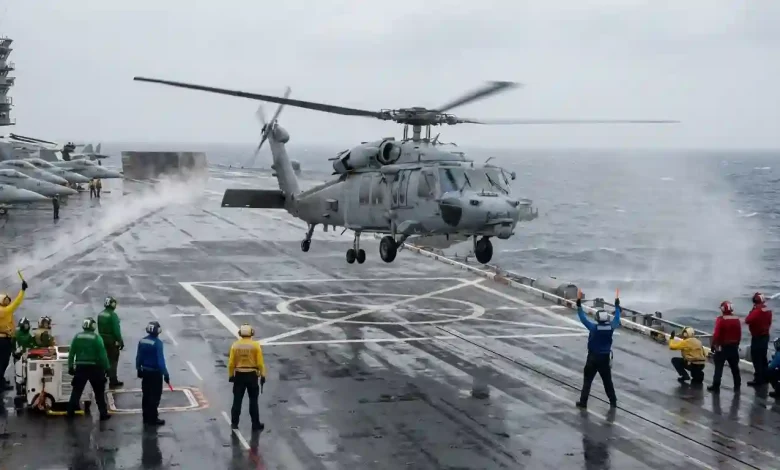
Table of Contents
US Central Command (CENTCOM) has announced a major maritime enforcement operation in the Gulf of Oman, escalating tensions across vital shipping corridors in the Middle East. In a highly volatile move that underscores the expanding scope of American naval operations, U.S. Navy MH-60 Seahawk helicopters fired two Hellfire missiles at the Panama-flagged commercial cargo ship M/V Vela Nova on Tuesday, disabling its steering gear. The kinetic strike transpired after the vessel’s civilian crew repeatedly ignored verbal and radio warnings while heading towards an Iranian port. This bold military action demonstrates that Washington is resolved to maintain an aggressive maritime posture despite the complex geopolitical ripples reverberating throughout the Persian Gulf and surrounding international waters.
The deployment of direct military force against commercial shipping outside of the immediate conflict zone represents a significant departure from standard naval interdictions. While regional powers scramble to contain the strategic fallout, the maritime domain remains the primary arena for power projection. Naval operations in these waters are no longer merely defensive but have transitioned into active enforcement actions intended to choke off trade lines destined for the Islamic Republic of Iran. Analysts warn that this aggressive operational framework could invite asymmetric retaliation from regional actors, further destabilizing the fragile commercial corridors that the global economy depends on.
Escalation in the Gulf of Oman: The Vela Nova Interdiction
The incident involving the Panama-flagged container ship M/V Vela Nova marks a dramatic re-ignition of hostilities after a period of relative calm following the July escalations. According to military briefs, the container vessel was transiting westbound through the Gulf of Oman, approximately 71 nautical miles off the coast of Pakistan, when it was intercepted by U.S. forces. The ship, registered under Golden Valley Marine Investment in Liberia and operated by Doris Shipping & Trading in Turkey, was reportedly attempting to transit towards an Iranian port in direct defiance of the ongoing maritime embargo. This operation has exacerbated the escalating maritime standoff in the Strait of Hormuz, pulling international commercial operators directly into the military crosshairs.
Prior to the missile deployment, U.S. naval units issued multiple warnings to the Vela Nova, instructing the crew to alter course and comply with the blockade directives. When the vessel’s crew refused to comply, a Navy MH-60 helicopter was authorized to strike the ship’s stern. The precision target selection focused on the engine room and steering gear to neutralize the vessel’s propulsion without causing catastrophic damage to the hull or the civilian crew. Following the strike, a fire broke out in the stern compartment, which was subsequently extinguished by the crew. The 17 civilian crew members safely abandoned ship, leaving the container vessel drifting “not under command” south of Gwadar, Pakistan.
Anatomy of the Strike on M/V Vela Nova
Military specialists indicate that the use of Hellfire missiles in this context was carefully calibrated. Rather than sinking the ship, the strike sought to establish a clear deterrent for other commercial fleets contemplating trade with Iran. By targeting the steering apparatus, CENTCOM forces successfully neutralized the ship’s navigational capacity, rendering it unable to continue its voyage. The tactical execution highlights the high degree of surveillance and rapid response capability maintained by U.S. naval forces in the Gulf of Oman, showcasing their readiness to enforce unilateral directives. However, such actions carry the profound looming threat of a wider Iran war that could draw in neighboring nations.
The geopolitical fallout from the Vela Nova interception is already being analyzed by maritime insurance firms and international shipping registries. Because the vessel was transiting outside the immediate boundaries of the Persian Gulf, the strike proves that the geographic boundaries of the U.S. blockade are wider than previously estimated. Commercial shipping companies must now re-evaluate the safety of their trade routes in the Arabian Sea and Gulf of Oman, as proximity to Iranian ports now carries the risk of direct kinetic engagement by Western forces. This shift is likely to drive up maritime insurance premiums and disrupt traditional supply chains across South Asia.
The Evolution of the U.S. Naval Blockade
This blockade enforcement mechanism was originally established by Washington on April 13, following a breakdown in regional peace negotiations. While a temporary 60-day memorandum of understanding was signed in June to allow unhindered civilian merchant navigation, the truce proved short-lived. Following renewed military skirmishes and attacks on regional shipping in July, the United States reinstated the maritime blockade with full operational authority. Under this current mandate, U.S. forces have redirected 55 commercial vessels, disabled three non-compliant ships, and boarded two. This aggressive stance reflects the administration’s military strategies regarding Iran, aimed at crippling Tehran’s economic channels through maritime interdiction.
The legal justification for the blockade remains a point of intense international debate. While Washington cites freedom of navigation rules and the need to prevent illicit arms and oil smuggling, Tehran rejects the legality of these actions, viewing them as acts of economic warfare. The unilateral enforcement of these measures by CENTCOM has placed neutral merchant vessels in highly precarious situations, where a failure to comply with radio instructions can result in missile strikes. As the international community grapples with the legal precedents being set, the actual enforcement on the water shows no signs of slowing down.
Energy Security and Strait of Hormuz Oil Flows
Amidst these severe military confrontations, the global energy market remains highly sensitive to disruptions. Yet, recent statements from senior American officials paint a surprisingly resilient picture of regional oil flows. The Strait of Hormuz, which connects the Persian Gulf with the Gulf of Oman, is widely regarded as the world’s most critical energy transit bottleneck. Disruptions here historically lead to massive spikes in crude oil prices, yet the current data indicates that crude exports have managed to recover to pre-conflict levels despite the ongoing hostilities.
The ability of global markets to absorb these shocks is largely due to coordinated security operations that ensure the physical protection of tankers transiting the area. While merchant container ships like the Vela Nova face direct enforcement actions, crude oil tankers are heavily protected by allied naval assets to prevent economic panic. This dual-track strategy—imposing a strict blockade on Iranian commerce while simultaneously securing the export of friendly oil—defines the complex maritime reality in the Middle East.
Energy Secretary Chris Wright’s Production Disclosures
US Energy Secretary Chris Wright confirmed that oil flows leaving the Strait of Hormuz are currently averaging nearly 9 million barrels per day. He credited this stabilization to the highly coordinated security efforts of the U.S. military and its Gulf allies, who have successfully kept critical sea lanes open. Furthermore, Wright noted that an additional 5 to 7 million barrels per day are successfully bypassing the Strait of Hormuz altogether via newly upgraded land pipelines and regional export facilities. This brings the total daily oil flows from the Persian Gulf region to approximately 15 million barrels per day, a volume that exceeds many independent trader estimates.
According to Wright, more than 20 million barrels of crude oil left the Gulf region on Sunday alone, a single-day total that is higher than pre-conflict averages. While these figures are designed to reassure international markets, they also highlight the massive stakes involved in the current conflict. Any successful retaliation by Iran or its proxy forces against these energy streams could instantly disrupt global economic stability, making the ongoing naval confrontations in the region a matter of primary concern for international policymakers and corporate leaders.
Dissecting the Geopolitical Realities of Global Energy Supplies
The resilience of the oil trade is a testament to the extensive investments made in redundant pipeline infrastructure by Gulf nations like Saudi Arabia and the United Arab Emirates. These alternative routes allow a significant portion of crude to reach global markets without transiting the vulnerable waters of the Strait of Hormuz. However, the debate over Strait of Hormuz maritime security is far from over, as military hardware and logistics remain stretched. Western forces must balance the defensive requirements of oil convoys with the offensive demands of enforcing a strict naval blockade, leading to concerns over potential stockpiling and munition shortages across allied naval units.
| Route / Method | Daily Export Volume | Security Mechanisms | Vulnerability Status |
|---|---|---|---|
| Strait of Hormuz (Vessel Transit) | ~9 Million Barrels | US Navy & Gulf Allies patrols | High (Subject to blockade and retaliatory strikes) |
| Upgraded Regional Pipelines | 5–7 Million Barrels | Land-based national security forces | Medium (Target of sabotage and infrastructure attacks) |
| Combined Gulf Total Flows | ~15 Million Barrels | Coordinated Allied Strategic Network | Varies (Depends on geopolitical escalations) |
| Peak Single-Day Output (Sunday) | >20 Million Barrels | Rapid mobilization and convoy systems | High (Exposes shipping fleets to sudden escalations) |
Diplomatic Manoeuvres: Iran Strengthens Regional Alliances
As maritime pressure mounts, Tehran is actively seeking to consolidate its regional alliances and secure alternative terrestrial trade routes. With Western forces successfully blockading its coastal ports, the Islamic Republic is turning its diplomatic focus toward neighboring land powers to mitigate its economic isolation. These diplomatic maneuvers are aimed at reinforcing bilateral security agreements, expanding land-based trade, and ensuring that terrestrial supply corridors remain open to counter the impact of the naval blockade.
By fostering deeper relations with neighboring states, Iran hopes to construct an economic cushion that can withstand the severe impacts of the blockade. These diplomatic efforts are not merely economic but carry significant security implications, as coordinated border control is essential to prevent internal instability and combat cross-border insurgencies. Tehran’s diplomatic offensive represents a highly calculated effort to demonstrate that despite intense Western maritime pressure, the country remains far from isolated on the regional stage.
Broadening Bilateral Cooperation with Pakistan
In a major diplomatic development, Iranian President Masoud Pezeshkian met with Pakistani Interior Minister Mohsin Naqvi in Tehran on Tuesday. During their meeting, Pezeshkian expressed Iran’s readiness to significantly deepen bilateral relations with Islamabad, focusing on border security, joint counterterrorism efforts, and economic integration. Naqvi, who is visiting the Iranian capital as part of Pakistan’s ongoing diplomatic efforts to act as a regional mediator, briefed the Iranian leadership on regional stability initiatives and conveyed a special message of cooperation from Pakistani Prime Minister Shehbaz Sharif.
The alignment between Tehran and Islamabad is highly strategic. Both nations share a volatile border that has historically been plagued by militant activity and smuggling. By deepening cooperation, Pezeshkian and Naqvi aim to secure their shared terrestrial borders, ensuring that overland trade remains uninterrupted by regional instability. For Pakistan, maintaining a balanced relationship with both Iran and its Western allies is a delicate diplomatic challenge, but Islamabad remains committed to facilitating dialogue to prevent a wider conflict from engulfing South Asia.
Border Security and Trade Talks with Iraqi Kurdistan’s PUK
Simultaneously, Iranian Foreign Minister Seyed Abbas Araghchi held an extensive telephone conversation with Bafel Talabani, the president of the Patriotic Union of Kurdistan (PUK) in Iraq. The discussion focused on strengthening economic and trade relations, as well as enhancing security coordination along their shared borders. Given the ongoing maritime blockade, maintaining secure and open border crossings with Iraqi Kurdistan is vital for Iran’s border economy. Talabani highlighted the concrete steps taken by the PUK to reinforce border security, emphasizing that the Kurdistan Region will not allow its territory to be used to destabilize neighboring Iran.
While Oman has attempted to broker a peaceful resolution, Tehran rejects United States proposals that do not guarantee comprehensive sanctions relief and the unfreezing of assets. These localized diplomatic discussions with Iraqi Kurdish leadership allow Iran to maintain tactical control over its immediate security environment, ensuring that western border provinces remain stable. By coordinating closely with political actors like the PUK, Tehran can effectively counter hostile insurgent groups operating in the borderlands, allowing it to focus its military resources on the escalating maritime theater in the south.
The Red Sea Theater: Houthi Assertions in the Bab al-Mandeb
The geopolitical conflict is not limited to the Persian Gulf and the Gulf of Oman; it has also expanded into the Red Sea and the Gulf of Aden. This wider geographic distribution of conflict places a severe strain on international maritime transit routes, as shipping companies are forced to navigate multiple high-risk chokepoints simultaneously. The coordinates of the conflict have effectively linked the maritime security of the Strait of Hormuz with that of the Bab al-Mandeb, creating a continuous corridor of instability.
The strategic synergy between regional militant groups and state actors has transformed the waters surrounding the Arabian Peninsula into a highly dangerous environment for commercial shipping. As Western coalitions focus their naval resources on blockading Iranian ports, regional proxy groups have exploited these security gaps to launch targeted attacks on allied shipping. This multi-theater maritime conflict challenges the ability of international coalitions to maintain global freedom of navigation.
Targeting Military Assets and Maritime Chokepoints
In a bid to expand the conflict, Yemen’s Houthis claimed responsibility for targeting a Saudi vessel allegedly carrying military equipment in the strategic Bab al-Mandeb strait. According to the Houthi-run Saba news agency, the strike was executed with precision to challenge the movement of military logistics through the Red Sea. This attack highlights the ongoing actions of the Tehran-backed Houthi rebels, who continue to target Saudi and Western-linked vessels to disrupt allied supply lines. The Bab al-Mandeb strait remains a critical chokepoint, and any successful disruption there directly impacts the flow of goods transiting the Suez Canal, compounding the economic pressures on global trade.
The Houthi targeting of military logistics ships represents a tactical escalation designed to increase the cost of maintaining foreign naval forces in regional waters. By launching missile and drone strikes against Saudi-linked assets, the Houthis seek to project power far beyond Yemen’s borders, demonstrating their ability to disrupt key maritime chokepoints at will. This continuous threat forces commercial operators to divert vessels around the Cape of Good Hope, significantly increasing transit times and transport costs, while keeping Western naval forces permanently deployed in high-intensity defensive operations.
Strategic Implications: The Future of Middle East Security
The rapid succession of events—from the kinetic interdiction of the Vela Nova in the Gulf of Oman to the resilient energy flows through the Strait of Hormuz and the expanding Houthi strikes in the Bab al-Mandeb—illustrates a highly complex security environment. The Middle East is currently caught in a transition phase, where traditional diplomatic frameworks have been replaced by active containment and military deterrence. The U.S. naval blockade, while economically damaging to Iran, has also accelerated Tehran’s diplomatic pivot towards land-based alliances with regional neighbors like Pakistan and local political actors in Iraq.
Ultimately, the long-term stability of global trade routes will depend on whether regional powers can establish a sustainable security architecture. While military enforcement actions can temporarily secure energy flows, they also carry the permanent risk of miscalculation and sudden escalation. As the international community watches the escalating standoff, the maritime domain remains the ultimate barometer of geopolitical tension in the Middle East, where a single missile strike can reshape the economic reality of the modern world.