Mecca Joint Defence Agreement Signed Amid US Blockade Of Iran 2026
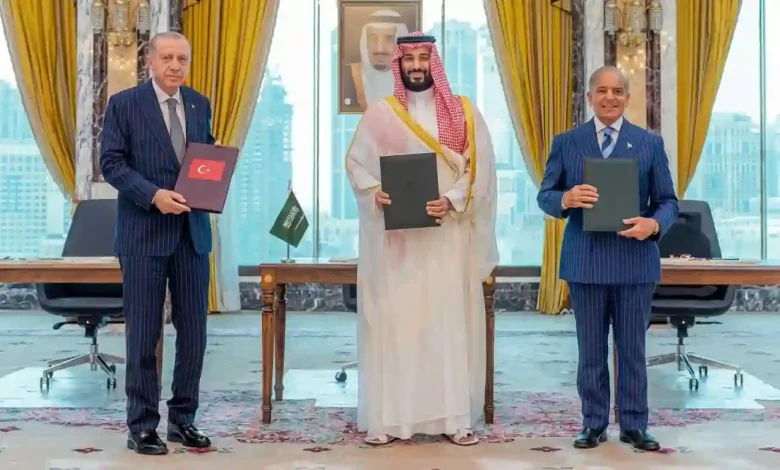
Table of Contents
Mecca Joint Defence Agreement has been officially signed by the leaders of Saudi Arabia, Turkiye, and Pakistan, marking a dramatic realignment of military alliances in the Middle East and South Asia. This landmark mutual defense pact, inked in the holy city of Mecca, establishes a collective deterrence framework where an armed attack against any one of the three signatory nations is considered an attack against all. The agreement emerges at a time when the broader region is engulfed in unprecedented instability, driven by a reinstated United States naval blockade of Iranian ports, complex maritime negotiations over the Strait of Hormuz, and a collapsing truce in Yemen that threatens to plunge the country back into large-scale civil war.
The Mecca Joint Defence Agreement: A Tripartite Security Landmark
The signing of the pact on August 7, 2026, represents a significant evolution in Islamic and Middle Eastern geopolitical architecture. Attended by Saudi Crown Prince Mohammed bin Salman, Turkish President Recep Tayyip Erdoğan, and Pakistani Prime Minister Shehbaz Sharif at Al-Safa Palace in Mecca, the summit solidified a strategic convergence that has been in development for nearly a year. Prior to this, the airstrikes against Iran entered their ninth day, signaling that traditional security umbrellas were shifting rapidly. The pact builds on the bilateral Strategic Mutual Defence Agreement signed between Riyadh and Islamabad in September 2025, but the addition of Ankara fundamentally expands its scope and capability.
This security crisis began intensifying after a fatal strike on American forces forced Washington to change its tactical posture, leading to a direct conflict that has severely exposed Gulf security vulnerabilities. By bringing together the financial leverage of Saudi Arabia, the nuclear deterrence of Pakistan, and the advanced defense manufacturing capability of Turkiye, the three nations are seeking to establish a self-reliant security framework. Turkish officials have emphasized that the agreement is purely defensive in nature and does not target any specific country, but rather seeks to promote regional peace through burden-sharing.
The Mechanics of the “Attack on One is an Attack on All” Alliance
At the core of the treaty is a collective defense clause that closely mirrors Article 5 of the North Atlantic Treaty Organization. Under this provision, Saudi Arabia, Turkiye, and Pakistan commit to treating an armed aggression against one signatory as an attack against all three. However, analysts note that the joint statement does not explicitly detail the automatic military obligations or troop deployment requirements. Instead, it lays down a robust framework for intensive intelligence sharing, technology transfer, and joint military training.
Deepening Trilateral Military Ties
Beyond the mutual defense commitment, the agreement outlines substantial collaboration in the defense industry, particularly the co-production of unmanned aerial vehicles (UAVs), air defense systems, and electronic warfare technologies. This cooperation aims to reduce reliance on Western defense contractors and build localized manufacturing chains. In the weeks following initial regional skirmishes, the U.S.-Iran conflict escalated further, demonstrating the urgent need for Middle Eastern states to secure independent tactical capabilities.
The Role of NATO Member Turkiye
Turkiye’s participation in the Mecca Joint Defence Agreement has drawn significant international attention. As a core member of NATO with the alliance’s second-largest standing military, Ankara’s decision to enter a trilateral defense pact outside of the traditional Western framework raised questions in Brussels and Washington. In response, Turkiye’s Communications Directorate rejected claims that the pact conflicts with its NATO obligations, clarifying that sovereign regional partnerships are complementary to its international commitments.
Signatory Capabilities and Defense Profiles
The combination of these three nations represents a formidable security block. To illustrate the complementary strengths of the signatories, the following table details their strategic profiles and primary military contributions under the agreement.
| Signatory Nation | Primary Leadership | Military Strength Niche | Economic/Diplomatic Weight | Primary Strategic Focus |
|---|---|---|---|---|
| Saudi Arabia | Crown Prince Mohammed bin Salman | High-tech Western defense systems, advanced air force capabilities | Deep financial reserves, leader of the Arab and Islamic world | Gulf security, safeguarding critical energy infrastructure |
| Turkiye | President Recep Tayyip Erdoğan | NATO-standard army, global leader in UAV technology and naval defense | Bridge between Europe and Asia, highly advanced defense industry | Black Sea, Mediterranean, and Levant stability |
| Pakistan | Prime Minister Shehbaz Sharif | Only Muslim-majority nuclear power, highly experienced standing military | Crucial South Asian geopolitical position, seasoned combat forces | South Asian security, protection of Indian Ocean shipping routes |
The US Naval Blockade of Iran: Enforcement and Maritime Impacts
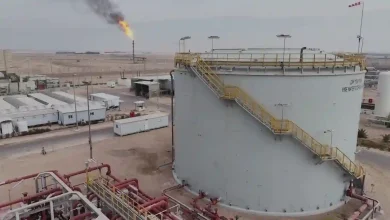
While the tripartite summit in Mecca was taking place, the United States military was actively enforcing a strict blockade of Iran. US Central Command (CENTCOM) confirmed that since reinstating the naval blockade on July 14, 2026, American forces have redirected 51 commercial vessels, disabled two non-compliant ships, and boarded two others to verify cargo compliance. This reinstatement followed the collapse of a brief, Pakistani-mediated interim ceasefire in June. As a direct response to these maritime interventions, Iran retaliated across the Gulf, targeting commercial shipping lanes and neighboring oil installations.
CENTCOM’s Renewed Blockade Measures
The blockade is designed to target maritime traffic entering or exiting Iranian ports, including key oil terminals, to starve Tehran of revenue. According to CENTCOM guidelines, neutral shipping traveling to non-Iranian destinations via the Strait of Hormuz is not obstructed, provided they submit to verification boardings. However, any ship attempting to breach the blockade is subject to defensive interdiction. This was demonstrated on July 25 when US forces boarded the Comoros-flagged tanker M/T Charminar in the Arabian Sea, emphasizing that non-compliance would result in immediate military enforcement.
Strait of Hormuz Negotiations: The Dispute Over Control and Fees
Amid the choking blockade, diplomatic channels have remained active but strained. Iran and Oman have continued high-stakes negotiations over a new operational mechanism for navigation through the Strait of Hormuz. While Iranian state media reported that a draft framework had been established, significant disagreements persist. Tehran is demanding extensive maritime control over the shipping lanes, including the authority to charge international vessels passage fees—a demand that Oman and western allies strongly oppose as a violation of international maritime law.
Oman’s Diplomatic Balancing Act
Oman, which shares oversight of the Strait of Hormuz, has long acted as a neutral mediator in regional disputes. Muscat is pushing for a mechanism that guarantees free passage for civilian vessels while accommodating some of Iran’s security concerns. However, the ongoing negotiations are complicated by the presence of US naval assets. Tensions spiked when key strategic military targets were engaged in the vicinity, demonstrating that diplomatic talks could easily be derailed by active combat operations.
Yemen Sliding Back Into Conflict: UN Envoy Warns of Fragile Peace
The regional instability is further exacerbated by the volatile situation in Yemen. United Nations Special Envoy for Yemen Hans Grundberg issued a grim warning on August 7, 2026, stating that the country is at a high risk of sliding back into a large-scale civil war. Grundberg highlighted renewed military escalations by Houthi forces in the strategic provinces of Marib and Hadramout, along with persistent attacks on commercial shipping in the Red Sea and Gulf of Aden. These actions directly threaten the fragile, de facto ceasefire that has held since the expiration of the 2022 UN-brokered truce.
Civilian Casualties and Renewed Strikes in Marib and Hadramout
According to Yemeni government officials, Houthi forces launched ballistic missiles and explosive drones at military units and civilian camps, causing significant casualties. In Marib, shelling of residential neighborhoods and displacement camps killed two civilians and injured 14 others. The Yemeni Health Ministry warned that these unilateral strikes represent a deliberate effort by the Houthis to undermine de-escalation efforts. Furthermore, as shipping channels through the region became increasingly volatile, crude oil prices hit record highs, compounding the humanitarian crisis with global economic shockwaves.
Geopolitical Implications: A New Regional Security Paradigm
The convergence of the Mecca Agreement, the US naval blockade, and the Yemen crisis points to a fundamental restructuring of Middle Eastern security. Historically, Gulf nations relied heavily on the United States to guarantee their defense. However, the protracted nature of the US-Iran conflict has led regional powers to seek alternative deterrence models. Even though the White House issued major clarifications regarding the scope of its maritime operations, the perception of Washington’s unreliability has accelerated the formation of local alliances.
This reality was particularly acute for Yemen, where the vital Bab-el-Mandeb gateway threatened to shut down entirely due to Houthi sea mines and drone attacks. For Saudi Arabia, securing its western flank in Yemen and its eastern maritime corridors in the Gulf requires a collective effort. The Mecca Joint Defence Agreement provides a trilateral safety net that combines Turkish tactical technology and Pakistani nuclear-backed military depth to safeguard Saudi Arabia’s vulnerable borders.
Regional and International Reactions to the Tripartite Pact
The announcement of the agreement has elicited diverse responses from global actors. Regional allies such as Somalia and Bahrain welcomed the pact, describing it as a landmark step toward strengthening collective security and regional stability. In contrast, Indian foreign ministry officials stated they are closely studying the national security implications of the deal, given Pakistan’s involvement. Meanwhile, Iranian officials, despite being the implicit target of the blockade, responded with calls for broader Islamic unity, arguing that regional security should be managed by regional states without foreign intervention.
As the naval blockade of Iran enters its second month and the threat of war in Yemen looms, the Mecca Joint Defence Agreement will face its first major test. Whether this trilateral alliance can successfully deter regional aggression or if it will accelerate the polarization of West Asia remains to be seen. What is certain is that the traditional rules of Middle Eastern diplomacy and defense have been rewritten.