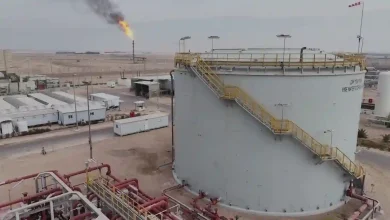
Iranian drones intercepted by Kuwait at Ahmad al-Jaber Air Base 2026
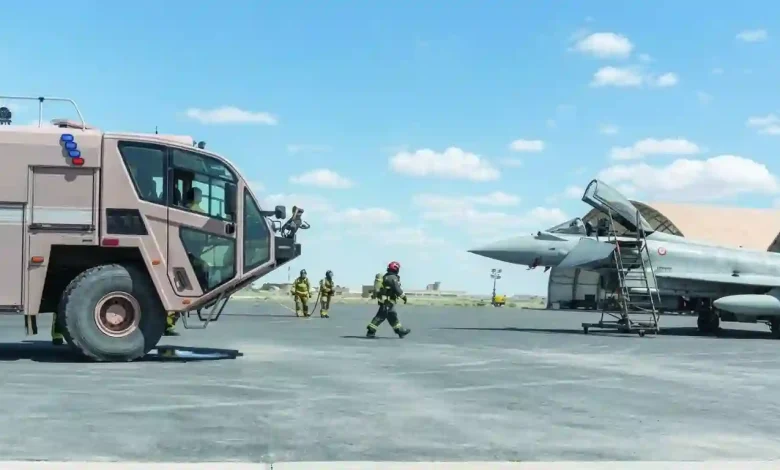
Table of Contents
Iranian drones became the latest flashpoint in the regional war as Kuwait’s air defense forces intercepted multiple hostile targets early Friday morning, local time. The escalation has marked a dangerous expansion of the ongoing conflict, directly dragging in Kuwait, which has traditionally sought a mediator role in the region. According to official military communiqués, the unprovoked strike targeted key military installations and vital national assets, especially as hostilities escalate and ceasefires collapse across the Middle East. While regional partners had hoped for a de-escalation, this latest operation demonstrates Tehran’s willingness to expand the geographic scope of its retaliation against American defense assets hosted on the Arabian Peninsula.
The Attack on Ahmad al-Jaber Air Base
The principal target of the Iranian strike was the Ahmad al-Jaber Air Base, a highly strategic facility located south of Kuwait City. The base is known to serve as one of the United States military’s primary air support, aerial surveillance, and logistics hubs in the Northern Persian Gulf. According to statements released by Iranian state media outlet Press TV, the military wing of the Islamic Republic deployed explosive-laden loitering munitions to strike fighter aircraft hangars, satellite communication installations, and equipment warehouses. This complex assault represents the 27th phase of Iran’s “Operation Thunderbolt,” which followed a series of intense US military strikes on Iranian territories.
Press TV aired video footage showing the launch of what appeared to be multi-rotor and fixed-wing kamikaze drones from undisclosed launch sites within Iran. The synchronized launch highlighted the sophisticated coordination between regular army units and the Islamic Revolutionary Guard Corps (IRGC). Despite the extensive fire and projectile trajectory shown in the video, the Kuwaiti Army reported that their early warning systems detected the threat before the drones could reach their primary targets, preventing catastrophic damage to the airfield’s main runway and critical maintenance structures.
Military and Operational Response by Kuwait
Kuwait’s Ministry of Defense acted swiftly to reassure the public and international allies of its defense capabilities. A military spokesperson took to social media platform X to announce that Kuwaiti defense assets successfully intercepted and neutralized the hostile drones. “The heinous Iranian aggression targeted a number of vital and military facilities, where the hostile targets were dealt with and destroyed, resulting in material damage as a result of falling shrapnel, without any human casualties,” the statement read. The spokesperson, Col. Saud Abdulaziz al-Atwan, emphasized that the military remains on its highest state of alert to defend national sovereignty, highlighting the sheer intensity of the conflict on day 151 of the broader war.
In addition to the defense of Ahmad al-Jaber Air Base, military officials confirmed that the air defense envelope successfully protected nearby civilian shipping lanes and industrial zones. The falling debris did, however, trigger minor fires in isolated areas, causing cosmetic and material damage to external perimeter fences and support vehicles. No personnel—Kuwaiti, American, or allied civilian contractors—were injured during the Friday morning barrage, which is a testament to the rapid engagement of Kuwait’s Patriot and Skyguard air defense systems working in tandem.
Tehran’s Stance and Operational Objectives
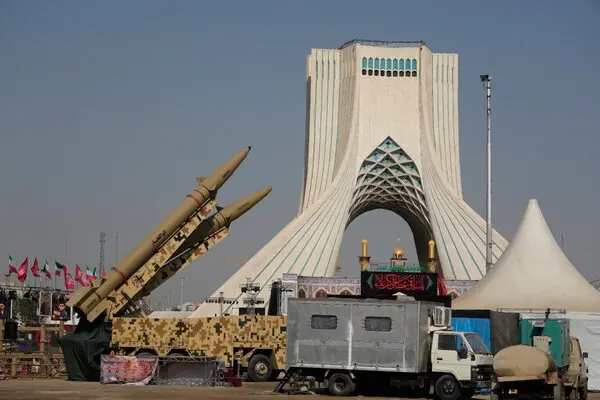
Tehran’s rationale for the strike was made clear in a subsequent press release by the Iranian Army’s Public Relations Department. According to Iranian military leadership, the targeting of American assets in Kuwait was a direct response to a “brutal attack” on a residential building on Qeshm Island in Southern Iran, which reportedly claimed the lives of a civilian family. The Iranian government warned that any regional nation hosting US forces and permitting the use of its soil or airspace for operations against Iranian territory would be deemed a legitimate target in their “Sacred Defense” campaign. This warning underscores the gravity of the ongoing direct combat between Washington and Tehran.
Military analysts point out that by directly targeting the Ahmad al-Jaber Air Base, Iran is attempting to impose a high geopolitical cost on neighboring Gulf states for their defense partnerships with Washington. Through asymmetric drone warfare, Tehran aims to signal that no military facility in the region is completely safe from its long-range strike capabilities, even as these regional states attempt to maintain a neutral or defensive posture. The use of low-cost, expendable drones allows Iran to test the limits of Western-integrated air defense networks while maintaining a degree of deniability and avoiding full-scale conventional warfare.
Broader Geopolitical Context of the 2026 Gulf Conflict
The strike on Kuwait is not an isolated incident but rather a continuation of a pattern of escalations that has engulfed several Arab nations in 2026. Over the past several months, countries like Saudi Arabia, Qatar, and Jordan have also experienced drone and missile overflights, many of which targeted logistics nodes and oil infrastructure, triggering massive global oil price volatility and economic shocks. The geopolitical alignment of the region is being tested as never before, as Gulf Cooperation Council (GCC) states seek to balance their historical security ties with the West against the immediate threat of Iranian retaliation.
These tactical strikes have evolved dynamically, as Iranian forces rely heavily on sophisticated missile adaptation and low-radar-signature drones to bypass defense nets. While Kuwait had previously managed to avoid the brunt of direct confrontations, the changing parameters of the conflict mean that even secondary logistics hubs are now within the active combat envelope. Observers fear that if diplomatic backchannels fail to produce a lasting resolution, the entire Gulf waterway could become a highly volatile combat zone, completely shutting down key economic transit corridors.
Summary of the Drone Attack in Kuwait
To provide a clear picture of the Friday morning incident and its wider implications, the following data table outlines the key parameters of the strike and the operational outcomes:
| Operational Metric | Key Details of the July 2026 Incident |
|---|---|
| Assault Mechanism | Loitering explosive-laden drones (Kamikaze / Suicide UAVs) |
| Primary Target | Ahmad al-Jaber Air Base, Kuwait (Host to US logistics and air support) |
| Secondary Targets | Vital government infrastructure and northern Kuwaiti logistics corridors |
| Defensive Countermeasures | Kuwaiti Air Force and Army Patriot and Skyguard air defense batteries |
| Damage Profile | Minor material damage from falling shrapnel and debris; no infrastructure destruction |
| Casualties | Zero military or civilian injuries reported |
| Claim of Responsibility | The Army of the Islamic Republic of Iran (Operation Thunderbolt – Phase 27) |
| Stated Justification | Retaliation for US military airstrikes on Southern Iran’s Qeshm Island |
US Troop Realignment and Regional Defense Alliances
In response to the growing vulnerability of bases across the Gulf, reports have emerged suggesting that the United States is actively reassessing the footprint of its military presence in Kuwait and neighboring states. The Pentagon has reportedly initiated plans to disperse certain air assets to more distant, fortified bases, hoping to mitigate the risk of a single catastrophic strike on clustered hangars. However, these defense adjustments come after brief lulls and temporary operational pauses earlier in the week, which some diplomats hoped would pave the way for a durable ceasefire.
At the same time, regional powers are attempting to build collective defense frameworks to counter the drone threat. Saudi Arabia recently announced the backing of 14 countries for a multinational “Maritime Defense Alliance” to secure international shipping routes, particularly around the Bab el-Mandeb Strait and the Arabian Sea. Despite these efforts, the financial strain on regional governments continues to escalate, adding billions to the unprecedented regional war costs borne by all parties. For Kuwait, maintaining high-readiness air defense posture requires continuous capital expenditure and seamless intelligence-sharing with Western partners.
Economic and Infrastructure Impacts of the Attack
The economic ramifications of drone incursions into Kuwaiti airspace extend far beyond the immediate material damage. Kuwait is one of the world’s most critical crude oil exporters, and any security threat near its oil-producing fields or export terminals sends immediate ripples through global energy markets. Though the Friday attack did not directly hit petroleum processing facilities, the proximity of the drone flight paths to key energy assets has forced insurance underwriters to recalculate war-risk premiums for tankers operating in the Northern Gulf.
This spike in operational risk has direct implications for global trade. Maritime logistics companies have reportedly begun exploring alternative routes, though bypassing the Gulf remains geographically and financially challenging. Kuwait’s government has sought to reassure international oil companies that its energy infrastructure remains heavily protected by multi-layered air defense grids. Nonetheless, energy analysts warn that a sustained campaign of low-cost drone strikes could successfully disrupt logistics chains, leading to localized supply bottlenecks and wider inflationary pressures across consumer economies.
Tactical Analysis of Drone Warfare in the Gulf
From a tactical standpoint, the attack highlights the evolving nature of modern asymmetric warfare. Drones have emerged as the weapon of choice for forces seeking to challenge technologically superior adversaries. Their low radar cross-section, ability to fly at low altitudes, and capability to be launched in saturated swarms make them incredibly difficult to intercept completely. Although Kuwait’s defenses proved highly successful on this occasion, the sheer volume of attacks across multiple fronts presents a continuous challenge for air defense crews who must remain vigilant around the clock.
As the regional situation remains fluid, the international community continues to monitor the diplomatic horizon. For Kuwait, the primary objective is to safeguard its borders and prevent its territory from being used as a battleground in the broader geopolitical standoff. Whether diplomatic initiatives brokered by neutral parties can successfully ease tensions remains to be seen. In the meantime, the drone interception on Friday serves as a stark reminder of the persistent danger looming over the Gulf region.