CPI Report 2026: How Volatile Energy Prices Threaten US Inflation Relief

Table of Contents
CPI measurements, scheduled for release by the Bureau of Labor Statistics (BLS) at 8:30 a.m. ET today, arrive at a critical juncture for the United States economy. While Wall Street is actively anticipating a notable deceleration in headline consumer price increases for last month, a major shadow looms over the broader macroeconomic landscape: the sudden and aggressive reversal of recent energy price declines. Just as households began enjoying marginal relief at the fuel pump, escalating geopolitical hostilities in the Middle East have driven crude oil benchmarks back to multi-week highs. Investors are questioning whether any disinflationary momentum captured in last month’s report is already outdated, setting up a complex policy test for Federal Reserve policymakers.
July 2026 Inflation Crossroads
As the summer of 2026 unfolds, the financial sector finds itself caught between trailing economic indicators and real-time geopolitical crises. Today’s data release represents the official record of consumer prices from last month, reflecting a period when global energy markets experienced a temporary but dramatic relief valve. However, because the consumer price index is by definition backward-looking, the soft figures expected by economists may mask a renewed inflationary wave that began forming in early July. This divergence makes the current report one of the most volatile and heavily scrutinized releases of the year, as traders attempt to separate short-term price drops from sticky, long-term structural inflation.
Inside the June CPI Projections
Before the recent oil market volatility, consensus estimates from leading economists pointed toward a minor victory in the fight against inflation. The consensus numbers indicate that we may see a deceleration in the overall headline pace, giving consumers a temporary reprieve. However, the internal components of the index reveal that the underlying mechanics of inflation remain far more complex than a single headline figure suggests.
Breaking Down the Headline Metrics
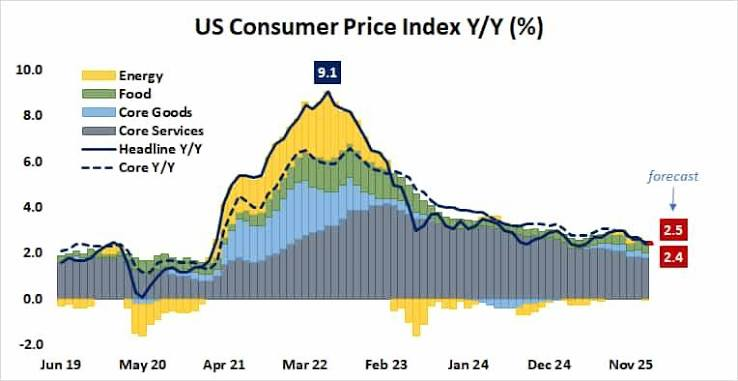
For last month, headline inflation is widely expected to showcase a monthly decline—potentially contracting by approximately 0.1%. This projected drop would pull the year-on-year headline rate down to roughly 3.8%, a welcomed descent from the prior month’s elevated 4.2% reading. This downward momentum was almost entirely fueled by a temporary plunge in international energy costs during the latter half of last month, which heavily offset stubborn price gains in secondary sectors. Economists emphasize that without this steep decline in retail gasoline and fuel oil, the headline index would have likely remained flat or even ticked upward.
Why Core Remains Resilient
In contrast to the headline metrics, underlying core figures tell a fundamentally different story. Core CPI, which excludes highly volatile food and energy sub-indexes, is forecast to remain stuck at a stubborn 2.9% annually, matching a monthly increase of 0.2%. Economists point to shelter costs, car insurance, and service-sector wage pressures as the primary drivers of this divergence. This persistent core print means that although “headline” numbers look promising on paper, the underlying price pressures of the domestic economy remain heavily insulated from downward market forces, keeping the average consumer’s wallet highly constrained.
The Volatile Energy Market
The core of this macroeconomic volatility lies in the dramatic and highly unstable global energy corridor. While the domestic economy has shown tentative signs of cooling, international events continue to exert an outsized influence on what Americans pay for basic goods and services.
Brief Respite from the Islamabad MoU
To understand the current dynamic, one must look back to the historic mid-June signing of the Islamabad Memorandum of Understanding (MoU). Brokered through international diplomatic channels, this peace accord between the United States and Iran was intended to conclude a devastating 110-day conflict. The immediate result of the signing on June 17 was a dramatic de-escalation of maritime hostilities. Iranian ports were cleared, oil blockades were temporarily waived, and global crude benchmarks reacted in kind. Oil crashed from the mid-$90s down to a local low near $70 per barrel, representing the exact disinflationary window captured in today’s backward-looking CPI report.
July Naval Clashes and Renewed Sanctions
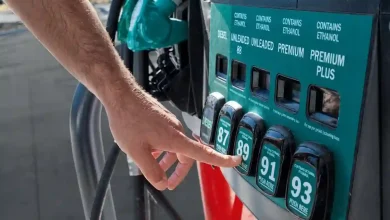
But this relief has proved remarkably short-lived. In the weeks following the MoU, relations between Washington and Tehran deteriorated with alarming speed. By early July, the United States reimposed its naval blockade of Iranian shipping, and President Donald Trump floated a highly controversial proposal to levy a 20% security fee on all commercial vessels navigating the Strait of Hormuz. Tit-for-tat military strikes quickly resumed, culminating on Monday with Iranian cruise missiles striking two United Arab Emirates tankers in Omani territorial waters. As a direct consequence, Brent crude surged past $86 per barrel on Tuesday morning, while U.S. West Texas Intermediate (WTI) climbed to over $80. This rapid escalation has completely erased the June price drop, signaling that the energy-driven disinflation recorded in last month’s CPI has already been offset by real-world market realities.
Comparative Economic and Inflation Projections
To contextualize these rapid shifts, the following table details the contrast between trailing CPI projections and the real-time energy market rebound occurring in July 2026:
| Inflation Component / Energy Benchmark | Previous Period (May 2026) | June Projections (Backward-Looking) | July Real-Time Status (As of July 14, 2026) | Primary Driver / Catalyst |
|---|---|---|---|---|
| Headline CPI (YoY) | 4.2% | Projected 3.8% | Under upward pressure | Rebounding fuel and crude benchmarks |
| Core CPI (YoY) | 2.9% | Steady at 2.9% | Sticky at 2.9% | Shelter, insurance, and service costs |
| Brent Crude Oil (Per Barrel) | Mid-$90s | Dropped to ~$70 | Rebounded to $86.04 | Reimposed naval blockade & Strait of Hormuz conflict |
| U.S. WTI Crude (Per Barrel) | Low-$90s | Dropped to ~$68 | Rebounded to $80.35 | Tit-for-tat US-Iran military strikes |
Delayed Transmission to Consumers
The primary concern for economists is the delayed transmission mechanism of these energy costs. While the BLS measures last month’s consumer prices retroactively, today’s retail gasoline and utility bills are already reflecting the July crude rebound. Energy costs act as a horizontal tax on the entire global supply chain. When crude rises, transportation costs scale upward, pushing grocery stores, manufacturers, and retailers to protect their margins by increasing end-user retail prices. Thus, even if today’s headline CPI shows a comforting contraction, it may represent the absolute bottom of the disinflationary wave, with consumer relief likely to take much longer to materialize than households hope.
Geopolitical Impacts and Washington Policy
These macroeconomic fluctuations are occurring alongside highly complex regulatory and legislative changes across the country. For instance, much like the rigorous corporate transparency rules seen when California’s food labeling law takes effects, the economic framework is shifting under heavy administrative scrutiny. Furthermore, just as geopolitical tensions in the Middle East have left the Defense Department running out of cash amid shifting foreign conflicts, energy security remains tied directly to military posture and national budget priorities.
Political stability is similarly pressured. Similar to the public scrutiny surrounding high-profile corporate controversies, such as the gates epstein testimony unpacking the blackmail allegations, federal agencies are operating under a lens of deep suspicion. As energy policy shifts, much like the recent regulatory shifts where Anthropic Mythos 5 cleared US eases strict artificial intelligence guidelines, energy markets must balance government intervention against free-market forces.
In the background, domestic political leaders also face intense scrutiny, including reports that California Gov Gavin Newsom investigated for regional fiscal choices. This political uncertainty is reminiscent of other national governance shakeups, such as when Mitch McConnell breaks silence fall caused waves of speculation across Capitol Hill. At the state level, legislative battles intensify over local affairs, such as the partisan redistricting Maryland targets sole remaining Republican seats, paralleling the heated debates in regional politics like the Michigans Democratic Senate debate Stevens featured on local economic issues.
The Federal Reserve’s Policy Dilemma
For the Federal Reserve and its newly appointed Chairman, Kevin Warsh, today’s CPI report represents an early and incredibly complex policy test. The central bank has maintained a highly restrictive monetary stance throughout 2026, attempting to tame sticky service-sector inflation. A softening headline CPI would normally provide the Fed with the political and economic cover to consider cutting interest rates. However, with Brent crude spiking back toward $86, the risk of a secondary wave of inflation is extremely high.
If the Fed cuts rates prematurely based on last month’s retroactive data, they risk overstimulating an economy already dealing with a massive energy shock. Conversely, keeping rates elevated as the consumer economy slows could inadvertently trigger a broader economic recession. Economists expect Warsh’s upcoming semi-annual testimony before Congress to reflect this delicate balancing act, emphasizing data-dependency while keeping a close eye on the volatile Strait of Hormuz.
Long-Term Economic Outlook
Ultimately, today’s BLS report will prove that inflation is nowhere close to being fully resolved. The temporary relief offered by the short-lived Islamabad MoU has evaporated, replaced by a highly volatile energy landscape that will likely push headline inflation higher in the coming months. For consumers waiting for relief, the reality is clear: price declines will take much more time to filter through the economy, and the path forward remains highly dependent on geopolitical stability in the Middle East.



One Comment