California’s food labeling law takes effect to combat waste
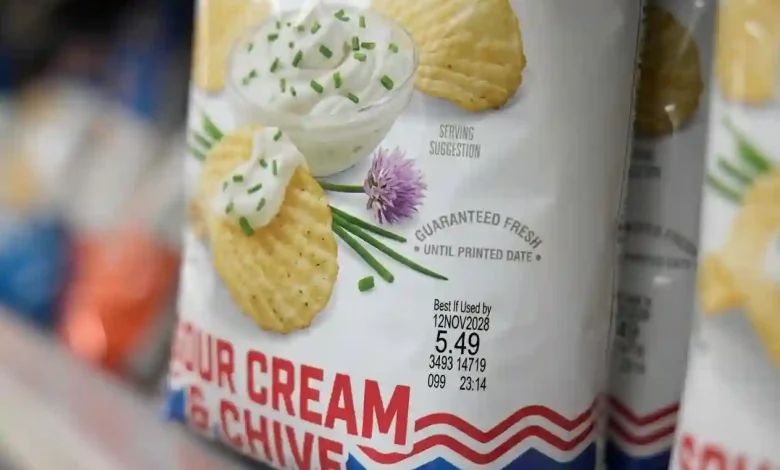
Table of Contents
California’s food labeling law, officially known as Assembly Bill 660, represents a groundbreaking shift in the state’s fight against consumer confusion and food waste. In Kimberley Kausen’s home, a passed “sell by” date on a jug of milk means different things to different family members. For her daughter, it means the jug belongs in the trash. For her husband, it means the milk is still good for a few more days. Kausen, a chef and cooking teacher in Irvine, California, is more discerning and often uses her sense of smell before deciding what to do with the milk. “I’ll put some thought into it, and if we’re talking about meat and poultry, I’m very cautious about that and for sure will do the smell test and the touch test,” she said. This classic household debate is not unique to the Kausen family; it is repeated daily in millions of homes across California and the wider United States, where a fragmented landscape of phrases on food packaging has historically left buyers guessing whether their food is genuinely unsafe to eat or merely past its absolute peak of freshness. The state’s new regulatory regime aims to resolve this issue by streamlining these arbitrary markers into a clear, unified standard.
Standardizing the Kitchen Debate
For decades, household grocery management has been treated as an exercise in deciphering a complex, unregulated code. The root of the problem lies in the organic evolution of the packaged goods industry, which historically lacked a single, governing standard for shelf-life communication. Without governmental guardrails, food manufacturers took it upon themselves to devise an array of terms designed to protect their brand reputations and assist retail distribution partners. Unfortunately, this resulted in an environment where individual consumers had to make complex food safety and quality determinations under pressure, often with zero training.
While trained chefs like Kimberley Kausen have the sensory confidence to smell, look, and touch foods to evaluate their safety, the average consumer feels massive anxiety when evaluating highly perishable proteins, dairy products, or bakery items. Under the stress of potential foodborne illness, the default reaction is understandably conservative: when in doubt, throw it out. The new regulatory regime targets this structural anxiety, transforming date labels from a source of consumer guesswork into a reliable system of safety and quality parameters.
The Legislative Blueprint: Anatomy of Assembly Bill 660
To address this persistent issue, California Assemblymember Jacqui Irwin (D-Thousand Oaks) introduced Assembly Bill 660 (AB 660), which was signed into law by Governor Gavin Newsom in September 2024. The law, which officially took effect on Wednesday, July 1, 2026, marks California as the first state in the nation to mandate uniform food date labeling. The legislation requires that any packaged food products sold within the state’s borders—with narrow exceptions such as raw eggs and infant formula—must adopt standardized, consumer-facing terminology if the manufacturer chooses to include date labels.
Rather than dictating whether a brand must include a date, the law targets the bewildering vocabulary currently printed on grocery items. Previously, research tracked over 50 distinct phrases used by manufacturers nationwide, ranging from “best before” and “expires on” to “freshest if enjoyed by”. Under the enforcement of the California Department of Food and Agriculture (CDFA), this linguistic chaos is being replaced with a strict, dual-term framework. Food companies must comply or face notable legal penalties and compliance risks, putting pressure on corporate supply chains across the country.
Two Clear Paradigms: Quality vs. Safety
The genius of AB 660 lies in its simplification of date categories into two clear-cut definitions: quality and safety. For products where a date is meant to signify peak flavor, texture, and aesthetic freshness rather than microbiological risk, manufacturers must use the phrase “BEST if Used by” or “BEST if Used or Frozen by”. This indicates that after the specified date, the food remains perfectly safe to eat, provided it has been stored under proper conditions, though its sensory characteristics might gradually degrade.
In contrast, for highly perishable items where aging presents a legitimate food safety hazard—such as certain deli meats, soft cheeses, and unpasteurized juices—the label must display “USE by” or “USE by or Freeze by”. This binary separation gives consumers instant clarity. When a shopper sees the “BEST” label, they know they can rely on their senses; when they see the “USE” label, they know it is a firm safety deadline to prevent foodborne illness.
The Elimination of “Sell By” Dates
Perhaps the most dramatic change under the new law is the outright ban of consumer-facing “Sell By” dates. Historically, “Sell By” dates were designed entirely as an internal inventory tool for retailers, notifying stock clerks when to rotate products on the shelves. However, displaying these dates on customer-facing packaging proved to be an environmental and financial disaster. Consumers routinely mistook “Sell By” dates for safety expiration dates, leading them to discard wholesome, completely edible food.
Under AB 660, manufacturers can no longer print “Sell By” in a consumer-facing manner. Retailers are still permitted to print coded, non-consumer-readable “Sell By” dates for logistical and inventory purposes, but these cannot be easily confused with the standardized quality or safety designations that the public relies upon. By eliminating this single phrase, the state removes the primary catalyst for premature food disposal in household kitchens.
Environmental Consequences of Labeling Confusion
The environmental stakes of this regulatory shift cannot be overstated. Food waste is one of the most pressing, yet solvable, contributors to the global climate crisis. When edible food is sent to the landfill, it is not merely a waste of nutrients; it represents a tragic squandering of the massive natural resources required to cultivate, harvest, process, package, and transport that food. Water, agricultural land, diesel fuel, fertilizers, and human labor are all discarded alongside that forgotten gallon of milk or loaf of bread.
By creating a clear standard, California hopes to keep hundreds of thousands of tons of edible food out of its waste management systems, thereby conserving the natural capital embedded in our agricultural supply chains. Eliminating confusion over shelf life directly prevents consumer-facing resource destruction.
Methane Emissions and the Climate Impact of Food Decomposed in Landfills
According to data from the California Department of Resources Recycling and Recovery (CalRecycle), Californians discard approximately 2.5 billion meals’ worth of unspoiled, nutritious food annually. This colossal volume of organic waste constitutes roughly 48% of the material sent to landfills across the state. Once buried in landfills, this organic matter decomposes anaerobically, generating immense volumes of landfill gas.
This process is responsible for 41% of California’s point-source methane emissions, a greenhouse gas with 84 times the warming potential of carbon dioxide over a 20-year timescale. By reforming labels and mitigating the premature disposal of food, AB 660 serves as a pivotal pillar in California’s broader strategy to dramatically slash short-lived climate pollutants and meet its ambitious net-zero emissions targets.
Economic and Social Tolls: Household Budgets and Food Insecurity
The financial implications for families are equally profound. The average American family throws away more than $1,300 worth of edible food every year, a figure that has climbed alongside rising grocery inflation and stubborn cost-of-living increases. Prematurely discarding food due to confusing dates is effectively throwing money into the trash bin.
Additionally, this confusion has historically exacerbated food insecurity. Currently, 1 in 5 Californians struggles to secure consistent, healthy meals. Food banks and hunger relief charities often reject large donations of perfectly wholesome packaged goods simply because they have passed an arbitrary, non-safety-related “Sell By” date. By standardizing labels, AB 660 ensures that safe, surplus food can be legally and confidently diverted to the millions of individuals who rely on the state’s emergency food network.
The Manufacturing Ripple Effect: Why California Rules the National Market
While Assembly Bill 660 is a California state law, its geographic impact is national in scope. California represents the largest consumer market in the United States. For national food and beverage manufacturers, operating two separate packaging, labeling, and distribution pipelines—one for California and one for the other 49 states—is economically and logistically unfeasible.
Just as California’s stringent vehicle emission standards and food additive bans (such as the ban on Red Dye No. 3 and potassium bromate) forced national corporations to reformulate their products across the board, AB 660 is compelling the food industry to standardize its packaging nationwide. Manufacturers are updating their machinery and label templates to comply with California’s rules, meaning shoppers in Texas, Ohio, and New York will increasingly see the standardized “BEST if Used by” and “USE by” phrases on their grocery shelves as well.
Historical Context and the Journey of Date Label Reform
The transition to mandatory standard labels has been a decade-long legislative journey. In 2017, California passed Assembly Bill 954, which directed state agencies to establish voluntary guidelines encouraging manufacturers to adopt “best if used by” and “use by” terminology. However, the voluntary approach ultimately failed to gain sufficient traction across the highly fragmented food industry.
Recognizing that voluntary compliance could not solve a crisis of this scale, lawmakers decided to make these standards mandatory with AB 660. This bold move builds on years of advocacy by groups like Californians Against Waste and the Natural Resources Defense Council (NRDC), who have long pointed out that a national, federal solution is desperately needed but stalled in Congress.
Comparative Analysis of New Standardized Phrases
To better understand the practical implications of the new law, it is helpful to look at how old, confusing terminology maps directly to the newly mandated standards. The table below outlines the changes that took effect on July 1, 2026.
| Old Terminology (Prohibited or Phased Out) | New Standardized Terminology | Primary Purpose | Consumer Action Required |
|---|---|---|---|
| Sell By, Pull By, Display Until | BANNED (Consumer-facing) | Retailer inventory management and stock rotation. | Ignore entirely; look for quality or safety dates instead. |
| Best Before, Freshest Before, Delicious By | BEST if Used By / BEST if Used or Frozen By | Indicates optimal quality, flavor, and texture. | Evaluate food using sight, smell, and taste before throwing out. |
| Expires On, Do Not Use After | USE By / USE By or Freeze By | Indicates food safety limits for highly perishable items. | Discard or freeze the item on or before the specified date. |
Consumer Psychology and the Science of the “Smell Test”
The shift to a streamlined labeling standard also addresses a major quirk in human consumer psychology. A 2025 national survey conducted by Harvard Law School, Johns Hopkins, and the food waste nonprofit ReFED revealed that 87% of consumers confidently believed they understood what various date labels meant. However, when put to the test, only 53% answered correctly. This vast disconnect explains why 43% of respondents admitted to always or usually discarding food near or past the date on the package.
By replacing vague jargon with words that directly denote quality or safety, AB 660 relieves consumers of cognitive fatigue. In the kitchen, people like Kimberley Kausen are returning to time-honored methods like the “smell test” and “touch test” for foods marked with quality dates, while respecting the strict safety guardrails of “USE by” dates. This intuitive combination of sensory testing and standardized labeling is the key to minimizing waste while keeping households safe.
Future Outlook: A De Facto National Standard?
As California’s landmark law rolls out across the state, policy experts believe we are witnessing the beginning of a national regulatory cascade. New York state lawmakers have already approved similar legislation that is awaiting the governor’s signature, and parallel bills have been proposed in several other states, including Illinois, Maryland, Massachusetts, New Jersey, and South Carolina.
Proponents hope that this groundswell of state-level action will finally prompt the federal government—specifically the U.S. Food and Drug Administration (FDA) and the U.S. Department of Agriculture (USDA)—to enact a single federal standard. Until that happens, California’s bold policy will serve as the de facto law of the land, driving an environmental, economic, and cultural revolution in how we value and consume the food on our tables.