Illinois data center tax incentives: Smart Pause by Pritzker to Strengthen Future Investment Strategy
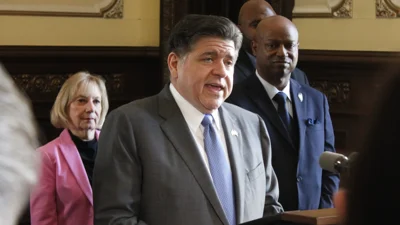
Illinois data center tax incentives are undergoing a historic transformation, as Governor JB Pritzker has announced a unilateral, executive-led pause on processing any new program applications starting July 1, 2026. This monumental decision, first shared in an exclusive with NBC News, follows a tense legislative spring session where state lawmakers failed to act on the governor’s proposed two-year moratorium. By intervening in the growth of the massive physical hubs that power modern cloud networks and artificial intelligence (AI), Pritzker is navigating a complex intersection of environmental preservation, economic competitiveness, and high-stakes local politics. The move highlights a growing national dilemma: how to embrace the next phase of technological expansion without placing a disproportionate burden on the public utilities and resources that local communities depend on daily.
Illinois data center tax incentives: Introduction to the Unilateral Pause
On June 5, 2026, Governor JB Pritzker directed the Illinois Department of Commerce and Economic Opportunity (DCEO) to freeze all incoming applications for the state’s Data Center Investment Program. The halt is set to take effect on July 1, 2026, creating a major regulatory inflection point for the technology sector. The governor’s decision is a direct consequence of legislative gridlock. Earlier in the year, Pritzker used his annual budget address to advocate for a legislative suspension of the tax incentives, arguing that the rapid growth of energy-intensive data storage facilities was outpacing the state’s infrastructure and threatening to inflate consumer utility bills. However, the Illinois General Assembly adjourned its spring session without passing the requested moratorium.
Faced with legislative inaction, the Pritzker administration turned to its administrative toolkit. Although the governor cannot unilaterally repeal the underlying 2019 statute that created the tax incentive program, the executive branch retains operational control over the DCEO. By pausing the administrative processing of new agreements, Pritzker has enacted a functional freeze on the state’s signature tech incentive. This pause acts as a strategic mechanism to force stakeholders—tech companies, utility giants, environmental groups, labor organizations, and state legislators—to negotiate a comprehensive regulatory framework ahead of the General Assembly’s fall veto session.
The Genesis of the Illinois Data Center Investment Program
To understand the gravity of the current pause, it is necessary to examine how Illinois emerged as a leading data center market. The foundation of this boom was laid in 2019 when Governor Pritzker signed a comprehensive bipartisan capital bill designed to restore Illinois’ competitiveness. Prior to 2019, Illinois lost countless tech projects to neighboring states because it lacked dedicated tax breaks for hyper-scale infrastructure. In response, lawmakers, labor unions, and business associations collaborated to establish the Data Center Investment Program, which transformed the state into an attractive destination for capital investment.
Why the 2019 Legislation Fueled a Multi-Billion Dollar Boom
The 2019 legislation offered highly attractive incentives. Under the program, certified data centers received a full exemption from state and local sales taxes on all IT equipment, servers, cooling systems, and electrical hardware for a period of up to ten years. To qualify, developers had to commit to a minimum capital investment of $250 million over a 60-month period and secure a project labor agreement (PLA) ensuring the utilization of unionized construction workers. The results were immediate and massive. Since its inception, the program has certified over 27 major projects, representing more than $8 billion in private investment.
The Chicago metropolitan area, particularly submarkets like Elk Grove Village, quickly expanded to become the nation’s third-largest data center market, trailing only Northern Virginia and Northern California. These massive buildings, often spanning hundreds of thousands of square feet, became crucial nodes for global cloud platforms, financial exchanges, and corporate networks. While the economic scale of the investment was undeniable, the program began drawing scrutiny as public officials and advocacy groups realized the long-term trade-offs associated with these massive, power-hungry structures.
Pritzker’s Unilateral Push: Why the Pause Starts July 1, 2026
The decision to pause the program represents a major policy pivot for Governor Pritzker, who previously championed the state’s tech-friendly environment. The primary driver of this shift is the accelerating resource footprint of the next generation of digital infrastructure. Modern data centers are no longer just passive storage facilities; they are being rebuilt to accommodate high-density artificial intelligence workloads. AI algorithms demand significantly more processing power than traditional cloud applications, which in turn requires a dramatic increase in energy usage, high-voltage transmissions, and water for thermal cooling.
Legislative Inaction in the General Assembly Triggers Executive Overreach
Pritzker sought to address these concerns via the legislative route during the spring of 2026. He called on state lawmakers to pass a two-year suspension of new data center tax credits, a move that would provide the state with the necessary time to study local community impacts and design modern regulatory guardrails. However, the General Assembly struggled to reach a consensus, as intense lobbying from business groups and construction unions stalled the proposals. With the legislative session ending in a stalemate, the governor chose to bypass legislative gridlock by leveraging administrative control. By halting the DCEO’s processing of incoming applications starting July 1, Pritzker has temporarily stopped the growth of new tax breaks, demonstrating his willingness to use executive authority to protect the public interest.
The Resource Drain: AI, High-Voltage Power, and Water Depletion
The technical realities of modern AI workloads have fundamentally changed the relationship between data centers and public resources. A single hyper-scale data center can consume as much electricity as a medium-sized city, and the rapid expansion of these facilities is placing unprecedented strain on regional electricity grids, such as the PJM Interconnection in northern Illinois and the Midcontinent Independent State Operator (MISO) in central and southern Illinois. This massive surge in demand threatens to outpace the retirement of older fossil-fuel plants and the development of new clean energy resources, creating a supply-demand imbalance that could threaten grid reliability.
How Mass-Scale Tech Infrastructure Strains Illinois Ratepayers
For ordinary residents, the risk is not just potential blackouts, but also financial strain. When utility companies are forced to upgrade transmission lines, build new substations, or acquire expensive peak-generation capacity to support massive tech facilities, the costs are often distributed across the entire ratepayer base. This means that local working families could face higher monthly electric bills to subsidize the infrastructure required by highly profitable multinational tech corporations. Furthermore, the environmental footprint extends to water systems; data centers rely on evaporative cooling systems that consume millions of gallons of water daily, posing a risk to municipal water supplies and local aquifers, especially during periods of drought.
The Proposed Legislative Remedies: The POWER Act and Beyond
In response to these systemic threats, environmental groups and consumer advocates have rallied behind a series of legislative solutions. Chief among these is the POWER Act (SB4016 / HB5513), championed by Midwest energy advocates at the Natural Resources Defense Council (NRDC). The POWER Act aims to establish nation-leading regulatory guardrails, preventing the shifting of data center infrastructure costs onto everyday consumers. Under the proposed framework, developers would be required to fund their own grid upgrades and secure dedicated, off-site clean energy generation to power their facilities, ensuring that the state’s transition to renewable energy is not undermined by tech-driven demand.
Additionally, Pritzker’s administration has outlined several key requirements for any future regulatory framework. These include banning non-disclosure agreements (NDAs) that prevent local municipalities from disclosing the water and energy footprints of proposed developments, requiring data centers to transition to highly efficient closed-loop cooling systems, and mandating transparent annual reporting on resource consumption. These measures aim to restore public accountability, ensuring that communities are fully informed of the environmental and financial impacts of tech development before projects are approved.
| Feature / Metric | Active Program (2019 – June 30, 2026) | Unilateral Pause Phase (Starting July 1, 2026) |
|---|---|---|
| Application Processing | Processed and approved continuously by DCEO. | Suspended unilaterally by executive branch instruction. |
| Core Tax Benefit | Sales tax exemption on IT equipment for eligible facilities. | Unchanged for already certified centers; new entries halted. |
| Capital Investment Threshold | Minimum $250 million over 60 months. | Under legislative review for potential upward adjustment. |
| Job Creation Requirements | Hiring of full-time equivalent green energy & building trade jobs. | Under scrutiny due to low “permanent” job yield. |
| Environmental Guardrails | Voluntary or minimal reporting on water/power utility footprint. | Mandatory audits and resource accountability proposed. |
Political Implications: Electoral Math and 2028 National Ambitions
Governor Pritzker’s high-profile action on data center incentives cannot be separated from his broader political trajectory. Pritzker is currently running for a third term as Illinois governor and is widely considered a leading contender for the 2028 Democratic presidential nomination. In a national political landscape increasingly defined by populist anxieties over corporate influence, tech monopolies, and the rising cost of living, taking a stand against unregulated tech expansion represents a powerful, voter-friendly message. By framing his intervention as a defense of “working families” against the insatiable resource demands of Big Tech, Pritzker is tapping into a key populist issue that crosses traditional party lines.
The move allows the governor to project strength as a leader who is willing to make tough, independent decisions, even when it means challenging powerful corporate interests or risk-averse factions within his own party. In a national primary, the ability to demonstrate a commitment to both environmental sustainability and consumer protection, while maintaining a strong record of fiscal responsibility, could help Pritzker build a compelling narrative for national voters. However, this strategic maneuver also comes with significant domestic political risks, as it threatens to alienate key components of his instate coalition, most notably organized labor.
Economic and Labor Backlash: A Deepening Stakeholder Divide
While environmentalists and consumer advocates have praised the unilateral pause, the decision has drawn sharp criticism from business leaders and trade unions. Organized labor, particularly the building and construction trades, has been one of the primary beneficiaries of the data center boom. Because the 2019 incentive program required project labor agreements, data center developments have generated thousands of high-paying, union construction jobs across Illinois. Labor leaders argue that a prolonged freeze on incentives will cause developers to cancel or postpone projects, threatening the livelihoods of electricians, pipefitters, and carpenters who rely on these major infrastructure developments.
Simultaneously, business groups like the Illinois Chamber of Commerce warn that the pause sends a damaging signal to the global investment community. They argue that by abruptly suspending a highly successful incentive program, Illinois risks gaining a reputation for regulatory instability. In a highly competitive tech market, developers prioritize predictability and long-term planning. A sudden, executive-led pause could lead major tech companies to reconsider their expansion plans in Illinois, potentially resulting in the loss of billions of dollars in private capital and the migration of highly specialized tech talent to neighboring states.
Regional Competition: Will Illinois Lose Ground to Midwest Neighbors?
The competitive dynamics of the Midwestern data center market add another layer of complexity to Pritzker’s decision. States like Indiana, Wisconsin, Iowa, and Ohio are actively competing to attract tech investments, offering aggressive incentive programs and streamlined regulatory pathways. Indiana, in particular, has emerged as a major competitor, leveraging its lower cost of power, favorable tax environment, and lack of stringent biometric privacy regulations to secure several high-profile developments. If Illinois maintains a prolonged pause on its incentives, it could inadvertently hand a major competitive advantage to its neighbors.
Because the regional electrical grid and fiber-optic networks span across state borders, developers can easily build large-scale facilities in northwest Indiana or southeast Wisconsin while still serving the Chicago market. Under this scenario, Illinois would lose out on the direct capital investment, property tax revenues, and construction jobs, while still experiencing many of the regional grid strains and environmental pressures associated with increased regional power demand. Finding a balance between robust regulation and maintaining economic competitiveness will be one of the most difficult challenges facing Illinois policymakers as they work to craft a permanent solution.
Conclusion: What Lies Ahead for Illinois in the Fall Veto Session
The administrative pause scheduled for July 1, 2026, marks the beginning of a critical transitional phase for Illinois’ tech sector. By utilizing executive authority to halt application processing, Governor Pritzker has effectively established a deadline, forcing all parties to collaborate on a viable regulatory framework. The upcoming fall veto session of the Illinois General Assembly will serve as the primary arena for these high-stakes negotiations, as lawmakers attempt to reconcile the competing demands of environmental protection, consumer affordability, organized labor, and industrial competitiveness.
The outcome of these negotiations will have far-reaching implications, not only for the future of technological infrastructure in Illinois but also for how other states approach the challenges of the AI revolution. If Illinois can successfully craft a balanced, comprehensive framework that safeguards public resources while still providing a predictable environment for responsible investment, it could establish a national model for tech regulation. However, if the state remains gridlocked, the prolonged pause could chill investment, highlighting the difficult trade-offs that policymakers must navigate in the era of rapid technological change.