Andes Hantavirus Quarantine: 5 Critical Updates You Need to Know
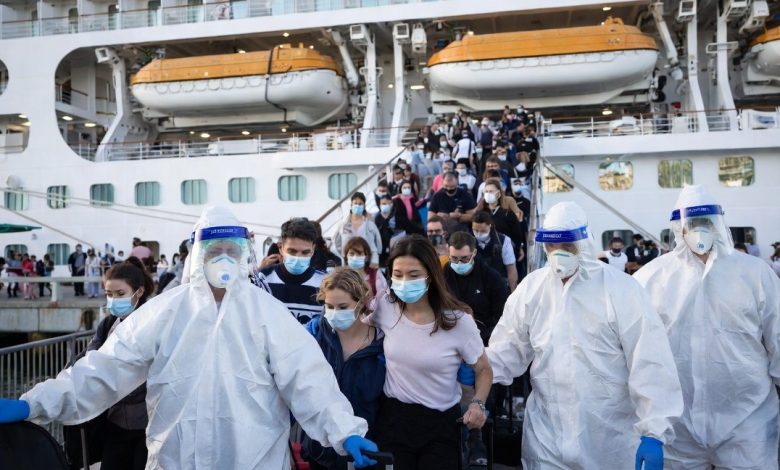
Andes hantavirus quarantine protocols have transitioned into a critical new phase as five asymptomatic American passengers previously isolated at the National Quarantine Unit in Omaha, Nebraska, have been permitted to complete the second half of their 42-day isolation at their private residences. These individuals, who were exposed to the highly lethal and rare Andes hantavirus during a cruise ship expedition, left the federal facility under incredibly strict public health conditions. Their release represents a delicate compromise between federal disease control measures and personal civil liberties, marking a highly unusual chapter in modern quarantine enforcement. While these five individuals are returning to their home states, thirteen other passengers remain at the secure Omaha facility, raising questions about the criteria used to determine who is allowed to leave.
Introduction to the Andes Hantavirus Quarantine Transition
The transition from a centralized clinical facility to residential quarantine is a rare maneuver in U.S. public health history. According to officials from the Centers for Disease Control and Prevention (CDC), the five passengers were permitted to depart on Monday, June 1, 2026, under the explicit condition that they remain entirely within their homes. They are strictly forbidden from making quick runs for takeout, trips to the grocery store, or any other excursions. The remaining portion of the 42-day quarantine is scheduled to conclude on June 22, 2026, marking a full six-week observation period since their last potential exposure to the pathogen.
For those who did not wish to return home under such restrictive terms—or whose states were unable or unwilling to facilitate the intensive monitoring required—the CDC offered the option to stay. These passengers can finish their 42-day quarantine at the National Quarantine Unit (NQU) in Omaha, a specialized containment and monitoring facility known for its high-level biosecurity. The decision to permit some passengers to return home under active surveillance has highlighted the logistical and financial strains of managing potential disease outbreaks in real time.
The MV Hondius Outbreak: How We Got Here
The origins of this medical crisis trace back to the MV Hondius, an international polar cruise ship that had been voyaging in the remote waters of Antarctica and southern Argentina. The cruise, which carried nearly 150 passengers and crew members, became the center of global attention when a severe and highly atypical respiratory illness began spreading among those on board. Ultimately, health officials in multiple countries identified 13 confirmed cases of Andes hantavirus linked directly to the vessel, including three tragic fatalities.
When the scale of the outbreak became clear, international health agencies mobilized. The 18 American citizens aboard were evacuated from the ship and transported back to the United States. While two passengers with mild symptoms or specific health concerns were routed to a biocontainment unit at Emory University Hospital in Atlanta, the remaining 16 were initially sent to the National Quarantine Unit in Omaha. Because the incubation period for Andes hantavirus can last up to six weeks, the World Health Organization (WHO) recommended a strict 42-day quarantine to prevent the introduction of the virus into the general public.
Behind Closed Doors at Omaha’s National Quarantine Unit
Omaha’s National Quarantine Unit, operated by the University of Nebraska Medical Center (UNMC) and Nebraska Medicine, is uniquely equipped for this mission. The facility has a storied history, having been utilized in 2014 to treat American healthcare workers infected with Ebola in West Africa, and again in 2020 to care for some of the first repatriated U.S. citizens exposed to COVID-19. Despite the high-quality care and comfortable conditions, the reality of involuntary or highly pressured isolation began to wear on the passengers as the weeks progressed.
Several passengers revealed that their stay in Omaha was initially presented as voluntary, but the legal reality quickly shifted. On a Zoom call in mid-May, CDC officials reportedly informed passengers that if they did not agree to stay, the agency would issue formal, legally binding federal quarantine orders. This dynamic created immense tension between the evacuees and public health officials, with some passengers exploring legal options to challenge their confinement. While none of the 18 Americans at the NQU tested positive for the virus via PCR or serology tests during their initial weeks, the long incubation period necessitated their continued isolation, leading to the development of the home-quarantine alternative.
The Terms of Release: Strict At-Home Quarantine Mandates
The compromise reached between the CDC and state health departments allowed five of the asymptomatic, PCR-negative passengers to leave Omaha on Monday. However, the terms of this release are far from a return to normal life. To qualify for home quarantine, the passengers’ home states had to formally agree to absolute, round-the-clock surveillance. The CDC mandated that states station law enforcement officers or public health employees outside the quarantined individuals’ homes to ensure compliance.
One passenger, a 30-year-old New York resident who spoke on the condition of anonymity to avoid public backlash, detailed the highly coordinated operation that brought him home. “They came to get me in my room at 6 a.m.,” he recounted. Given a high-filtration KN95 mask, he was driven directly from the Omaha facility to a private tarmac and placed on a charter plane. The logistical precision of the transfer underscores the extreme caution with which public health officials are treating the potential spread of this rare pathogen.
Surveillance and Enforcement at the State Level
Once the private aircraft touched down in their respective home states, the passengers were met with an immediate law enforcement escort. For the New York resident, a motorcade of emergency vehicles escorted him from the runway directly to his home. Upon arrival, an unmarked state trooper vehicle was positioned at the edge of his property. The trooper’s role is clear: to ensure that the resident does not leave his home, even for brief moments, and that no unapproved visitors enter the premises.
To formalize this arrangement, returning passengers had to sign legally binding quarantine agreements with their local county health departments. Under these agreements, any breach of isolation can result in immediate criminal charges or a forced return to an institutional quarantine facility. Health departments in New York, California, Arizona, and Oregon have actively cooperated with federal officials to implement these intensive, localized monitoring operations.
Medical Monitoring During Private Transit
The physical journey from Nebraska to the passengers’ home states was heavily scrutinized from a medical standpoint. The New York passenger reported that three medical staff members accompanied him on the private charter flight. Throughout the multi-hour journey, these healthcare workers regularly monitored his vital signs, including blood pressure, heart rate, and temperature, to detect any sudden onset of symptoms. This level of continuous, mid-flight surveillance highlights the proactive efforts to manage any sudden deterioration in the patient’s condition while in transit.
Comparative Analysis of Quarantine Environments
To understand the stark differences between the institutional quarantine in Omaha and the residential quarantine at home, it is helpful to examine the operational and legal parameters of each environment. The table below outlines the core differences in surveillance, freedom of movement, and state resource allocation.
| Operational Metric | National Quarantine Unit (Omaha) | Residential Home Quarantine |
|---|---|---|
| Location | Specialized biocontainment facility at UNMC | Private primary residence of the passenger |
| Physical Security | Facility-wide security and restricted access badges | 24/7 law enforcement or health employee stationed outside |
| Freedom of Movement | Restricted to private clinical room and designated common areas | Restricted to the home and yard; zero external travel allowed |
| Daily Monitoring | In-person checks by specialized clinical staff | Twice-daily unannounced temperature and symptom checks |
| Logistical Responsibility | Federal government (HHS/CDC) and Nebraska Medicine | Joint coordination between CDC and State Departments of Health |
| Legal Framework | Federal quarantine recommendations / pending formal orders | Signed local health department binding quarantine agreements |
Legal and Civil Liberties Implications of Forced Quarantines
The extraordinary measures taken to monitor these cruise ship passengers have reignited a fierce debate surrounding the legal boundaries of public health mandates and civil liberties. The tension between public safety and individual freedom is a recurring theme in American jurisprudence. In this case, several passengers openly resisted the CDC’s effort to keep them in Omaha, arguing that being threatened with formal quarantine orders amounted to coercive federal overreach.
Legal experts suggest that while the government possesses broad police powers during a public health emergency, the application of 24/7 law enforcement surveillance on asymptomatic individuals who have repeatedly tested negative pushes the limits of constitutional law. Some advocates argue that these actions mimic arguments raised in legal challenges invoking due process violations, where individuals are subjected to extreme state restriction without the typical judicial review or proof of active illness. Furthermore, the delegation of federal enforcement to state troopers highlights the complex legal web governing interstate health crises, where the constitutional boundaries of federal overreach are constantly tested by state-level executive execution.
Scientific Profile: What Makes Andes Hantavirus Unique?
To understand why federal and state health agencies are willing to deploy massive resources—including private charter planes and around-the-clock police details—one must look at the unique and terrifying nature of the Andes virus itself. Hantaviruses are a family of viruses normally transmitted to humans through contact with the urine, saliva, or droppings of infected rodents. In the United States, the Sin Nombre hantavirus is the most common strain, typically contracted by cleaning out dusty, rodent-infested cabins or barns.
However, the Andes hantavirus, which is native to South America (particularly Argentina and Chile), is uniquely dangerous. It is the only known hantavirus strain capable of person-to-person transmission. This means that a person infected with Andes virus can transmit the pathogen to family members, healthcare workers, or fellow cruise ship passengers through close contact and respiratory droplets. The virus causes Hantavirus Cardiopulmonary Syndrome (HCPS), a severe respiratory illness characterized by rapid lung failure and cardiovascular collapse, carrying a staggering mortality rate of approximately 38%, according to data compiled by the World Health Organization.
Human-to-Human Transmission Potential
The capability of human-to-human transmission is what transforms an Andes hantavirus exposure from a localized medical issue into an international biosecurity threat. During the MV Hondius cruise, the infection of multiple individuals who had no direct contact with rodents confirmed that the virus was actively spreading between passengers in the close, indoor quarters of the vessel. It is this specific transmission pathway that justifies the highly conservative 42-day quarantine window, as health officials must be absolutely certain that no subclinical or late-onset cases introduce the chain of transmission into densely populated U.S. cities.
Public Health Coordination and Global Health Gaps
The logistical coordination required to execute this transition has exposed significant structural gaps in how local, state, and international health agencies share information and manage highly infectious threats. The lack of clear public databases and the CDC’s reticence to openly discuss the shifting parameters of the quarantine have drawn sharp criticism from epidemiologists. Some states were quick to coordinate monitoring, while others faced administrative delays, leading to inconsistencies in how passengers from the same vessel were treated.
These inconsistencies reflect broader international challenges. As global travel and ecotourism expand into remote ecological niches, the risk of importing exotic pathogens increases. Public health scholars argue that these events highlight critical global health information gaps that leave nations vulnerable to delayed outbreak detection. Without standardized, transparent communication protocols between international cruise operators, foreign ports, and domestic health agencies, the response to the next novel pathogen could be marked by even greater confusion and legal friction.
Future Outlook and Public Safety Measures
As the June 22 deadline approaches, the five home-quarantined passengers will remain under the watchful eye of local law enforcement and health monitors. Every day, they must submit to twice-daily temperature checks and self-report any emerging symptoms, however mild. If they complete the remaining weeks without testing positive or exhibiting symptoms, they will finally be released from their long isolation, allowing them to resume normal life after nearly two months of intense governmental surveillance.
This incident is likely to serve as a benchmark for future quarantine protocols involving high-consequence pathogens. The use of private charters, mandatory state-level trooper guards, and local health department contracts demonstrates the extreme lengths to which modern public health infrastructure will go to contain a potential outbreak. While these measures may succeed in keeping the Andes hantavirus from taking root on American soil, the legal, financial, and ethical debates they have sparked will undoubtedly reverberate through the halls of public health and constitutional law for years to come.