Fireball Over Massachusetts: NASA Confirms Sonic Boom Event
Introduction
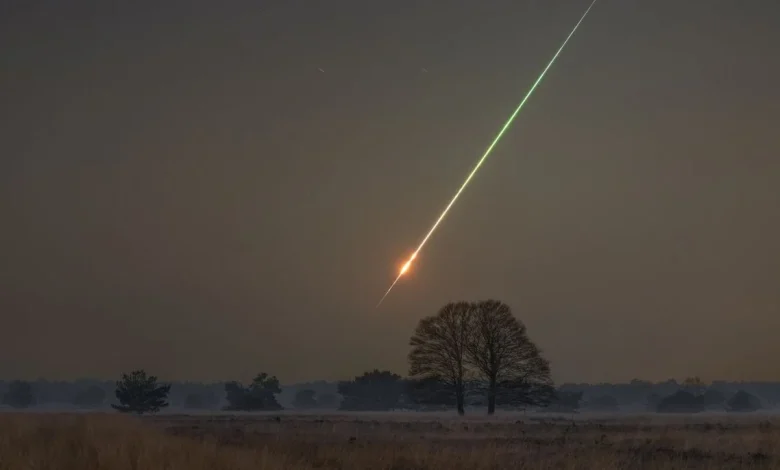
On May 31, 2026, residents of Massachusetts and southeastern New Hampshire experienced a dramatic celestial event as a bright fireball streaked through the sky, culminating in a powerful explosion. This event, confirmed by NASA, caused widespread reports of a sonic boom and tremors, captivating the attention of both the public and scientific community. The fireball, an exceptionally bright meteor, illuminated the afternoon sky at approximately 2:06 p.m. Eastern Time, leaving a lasting impression on those who witnessed it. This article delves into the details of the event, the science behind it, and its broader context within the study of meteors and near-Earth objects.
The Massachusetts Fireball Event
The Massachusetts fireball event unfolded rapidly, beginning with a brilliant flash visible across a wide area. Witnesses described a sudden, intense light followed by a loud boom that rattled windows and shook the ground. The event triggered numerous calls to local authorities, with residents reporting what they initially suspected to be an earthquake or some other form of terrestrial disturbance. Public safety officials quickly began investigating the source of the reports, and it soon became clear that the event was not related to any local emergency or infrastructure issue.
The widespread nature of the reports indicated that the fireball was a significant event, observable over a large geographical area. The timing of the event, occurring in the early afternoon, meant that many people were outdoors or near windows, increasing the number of potential witnesses. Social media platforms quickly became flooded with accounts and speculations, as people shared their experiences and attempted to understand the cause of the phenomena. This immediate, collective response underscored the impact of the event on the local community.
NASA Confirmation and Analysis
Shortly after the event, NASA issued a statement confirming that a fireball had indeed passed over the region. According to NASA’s analysis, the meteor entered the Earth’s atmosphere at an estimated speed of 75,000 miles per hour. As it plunged through the atmosphere, friction caused the meteor to heat up rapidly, resulting in a spectacular display of light and energy. The fragmentation of the meteor at an altitude of approximately 40 miles above extreme northeastern Massachusetts and southeastern New Hampshire released energy equivalent to about 300 tons of TNT. This explosive breakup was the source of the sonic boom and ground tremors reported by residents.
NASA emphasized that the fireball was a natural object, unrelated to any active meteor shower or human-made space debris. This distinction is important because it helps to rule out other potential explanations for the event, such as the re-entry of a satellite or rocket body. The agency’s confirmation provided a definitive explanation for the observed phenomena, helping to quell speculation and provide reassurance to the public. Furthermore, NASA’s analysis of the meteor’s trajectory and composition contributes to a broader understanding of the types of space objects that enter Earth’s atmosphere and the potential risks they pose.
Sonic Boom and Tremors
The audible boom and tremors reported by residents were a direct result of the meteor’s high-speed entry and subsequent fragmentation. When an object travels through the atmosphere faster than the speed of sound, it creates a shock wave that propagates outward. This shock wave manifests as a sonic boom, a loud, thunder-like noise that can be heard over a wide area. In the case of the Massachusetts fireball, the energy released during the meteor’s breakup was sufficient to generate a significant sonic boom, which was detected by numerous witnesses.
In addition to the sonic boom, some residents reported feeling ground tremors. These tremors were likely caused by the energy released during the meteor’s fragmentation being transmitted through the Earth’s crust. While the tremors were not strong enough to cause any damage, they added to the overall sense of a significant event. The combination of the loud boom and ground tremors created a memorable and somewhat unsettling experience for those who witnessed it. The Massachusetts Emergency Management Agency confirmed that there were no emergency calls related to the event, indicating that while startling, the event did not result in any injuries or property damage.
Meteor Characteristics and Trajectory
The characteristics of the Massachusetts fireball provide valuable insights into its origin and composition. While a precise determination of its composition would require the recovery and analysis of any surviving fragments (meteorites), NASA’s analysis of its trajectory and speed can offer clues. The high speed of the meteor, 75,000 miles per hour, suggests that it likely originated from the outer solar system. Meteors from this region tend to be composed of denser materials, such as iron and nickel, which can withstand the intense heat and pressure of atmospheric entry.
The meteor’s trajectory also provides information about its path through the solar system. By tracing its trajectory back to its point of origin, scientists can potentially identify the asteroid or comet from which it originated. This information can then be used to study the composition and evolution of these parent bodies. Furthermore, analyzing the meteor’s trajectory can help to improve models of meteoroid streams and their potential impact risks. This is especially useful when correlated to existing meteor events to anticipate future phenomena.
Distinguishing Fireballs from Other Phenomena
It is important to distinguish fireballs from other similar phenomena, such as meteor showers, satellite re-entries, and bolides. Meteor showers occur when the Earth passes through a stream of debris left behind by a comet or asteroid. These events typically produce numerous meteors over a period of several hours or days. In contrast, the Massachusetts fireball was an isolated event, not associated with any known meteor shower.
Satellite re-entries can also produce bright flashes and sonic booms, but they are typically slower and more predictable than fireballs. Satellites also tend to burn up more gradually, producing a longer streak of light in the sky. Bolides are exceptionally bright fireballs that explode in the atmosphere. While the Massachusetts fireball did explode, it was not as large or energetic as a typical bolide. By understanding the characteristics of each type of event, scientists and observers can more accurately identify and classify them.
The Science of Meteors and Fireballs
Meteors and fireballs are fascinating phenomena that provide valuable insights into the composition and dynamics of the solar system. Meteors are small particles of dust and rock that enter the Earth’s atmosphere and burn up, producing a streak of light in the sky. Fireballs are simply brighter meteors, typically defined as being brighter than magnitude -4 (about the same brightness as Venus in the night sky). These objects originate from a variety of sources, including comets, asteroids, and even the Moon and Mars.
When a meteoroid enters the Earth’s atmosphere, it collides with air molecules, causing it to heat up rapidly. This heat causes the meteoroid to glow, producing the visible streak of light. If the meteoroid is large enough, it may survive its passage through the atmosphere and reach the ground as a meteorite. Meteorites provide valuable samples of extraterrestrial material that can be studied in laboratories. These samples can provide insights into the formation and evolution of the solar system, as well as the potential for life beyond Earth.
Historical Meteor Events
Throughout history, there have been numerous reports of significant meteor events, some of which have had a profound impact on human societies. One of the most famous examples is the Tunguska event of 1908, in which a large meteoroid exploded over Siberia, flattening an estimated 80 million trees over an area of 800 square miles. The event released energy equivalent to about 12 megatons of TNT, making it one of the largest impact events in recorded history.
Other notable meteor events include the Chelyabinsk meteor of 2013, which exploded over Russia, causing widespread damage and injuries. The Chelyabinsk meteor was estimated to be about 20 meters in diameter and released energy equivalent to about 500 kilotons of TNT. These events serve as a reminder of the potential hazards posed by near-Earth objects and the importance of monitoring and tracking them. Understanding these past events aids scientists in predicting and preparing for future occurrences, emphasizing the need for continuous observation and research.
Understanding Meteor Showers
Meteor showers are predictable celestial events that occur when the Earth passes through the debris field of a comet or asteroid. These debris fields contain countless small particles of dust and rock that enter the Earth’s atmosphere and burn up, creating a spectacular display of light. Meteor showers are named after the constellation from which they appear to originate, known as the radiant. For example, the Perseid meteor shower appears to originate from the constellation Perseus.
Some of the most well-known meteor showers include the Perseids (August), the Leonids (November), and the Geminids (December). These showers occur annually and can produce dozens or even hundreds of meteors per hour at their peak. Meteor showers provide a great opportunity for skywatchers to observe meteors without the need for specialized equipment. By knowing when and where to look, anyone can witness these amazing celestial displays. Planning to view these showers involves finding a dark location away from city lights and allowing your eyes to adjust to the darkness.
Potential Impact and Safety
While most meteors are small and burn up harmlessly in the atmosphere, there is always a potential risk of larger objects reaching the ground and causing damage. The risk of a catastrophic impact is relatively low, but it is not zero. Scientists are constantly monitoring near-Earth objects and developing strategies to mitigate the risk of a potential impact. These strategies include tracking potentially hazardous objects, developing methods to deflect or destroy them, and preparing emergency response plans in case of an impact.
In the event of a large meteor impact, the potential consequences could be significant. Impacts can cause widespread damage from the blast wave, ground tremors, and tsunamis (if the impact occurs in the ocean). They can also release large amounts of dust and debris into the atmosphere, which can block sunlight and cause global cooling. While the likelihood of such an event is low, it is important to be aware of the risks and to take steps to mitigate them. Public safety officials continuously refine their protocols to address potential threats, incorporating data from NASA and other space agencies to ensure readiness.
Reporting a Fireball
If you witness a fireball, there are several things you can do to report it and contribute to scientific research. First, try to estimate the brightness of the fireball and its duration. Note the time and location of the sighting, as well as the direction of travel. If possible, take photos or videos of the event. You can then report your sighting to organizations such as the American Meteor Society or the International Meteor Organization.
Your reports can help scientists to better understand the characteristics of fireballs and their origins. By collecting data from multiple observers, scientists can reconstruct the trajectory of the meteor and estimate its size and composition. This information can then be used to improve models of meteoroid streams and their potential impact risks. Furthermore, reporting a fireball can help to alert authorities to the possibility of meteorites on the ground. If meteorites are recovered, they can be studied in laboratories and provide valuable insights into the composition and evolution of the solar system.
Future Monitoring and Research
The study of meteors and fireballs is an ongoing process, with new discoveries being made all the time. Scientists are constantly developing new technologies and techniques to monitor near-Earth objects and to better understand their characteristics. These technologies include advanced radar systems, telescopes, and space-based observatories. By combining data from multiple sources, scientists can create a more complete picture of the meteoroid environment and the potential risks it poses.
Future research will likely focus on improving our ability to predict meteor showers and to identify potentially hazardous objects. This will involve developing more sophisticated models of meteoroid streams and their interactions with the Earth’s atmosphere. It will also involve searching for new asteroids and comets that could pose a threat to our planet. By investing in research and monitoring efforts, we can better protect ourselves from the potential hazards of near-Earth objects.
Conclusion
The fireball that passed over Massachusetts and New Hampshire on May 31, 2026, served as a dramatic reminder of the dynamic nature of our solar system. This event underscored the importance of continued monitoring and research efforts to understand and mitigate the potential risks posed by near-Earth objects. As technology advances and our understanding deepens, we become better equipped to predict and prepare for these celestial events, ensuring the safety and security of our planet. Such events highlight the interconnectedness of space and Earth, prompting ongoing scientific inquiry and public engagement.
Events like this also encourage the public to learn more about astronomy and space science, fostering a greater appreciation for the wonders of the universe. The combination of scientific inquiry, technological advancement, and public engagement is essential for advancing our understanding of the cosmos and protecting our planet from potential threats. The Massachusetts fireball event will undoubtedly serve as a valuable case study for future research and educational efforts.
| Characteristic | Description |
|---|---|
| Event Date | May 31, 2026 |
| Time of Event | 2:06 p.m. Eastern Time |
| Location | Northeastern Massachusetts/Southeastern New Hampshire |
| Speed | 75,000 miles per hour |
| Energy Release | Equivalent to 300 tons of TNT |
| Altitude of Breakup | 40 miles |
| Associated Shower | None (sporadic meteor) |
| Phenomena Reported | Sonic boom, ground tremors |
It is also important to consider the broader implications of space object monitoring in the context of global security. As nations increasingly rely on space-based assets for communication, navigation, and surveillance, the potential for collisions or intentional attacks on these assets becomes a growing concern. Efforts to track and characterize space objects are therefore essential not only for mitigating the risk of natural impacts but also for ensuring the safety and security of our space infrastructure. The ongoing development of space situational awareness capabilities is a critical component of maintaining a secure and sustainable space environment.
Moreover, the study of meteors and fireballs has implications for our understanding of the origins of life. Some scientists believe that meteorites may have delivered organic molecules to Earth early in its history, providing the building blocks for the first living organisms. By studying the composition of meteorites, we can learn more about the potential for life to exist elsewhere in the universe. This research is part of a broader effort to search for habitable environments beyond Earth and to understand the conditions that are necessary for life to arise. The discovery of organic molecules in meteorites strengthens the hypothesis that life may be more common in the universe than previously thought.
The monitoring and analysis of fireballs and meteors are important for ensuring public safety, advancing scientific knowledge, and promoting international cooperation. These efforts contribute to a safer, more secure, and more sustainable future for all. Furthermore, the public’s fascination with these celestial events highlights the importance of science communication and education, as these phenomena provide opportunities to engage people of all ages and backgrounds in the wonders of the universe. As we continue to explore the cosmos, we can expect to witness many more amazing events like the Massachusetts fireball, each of which will offer new insights and inspire future generations of scientists and explorers. Events that leave lasting impressions also emphasize the need for resilient infrastructure and emergency preparedness planning. The lessons learned from the Massachusetts fireball event can inform and improve these efforts.
Finally, such events also highlight the need for international collaboration in space exploration and monitoring. Space is a shared resource, and the risks and benefits associated with its exploration and use are global in nature. By working together, nations can pool their resources and expertise to address the challenges and opportunities that lie ahead. This collaboration can take many forms, including joint research projects, data sharing agreements, and coordinated monitoring efforts. International collaboration is essential for ensuring the long-term sustainability of space activities and for protecting our planet from potential threats. The ongoing dialogue between space agencies and international organizations is critical for fostering this collaboration and for advancing our understanding of the universe. The event was a stark reminder of the ever-present potential for space phenomena to interact with our planet, reinforcing the need for continued vigilance and scientific inquiry.