Taiwan Independence: Trump’s Stance and Lai Ching-te’s Response
Introduction
The status of Taiwan remains a complex and sensitive issue in international relations. Recent statements from both former U.S. President Donald Trump and Taiwan’s President Lai Ching-te have brought renewed attention to the island’s uncertain future. Trump’s remarks regarding arms sales and potential U.S. intervention, coupled with Lai’s firm assertion of Taiwan’s sovereignty, underscore the delicate balance between maintaining peace and defending democratic values in the face of Chinese pressure. This article delves into the nuances of these statements, their implications, and the broader geopolitical context surrounding Taiwan.
Trump’s Position on Taiwan: Arms Sales and Intervention
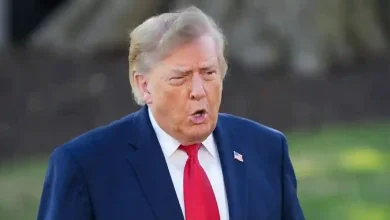
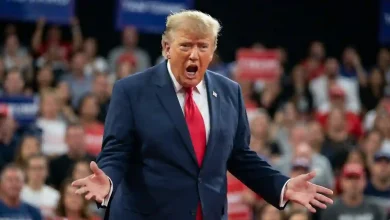
Donald Trump’s recent comments have introduced an element of uncertainty into the longstanding U.S. policy regarding Taiwan. Following his summit with Chinese President Xi Jinping in Beijing, Trump stated that he had not yet decided whether to proceed with arms sales to Taiwan. This ambiguity raises questions about the U.S.’s commitment to providing Taiwan with the means to defend itself against potential aggression from mainland China. The sale of arms to Taiwan has historically been a contentious issue, with Beijing consistently voicing strong opposition, viewing it as an infringement on its sovereignty.
Furthermore, Trump’s remarks about the possibility of U.S. intervention in the event of a Chinese invasion have added another layer of complexity. When asked whether the U.S. would come to Taiwan’s rescue, Trump responded, “We’re supposed to travel 9,500 miles to fight a war. I’m not looking for that,”. This statement suggests a reluctance to engage in military conflict on behalf of Taiwan, reflecting a broader sentiment of prioritizing domestic concerns over foreign entanglements. He further added that he wants both sides to “cool down,” indicating a preference for de-escalation and peaceful resolution of the cross-strait tensions.
Taiwan’s Response to Beijing and Trump
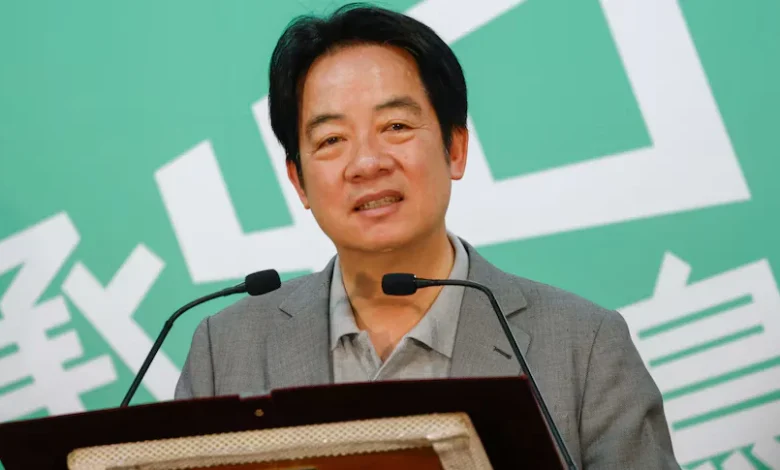
In response to Beijing’s persistent claims of sovereignty over Taiwan, and in light of Trump’s ambiguous stance, Taiwan’s President Lai Ching-te has reaffirmed the island’s independent identity. Speaking at an event commemorating the 40th anniversary of his party’s founding, Lai stated that the term “Taiwan independence” signifies that the island neither belongs to nor is subordinate to Beijing. This declaration underscores Taiwan’s determination to maintain its autonomy and resist any attempts by China to exert control.
Lai also emphasized that only the Taiwanese people have the right to decide their future, reinforcing the principle of self-determination. This assertion is a direct challenge to Beijing’s position that the future of Taiwan should be determined through reunification with the mainland, under the “One Country, Two Systems” framework. By asserting the right of the Taiwanese people to choose their own destiny, Lai is advocating for a democratic and peaceful resolution of the cross-strait issue.
Official Statement from Taiwan’s Foreign Ministry
Reinforcing President Lai’s message, Taiwan’s foreign ministry issued a statement asserting that Taiwan “is a sovereign and independent democratic nation, and is not subordinate to the People’s Republic of China”. This formal declaration reiterates Taiwan’s official position and serves as a clear message to both Beijing and the international community. By explicitly stating that Taiwan is not subordinate to China, the foreign ministry is rejecting any notion of Chinese authority over the island.
Analysis of Trump’s Stance on Taiwan
Trump’s approach to Taiwan appears to be driven by a combination of factors, including a desire to avoid military conflict, a focus on economic considerations, and a transactional view of foreign policy. His reluctance to commit to defending Taiwan could be interpreted as a signal to Beijing that the U.S. is not seeking to escalate tensions in the region. However, it also carries the risk of emboldening China and undermining Taiwan’s confidence in U.S. support.
From an economic perspective, Trump may be weighing the potential costs and benefits of arms sales to Taiwan against the broader economic relationship between the U.S. and China. China is a major trading partner of the U.S., and any actions that could jeopardize this relationship are likely to be carefully considered. Additionally, Trump’s transactional approach to foreign policy suggests that he may be seeking to extract concessions from China in other areas, such as trade or North Korea, in exchange for a more accommodating stance on Taiwan.
Lai’s Declaration and Its Implications
Lai Ching-te’s declaration that Taiwan neither belongs to nor is subordinate to Beijing represents a significant assertion of Taiwan’s sovereignty. This statement is likely to be welcomed by supporters of Taiwan’s independence but could also provoke a strong reaction from China. Beijing has consistently warned against any moves towards formal independence and has not ruled out the use of force to prevent it.
Lai’s emphasis on the right of the Taiwanese people to decide their future is also a key element of his message. This principle aligns with democratic values and international norms, but it directly contradicts China’s claim that the future of Taiwan should be determined through reunification. The differing perspectives on this issue highlight the fundamental divide between Taiwan and China and underscore the challenges in finding a peaceful resolution to the cross-strait dispute.
U.S. Foreign Policy Considerations
The U.S. approach to Taiwan is shaped by a complex set of factors, including its strategic interests in the Asia-Pacific region, its commitment to democratic values, and its economic relationship with China. The U.S. has long maintained a policy of “strategic ambiguity” regarding Taiwan, neither explicitly committing to defend the island nor ruling out the possibility of doing so. This policy is designed to deter China from taking military action against Taiwan while also avoiding a commitment that could draw the U.S. into a conflict.
However, the rise of China as a global power and its increasing assertiveness in the region have led to a reassessment of U.S. policy towards Taiwan. Some analysts argue that the U.S. should adopt a policy of “strategic clarity,” explicitly stating that it would defend Taiwan in the event of a Chinese attack. Proponents of this approach believe that it would deter China and reassure Taiwan of U.S. support. Others argue that strategic ambiguity remains the best approach, as it provides the U.S. with flexibility and avoids a commitment that could escalate tensions.
Potential Scenarios and Geopolitical Impact
The future of Taiwan is subject to a range of potential scenarios, each with significant geopolitical implications. One possibility is that China could attempt to exert greater political and economic pressure on Taiwan, seeking to undermine its autonomy and pave the way for eventual reunification. Another scenario is that China could resort to military force, launching an invasion or blockade of Taiwan.
A military conflict over Taiwan would have devastating consequences, not only for the island itself but also for the entire region and beyond. It could draw the U.S. and its allies into a war with China, with potentially catastrophic results. Even short of a full-scale conflict, increased tensions in the Taiwan Strait could disrupt trade, undermine regional stability, and fuel a new arms race.
Historical Context of Taiwan-China Relations
Understanding the historical context of Taiwan-China relations is crucial for comprehending the current situation. Taiwan has been governed separately from mainland China for over seven decades. Following the Chinese Civil War in 1949, the losing Nationalist forces retreated to Taiwan and established their own government. Since then, Taiwan has developed into a vibrant democracy with a thriving economy.
China, however, views Taiwan as a renegade province that must be reunited with the mainland, by force if necessary. This position is rooted in China’s historical narrative and its belief in the principle of territorial integrity. The cross-strait relationship has been marked by periods of tension and periods of relative calm, but the fundamental differences between the two sides remain unresolved.
International Reactions and Alliances
The international community is closely watching the situation in the Taiwan Strait. Many countries, including the U.S., Japan, and Australia, have expressed concerns about China’s increasing assertiveness in the region and have reiterated their commitment to maintaining peace and stability. These countries have also strengthened their alliances and partnerships in the region, seeking to deter any potential aggression from China.
The European Union has also voiced concerns about the situation in Taiwan and has called for a peaceful resolution of the cross-strait dispute. While the EU does not have a formal alliance with Taiwan, it has expressed its support for the island’s democracy and its right to self-determination. The international community’s response to the situation in Taiwan will play a crucial role in shaping the future of the island and the broader geopolitical landscape.
Economic Ties and Their Influence
Economic ties between Taiwan and China are extensive and complex. Taiwan is a major investor in China, and China is a major trading partner of Taiwan. These economic ties have created a degree of interdependence between the two sides, which some believe could serve as a constraint on China’s behavior. However, others argue that China could use its economic leverage to exert pressure on Taiwan and undermine its autonomy.
The global economy is also heavily reliant on Taiwan, particularly for semiconductors. Taiwan Semiconductor Manufacturing Company (TSMC) is the world’s leading producer of advanced semiconductors, which are essential components for a wide range of electronic devices. Any disruption to Taiwan’s semiconductor industry would have significant consequences for the global economy, highlighting the importance of maintaining peace and stability in the region. The geopolitical tensions are also affecting other countries, such as the UAE which is warning the US of shift to Yuan oil sales. The ongoing situation might be related to the crisis in the Strait of Hormuz.
Data Table: Comparing Key Aspects
| Aspect | Taiwan’s Position | China’s Position | Trump’s Stance (2026) |
|---|---|---|---|
| Sovereignty | Independent and sovereign nation | Taiwan is a province of China | Uncertain; weighs arms sales and intervention |
| Future Determination | Only the Taiwanese people can decide | Reunification with mainland China | Prefers de-escalation and peaceful resolution |
| U.S. Intervention | Seeks U.S. support for defense | Opposes any foreign intervention | Reluctant to commit to military intervention |
| Economic Ties | Major investor in China; significant trade | Taiwan is economically integrated with China | Considers economic implications of policy |
Conclusion
The situation surrounding Taiwan remains highly sensitive and complex. Trump’s ambiguous statements regarding arms sales and potential U.S. intervention, coupled with Lai Ching-te’s firm assertion of Taiwan’s sovereignty, underscore the challenges in maintaining peace and stability in the region. The future of Taiwan will depend on a variety of factors, including the evolving relationship between the U.S. and China, the internal dynamics within Taiwan, and the broader geopolitical landscape. A peaceful resolution of the cross-strait dispute is essential for the stability and prosperity of the Asia-Pacific region and the world.
Given the global reliance on Taiwanese semiconductors, any instability could reverberate worldwide. This makes the ongoing dialogue and the stance of global powers like the U.S. critically important. The situation requires careful diplomacy and a commitment to peaceful resolution to avoid potentially devastating consequences. The US has had other military deployments in the region recently, such as the Dark Eagle hypersonic missile.
For further reading on related geopolitical tensions, consider exploring analyses of the Taiwan Strait situation.
Related articles:
Petrodollar Crisis: UAE Warns US of Shift to Yuan Oil Sales
Dark Eagle Hypersonic Missile Deployed to Middle East by CENTCOM
Iran Strait of Hormuz Crisis: A 24-Hour Reversal Explained