Hormuz Standoff: Iranian Official Predicts Conflict Before Talks
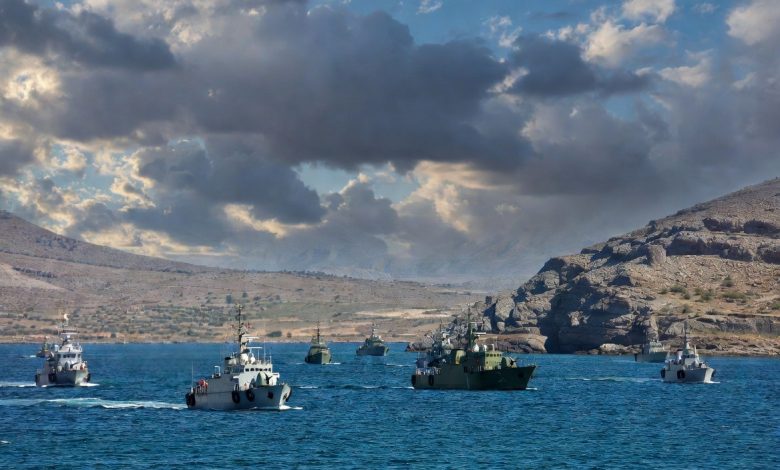
Hormuz remains the focal point of an increasingly volatile geopolitical landscape, serving as the ultimate chokepoint for global energy markets and the epicenter of renewed diplomatic and military anxieties. A recent, unconfirmed report published by Arab News has cast a long shadow over the Persian Gulf, citing an unnamed senior Iranian official who controversially expects a limited resumption of fighting, which would ostensibly be followed by a transition to negotiations. This alarming projection comes in the immediate aftermath of reports indicating that former U.S. President Donald Trump has firmly rejected Tehran’s latest diplomatic overture. The Iranian proposal reportedly offered a conditional reopening of the highly contested Strait of Hormuz, provided that any ongoing or future talks regarding the Islamic Republic’s controversial nuclear program are permanently shelved or delayed to a much later date. If this intelligence holds true, the international community is staring down the barrel of a meticulously calculated escalation phase, where kinetic military action is weaponized as a tool to force diplomatic leverage.
The Strategic Implications of the Arab News Leak
The decision to leak such highly sensitive strategic forecasting to a prominent Gulf-based publication is rarely coincidental in the realm of Middle Eastern geopolitics. By utilizing this specific media channel, factions within Tehran may be attempting to signal their resolve to neighboring Arab states, the United States, and the broader international coalition navigating the region’s waterways. The concept of a calculated, limited military engagement is deeply embedded in the operational doctrine of the Islamic Revolutionary Guard Corps Navy (IRGC-N). Rather than engaging in a conventional, symmetrical naval conflict—a scenario in which the United States Navy possesses overwhelming superiority—Iran’s maritime strategy relies heavily on asymmetric tactics. This includes the deployment of fast-attack craft swarms, the covert laying of naval mines in critical shipping lanes, and the utilization of shore-based anti-ship cruise missiles. When an official speaks of a resumption of fighting, it is precisely this brand of asymmetric warfare that analysts fear. The objective is not to win a prolonged war, but to inflict sufficient economic and psychological pain on the global market to necessitate a diplomatic off-ramp favorable to Tehran.
Deconstructing the Limited Resumption of Fighting
Understanding the paradox of a limited resumption of fighting requires a deep dive into the concept of escalate-to-deescalate, a strategy where a state intentionally raises the stakes of a conflict to force a paralyzed adversary back to the negotiating table. However, in the confined, highly militarized waters of the Persian Gulf, the margin for error is virtually non-existent. A limited strike on a commercial vessel, a drone attack on a regional oil facility, or a localized skirmish with international naval escorts can rapidly spiral out of control. The historical precedent of the Tanker War during the 1980s serves as a grim reminder of how easily localized maritime harassment can metastasize into broader regional conflict involving multiple global superpowers. The current risk matrix is exponentially more dangerous given the advanced proliferation of unmanned aerial vehicles (UAVs) and precision-guided munitions. If Iran’s intent is to demonstrate its capacity to close the Strait of Hormuz temporarily, the resulting collateral damage could trigger a massive, disproportionate retaliatory strike from the United States or its regional allies, thereby obliterating any hopes for the very negotiations the initial fighting was meant to secure.
Diplomatic Deadlock: Trump’s Rejection of the Deal
At the core of this escalating crisis is the reported outright rejection of Iran’s reopening proposal by Donald Trump, whose political influence and policy frameworks continue to heavily dictate conservative American foreign policy. The Trump-era approach to Iran, universally characterized by the Maximum Pressure campaign, fundamentally relies on the comprehensive strangulation of the Iranian economy to extract maximalist concessions. Tehran’s recent diplomatic maneuver attempted to exploit the global economic anxiety surrounding the blocked Strait by offering a targeted solution: peace in the Gulf in exchange for a blind eye to their nuclear advancements. This piecemeal approach to diplomacy, where Tehran proposed a peace deal to keep Hormuz open while ignoring nuclear demands, was systematically dismantled by U.S. strategists who recognize the inherent danger of decoupling these two critical security paradigms. Accepting such a deal would implicitly legitimize Iran’s nuclear breakout timeline while essentially rewarding the use of maritime blockades as an extortion tactic.
The Refusal to Decouple Maritime Security from Nuclear Ambitions
The refusal to decouple the security of international shipping lanes from the ongoing dispute over uranium enrichment levels highlights the multifaceted nature of the U.S.-Iran standoff. From the perspective of Washington hardliners, the blockade of the Strait of Hormuz and the acceleration of the nuclear program are not isolated issues; they are two interconnected arms of the same strategic octopus designed to project Iranian hegemony across the Middle East. Consequently, the Iran blockade standoff continues as Trump rejects the peace plan, cementing a diplomatic stalemate. U.S. policymakers argue that relieving the economic pressure generated by maritime sanctions without securing ironclad guarantees regarding the dismantling of Iran’s nuclear infrastructure would be a catastrophic strategic failure. It would provide Tehran with the financial influx needed to fund regional proxies while simultaneously allowing their centrifuges to spin unhindered. This uncompromising stance ensures that any path to negotiation will be fraught with immense friction, requiring one side to fundamentally alter its strategic red lines.
| Strategic Pillar | Iran’s Proposed Framework | U.S. / Trump Administration Demands |
|---|---|---|
| Strait of Hormuz Transit | Conditional reopening based on specific economic concessions | Unconditional guarantee of freedom of navigation for all vessels |
| Nuclear Program | Shelve all diplomatic discussions and monitoring indefinitely | Immediate resumption of strict non-proliferation agreements and inspections |
| Sanctions Relief | Immediate lifting of maritime, banking, and energy sanctions | Maintenance of maximum economic pressure until a comprehensive deal is struck |
| Military Posture | Transition to talks only after a localized show of military force | Overwhelming deterrence against any form of regional or maritime aggression |
| Regional Proxies | Exclude proxy network support from bilateral negotiations | Complete cessation of funding and arming militant networks across the Middle East |
The Geoeconomic Shockwaves of Continued Blockade
The potential for military conflict in the Strait of Hormuz is not merely a regional security issue; it is a global economic crisis of unprecedented proportions. The Strait is widely regarded as the world’s most critical energy chokepoint, with approximately one-fifth of the globe’s total petroleum consumption passing through its narrow waters daily. Any resumption of fighting, however limited the Iranian official may claim it will be, immediately jeopardizes the transit of millions of barrels of crude oil and massive quantities of liquefied natural gas (LNG) originating from Qatar and the United Arab Emirates. The mere anticipation of conflict drives speculative fear in the commodity markets, resulting in severe and immediate pricing shocks. We have already witnessed the devastating financial impact of these geopolitical tremors, such as the recent instance where the Hormuz closure sparked an 11% surge in EU natural gas futures, crippling energy-intensive industries and exacerbating inflationary pressures across Western economies.
Commodity Markets and Global Supply Chains
Beyond the immediate spike in energy prices, a protracted standoff or kinetic engagement in the Gulf disrupts the foundational logistics of global supply chains. Maritime insurance premiums for vessels traversing the Middle East have skyrocketed, and many massive shipping conglomerates have been forced to reroute their fleets around the Cape of Good Hope, adding weeks to transit times and exponentially increasing freight costs. This logistical nightmare cascades down to the consumer level, impacting the price of everyday goods, agricultural fertilizers, and essential raw materials. Asian economies, particularly China, Japan, and South Korea, which rely disproportionately on Middle Eastern crude, find their energy security severely compromised. The resulting economic desperation places immense pressure on the international community to intervene, either by forcing the United States to soften its negotiating stance or by joining a multinational military coalition to forcefully break the Iranian blockade. The economic weaponization of the Strait is a highly effective, albeit reckless, tool in Tehran’s diplomatic arsenal.
Internal Iranian Dynamics and Factional Divides
To fully comprehend the motivations behind the unnamed senior Iranian official’s stark prediction, one must analyze the complex and often opaque internal political dynamics of the Islamic Republic. Iran’s leadership is not a monolithic entity; it is characterized by deep ideological and strategic fissures. The supreme authority rests with Ayatollah Ali Khamenei, but beneath him, a constant tug-of-war exists between the hardline elements of the IRGC and the relatively more pragmatic members of the diplomatic corps and political establishment. This internal power struggle frequently results in conflicting messaging and erratic policy implementation. The unconfirmed Arab News report may very well be a manifestation of this Iran leadership divide where internal cracks stall US talks and complicate the formulation of a unified national strategy. Hardliners may be pushing for a kinetic escalation to project strength and consolidate domestic control amidst severe economic hardship, while pragmatists recognize that a full-scale war with the United States would be suicidal for the regime. Consequently, the strategy of a limited fight followed by negotiations represents a fragile compromise between these competing domestic factions—a dangerous attempt to satisfy the military’s demand for action while keeping the diplomatic door slightly ajar.
Predicting the Transition from Conflict to Negotiation
If the bleak forecast of limited fighting materializes, the subsequent transition to negotiations will be one of the most delicate and perilous diplomatic maneuvers of the 21st century. Historically, transitioning from active hostilities to the negotiating table requires the intervention of highly trusted, neutral third-party mediators. Nations such as Oman and Qatar have traditionally played this indispensable backchannel role, facilitating indirect communications between Washington and Tehran when direct dialogue is politically impossible. However, the timeline for such a transition is entirely unpredictable. Once military force is deployed, the resulting casualties, destruction of military assets, and public outcry generate immense domestic political pressure on both sides to escalate rather than concede. For the United States, agreeing to talks immediately following an unprovoked Iranian attack on shipping or allied assets would be widely condemned as capitulation to terrorism. For Iran, halting military operations without tangible economic concessions would be viewed as a humiliating defeat. Therefore, the unnamed official’s expectation that fighting will neatly transition into productive negotiations may reflect a dangerous overestimation of Tehran’s ability to control the escalation ladder. The international community must prepare for a prolonged period of severe instability, as the mechanisms for de-escalation in the Middle East have never been more degraded. The coming weeks will reveal whether diplomatic backchannels can prevent the Persian Gulf from descending into a devastating theater of war, or if the uncompromising stances of both Trump’s political apparatus and Tehran’s hardliners will push the global economy over the edge.