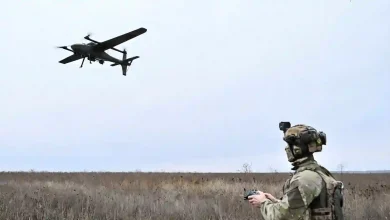
Kidal Falls: Russian and Malian Troops Retreat Amid Crisis
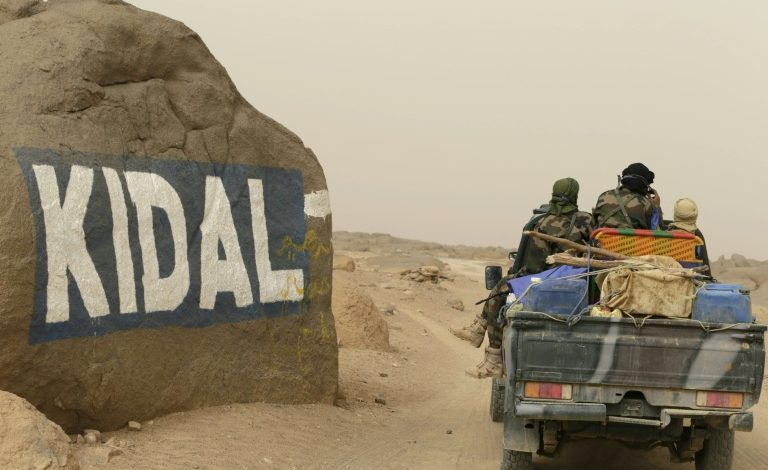
Kidal, once the heavily fortified epicenter of Malian state authority in the northern desert, has dramatically fallen to an unprecedented coalition of rebel and jihadist forces, marking one of the most severe military collapses in West African modern history. The sudden withdrawal of Malian armed forces and their Russian military partners has sent shockwaves through the region and the broader international community. This strategic defeat fundamentally undermines the legitimacy of the military junta that seized power in 2021 on the promise of restoring security. Instead, the country is spiraling deeper into chaos, with the violence now reaching the very heart of the capital, Bamako. The devastating assassination of Defence Minister Sadio Camara, a chief architect of the junta’s pivot toward Moscow, has left the government paralyzed and searching for answers in a rapidly deteriorating geopolitical landscape.
Kidal Captured: The Collapse of Malian and Russian Defenses
The battle for Kidal was neither brief nor expected to end in such a comprehensive defeat for the state apparatus. Over the past several weeks, coordinated assaults originating from the harsh desert terrain systematically dismantled the defensive perimeters established by the Malian military (FAMA) and Russian private military contractors. Despite possessing superior firepower and air support, the defensive lines buckled under the relentless pressure of asymmetric warfare tactics. The withdrawal from Kidal was chaotic, with reports indicating that substantial caches of military hardware were abandoned in the haste to retreat southward. This operational failure exposes massive logistical and tactical vulnerabilities within the current military strategy. The loss of Kidal is not merely a territorial concession; it is a profound symbolic defeat. For decades, control over Kidal has been the ultimate barometer of sovereignty in Mali. By losing this stronghold, the junta has inadvertently signaled to all armed groups across the Sahel that the state is fragile, overextended, and incapable of securing its own borders, despite the controversial deployment of foreign mercenaries.
The Unprecedented Alliance: FLA and JNIM Join Forces
Perhaps the most alarming development in the capture of the city is the alliance responsible for it. The Azawad Liberation Front (FLA), a nationalist Tuareg separatist group seeking an independent state, and Jama’at Nusrat al-Islam wal-Muslimin (JNIM), an extremist coalition affiliated with al-Qaeda, have historically been adversaries. Their ideological foundations are inherently opposed: the FLA envisions a secular, independent Tuareg nation, while JNIM seeks to establish a hardline Islamic caliphate across the Sahel. However, the shared objective of expelling Malian forces and their Russian allies has catalyzed a tactical marriage of convenience. This unprecedented cooperation has allowed them to pool resources, intelligence, and manpower, overwhelming state defenses through highly coordinated multi-front assaults. The fusion of the FLA’s deep knowledge of the desert terrain and JNIM’s extensive experience in urban insurgency and suicide tactics created a lethal synergy that the Malian and Russian forces were entirely unprepared to counter.
Bamako Under Siege: The Assassination of Defence Minister Sadio Camara
While the northern front collapsed, the conflict violently spilled into the political nucleus of the country. A meticulously planned assault in the capital city of Bamako targeted key government installations, culminating in the assassination of Defence Minister Sadio Camara. Camara was not merely a cabinet member; he was the primary architect of Mali’s geopolitical realignment, orchestrating the expulsion of French forces and brokering the clandestine agreements that brought Russian mercenaries into the country. His death creates a massive power vacuum within the ruling military council. The operational sophistication required to execute a high-profile assassination deep within the heavily fortified capital suggests that the rebel-jihadist coalition possesses substantial intelligence networks and operational reach far beyond their traditional northern strongholds. This brazen attack has shattered the illusion of security in Bamako, forcing the remaining leadership into heavily guarded bunkers and plunging the civilian population into a state of acute paranoia and fear.
The Junta in Crisis: Can the Military Rulers Survive?
The dual shocks of losing a critical northern territory and suffering a decapitation strike within the defense ministry have plunged Colonel Assimi Goïta’s military government into an existential crisis. The central justification for the 2021 coup d’état was the previous civilian administration’s inability to defeat the insurgency. Goïta’s regime promised absolute security and sovereignty, leveraging populist anti-colonial sentiment to justify severing historical ties with Western allies. Now, facing military defeats that eclipse those of previous administrations, the junta’s popular support is rapidly eroding. Internal factions within the military are reportedly questioning the leadership’s strategic decisions, raising the specter of yet another coup. The government’s inability to pay soldiers, secure supply lines, or protect its own ministers has stripped away its aura of invincibility. If the leadership cannot rapidly stabilize the capital and mount a credible counter-offensive, the total collapse of the transitional government appears increasingly inevitable.
The Failure of the Russian Mercenary Strategy in the Sahel
The withdrawal from Kidal serves as a devastating indictment of Russia’s expeditionary military strategy in Africa. Brought in to replace the French Barkhane mission, Russian paramilitaries promised a brutal, no-nonsense approach to counter-terrorism, free from Western concerns over human rights and collateral damage. However, raw brutality has not translated into strategic success. The Russian forces have repeatedly been accused of indiscriminately targeting civilian populations, particularly among the Fulani and Tuareg communities, which has inadvertently driven recruitment for both the FLA and JNIM. Furthermore, the Russian contingent has proven ill-equipped to handle the harsh environmental realities of the Sahara or the sophisticated asymmetric tactics employed by the insurgents. Their inability to secure Kidal—a mandate they explicitly promised to fulfill—demonstrates the profound limitations of substituting professional, deeply integrated multinational forces with profit-driven mercenary groups.
Comparing French Withdrawal to Russian Deployment
To fully grasp the magnitude of the current crisis, one must evaluate the shifting dynamics of foreign intervention in Mali. The data below outlines the stark differences between the previous Western-backed approach and the current Russian-backed strategy.
| Strategic Aspect | French Operation Barkhane (2013-2022) | Russian Military Support (2021-Present) |
|---|---|---|
| Primary Objective | Counter-terrorism and regional capacity building | Regime survival and resource extraction |
| Operational Focus | Multinational intelligence sharing and air supremacy | Direct combat operations and psychological warfare |
| Human Rights Record | Subject to international legal scrutiny and oversight | Widespread allegations of extrajudicial killings |
| Outcome in Kidal | Maintained uneasy stabilization and state presence | Complete withdrawal and loss of territory to rebels |
As this data illustrates, the shift in alliances has not yielded the promised security dividends. If anything, the situation has precipitously worsened, leaving Mali isolated from international aid while failing to achieve military objectives. For further analysis on international security dynamics, researchers at the International Crisis Group’s Sahel reporting provide continuous tracking of these shifting military landscapes.
Geopolitical Ramifications: A Destabilized West Africa
The collapse of Malian security architecture has profound implications for the entire West African region. Neighboring states, already grappling with their own fragile security environments, are watching the developments with profound alarm. The success of the FLA-JNIM alliance provides a dangerous blueprint for insurgencies in Burkina Faso, Niger, and potentially coastal states like Côte d’Ivoire and Togo. This crisis is occurring against the backdrop of massive global realignments. As analyzed in recent reports detailing geopolitical shifts and market impacts, the vacuum created by Western disengagement from Africa has invited opportunistic interventions that prioritize short-term gains over long-term stability. The inability of regional bodies like ECOWAS to effectively intervene or mediate has further emboldened the insurgents, creating a contiguous belt of instability stretching across the continent.
Regional Security and International Responses
The international community’s response has been one of alarmed paralysis. With Western nations largely expelled from the operational theater, diplomatic levers are severely constrained. Unlike the successful diplomatic interventions seen in other parts of the world, such as the comprehensive agreement to end regional conflict brokered in Asia, Mali finds itself devoid of credible international mediators. The United Nations peacekeeping mission (MINUSMA) has already been dismantled at the junta’s request, leaving virtually no independent observers or stabilization forces on the ground. This isolation prevents any structured dialogue or humanitarian intervention, effectively condemning the civilian population to bear the full brunt of the escalating violence.
Economic Fallout and Human Displacement in Northern Mali
The economic devastation accompanying the fall of the north is absolute. Kidal and the surrounding regions are rich in unexploited resources and sit along vital trans-Saharan trade routes. The seizure of these routes by militant groups deprives the central government of critical revenue streams, further crippling its ability to fund the war effort. The conflict has triggered a massive humanitarian disaster, with hundreds of thousands of internally displaced persons fleeing the violence. The global economic environment, increasingly shaped by defense spending and conflict profiteering—a dynamic heavily explored in discussions of how the war economy, defense, and Wall Street win big—means that weapons continue to flow effortlessly into the hands of non-state actors, fueled by illicit gold mining and regional smuggling networks.
The Road Ahead: Potential Scenarios for Mali’s Future
The trajectory for Mali appears exceptionally grim. The immediate priority for the junta must be securing the capital and restoring a semblance of command and control following the death of the Defence Minister. However, reclaiming the north seems operationally impossible in the short term. The Malian forces are learning a painful lesson in the limits of brute force against deeply entrenched, highly motivated asymmetric networks. Advanced weaponry and foreign mercenaries cannot compensate for a lack of local legitimacy and intelligence. This stark reality mirrors global military lessons where reliance on sheer technological superiority or brute force often fails in complex insurgency environments, a concept widely debated in military circles examining technologies like the F-15 rescue tech breaking physics rules, which highlights the gap between advanced hardware and ground-level tactical realities. Ultimately, unless the Malian leadership can forge a new political consensus and seek functional, broad-based alliances, the nation risks fracturing entirely, leading to a prolonged period of statelessness and regional catastrophe.