Republican Bill Offers U.S. Veteran Benefits To IDF Volunteers
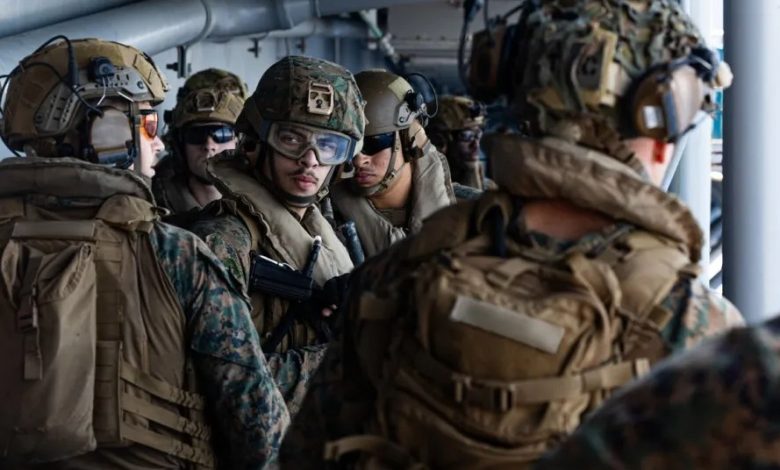
Republican lawmakers Guy Reschenthaler (R-PA) and Max Miller (R-OH) have introduced a highly controversial legislative proposal aimed at providing U.S. citizens fighting in the Israeli military with the exact same federal benefits typically reserved for American veterans. The profound implications of this bill are rippling through Washington D.co, sparking intense debates regarding military entitlements, foreign service, and the precise definition of an American veteran. By attempting to grant job protection, mortgage relief, and other robust federal benefits to Americans volunteering in the Israel Defense Forces (IDF), the proposed legislation seeks to fundamentally alter the landscape of U.S. military support. With over 12,000 Americans currently serving in the IDF, this legislative maneuver illuminates the deep, intrinsic political ties between the United States and Israel, while simultaneously raising critical questions about taxpayer obligations and the legal boundaries of dual allegiance.
Understanding the Proposed Legislation
The legislative push spearheaded by Congressmen Reschenthaler and Miller represents an unprecedented attempt to extend specific, highly coveted domestic protections to citizens engaged in a foreign nation’s military operations. Traditionally, veteran benefits in the United States have been strictly gated, requiring honorable service within the branches of the U.S. Armed Forces. This newly introduced framework seeks to bypass that historical prerequisite for a specific subset of Americans: those fighting under the banner of the IDF. The crux of the argument presented by the bill’s sponsors is that Israel is an indispensable ally in a volatile region, and American citizens who volunteer to defend it are indirectly serving American strategic interests. However, constitutional scholars and political scientists have fiercely debated the precedent this sets. Critics argue that opening the federal vault to foreign combatants, regardless of allied status, blurs the line between sovereign national defense and international volunteering. Those interested in the precise legal wording and progress of such bills often track them directly through the official federal legislative portal to monitor committee assignments and floor votes.
Core Benefits Outlined in the Proposal
At the heart of this proposal is the extension of two massive pillars of American military civil protection: the Uniformed Services Employment and Reemployment Rights Act (USERRA) and the Servicemembers Civil Relief Act (SCRA). If enacted, Americans returning from IDF service would legally compel their previous U.S. employers to reinstate them in their jobs with the exact same seniority, status, and pay as if they had never left. Furthermore, the SCRA protections would shield them from home foreclosures, vehicle repossessions, and allow them to terminate residential leases without penalty while deployed overseas. The proposal essentially seeks to mandate that American corporations, landlords, and financial institutions shoulder the economic accommodations for individuals participating in a foreign conflict, a mandate previously exclusively reserved for those answering the call of the Pentagon.
The Scope of Americans Serving in the IDF
To truly grasp the magnitude of this legislative proposal, one must look at the sheer numbers. It is currently estimated that over 12,000 Americans are serving in the Israel Defense Forces. This staggering figure is composed of dual citizens, “lone soldiers” (volunteers from abroad without immediate family in Israel), and participants in the Mahal program, which allows non-Israelis to serve in military combat roles. The motivation for these thousands of Americans is often rooted in deep cultural, religious, or ideological convictions. However, their status upon returning to the United States has historically been that of a private citizen. The sheer volume of these combatants transforms the proposed legislation from a symbolic gesture into a massive logistical and financial undertaking for the U.S. government and the domestic private sector, which would bear the brunt of employment and housing compliance.
Historical Precedents for Foreign Military Service
Throughout history, Americans have occasionally fought under foreign flags. Prior to the official entry of the United States into World War II, American pilots volunteered for the British Royal Air Force in the “Eagle Squadrons,” and others joined the French Foreign Legion or fought in the Spanish Civil War. More recently, American citizens have traveled to Ukraine to fight against the Russian invasion. Yet, in none of these historical instances did the United States government pass legislation to grant these volunteers federal veteran benefits, job protection, or mortgage relief upon their return. The Reschenthaler-Miller proposal is highly unique because it singles out a specific foreign military for domestic federal recognition, raising profound constitutional questions regarding the Equal Protection Clause and the precise definition of American military service.
Benefit Comparison Table
To fully comprehend the sweeping changes proposed by this bill, it is necessary to compare the existing benefits afforded to U.S. Military Veterans against the proposed benefits for U.S. Citizens in the IDF.
| Benefit Category | Current U.S. Military Veterans | Proposed for U.S. Citizens in IDF |
|---|---|---|
| Employment Protection (USERRA) | Fully Guaranteed | Fully Guaranteed (Under Proposal) |
| Civil Relief (SCRA) – Mortgages | Capped Interest, Foreclosure Shield | Capped Interest, Foreclosure Shield |
| Healthcare (VA Medical) | Full Access (Based on Eligibility) | Currently Not Included, Subject to Debate |
| GI Bill Education Funding | Full Tuition Assistance | Not Explicitly Granted |
| Pension and Disability Compensation | Service-Connected Coverage | Responsibility of Foreign Gov (Israel) |
Political Backlash and Bipartisan Reactions
The introduction of the bill has ignited a fierce firestorm on Capitol Hill. Progressive Democrats have vehemently opposed the measure, arguing that American taxpayer funds and federal legal frameworks should strictly serve those who take an oath to the U.S. Constitution, not a foreign government. They argue the proposal represents an inappropriate merging of U.S. and Israeli state interests. Interestingly, the bill has also faced significant pushback from conservative “America First” factions within the Republican party itself. These isolationist-leaning politicians argue that extending domestic benefits to foreign fighters inherently undermines the exclusivity and honor of serving in the U.S. Armed Forces. The dual loyalty debate has resurfaced in full force, questioning whether an individual can genuinely fulfill the obligations of American citizenship while actively taking up arms for another sovereign nation.
Implications for U.S. Foreign Policy in the Middle East
From a geopolitical perspective, the timing and optics of this bill are incredibly delicate. U.S. foreign policy in the Middle East is currently navigating a labyrinth of complex diplomatic negotiations and fragile alliances. By legally treating IDF volunteers as functional equivalents to U.S. troops in terms of domestic civil protections, the U.S. government risks blurring the lines of its official neutrality and diplomatic mediations. Regional actors may interpret this legislative move as the United States officially embedding its own citizenry into the Israeli military apparatus. Analysts point out that achieving long-term peace in the region requires delicate maneuvering, noting that moving beyond Netanyahu and Hezbollah brings stability to an otherwise volatile ecosystem. Binding U.S. federal benefits to a foreign military could complicate these broader strategic objectives by cementing partisan military ties over diplomatic agility.
Financial and Economic Impact on Federal Resources
If passed, the financial ramifications of extending SCRA and USERRA to over 12,000 IDF volunteers would be substantial, primarily falling on the shoulders of the American private sector and the judicial system tasked with enforcing these rights. Employers forced to hold positions open for years, or landlords legally barred from evicting tenants due to overseas deployment, absorb massive hidden costs. The Department of Labor and the Department of Justice, which enforce these veteran protections, would require additional funding to process claims, investigate grievances, and manage the administrative overhead of verifying foreign military service records. This introduces a logistical nightmare: how does the U.S. government rapidly and accurately verify the honorable discharge status, deployment dates, and medical records of troops operating in a foreign military system that is under no legal obligation to report to the U.S. Department of Defense?
The Debate Over Citizenship and Entitlements
This legislative proposal touches the very nerve center of what it means to be an American citizen and what entitlements accompany that status. The requirement of federal benefits has historically been a reciprocal agreement: the citizen sacrifices their safety for the defense of the United States, and the state, in return, ensures their economic and physical well-being. By circumventing the U.S. military apparatus entirely, the bill fractures this social contract. This complex legal gray area has distinct echoes of the birthright citizenship debate reignited by air force base IED plot incidents, showing how rapidly domestic legal definitions of loyalty and entitlement can become radicalized and highly politicized in the modern era.
The Intersection of Defense Policy and Domestic Politics
The push by Reschenthaler and Miller is widely viewed by political strategists as a calculated domestic maneuver designed to shore up support among pro-Israel voting blocs and high-dollar donor networks ahead of contentious election cycles. It uses the sacred architecture of American veteran affairs as a vehicle for foreign policy signaling. This strategy forces political opponents into uncomfortable positions, where voting against the bill can be weaponized in campaign ads as being “anti-ally” or “unsupportive of Jewish Americans.” However, defense policy experts warn that playing politics with veteran benefits erodes the institutional integrity of the VA and the Armed Forces. It represents a broader trend of leveraging international conflicts to secure domestic political capital, an approach that risks entangling the U.S. in foreign disputes through the backdoor of civil relief laws. The strategic alignment seen here is conceptually similar to how the deployment of U.S. jets to UAE hedges Iran peace talks, utilizing military and legislative posturing to force diplomatic outcomes and project power.
Legal Protections: USERRA and SCRA Explained
To fully appreciate the gravity of the Reschenthaler-Miller bill, an in-depth understanding of USERRA and SCRA is essential. USERRA, passed in 1994, is a federal statute that protects servicemembers’ and veterans’ civilian employment rights. It requires employers to reemploy returning veterans in the job they would have attained had they not been absent for military service, the so-called “escalator principle.” SCRA, enacted in 2003 (replacing the Soldiers’ and Sailors’ Civil Relief Act of 1940), provides a wide range of protections, including capping interest rates on pre-service loans at 6%, protecting against default judgments in civil cases, and allowing the termination of auto leases. Extending these highly powerful, market-altering legal weapons to individuals serving a foreign power fundamentally reshapes the obligations of American businesses. It essentially drafts American corporations into indirectly subsidizing the military operations of a foreign allied nation by forcing them to absorb the operational downtime and economic friction of their deployed employees.
Conclusion: A Shift in American Military Paradigms
The legislative proposal championed by Republican congressmen Guy Reschenthaler and Max Miller marks a watershed moment in the discourse surrounding American military benefits. By attempting to bridge the gap between U.S. federal entitlements and service in the Israel Defense Forces, the bill forces the United States to confront profound questions about citizenship, loyalty, and the financial boundaries of geopolitical alliances. With over 12,000 Americans currently serving in the IDF, the practical implications of granting them job protection and mortgage relief are immense, promising to reshape the legal responsibilities of the private sector and the administrative burden of the federal government. Whether this bill ultimately passes or languishes in committee, it has undeniably exposed the evolving nature of international conflict and the complex, deeply intertwined realities of modern global citizenship. As lawmakers grapple with these unprecedented demands, the definition of what makes an American veteran remains hanging in the balance.