Panama Canal crisis: Iran War Reshapes Global Shipping Costs
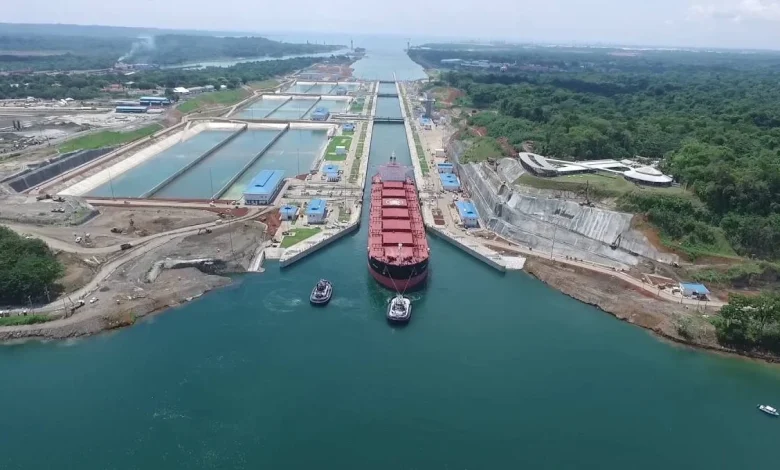
Panama Canal crisis developments are currently reshaping the entire architecture of global maritime logistics in real-time, sending shockwaves through international energy markets and supply chains. As the conflict involving Iran escalates, the ripple effects have extended far beyond the immediate geographical boundaries of the Middle East, striking directly at the heart of the Western Hemisphere’s most critical maritime chokepoint. The legendary canal, which connects the Atlantic and Pacific oceans, is experiencing an unprecedented surge in demand, wait times, and transit costs. Lane prices in the canal have jumped nearly 10x since the war began, transforming what was once a predictable logistical corridor into a cutthroat bidding war for access. The most commonly used locks are now averaging $837,500 per transit, with individual auction slots hitting an astronomical $4 million in April. Five times as many ships are now bidding for space compared to pre-war levels, creating a maritime traffic jam of historic proportions. The core reason behind this unprecedented shift is clear: the Strait of Hormuz is functionally closed, Asia has lost vital access to Gulf oil, and global energy consumers are suddenly scrambling for U.S. crude routed through Panama instead.
Panama Canal Crisis: The Unintended Consequence of Middle Eastern Conflict
The geopolitical landscape of 2026 has demonstrated how interconnected global infrastructure truly is. When hostilities in the Middle East intensified, the immediate focus was on the regional fallout and the direct military engagements. However, the secondary effects of these military actions have fundamentally altered the logistical calculations of every major shipping company on the planet. The canal is feeling the full weight of a global energy pivot. Because Asian economies run on massive imports of crude oil, the sudden unavailability of traditional Middle Eastern suppliers has forced an emergency pivot to the Americas. This shift places the Panama Canal squarely in the crosshairs of global energy security, proving that when one vital chokepoint closes, another must invariably strain under the immense pressure of diverted global trade.
How the Closure of Hormuz Upended Global Routes
The catalyst for this maritime upheaval is the effective shutdown of the Strait of Hormuz. For decades, Hormuz served as the primary artery for global energy, with roughly 20% of the world’s petroleum passing through its narrow waters. However, recent escalations, including incidents where Iran attacks French vessel CMA CGM Everglades in Hormuz, have rendered the strait unnavigable for commercial tankers. Insurance premiums for vessels attempting the route have become prohibitive, if coverage is available at all. Furthermore, as Iran threatens new military blows amid Hormuz crisis, shipowners are refusing to risk multibillion-dollar assets and the lives of their crews in an active war zone. With Middle Eastern crude effectively bottled up, major Asian refiners in China, Japan, and South Korea have had to secure alternative baseload supplies immediately. The only global producer with the spare capacity and logistical reach to fill this massive void is the United States, specifically from the Permian Basin and Gulf Coast export terminals. To get that U.S. crude to Asian markets quickly, the Panama Canal is the only viable shortcut, bypassing the lengthy and expensive journey around Cape Horn or the Cape of Good Hope.
Astronomical Transit Costs: Lane Prices Jump Tenfold
The sudden influx of enormous crude carriers and product tankers has completely overwhelmed the Panama Canal Authority’s booking system. Prior to the conflict, transiting the canal required strategic planning but remained a relatively stable cost component of global shipping. Today, the economics of canal transits have been completely upended. Lane prices have spiked nearly 1,000%, a tenfold increase that reflects pure supply and demand panic. Carriers are desperate to deliver U.S. crude to Asian buyers who are paying premium spot prices to keep their refineries running and their domestic grids powered. The base fees for the most commonly used locks, both Panamax and Neopanamax, have surged, but it is the dynamic pricing models and special transit auctions that reveal the true desperation of the market. The average transit cost now sits at a staggering $837,500, a figure that severely eats into shipping margins but is still deemed acceptable by energy traders who stand to make massive profits on the final delivery of the crude.
Auction Slots Reach an Unprecedented $4 Million
To bypass the swelling queue of waiting vessels, the Panama Canal Authority periodically auctions off transit slots to the highest bidder. In April 2026, these auctions witnessed historical highs, with individual expedited transit slots hitting the $4 million mark. This fee is paid purely for the privilege of jumping the line, completely separate from the standard transit tariffs and tugboat fees. Five times as many ships are now actively bidding for these rare slots compared to pre-war levels. The bidders are predominantly massive crude tankers carrying American oil, funded by trading houses and national energy companies that recognize the cost of a delayed shipment far outweighs the $4 million auction premium. This hyper-competitive environment has transformed the canal from a standard public utility into a massive profit center, albeit one operating at maximum operational stress.
The Asian Scramble for American Crude Oil
With Middle Eastern oil supplies constrained by conflict, the energy calculus of the East has shifted westward. The United States, having spent the last decade building formidable export infrastructure along the Gulf Coast in Texas and Louisiana, has become the undisputed supplier of last resort. However, moving millions of barrels of oil daily from the Gulf of Mexico to the South China Sea requires navigating the Panama Canal. Asian energy conglomerates are signing long-term and emergency spot contracts for American light sweet and heavy sour crudes, pulling every available vessel into the U.S.-Asia trade route. This scramble is not merely about maintaining corporate profits; it is a fundamental requirement for national security. Asian nations require uninterrupted energy supplies to prevent blackouts, fuel manufacturing sectors, and maintain social stability, making the reliable transit of U.S. oil through Panama an issue of supreme geopolitical importance.
Shifting Dependency from Gulf States to the U.S.
The longer the conflict persists, the more permanent this shift in dependency becomes. Asian markets that once relied implicitly on the stability of the Persian Gulf are now restructuring their supply chains around the Americas. Interestingly, despite the chaos in shipping lanes, global crude prices have seen wild fluctuations but have not spiraled completely out of control, largely due to the massive volumes of American oil flooding the market. As observed in recent financial analyses, oil holds below 100 amid deal hopes, but the logistics of physically moving that oil remain deeply compromised. The U.S. strategic position has strengthened remarkably, as it now controls both the production of the required energy and the origin ports, leaving the Panama Canal as the crucial, yet heavily strained, middleman in this new global dynamic.
Wait Times and Supply Chain Bottlenecks Emerge
The physical limitations of the Panama Canal are becoming starkly apparent under this unprecedented load. The locks can only cycle a finite number of massive vessels per day. The Neopanamax locks, expanded a decade ago to accommodate larger vessels, are operating around the clock, yet they cannot keep pace with the armada of crude tankers arriving from the U.S. Gulf Coast. Consequently, vessels are forced to drop anchor in the Caribbean Sea and the Pacific Ocean, waiting weeks for their scheduled or auctioned transit window. These bottlenecks are having a cascading effect on global supply chains. Because so many tankers are tied up waiting in line at the canal, there is a growing shortage of available vessels to service other routes globally, driving up charter rates across all maritime sectors.
Crude Tanker Delays Hit Six-Week High
Wait times for unbooked crude tankers attempting to transit the canal have hit a staggering six-week high. For a vessel carrying up to a million barrels of oil, sitting idle for six weeks represents a colossal misallocation of capital and resources. The daily charter rates for these vessels are soaring, and the longer they sit off the coast of Panama, the higher the final cost of the delivered energy becomes. Ship captains and fleet managers are forced to make grueling calculations: do they wait in a six-week queue, bid $4 million in a blind auction, or add 40 days to their voyage by sailing around the southern tip of South America? Each choice carries severe financial penalties and logistical risks.
Comparative Impact on Global Chokepoints
To fully understand the severity of the crisis, one must look at the status of other major global maritime corridors. The strain is not isolated; it is a zero-sum game where the closure of one route instantly pressures the alternatives.
| Global Chokepoint | Pre-War Status (2025) | Current Status (April 2026) | Primary Global Impact |
|---|---|---|---|
| Strait of Hormuz | 21M barrels per day transit | Effectively Closed / Extreme Risk | Middle East Crude trapped; Asian energy deficit |
| Panama Canal | Normal Operations / Occasional Draft Limits | Overwhelmed (10x price jump, 6-week delays) | U.S. Crude delayed; Global shipping costs surge |
| Suez Canal | Recovering from previous regional disruptions | Strained / Elevated Insurance Premiums | European-Asian manufacturing goods delayed |
| Strait of Malacca | Standard High Traffic | High Congestion / Vulnerable to cascading delays | Asian import/export timelines extended |
This table illustrates the interconnected fragility of global maritime trade. With Hormuz shut down, the pressure completely transfers to the remaining viable routes, magnifying the importance of the Panamanian transit corridor to unsustainable levels.
Winners and Losers in the Redrawn Shipping Map
In every geopolitical upheaval, there are distinct economic winners and losers. The current maritime crisis is no exception. The most obvious losers are the Asian energy consumers and refiners who are forced to pay exorbitant premiums for delayed American oil. Global shipping conglomerates are also facing complex challenges; while they are earning record charter rates, their fleets are tied up in massive traffic jams, reducing their overall operational efficiency. Furthermore, global regulators and maritime authorities, such as the United Nations Conference on Trade and Development (UNCTAD), continue to warn about the inflationary pressures these bottlenecks place on the global economy. The physical danger is also evolving, as undersea cables in Hormuz mapped by Iran present a severe threat not just to shipping, but to the digital infrastructure that coordinates global logistics.
American Oil Exporters Reap Massive Windfalls
Conversely, the only clear winners in this redrawn shipping map are the Americans selling the oil. U.S. exploration and production companies operating in the Permian Basin, along with the midstream companies controlling the pipelines and Gulf Coast export terminals, are experiencing a financial windfall. Their product is in absolute demand, and buyers are willing to absorb the astronomical shipping and canal transit costs just to secure the molecules. The United States has firmly cemented its position not just as energy independent, but as the indispensable energy guarantor for the Eastern Hemisphere in times of severe crisis.
Future Projections for Maritime Trade in 2026
As we advance deeper into 2026, the outlook for the canal remains tense. The Panama Canal Authority is exploring every available technological and operational optimization to increase throughput, but physics dictates a hard limit on the number of locks that can be cycled daily. Unless there is a sudden and miraculous diplomatic resolution to the conflict involving Iran that reopens the Strait of Hormuz, the extreme pressure on the Americas’ most critical waterway will persist. Shipping companies are already ordering new vessels and exploring alternative, albeit longer, routes to build resilience into their supply chains. Ultimately, the crisis underscores a permanent lesson for the global economy: the era of cheap, predictable, and uninterrupted maritime logistics may be a relic of the past, replaced by an era where strategic chokepoints dictate the wealth and security of nations.