Army ground drone breakthroughs revolutionize the last tactical mile
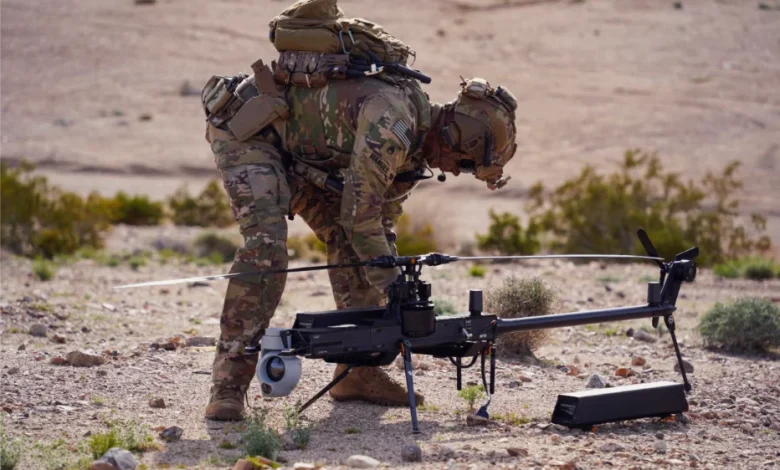
Army ground drone platforms are currently experiencing an unprecedented surge in development and priority allocation from the United States military, representing a monumental leap in battlefield logistics and trauma care. As global conflict landscapes evolve into highly contested, hyper-lethal environments, the necessity for unmanned ground vehicles (UGVs) capable of traversing the so-called “last tactical mile” has never been more urgent. This final stretch of terrain—often a horrific gauntlet of sniper fire, artillery barrages, and improvised explosive devices (IEDs)—is where the vast majority of military casualties occur. Transporting crucial supplies into this zone and extracting wounded personnel out of it demands a technological revolution. Military commanders are practically begging for these autonomous, low-signature machines that act as a dual-purpose robot medic and delivery bot, fundamentally altering how combat operations are sustained and how lives are saved in the modern theater of war.
Understanding the Last Tactical Mile Challenge
The last tactical mile is historically the most dangerous and logistically complex segment of any military operation. It is the invisible boundary where secure supply lines end and chaotic, direct-fire combat begins. For decades, moving ammunition, water, and medical supplies across this deadly gap meant risking human lives. Supply convoys, even when heavily armored, are prime targets for enemy ambushes. When a soldier is critically injured in this zone, a grim calculus emerges: sending a human medic and an extraction team into the kill zone often results in secondary casualties, compounding the tragedy. The introduction of unmanned logistics systems aims to dismantle this agonizing dilemma by removing the human element from the immediate line of fire, shifting the risk from personnel to expendable, hardened machinery designed specifically for these high-threat environments.
The Critical Need for Evacuation Under Fire
Combat medicine is inherently limited by the tactical situation. The “golden hour”—the critical sixty minutes following a traumatic injury during which emergency medical treatment is most likely to save a life—is often eaten away by the inability to safely reach and extract the wounded. The urgency to deploy an autonomous ground drone is driven by its potential to charge into active crossfires, retrieve multiple casualties, and immediately exit the danger area without requiring covering fire that drains tactical momentum. By deploying a robotic system capable of absorbing small arms fire while maintaining its operational integrity, the military ensures that injured soldiers are evacuated swiftly, multiplying their survival chances while keeping dedicated medical personnel safely stationed at secure casualty collection points.
Technical Specifications of the Unmanned Medevac
To survive the harshest conditions imaginable, the unmanned medevac vehicle is built with an array of advanced technical specifications. Unlike traditional logistical trucks, these machines feature heavily armored yet lightweight composite chassis, enabling them to withstand shrapnel and ballistic impacts without sacrificing maneuverability. Their drivetrains are typically a hybrid of electric and internal combustion, allowing for a “silent watch” mode where the vehicle can operate purely on battery power to avoid acoustic detection. The ruggedized tracked or multi-wheeled designs allow these platforms to traverse 60-degree inclines, ford deep mud, and push through dense urban rubble, ensuring that there is virtually no terrain a wounded soldier might be stranded in that the drone cannot access.
Autonomous Navigation and Low-Signature Capabilities
Modern warfare demands stealth, and stealth requires low thermal and acoustic signatures. These specialized UGVs utilize advanced electric propulsion systems that run virtually silently, a crucial advantage when infiltrating an enemy-dominated area. Navigation is handled by a sophisticated suite of LiDAR, optical cameras, and localized AI processing that allows the machine to traverse complex terrains autonomously, even in GPS-denied environments. The drone maps its surroundings in real-time, plotting the safest and most efficient path to the wounded soldier. This self-contained intelligence mirrors the rapid evolution seen in civilian sectors, drawing parallels to the localized processing advancements found in cutting-edge tech like AI wearable rings and smart tech, which also rely on instantaneous, disconnected data processing to function seamlessly.
Payload Capacity: Carrying Casualties Safely
One of the most impressive feats of engineering on these systems is their specialized payload capacity. Designed to carry at least two casualties simultaneously, the bed of the drone is equipped with an active, gyroscopically stabilized suspension system. This critical feature ensures that as the drone bounces over craters and debris, the severe shocks and jolts are not transferred to the wounded soldiers, which could exacerbate spinal injuries or induce massive trauma shock. Furthermore, life-support modularity allows the integration of automated oxygen administration and vitals monitoring, turning the transport bed into a mobile, autonomous intensive care unit that actively stabilizes the patient during the perilous journey back to safety.
Resupply Missions: The Lifeline of Forward Operations
Beyond casualty evacuation, the drone serves as the ultimate delivery bot under fire. Forward operating units frequently find themselves pinned down, rapidly depleting their ammunition, specialized batteries, and water. Airdrops are notoriously inaccurate and draw immense enemy attention, while traditional vehicular resupply is slow and vulnerable. The autonomous ground drone acts as a vital lifeline, shuttling up to a thousand pounds of essential gear directly to the warfighter’s position. This constant, reliable stream of logistics ensures that infantry units can maintain their offensive momentum or hold defensive lines indefinitely without the looming dread of running out of the tools necessary to survive.
Bridging the Logistics Gap Without Risking Lives
Bridging this logistics gap fundamentally alters the tactical doctrine of ground combat. Commanders can now push units deeper into hostile territory, knowing they have an unyielding, robotic umbilical cord connecting them to base camp. The psychological impact on the troops is equally significant; morale is substantially higher when soldiers know that an armored, autonomous lifeline is continuously available to resupply them or extract them if the worst happens. This shift is currently being closely evaluated by institutions like the Defense Advanced Research Projects Agency (DARPA), which continuously funds the underlying AI and robotic frameworks that make these unmanned marvels possible.
Comparative Analysis: Human vs. Robotic Medics
To fully understand the monumental shift this technology represents, it is essential to examine the direct operational differences between traditional human-led extraction and the new autonomous paradigm.
| Operational Metric | Traditional Human Medic & Extraction Team | Autonomous Army Ground Drone |
|---|---|---|
| Risk Factor | Extremely High (risks multiple secondary casualties) | Zero human risk (expendable hardware) |
| Speed Under Fire | Slow, relies heavily on suppressive cover fire | Rapid, ignores suppression, direct line execution |
| Acoustic/Thermal Signature | High (requires large transport vehicles like Humvees) | Ultra-low (electric motors, thermal shielding) |
| Patient Stability | Manual carry can be rough and inconsistent | Gyroscopic active suspension prevents injury aggravation |
| Payload/Resupply | Limited to human carrying capacity (~80-100 lbs per soldier) | Massive (up to 1,000+ lbs of ammo/water/gear) |
Geopolitical Implications of Autonomous Military Tech
The rush to field these autonomous ground systems is not happening in a vacuum. As adversaries modernize their forces, the integration of robotics into standard infantry operations becomes a strategic imperative. The presence of highly capable, unyielding robotic logistics vehicles gives a distinct operational advantage that can deter aggression. Global defense ministries are acutely aware of the shift in battlefield dynamics. For instance, as intelligence agencies monitor the rapid acceleration of adversarial capabilities, such as the testing of high-thrust rocket motors, the U.S. and its allies recognize that traditional troop movements are becoming too vulnerable. The proliferation of lethal autonomous tech ensures that forces can operate effectively even when the airspace is highly contested or ground routes are compromised.
Escalating Global Tensions and Modern Warfare
The urgency to deploy the robotic medic is further compounded by the continuous threat of regional conflicts spilling into broader warfare. High-stress geopolitical flashpoints demand military readiness that limits human casualties at all costs. When nations are on the brink of conflict and threaten massive military blows across critical shipping lanes or borders, ground troops deployed to secure these regions must be backed by next-generation logistics. Similarly, the monitoring of suspicious enemy activities, much like observing a low-altitude flight signaling sudden escalation, highlights how rapidly a stable region can devolve into a chaotic kill zone where human extraction becomes impossible. The robotic medic is the ultimate insurance policy against the unpredictable lethality of modern near-peer combat.
The Future of Battlefield Robotics and AI Integration
Looking ahead, the evolution of the autonomous ground drone will invariably intertwine with the broader integration of artificial intelligence across all military domains. Future iterations of these delivery and evacuation bots will feature swarm intelligence, allowing multiple units to coordinate complex supply chains and mass casualty extractions simultaneously without a central human controller. They will communicate seamlessly with aerial drones, automated artillery, and satellite networks to predict enemy movements and route themselves through the safest possible corridors. The sensor fusion required for this level of autonomy is already being heavily tested, pushing the boundaries of what machine learning algorithms can achieve in life-or-death scenarios.
Next-Level Solutions for the Next Generation of Combat
Ultimately, the deployment of this technology represents a profound moral and tactical victory. By taking the human element out of the most perilous logistical tasks, the military preserves its most valuable asset: its service members. Saving lives while keeping soldiers out of the kill zone is indeed next-level execution. As these prototypes transition from testing grounds to active combat theaters, the autonomous ground drone will cement its legacy not as a weapon of war, but as the ultimate mechanized guardian of the last tactical mile, forever changing the grim realities of battlefield survival.