Petrodollar Crisis: UAE Warns US of Shift to Yuan Oil Sales
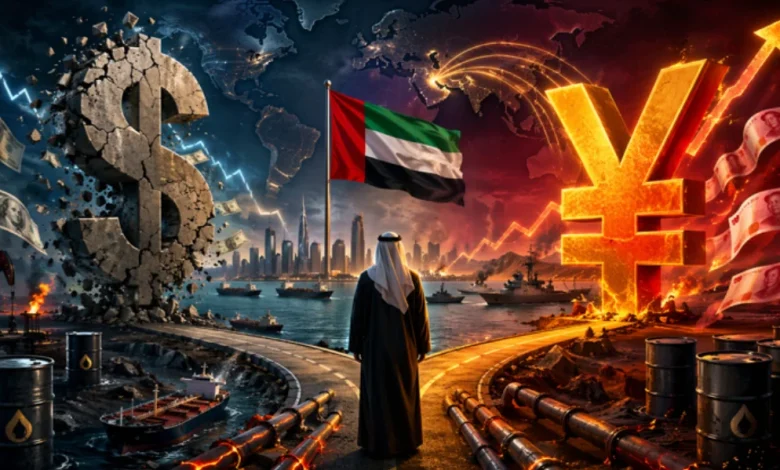
Petrodollar dominance is currently facing an unprecedented and existential threat, marking a potential paradigm shift in the global financial architecture that has defined international economics since the mid-1970s. The United Arab Emirates has delivered a stark and unequivocal diplomatic warning to the United States: restrict our access to dollar liquidity, and we will immediately commence pricing and selling our crude oil in Chinese yuan. This blunt ultimatum is far more than mere political posturing; it is a calculated warning shot directed precisely at the foundation of American economic power and global hegemony. For half a century, the unwritten agreement that global energy commodities must be priced, traded, and settled in United States dollars has served as the invisible backbone of US dominance. Because oil is the lifeblood of the industrialized world, every sovereign nation requires a constant, massive supply of US dollars simply to keep their domestic economies running. This structural mandate creates a massive, perpetual, and artificial global demand for the US currency, propping up its value regardless of domestic economic mismanagement. It is the core reason why the United States can print money with relative impunity, sustain massive deficit spending, and unilaterally impose crippling economic blockades on geopolitical adversaries. However, the very moment major Gulf producers like the UAE and Saudi Arabia begin accepting alternative currencies such as the Chinese yuan for their energy exports, that self-reinforcing cycle of dollar supremacy fractures irreversibly.
Petrodollar Hegemony Under Siege: The UAE’s Ultimatum
The geopolitical shockwaves generated by the UAE’s recent declarations cannot be overstated. By openly threatening to bypass the dollar in favor of the yuan, the UAE is leveraging its position as one of the world’s most critical energy suppliers to push back against what it perceives as an increasingly erratic and weaponized US financial policy. The petrodollar system was never codified in a single binding international treaty; rather, it was born out of a strategic understanding forged in 1974 between US Treasury Secretary William Simon and the Saudi royal family. In exchange for US military protection and security guarantees, Saudi Arabia, and subsequently the rest of the Organization of the Petroleum Exporting Countries (OPEC), agreed to price all their oil exports exclusively in US dollars and invest their surplus oil revenues into US Treasury bonds. This arrangement effectively cemented the dollar as the world’s undisputed reserve currency. The UAE’s threat to dismantle this arrangement highlights a growing frustration among Gulf states regarding the aggressive extraterritorial application of US financial regulations. When Washington threatens to cut off access to dollar clearing networks as a punitive measure, it inadvertently incentivizes the very nations it seeks to coerce to build and adopt alternative financial infrastructure. The UAE’s pivot suggests that the perceived risks of over-reliance on a currency controlled by a single, increasingly unpredictable geopolitical actor now outweigh the historical benefits of the dollar’s unparalleled liquidity. As nations look to insulate themselves from the collateral damage of American foreign policy, the shift toward a multipolar currency framework for energy trading moves from a theoretical possibility to an impending reality.
The Mechanics of US Economic Dominance
Understanding the gravity of the UAE’s threat requires a deep dive into the mechanics of how the petrodollar system functionally subsidizes the American way of life. The global demand for dollars to purchase oil forces foreign central banks and major corporations to hold vast dollar reserves. Because sitting on physical cash yields no interest, these entities naturally park their dollars in the safest, most liquid dollar-denominated assets available: US Treasury securities. This mechanism effectively means that the rest of the world continually finances the United States’ massive national debt at artificially suppressed interest rates. This “exorbitant privilege,” a term famously coined by former French Finance Minister Valery Giscard d’Estaing, allows the US government to run systemic trade and budget deficits that would bankrupt any other nation. If the UAE begins selling its millions of barrels of daily oil exports in Chinese yuan, the nations purchasing that oil will no longer need to acquire dollars to settle those specific trades. They will instead need to hold yuan reserves. As the global demand for dollars incrementally decreases, the artificial demand for US Treasuries will correspondingly drop. To attract buyers for its debt, the US Treasury would be forced to offer significantly higher interest rates, which would drastically increase the cost of servicing the national debt, thereby exacerbating domestic inflation and severely constraining federal spending. The domino effect of a collapsing petrodollar system would fundamentally reshape the macroeconomic landscape of the United States, transitioning the nation from an era of unconstrained financial expansion into an era of severe fiscal austerity and constrained global influence.
De-Dollarization: Why the UAE is Pivoting to the Yuan
The UAE’s pivot toward the Chinese yuan is not happening in a vacuum; it is a calculated response to shifting global trade realities and the accelerating trend of de-dollarization spearheaded by the BRICS+ consortium. Over the past two decades, the center of gravity for global energy consumption has decisively shifted from West to East. China has emerged as the world’s largest importer of crude oil, while the United States, empowered by the shale revolution, has transformed from a desperate importer into a net exporter of petroleum products. From the perspective of Abu Dhabi, it defies fundamental economic logic to continue pricing the entirety of its primary export in the currency of a nation that is now a direct commercial competitor, rather than utilizing the currency of its largest and most reliable customer. The UAE and China have aggressively expanded their bilateral economic relations, signing comprehensive strategic partnership agreements that extend far beyond simple hydrocarbon transactions into realms of artificial intelligence, renewable energy, advanced manufacturing, and telecommunications infrastructure. By settling oil trades in yuan, the UAE can eliminate the exchange rate risk and transaction costs associated with converting currencies twice (from yuan to dollar, and dollar to dirham) while simultaneously appeasing its most critical trading partner. Furthermore, the establishment of the Shanghai International Energy Exchange (INE) has provided a credible, functioning mechanism for pricing and clearing oil contracts in yuan, backed by the ability to convert that yuan directly into physical gold. This gold convertibility effectively neutralizes the primary argument against the yuan—its lack of full capital account convertibility—providing oil exporters with a hard-asset off-ramp that circumvents the fiat dollar system entirely.
China’s Growing Influence in the Gulf
China’s diplomatic and economic footprint in the Persian Gulf has expanded exponentially, fundamentally altering the strategic calculus of nations like the UAE. Beijing’s approach is distinctly transactional and strictly non-interventionist, standing in stark contrast to the United States’ historical tendency to link economic cooperation with demands for domestic political reforms, human rights benchmarks, and alignment on broader foreign policy objectives. Through the Belt and Road Initiative (BRI), China has poured hundreds of billions of dollars into critical infrastructure projects across the Middle East, seamlessly integrating the region into its expansive global supply chains. The successful Chinese mediation of the historic diplomatic rapprochement between Saudi Arabia and Iran demonstrated Beijing’s newly acquired capability to act as a primary security and diplomatic guarantor in a region traditionally dominated by Washington. As the UAE observes this shifting geopolitical tectonic plate, aligning its economic infrastructure with the rising Eastern power becomes an imperative of national survival. The threat to shift oil sales to the yuan is an acknowledgment that the unipolar moment of American dominance has conclusively ended, replaced by a multipolar reality where the Gulf states intend to balance competing superpowers against one another to extract maximum strategic advantage.
The Global Economic Fallout of a Petroyuan
The macroeconomic implications of a broad transition from the petrodollar to the petroyuan would send seismic shockwaves through global currency markets and fundamentally alter the distribution of global capital. Currently, the immense liquidity of the dollar-based financial system is facilitated by the SWIFT messaging network and the Clearing House Interbank Payments System (CHIPS). If a critical mass of energy trade migrates to China’s Cross-Border Interbank Payment System (CIPS), it would not merely be a currency exchange; it would be the birth of a parallel, sanctions-proof global financial ecosystem. For the United States, the fallout would be multifaceted and severe. A reduction in global dollar demand would likely lead to a structural depreciation of the dollar’s exchange rate. While a weaker dollar could theoretically boost US manufacturing exports, the immediate consequence would be a massive spike in the cost of imported goods, unleashing severe, persistent inflationary pressures upon the American consumer. Furthermore, as the world’s reliance on the dollar diminishes, the United States’ ability to project power through unilateral economic warfare would be fatally compromised. Nations would no longer fear being cut off from the dollar system if a robust, liquid, and universally accepted alternative mechanism for international trade settlement exists. This would drastically accelerate the transition into a multipolar financial order, severely limiting Washington’s ability to dictate global economic terms.
Sanctions, Printing Presses, and Dollar Weaponization
The catalyst for the UAE’s bold declaration can be traced directly to the weaponization of the US dollar. Over successive administrations, the United States has increasingly relied on the Office of Foreign Assets Control (OFAC) to achieve foreign policy objectives without deploying military force. By freezing the central bank reserves of sovereign nations and blocking them from the SWIFT network, the US demonstrated the devastating power of its financial hegemony. However, this strategy operates on diminishing returns. The aggressive deployment of sanctions targeting militia commanders, adversarial governments, and entire national economies has terrified neutral third-party nations. The realization that dollar reserves are not sovereign property but rather conditional assets subject to confiscation at the whim of Washington has sparked a frantic, global scramble for alternative financial mechanisms. The UAE’s warning is a manifestation of this systemic fear. By diversifying its currency inflows, Abu Dhabi is preemptively immunizing its economy against potential future coercion. The US printing press, which historically operated without consequence due to the insatiable global demand for dollars, is now facing the reality that its captive audience is actively searching for the exit.
Analyzing the Data: Dollar vs. Yuan in Global Trade
To fully grasp the magnitude of the potential shift from the dollar to the yuan, it is essential to analyze the underlying data that characterizes both currencies within the context of global energy markets. While the US dollar currently maintains a dominant position in terms of overall foreign exchange reserves and global transaction volumes, the trajectory of the Chinese yuan in cross-border trade settlement is accelerating at an unprecedented pace, particularly among BRICS member states. The following table provides a comprehensive comparative analysis of the fundamental attributes of both currencies as they relate to international oil trade.
| Attribute | US Dollar (Petrodollar) | Chinese Yuan (Petroyuan) |
|---|---|---|
| Global Reserve Share | Approximately 58% | Approximately 3% (Growing Rapidly) |
| Sanctions Risk | Extremely High (Subject to US OFAC) | Low (Non-interventionist policy) |
| Primary Clearing System | SWIFT / CHIPS | CIPS (Cross-Border Interbank Payment System) |
| Convertibility | Fully Convertible (Fiat) | Managed Float (Convertible to Gold on INE) |
| Political Alignment | Western Hegemony / NATO | BRICS+ / Global South Integration |
This data clearly illustrates the strategic divergence occurring in global finance. While the dollar offers unmatched immediate liquidity, the yuan offers security against Western sanctions and direct alignment with the world’s primary growth engine for energy demand. For nations like the UAE, the strategic calculation is shifting from prioritizing pure liquidity to prioritizing sovereign financial security.
Geopolitical Ramifications in the Middle East
The geopolitical ramifications of the UAE’s threat extend far beyond simple currency mechanics; they signify a fundamental realignment of the Middle Eastern security and economic architecture. For decades, the Gulf states operated under an implicit “oil-for-security” umbrella provided by the United States military. However, recent geopolitical events, including perceived American hesitance to decisively respond to regional security threats and the chaotic withdrawal from Afghanistan, have severely undermined the credibility of US security guarantees in the eyes of Gulf monarchies. As a result, nations like the UAE and Saudi Arabia are aggressively pursuing strategic autonomy, transforming the global financial landscape into a war economy where defense procurement, technological sovereignty, and financial independence are deeply intertwined. By threatening to dismantle the petrodollar, the UAE is effectively signaling that it no longer views the United States as the sole, indispensable partner in the region. This opens the door for deeper military, technological, and economic cooperation with Beijing and Moscow, further eroding Western influence in one of the most strategically critical regions on the planet.
Regional Stability and Strategic Alignments
The vulnerability of global energy supply chains has been repeatedly highlighted by regional instability, with acute supply bottlenecks and geopolitical flashpoints threatening the uninterrupted flow of crude oil to international markets. These vulnerabilities, underscored by the Strait of Hormuz blockade scenarios, emphasize the critical necessity for the Gulf states to diversify their strategic partnerships. Relying solely on a distant Western superpower whose domestic political consensus is increasingly turning inward is viewed as a high-risk strategy in Abu Dhabi. By integrating their energy exports into the financial infrastructure of their primary Asian customers, the Gulf states are attempting to build a more localized, resilient, and multi-polar security framework. This strategy inherently involves accommodating the interests of regional powers and massive Asian importers who demand stability above all else. The shift toward the yuan is therefore not merely a financial transaction; it is a profound geopolitical realignment designed to ensure the long-term survival and prosperity of the Gulf monarchies in a post-American Middle East.
What This Means for Global Markets Moving Forward
As we look to the future, the UAE’s threat regarding yuan-denominated oil sales must be viewed as a definitive inflection point in modern economic history. Even while oil holds below $100 per barrel, the structural mechanisms governing how that oil is priced and paid for are undergoing a revolutionary transformation. Investors, multinational corporations, and sovereign governments must rapidly adjust their risk models to account for a world where the US dollar is no longer the undisputed king of global commodities. The gradual unwinding of the petrodollar system will likely result in increased currency volatility, the fragmentation of global capital markets into distinct geopolitical blocs, and a sustained, structural increase in the cost of capital within the United States. For Washington, the challenge is monumental: adapting to a multipolar financial reality where economic dominance can no longer be mandated by decree or enforced through the SWIFT system, but must instead be earned through competitive economic fundamentals and prudent fiscal management. The age of unconstrained American financial hegemony is drawing to a close, and the dawn of the petroyuan era is forcefully announcing its arrival upon the global stage.