Canada Declares US Trade a Weakness: PM Carney Invokes 1812
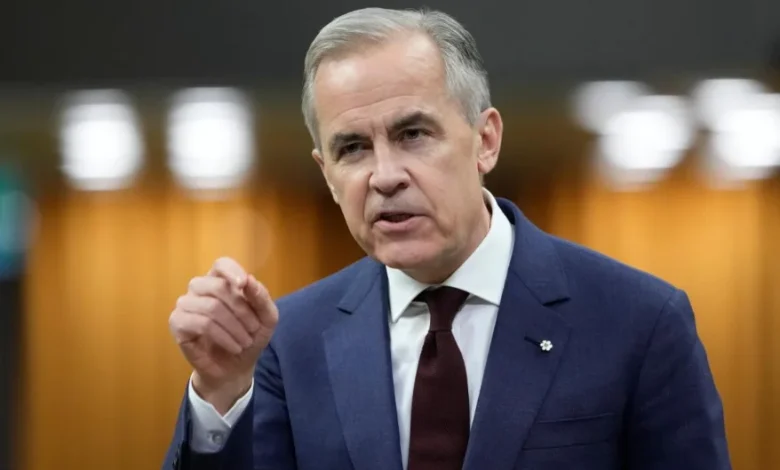
Canada Re-evaluates North American Trade Ties
Canada finds itself at a historical crossroads regarding its foundational economic strategies and its deepest bilateral alliances. For decades, the conventional wisdom within Ottawa has been to nurture and expand the deeply integrated North American trade corridor. However, the paradigm is violently shifting in 2026. Prime Minister Mark Carney has officially signaled a profound departure from this long-held complacency, categorically stating that funneling over seventy percent of national exports into a single market is no longer just an economic imbalance, but a glaring strategic weakness. This unprecedented declaration stems from escalating protectionist rhetoric south of the border, where the United States has increasingly demonstrated a willingness to leverage its massive consumer market as a geopolitical weapon. When your primary trading partner begins treating mutual prosperity as a zero-sum game, relying heavily on their goodwill transforms from a symbiotic partnership into an existential liability.
The 70 Percent Export Liability
Canada currently directs an astonishing proportion of its entire export capacity—ranging historically from 70 to 75 percent—directly to the United States. In stable geopolitical eras, this proximity offered unparalleled efficiency and mutual wealth generation. However, Prime Minister Carney, drawing on his extensive background as a global central banker, understands the sheer systemic risk of this monopsony dynamic. The lack of buyer diversification implies that any sudden policy shift in Washington—be it targeted tariffs, stringent border adjustments, or politically motivated embargoes—can instantly hemorrhage the Canadian economy. Carney’s blunt assessment marks the first major departure from his predecessors’ diplomatic tiptoeing. He posits that an economy dependent on a single, unpredictable patron is effectively outsourcing its national sovereignty. This dependency spans critical sectors from automotive manufacturing and raw mineral extraction to lumber and energy exports. The energy sector remains particularly vulnerable, as global crude stability is tested while oil holds below $100 amid major geopolitical deal hopes. Such global volatility only exacerbates the precariousness of Canada’s singular reliance on its southern neighbor.
PM Mark Carney’s Historic Invocation of the War of 1812
Canada experienced an electric political moment when Prime Minister Carney invoked the War of 1812 during his latest national address regarding economic sovereignty. The historical parallel is both stark and intensely provocative. In 1812, American political forces assumed that marching north into British North America would be a mere formality—an assumption that was violently dismantled by a coalition of British troops, Canadian militia, and Indigenous allies who not only repelled the invasion but infamously burned the White House. By drawing on this specific historical touchstone, Carney is delivering the quintessential Canadian version of ‘we have been here before, and we did not fold.’ This is not mere rhetorical flourishing; it is a calculated warning shot across the bow of American trade negotiators. It explicitly informs Washington that despite the overwhelming asymmetry in economic and military power, Canada possesses both the historical precedent and the modern resolve to endure profound friction rather than capitulate to humiliating demands.
Strategic Messaging and Geopolitical Posturing
Canada recognizes that the impending negotiations are as much about psychological posturing as they are about tariff schedules. Carney’s invocation of 1812 masterfully rallies domestic support, transforming a dry, technical trade dispute into a matter of national pride and survival. It signals to the Canadian public that short-term economic pain may be necessary to secure long-term structural independence. Furthermore, the message resonates globally. By standing firm against perceived American bullying, Canada seeks to project stability to other potential trading partners in Europe and the Indo-Pacific. Similar economic brinkmanship has been observed in recent geopolitical maneuvers, such as when US economic blockades sparked mass protests, illustrating the devastating potential of unilateral American economic warfare. Carney is unequivocally stating that Canada will not allow itself to be cornered into a similar scenario.
US Officials Telegraph Major Trade Treaty Changes
Canada is acutely aware that the upcoming review of the United States-Mexico-Canada Agreement (USMCA) is not going to be a routine rubber-stamping exercise. The treaty, negotiated in a highly volatile political climate years ago, contains a sunset clause necessitating a joint review in 2026. US officials are already telegraphing aggressive intentions, signaling desires to drastically alter rules of origin for automotive manufacturing, dismantle Canadian dairy protections, and implement punitive border carbon adjustments. The current administration in Washington views the trade deficit—even if structurally beneficial for cross-border supply chains—as a political failure that must be corrected through strong-arm tactics. American trade representatives have been conducting comprehensive audits of Canadian compliance, actively looking for leverage points to extract maximum concessions during the joint review sessions.
Analyzing the Upcoming Treaty Review
Canada must brace for what analysts predict will be the most bruising diplomatic negotiation since the original free trade debates of the late 1980s. The review process allows any party to express dissatisfaction, potentially triggering a countdown to the treaty’s termination. US negotiators are expected to weaponize this termination threat, operating on the assumption that Canada’s 70 percent dependency will force a capitulation before the deadline expires. However, Carney’s proactive stance is designed to strip this threat of its psychological power. By openly acknowledging the pain of potential tariffs and preparing the public for economic disruption, Ottawa aims to disarm the American negotiation strategy. For official updates on the US position, global markets frequently monitor the Office of the United States Trade Representative, which has grown increasingly vocal about its protectionist mandates.
Economic Implications of a Strained Bilateral Relationship
Canada understands that transforming a heavily integrated continental economy is a task measured in decades, not months. The immediate economic implications of a strained bilateral relationship are profound. Cross-border supply chains, particularly in the automotive and aerospace sectors, operate on just-in-time manufacturing models where components cross the Detroit-Windsor border multiple times before a final product is assembled. Any thickening of the border—through tariffs, rigorous inspections, or bureaucratic delays—adds exponential costs to these processes. If the US proceeds with threatened tariffs, Canadian industries could face sudden uncompetitiveness in their primary market. The resulting capital flight, localized unemployment in manufacturing hubs, and currency volatility are stark realities the Carney administration must actively mitigate through aggressive domestic policy interventions and emergency liquidity measures.
Sector-by-Sector Vulnerability Analysis
Canada requires a granular understanding of where the deepest vulnerabilities lie. A comprehensive overview reveals specific pressure points that American negotiators are likely to target. The table below outlines the primary sectors at risk in the 2026 trade review.
| Economic Sector | Percentage Exported to US | US Threat Level | Canadian Mitigation Strategy |
|---|---|---|---|
| Automotive & Parts | 82% | Critical (Rules of Origin changes) | Pivot to domestic EV battery supply chains |
| Energy (Crude & Gas) | 90%+ | High (Pipeline regulations/Carbon taxes) | Expand tidewater access to Asian markets |
| Agriculture (Dairy/Lumber) | Varies | Severe (Quota dismantling demands) | Aggressive WTO litigation & European exports |
| Critical Minerals | 65% | Moderate (Export controls) | Strengthen alliances with the European Union |
Canada cannot afford to ignore these vulnerabilities. The data unequivocally supports Carney’s thesis: the sheer concentration of export volume in the automotive and energy sectors represents an unsustainable systemic risk if the purchasing partner turns hostile.
Diversification Strategies for the Canadian Economy
Canada is now forced to radically accelerate its trade diversification strategies. The Comprehensive Economic and Trade Agreement (CETA) with the European Union and the Comprehensive and Progressive Agreement for Trans-Pacific Partnership (CPTPP) offer massive, underutilized frameworks for Canadian exporters. The government is expected to announce massive subsidies and logistical support for companies willing to reorient their supply chains away from North-South corridors to East-West and oceanic routes. This involves rapid infrastructure investments in deep-water ports, expanded rail capacity to coastal terminals, and aggressive diplomatic missions to secure favorable terms in emerging markets. Global trade dynamics are shifting profoundly, mirroring comprehensive realignments such as when major US deals aim to reshape global maritime chokepoints. In this fluid environment, agility and diversified alliances are the paramount currencies of national survival.
New Global Trade Partnerships in 2026
Canada must aggressively court the Indo-Pacific region. The rapidly expanding middle classes in Southeast Asia present massive, untapped markets for Canadian agriculture, clean technology, and educational services. By strategically pivoting toward these high-growth areas, Canada can incrementally reduce its reliance on the mature, increasingly protectionist US market. Furthermore, deepening ties with the European Union concerning critical minerals required for the green transition provides Canada with immense geopolitical leverage. As the world races to secure non-Chinese sources of lithium, cobalt, and rare earth elements, Canada’s vast, ethically mined reserves become a premium commodity. Leveraging these resources correctly can establish binding economic partnerships that insulate Ottawa from the unpredictable whims of Washington’s trade representatives.
Political Ramifications on Both Sides of the Border
Canada recognizes that trade wars are intrinsically tied to domestic politics. In the United States, populist rhetoric demanding the reshoring of jobs and the punishing of foreign competition plays exceedingly well with a polarized electorate. Consequently, American politicians have little incentive to offer concessions to Canada unless the alternative causes immediate, visible pain to their own constituents. Conversely, within Canada, Prime Minister Carney’s hardline stance represents a significant political gamble. While standing up to the United States historically yields a temporary bump in patriotic approval ratings, the inevitable economic fallout—such as localized job losses or inflationary pressures—could rapidly erode his political capital. The administration is betting that the Canadian public is mature enough to accept short-term volatility in exchange for long-term economic sovereignty.
Avoiding Passive Capitulation
Canada has spent decades perfecting the art of quiet diplomacy in Washington, relying on deep institutional relationships to smooth over periodic disputes. However, Carney is signaling that the era of passive accommodation is definitively over. The structural changes demanded by the US in 2026 are perceived as existential threats to core Canadian industries, particularly the heavily protected dairy sector and the finely balanced automotive ecosystem. A failure to publicly draw red lines would invite relentless demands, turning the treaty review into an endless sequence of capitulations. By pre-emptively declaring the current relationship a weakness and invoking the fierce independence of the 1812 conflict, the government is establishing a rigid negotiation parameter: Canada will negotiate, but it will absolutely not be dictated to.
Conclusion: A Resolute Stand for National Sovereignty
Canada has irreversibly altered the trajectory of its foreign economic policy. Prime Minister Mark Carney’s stark warning regarding the strategic liability of a 70 percent export dependency marks a paradigm shift in North American relations. The invocation of the War of 1812 serves as a potent reminder that while Canada desires peace and mutual prosperity, it possesses a deep-seated historical resilience against overwhelming odds. As the 2026 trade treaty review looms, the stage is set for a historic confrontation. Ottawa is no longer content to quietly manage its dependency; it is actively preparing to dismantle it. Whether through painful economic diversification, aggressive expansion into European and Asian markets, or enduring the immediate sting of bilateral tariffs, the message is unmistakably clear. Canada will safeguard its economic sovereignty, ensure its strategic autonomy, and firmly reject any international framework that demands submission in exchange for market access.