Pakistan Mediates U.S.-Iran Talks: Lebanon Ceasefire Hurdles
Pakistan stands at the absolute epicenter of one of the most complex geopolitical chess matches of the decade, serving as the crucial intermediary in the deeply strained relations between the United States and Iran. According to recent statements from the Foreign Ministry in Islamabad, there is currently no set date for the next formal round of U.S.-Iran talks. However, officials strongly believe that real, tangible progress is being made behind closed doors. This progress is primarily driven by Pakistan’s intensive efforts in quietly shuttling highly sensitive messages between the two antagonistic sides. The primary goal of this clandestine shuttle diplomacy is to bridge the formidable gaps that systematically derailed earlier negotiations, restoring a modicum of trust before returning to the public negotiating table. Furthermore, the Foreign Ministry has explicitly highlighted that Lebanon remains inextricably linked to the ongoing regional ceasefire dynamics. They argue that peace in Lebanon is not merely a tangential issue, but rather an essential prerequisite for the broader bilateral talks to move forward. This revelation leads geopolitical analysts to question: Could the volatile situation in Lebanon be the primary anchor holding everything up?
The Core of the Diplomatic Standoff
The diplomatic standoff between Washington and Tehran is characterized by decades of deep-seated mutual suspicion, ideological antagonism, and conflicting regional ambitions. For negotiations to resume, both sides must navigate a labyrinth of conditional demands. The United States insists on verifiable curbs to Iran’s rapidly advancing nuclear enrichment programs and a cessation of support for regional proxy militias. Conversely, Iran demands comprehensive, irrevocable relief from crippling economic sanctions that have devastated its domestic economy, alongside guarantees that future U.S. administrations will not unilaterally abandon any finalized agreements. Pakistan’s role in this environment is not to force an immediate resolution but to facilitate a baseline of communication. By engaging in backchannel diplomacy, Pakistani officials are meticulously translating the hardline rhetoric of both nations into actionable diplomatic proposals. This quiet approach prevents the public posturing that typically undermines official summits, allowing negotiators to explore theoretical concessions without facing immediate domestic political backlash.
Bridging the Divide Between Washington and Tehran
Bridging the cavernous divide between these two global adversaries requires addressing the structural issues that led to the collapse of previous accords. The trust deficit is monumental. Every message transported through Islamabad undergoes intense scrutiny, as both Washington and Tehran look for hidden caveats. The United States is particularly cautious, demanding that any new framework includes strict compliance verification mechanisms that are immune to Iranian obfuscation. On the other hand, Iran’s supreme leadership requires absolute assurance that their regional security apparatus will not be dismantled as a precondition for economic survival. The high stakes involved are vividly illustrated by the severe international anxiety regarding military escalation. As detailed in reports outlining how a broader conflict could unfold, a full-scale confrontation would be catastrophic; indeed, a financial crisis and threats to global markets are widely considered inevitable if diplomacy completely fails. Consequently, Pakistan’s mediators are tirelessly working to synthesize these mutually exclusive demands into a phased roadmap, where incremental trust-building measures precede any major geopolitical compromises.
The Sticking Point: Lebanon’s Role in Broader Negotiations
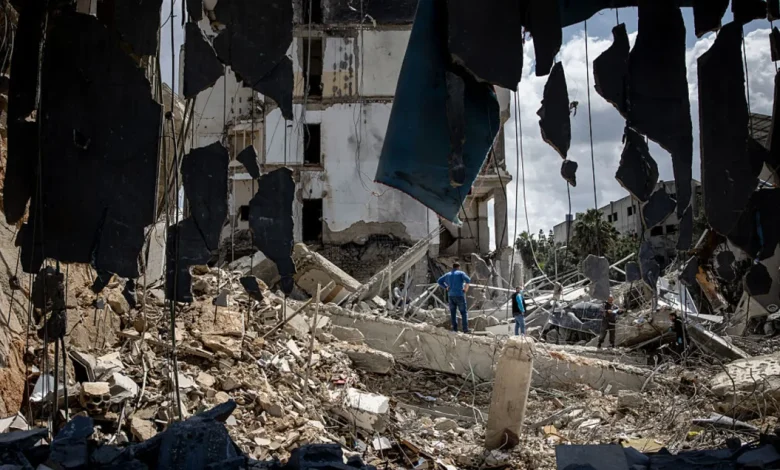
Perhaps the most significant revelation from the Pakistani Foreign Ministry is the explicit linkage between the U.S.-Iran diplomatic track and the fragile ceasefire holding in Lebanon. Historically, Lebanon has served as the paramount strategic theater for Iran’s forward defense doctrine, primarily through its robust backing of Hezbollah. The assertion that peace in Lebanon is essential for broader talks indicates that Tehran views the preservation of its strategic assets in the Levant as a non-negotiable component of any grand bargain. The current ceasefire in Lebanon is highly tenuous, constantly threatened by domestic political paralysis, severe economic depression, and the looming specter of renewed hostilities with Israel. From the Iranian perspective, committing to a comprehensive agreement with the United States while its primary regional ally remains vulnerable is a strategic miscalculation. Therefore, Tehran insists that Washington must exert its influence to stabilize the Lebanese front, effectively treating the Mediterranean nation as a crucial bargaining chip in the nuclear and sanctions relief negotiations.
Ceasefire Dynamics and Hezbollah’s Influence
Understanding the ceasefire dynamics requires acknowledging the pervasive influence of Hezbollah within Lebanon’s political and military infrastructure. Hezbollah is not merely an armed faction; it is a deeply entrenched socio-political movement with veto power over Lebanese state decisions. Any sustainable peace in Lebanon inherently involves acknowledging and negotiating with Hezbollah’s interests, which are inextricably tied to Tehran’s directives. The United States views Hezbollah as a premier terrorist organization and is highly reluctant to endorse any framework that legitimizes or empowers the group. However, the reality on the ground dictates that ignoring Hezbollah ensures the failure of the Lebanese ceasefire. This creates a severe diplomatic bottleneck. The potential for sudden, explosive escalations remains a terrifying reality for regional planners. Incidents such as the severe Iranian missile barrage that recently struck a Beersheba chemical plant serve as stark reminders of the interconnected volatility of the region. Such localized escalations can instantly torpedo months of delicate messaging facilitated by Islamabad, proving exactly why the Pakistani Foreign Ministry views the Lebanese ceasefire as the absolute linchpin for broader U.S.-Iran progress.
Historical Context of Islamabad’s Mediation Role
Pakistan’s emergence as the primary mediator is deeply rooted in its unique geographical, demographic, and historical positioning. As a nuclear-armed, predominantly Sunni nation that shares a massive, porous border with Shia-majority Iran, Pakistan has a critical vested interest in regional stability. Simultaneously, Islamabad maintains a complex, multifaceted relationship with the United States, marked by decades of security cooperation, counter-terrorism alliances, and economic reliance. This dual alignment provides Pakistan with unparalleled access to the highest echelons of both governments. Unlike European intermediaries, who are often viewed with suspicion by Tehran as extensions of Western hegemonic interests, Pakistan is perceived as a regional stakeholder whose own national security is directly tied to the prevention of a U.S.-Iran war. Over the past several decades, whenever official channels between Washington and Tehran have completely severed, Islamabad has stepped into the void, utilizing its embassies and intelligence networks to ensure that critical red lines are communicated and respected, thereby preventing accidental escalations into full-scale conflict.
Previous Rounds of Negotiations and Derailments
To fully grasp the difficulty of setting a date for the next round of talks, one must analyze the spectacular derailments of previous negotiations. The collapse of the Joint Comprehensive Plan of Action (JCPOA) and subsequent failed attempts to resurrect it have left profound scars on the diplomatic landscape. Earlier negotiations frequently broke down over issues of sequencing: who acts first? Iran repeatedly demanded upfront sanctions relief to prove American goodwill, while the U.S. demanded upfront rollback of nuclear enrichment to prove Iranian sincerity. When compromises seemed near, domestic hardliners in both countries would inevitably sabotage the process, framing any concession as a fatal surrender. Furthermore, extraneous regional events—such as proxy attacks in Iraq or Syria, maritime incidents in the Persian Gulf, or cyber warfare campaigns—would constantly inject toxic volatility into the negotiating rooms. Pakistan’s current strategy involves isolating the core negotiations from these peripheral shocks. By operating completely in the shadows, Pakistani diplomats are attempting to create a sterilized environment where the fundamental issues of sanctions and nuclear containment can be discussed without the paralyzing interference of daily geopolitical crises.
Data Analysis: The Diplomatic Matrix
To systematically understand the intricate balancing act currently being managed by Islamabad, we must review the primary strategic objectives, current stances, and leverage points of the key actors involved in this diplomatic deadlock. The following table provides a comprehensive analytical breakdown of the diplomatic matrix.
| Actor | Primary Strategic Objective | Current Stance on Negotiations | Leverage Points |
|---|---|---|---|
| United States | Containment of nuclear capabilities and regional proxy influence | Seeking comprehensive verifiable guarantees before committing to a formal summit date | Sweeping economic sanctions, global financial control, robust military alliances |
| Iran | Immediate sanctions relief and preservation of regional deterrent networks | Demanding actionable economic relief and sustained ceasefire in allied zones like Lebanon | Advanced uranium enrichment levels, extensive proxy forces, regional disruption capabilities |
| Pakistan | Regional stability, border security, and prevention of broader conflict spillover | Active backchannel mediation, prioritizing quiet diplomacy over public declarations | Strategic neutrality, profound geopolitical ties to both Washington and Tehran |
| Lebanon (Hezbollah) | Organizational survival, domestic political dominance, and resistance to external pressures | Tying localized ceasefire agreements directly to broader regional geopolitical resolutions | Asymmetric border conflict capabilities, absolute domestic political veto power |
This matrix clearly illustrates why a simple bilateral agreement is virtually impossible. The interlocking dependencies—specifically how Iranian leverage relies on Lebanese instability, and how U.S. leverage relies on economic strangulation—create a scenario where concessions in one area immediately weaken an actor’s position in another. Pakistan’s monumental task is to find the microscopic intersection where all parties feel they have maintained their strategic imperatives while stepping back from the brink of war.
Regional Power Plays and Geopolitical Impact
The implications of these delayed talks reverberate far beyond the borders of the United States, Iran, and Pakistan. The entire Middle East and South Asia regions are held hostage by this diplomatic paralysis. Traditional Arab powers, particularly in the Gulf, are watching Islamabad’s efforts with intense apprehension. For these nations, a U.S.-Iran deal could either herald a new era of regional integration or signal a terrifying American withdrawal that leaves them vulnerable to an emboldened, unconstrained Tehran. Israel, conversely, views any accommodation with Iran as an existential threat and continuously lobbies Washington to abandon negotiations in favor of overwhelming military pressure. Meanwhile, global superpowers like China and Russia are actively manipulating the standoff to further their own multi-polar ambitions, offering Iran economic lifelines that directly undermine the effectiveness of U.S. sanctions. In this hyper-charged environment, Pakistan’s mediation is not just about resolving a bilateral dispute; it is about managing a delicate global equilibrium that, if shattered, could rapidly drag multiple nuclear-armed states into an uncontainable conflagration.
Economic Ramifications for Global Energy Markets
The economic stakes of these delayed negotiations cannot be overstated, particularly concerning global energy markets. The Persian Gulf remains the central artery for global hydrocarbon supplies. Any significant escalation resulting from failed diplomacy immediately threatens the uninterrupted flow of millions of barrels of oil per day. The market’s immense sensitivity to this geopolitical fault line is constantly demonstrated by price fluctuations. Currently, the precarious balance where oil holds below 100 amid deal hopes and ongoing talks is entirely dependent on the market’s belief that Pakistan’s shuttle diplomacy will eventually bear fruit. If the backchannel communications break down, risk premiums will skyrocket, sparking devastating inflation across Western economies. Furthermore, the strategic maritime chokepoints involved are vital not just for oil, but for global trade logistics. The persistent anxieties reflected in Strait of Hormuz global shipping and geopolitics analyses confirm that commercial maritime insurance rates and shipping route security are fundamentally tethered to the success or failure of Islamabad’s diplomatic endeavors. Consequently, international economic stability is heavily reliant on an unseen, unheralded diplomatic process operating out of the Pakistani capital.
Why a Date Remains Elusive
Despite the optimistic assessments emanating from Pakistan regarding real progress, establishing a concrete date for formal talks remains elusive due to the uncompromising political realities in both Washington and Tehran. In the United States, the domestic political calendar heavily dictates foreign policy maneuvering. Any administration is inherently terrified of appearing weak or excessively conciliatory toward a nation that frequently chants for its destruction. Setting a date without pre-agreed, ironclad concessions from Iran exposes the U.S. leadership to ferocious partisan attacks. Conversely, in Iran, the ruling clerics and the powerful Islamic Revolutionary Guard Corps (IRGC) must project an image of absolute, unyielding defiance. Agreeing to sit down with American diplomats without securing prior, tangible relief from the crushing sanctions regime is viewed domestically as a humiliating capitulation. Therefore, both nations are engaged in a perilous game of chicken, waiting for the other to blink first, while relying entirely on Pakistan to communicate their steadfastness and test the boundaries of the opponent’s resolve.
What Needs to Happen Next for Progress
For this quiet progress to transition into a publicized diplomatic breakthrough, a meticulously choreographed sequence of reciprocal actions must unfold. First, the Lebanese ceasefire must be solidified, transforming it from a fragile, temporary pause into a robust, internationally monitored truce. This would satisfy Iran’s requirement for regional security and remove a major volatile variable from the equation. Second, the United States must demonstrate a willingness to implement limited, targeted sanctions waivers—perhaps facilitating the release of frozen Iranian assets strictly for humanitarian purchases. This gesture would provide Tehran with the necessary domestic political capital to justify returning to the negotiating table. Concurrently, as noted in authoritative international diplomatic and geopolitical security reports, Iran must halt its most provocative nuclear enrichment activities and grant enhanced access to international atomic inspectors. Pakistan’s role will be to synchronize these steps, ensuring that each side’s concessions are simultaneous and verifiable, thereby preventing accusations of bad faith that have doomed previous efforts.
Conclusion: The Path Forward for Stability
Pakistan has undertaken a monumental and historically significant burden by serving as the primary conduit between the United States and Iran during one of the most perilous periods in modern Middle Eastern history. The absence of a scheduled date for official negotiations should not be misinterpreted as a complete diplomatic failure, but rather as indicative of the immense complexity and fragility of the issues at hand. As Islamabad continues to shuttle critical messages, the emphasis on the Lebanese ceasefire highlights the deeply interconnected nature of regional conflicts. Achieving a breakthrough will require extraordinary patience, precise communication, and a willingness from both Washington and Tehran to accept imperfect compromises. Until that moment arrives, the world must rely on the quiet, unyielding efforts of Pakistani diplomats working in the shadows, navigating a geopolitical minefield to prevent a catastrophic regional war and pave the narrow, treacherous path forward toward enduring global stability.