Netanyahu Loses Staunch Ally as Italy Suspends Defense Pact
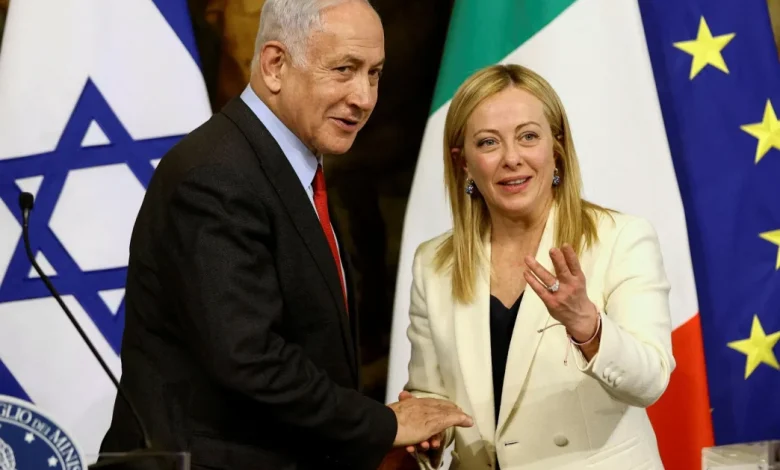
Netanyahu and his government are facing an unprecedented diplomatic crisis as Italy, one of Israel’s most steadfast European allies, officially suspends its bilateral defense agreement. In a dramatic geopolitical shift that has sent shockwaves through international diplomacy, Italian Prime Minister Giorgia Meloni has decided to halt military cooperation with Israel. This development is not merely a routine diplomatic spat; it represents a profound realignment of European politics. Meloni is not Emmanuel Macron of France or Pedro Sánchez of Spain, leaders who have historically balanced their support for Israel with vocal critiques of its policies. Meloni is a staunch Christian conservative who, upon taking office, was widely considered one of Israel’s closest and most reliable allies in Europe. Her decision to pull back signals that Israel is rapidly losing the support of the European right, compounding the existing alienation from the European left. The isolation surrounding the current Israeli administration is no longer emanating solely from predictable progressive quarters; it is now being driven by conservative governments that were firmly in Israel’s corner just a year ago.
The Meloni Shift: A Crushing Blow from the European Right
The significance of Giorgia Meloni’s pivot cannot be overstated. When her right-wing coalition secured victory in Italy, the Israeli government celebrated the rise of a European leader whose ideological framework closely aligned with conservative national security paradigms. Meloni’s initial approach to the Middle East was characterized by robust support for Israel’s right to self-defense, a stance she reiterated passionately in numerous international forums. However, the prolonged nature of the conflict, mounting civilian casualties, and the broader destabilization of the Mediterranean basin have drastically altered Rome’s strategic calculus. The suspension of the defense pact is a clear indicator that domestic pressures, coupled with Italy’s broader geopolitical ambitions, have superseded ideological affinities. Italy’s foreign policy is deeply intertwined with its historical role in the Mediterranean and the Middle East, a reality recently underscored by the Meloni Middle East tour where the Italy PM visited Saudi Arabia, Qatar, and the UAE to forge new energy and security alliances. As Italy seeks to position itself as a central mediator and energy hub bridging Europe and the Arab world, uncritical alignment with a deeply controversial Israeli military campaign has become a strategic liability.
Conservative Alliances Falling Apart
For decades, the Israeli government has cultivated relationships with European conservative movements, relying on shared values regarding counter-terrorism, border security, and national sovereignty. The fracture in the Italy-Israel relationship highlights the fragility of these alliances when tested by prolonged, high-intensity warfare. Meloni’s conservative base in Italy includes strong Catholic constituencies that have grown increasingly vocal about humanitarian concerns in the Levant. Furthermore, Italy’s significant contributions to UN peacekeeping missions, particularly in Lebanon, have forced Rome to prioritize regional stability over unconditional loyalty to the Netanyahu administration. When Israeli military operations began encroaching upon areas affecting European strategic interests and peacekeeping forces, the tipping point was reached. This marks a definitive end to the era where Israel could rely on the European right to automatically veto or dilute EU condemnations.
Unraveling the Defense Agreement Between Italy and Israel
The suspended defense agreement between Rome and Jerusalem was a cornerstone of their bilateral relationship. It encompassed joint military exercises, extensive intelligence sharing, and significant arms procurement contracts. Italy’s robust defense industry, featuring giants like Leonardo and Fincantieri, has long been integrated with Israeli defense technology sectors. Suspending this pact disrupts a lucrative and strategically vital exchange of aerospace technology, naval systems, and cybersecurity protocols. The freezing of arms exports and joint technological development sends a chilling message to Israel’s defense establishment: European military cooperation is strictly conditional. This move also forces Israel to re-evaluate its supply chains at a critical juncture, recognizing that European defense components and political goodwill can evaporate simultaneously.
| European Nation | Current Leader | Political Leaning | Recent Diplomatic Action Regarding Israel |
|---|---|---|---|
| Italy | Giorgia Meloni | Conservative / Right | Suspended bilateral defense agreement and military cooperation. |
| Spain | Pedro Sánchez | Socialist / Left | Called for comprehensive EU sanctions against Israeli leadership. |
| France | Emmanuel Macron | Centrist | Demanded immediate protection for Lebanon and halted specific arms sales. |
| Poland | Donald Tusk | Center-Right | Expressed profound dismay over regional escalations and diplomatic posture. |
Tracking the Domino Effect: Europe Turns Its Back
The isolation of the Israeli government is accelerating through a demonstrable domino effect across the European continent. What began as isolated critiques from nations traditionally sympathetic to the Palestinian cause, such as Ireland and Spain, has metamorphosed into a continent-wide consensus of frustration and distancing. Spain’s Prime Minister Pedro Sánchez has aggressively campaigned within the European Union to impose binding sanctions on Israel, arguing that international law must be applied uniformly. Concurrently, France’s Emmanuel Macron has issued stern demands regarding the protection of Lebanon, directly challenging Israeli military expansions in the northern theater. Even Poland, dealing with its own security concerns regarding Eastern Europe, has expressed public dismay over Israel’s diplomatic intransigence. The collective action of these nations illustrates a fundamental collapse of Israel’s European diplomacy. For an extensive look at how NATO dynamics are shifting amid these geopolitical crises, it is critical to observe instances where NATO allies shut airspace, reflecting deep operational divides within Western alliances.
Military Triumphs Over Diplomatic Disasters
The paradox of the current Israeli strategy is the stark contrast between tactical military successes and catastrophic diplomatic failures. On the battlefield, the Israeli Defense Forces continue to execute complex operations, dismantling adversary infrastructure and achieving specific kinetic objectives. However, modern warfare is intrinsically linked to diplomatic legitimacy and international support. The prevailing sentiment among global observers is that tactical victories are hollow if they result in the country becoming a pariah state. The loss of a steadfast ally like Italy underscores the reality that military might cannot substitute for diplomatic alliances. As the government prioritizes immediate security objectives, it is simultaneously burning the very bridges that are essential for long-term survival, economic prosperity, and regional integration. A nation cannot sustain its military apparatus indefinitely if its key trading partners and political allies embargo its defense industries and isolate its leadership.
Global Implications: Analyzing the Regional Fallout
The ripple effects of Europe’s distancing from Israel extend far beyond the Mediterranean. The broader Middle East is closely monitoring these developments, interpreting the diplomatic isolation as an opportunity to shift the balance of power. The ongoing tensions involving major regional players like Iran are exacerbated by Israel’s shrinking alliance network. With European nations pulling back, the United States is left shouldering an increasingly disproportionate burden of diplomatic and military support for Israel. This dynamic is thoroughly analyzed in recent coverage of the US-Iran war news and strategic updates, which highlights how global powers are reacting to the shifting sands of Middle Eastern alliances. Furthermore, the economic implications are profound. Europe is Israel’s largest trading partner. The threat of economic sanctions, reduced foreign direct investment, and energy sector volatility looms large. The intersection of military conflict and energy security has already been highlighted by events such as the Israel-Iran strike on South Pars and its global energy fallout. As Europe diversifies its diplomatic portfolio, it is also recalibrating its economic dependencies, leaving Israel vulnerable to long-term economic stagnation.
The Road Ahead for the Israeli Government
The path forward for the current Israeli administration is fraught with immense challenges. Rebuilding trust with European leaders like Giorgia Meloni will require more than superficial diplomatic gestures; it will demand a fundamental reassessment of the government’s strategic objectives and its commitment to international norms. The suspension of the Italian defense pact must serve as a clarion call to the political establishment in Jerusalem. The prevailing assumption that the European right would offer unconditional support regardless of the geopolitical context has been definitively shattered. To avoid complete marginalization on the world stage, the Israeli leadership must pivot toward a strategy that balances legitimate security needs with the diplomatic realities of an interconnected global order. Failure to do so will not only cement their current isolation but will actively endanger the very national security they claim to be defending. As international institutions, such as the European Council, continue to deliberate on the future of EU-Israel relations, the window for diplomatic reconciliation is rapidly closing.