WWDC 2026: Why Apple’s Safe Play and iOS 27 Was ‘Boring’
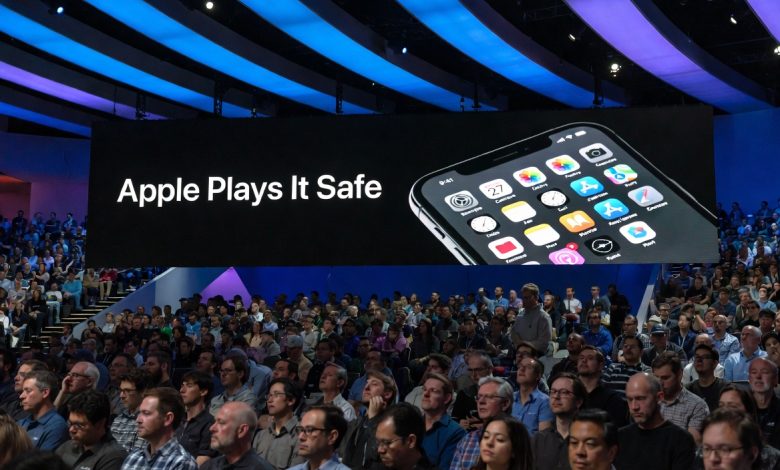
In many ways, the understated nature of the keynote was exactly what Apple needed. After the turbulent release of ‘Liquid Glass’ in 2025—which sparked widespread criticism regarding visual accessibility—and the long-delayed rollout of Apple Intelligence features first promised in 2024, the company stood at a critical crossroads. Rather than trying to dazzle the audience with vaporware, Apple delivered a masterclass in software repair, engineering transparency, and trust-rebuilding. It was a historic event, not because of what was added, but because of what was quietly fixed.
- The Paradox of WWDC 2026: Why ‘Boring’ is Apple’s New Superpower
- Stripping Away the Stunts: A Transition to Foundational Stability
- Craig Federighi’s Subdued Presentation Tone
- Tim Cook’s Emotional Farewell to Apple’s Developer Base
- The Long-Awaited Siri AI: Finally Delivering on a Two-Year Promise
- The Power Behind Siri: A Custom 1.2-Trillion Parameter Gemini Model
- The App Intents Mandate and the Sunset of SiriKit
- Liquid Glass Design Refinements: Admitting the Mistakes of WWDC25
- The Introduction of the Transparency and Contrast Sliders
- How Liquid Glass Icons and Black Glass Unify the UI
- Key Software Advancements in iOS 27 and macOS Golden Gate
- Parental Controls and iCloud+ Device Usage Caps
The Paradox of WWDC 2026: Why ‘Boring’ is Apple’s New Superpower
In the high-stakes world of consumer technology, ‘boring’ is typically viewed as a death sentence. Tech companies routinely inflate their presentations with flashy, half-baked features to keep stock prices high and social media algorithms buzzing. However, Apple’s decision to deliver a remarkably straightforward keynote in 2026 represents a calculated, highly mature strategic pivot. By prioritizing solid engineering over hyperbole, Apple addressed the mounting skepticism that has shadowed its software division for the past two years.
The tech ecosystem has suffered from AI fatigue and feature overload. Users are increasingly frustrated by operating systems that feel bloated, buggy, and detached from daily utility. By stepping away from the arms race of endless novelty, Apple positioned itself as the adults in the room. The ‘boring’ label is actually a shield for deep, foundational refinement. It signals that Apple is no longer chasing headlines; instead, they are dedicated to ensuring that the devices in billions of pockets simply work flawlessly.
Stripping Away the Stunts: A Transition to Foundational Stability
For several consecutive years, Apple’s pre-recorded keynote videos felt more like Hollywood action blockbusters than software briefings. Directors relied on dizzying drone shots, dramatic lighting shifts, and elaborate physical skits to keep the audience engaged. While entertaining, these cinematic distractions often masked a lack of concrete shipping dates and architectural substance. In 2026, the presentation design shifted dramatically. The camera work was steady, the environments were simpler, and the focus remained squarely on the code and the user interface.
This deliberate scaling back of theatricality was not an accidental budget cut. It was a conscious editorial choice. Apple understood that after multiple high-profile software delays, executing another over-the-top stunt would come across as tone-deaf. The developers sitting in the audience didn’t want to see executive theatrics; they wanted stable APIs, clear documentation, and a cohesive operating system that didn’t alienate their users. By removing the fluff, Apple allowed its engineering improvements to speak for themselves.
Craig Federighi’s Subdued Presentation Tone
Craig Federighi, Apple’s Senior Vice President of Software Engineering, is famous for his high-energy, charismatic stage presence. Known affectionately by the community as ‘Hair Force One,’ Federighi has previously jumped out of windows, raced through tunnels, and played electric guitars in comedic interludes. During this keynote, however, his tone was noticeably more measured. He presented with a calm, grounded demeanor, walking developers through the technical specifics of iOS 27 with earnestness rather than theatrical hype.
This subtle shift in Federighi’s delivery underscored the gravity of the release. Rather than rushing through bullet points with breathless enthusiasm, he spent valuable minutes explaining the ‘why’ behind their architectural changes. He openly addressed the need for performance optimization and stability, validating the concerns of developers who have struggled with rapid API transitions. It was a refreshing demonstration of executive humility that resonated deeply with the professional community.
Tim Cook’s Emotional Farewell to Apple’s Developer Base
Beyond the software announcements, the keynote carried immense historical weight as Tim Cook’s final WWDC as Apple’s Chief Executive Officer. Following Apple’s announcement in April 2026 that Cook will transition to Executive Chairman in September, giving way to hardware veteran John Ternus, this was his farewell address to the global developer community. Standing under the metallic Apple logo at Apple Park, Cook delivered a heartfelt, personal speech that received a sustained, multi-minute standing ovation.
Cook’s 15-year tenure has been defined by unprecedented operational scaling, the expansion of Apple’s services ecosystem, and the introduction of major hardware platforms like the Apple Watch and Apple Vision Pro. His final address was not a victory lap of financial metrics, but a sincere expression of gratitude. He thanked the developers for their relentless imagination and ingenuity, noting that their creations have been a constant source of inspiration throughout his career. This emotional transition set a reflective, legacy-focused tone for the entire event.
The Long-Awaited Siri AI: Finally Delivering on a Two-Year Promise
The centerpiece of the software announcements was the official, fully realized rollout of Siri AI. Initially teased during the 2024 keynote under the ‘Apple Intelligence’ banner, the next-generation virtual assistant has tested the patience of consumers and industry experts alike. For two years, the promise of a contextually aware, on-screen intelligent assistant remained mostly aspirational, leaving users with fragmented beta features and vague release timelines. This keynote finally closed that gap, showcasing a Siri that is fundamentally rebuilt from the ground up.
This new iteration of Siri is deeply integrated into the core architecture of iOS 27, iPadOS 27, and macOS Golden Gate. Unlike previous versions, which operated as a simple query-and-response engine, Siri AI possesses deep on-screen awareness and personal contextual comprehension. It can safely parse information across various apps—such as cross-referencing a flight itinerary in Mail with a text message from a family member in Messages—to execute complex, multi-step actions. This is the cohesive assistant Apple promised years ago, and its arrival is a vital milestone for the platform.
The Power Behind Siri: A Custom 1.2-Trillion Parameter Gemini Model
To power the heavy-lifting reasoning capabilities of Siri AI, Apple made a highly significant architectural pivot by partnering with Google. Under the hood, Siri’s advanced linguistic processing and external knowledge retrieval are driven by a custom, highly optimized 1.2-trillion parameter Google Gemini foundation model. This hybrid approach combines Apple’s proprietary on-device models for personal context with Gemini’s massive computational intelligence for open-domain reasoning.
Crucially, Apple has maintained its strict privacy standards through Private Cloud Compute. When a complex query requires cloud processing, the data is sent to Apple’s secure servers built with custom Apple Silicon. This ensures that user data is never stored, logged, or made accessible to third parties, including Google. The integration of Gemini represents a pragmatic acknowledgment by Apple that collaborating with established AI leaders is the fastest path to delivering top-tier performance to its users.
The App Intents Mandate and the Sunset of SiriKit
For developers, the architectural shift is profound. Apple announced that App Intents is now the mandatory framework for any application wishing to integrate with Siri AI, while the legacy SiriKit framework is officially being deprecated on a strict timeline. This transition requires developers to rebuild their app interactions to match Apple’s modern intent-based system. While this represents a significant engineering effort for third-party creators, it is necessary to enable Siri to safely navigate and control apps on a granular level.
To aid developers in this migration, Xcode 27 introduces powerful on-device AI code completion tools. The new development environment can automatically scan legacy SiriKit integrations and suggest modern App Intents replacements. This developer-first focus is another example of Apple investing in structural health over surface-level flash, ensuring that the broader app ecosystem can seamlessly adapt to the era of agentic AI.
Liquid Glass Design Refinements: Admitting the Mistakes of WWDC25
In 2025, Apple took a massive design risk by introducing ‘Liquid Glass,’ a unified visual language characterized by heavy glassmorphism, dynamic light refraction, and fluid UI elements. While visually striking in marketing videos, the real-world deployment of Liquid Glass was plagued by severe user backlash. The design community and everyday users complained about poor text contrast, unreadable notifications, and a lack of clear visual hierarchy that violated Apple’s own long-standing Human Interface Guidelines (HIG).
Rather than ignoring the criticism or waiting years to address it, Apple used this keynote to publicly, albeit quietly, repair these design flaws. The company devoted a significant portion of the iOS 27 presentation to design refinements. It was a rare, historically significant moment of design correction. By prioritizing legibility and accessibility over superficial glitz, Apple demonstrated that it is willing to listen to its user base and correct course when a design experiment fails to meet real-world standards.
The Introduction of the Transparency and Contrast Sliders
The most immediate and practical solution introduced to fix the Liquid Glass dilemma is the new ‘Lessen Liquid Glass’ slider and native contrast adjustment controls. Located within the Accessibility and Display settings of iOS 27, these tools allow users to dynamically adjust the transparency, reflectivity, and edge-contrast of the system’s glass elements. This gives users who suffer from visual strain or who simply prefer a cleaner interface the power to dial down the dynamic glass effects entirely.
This implementation is a major win for digital accessibility. For decades, Apple has championed the belief that technology should be usable by everyone. The rigid, uncustomizable nature of the initial Liquid Glass rollout was a rare departure from that philosophy. By putting control back into the hands of the user, Apple has restored the balance between artistic expression and practical usability, ensuring that the interface remains readable under any lighting condition or visual capability.
How Liquid Glass Icons and Black Glass Unify the UI
While fixing the legibility issues, Apple did not abandon the Liquid Glass concept entirely. Instead, they refined it into a more mature aesthetic. The keynote introduced ‘Black Liquid Glass’ and revamped app icon designs that incorporate glassmorphic layers directly into the artwork itself. This creates a stunning sense of depth and tactile realism without compromising the legibility of the system typography. The typography is now masked and reinforced with solid backdrops when layered over complex glass textures.
This unified visual language now extends cleanly across all major platforms. In macOS Golden Gate, the Finder and system menus adopt a sophisticated ‘black glass’ aesthetic that responds beautifully to dark mode and shifting desktop backgrounds. The result is an interface that feels incredibly premium, coherent, and highly polished—proving that glassmorphism can work beautifully when executed with restraint and a rigorous commitment to typographic clarity.
Key Software Advancements in iOS 27 and macOS Golden Gate
While Siri and design refinements took center stage, the broader software releases deliver a wide array of quality-of-life improvements. The focus of these updates is responsiveness and system performance. Across iOS 27, iPadOS 27, and macOS Golden Gate, Apple has optimized core system processes to reduce latency, improve battery life, and ensure that animations remain butter-smooth even on older hardware. This performance-first approach aligns perfectly with the keynote’s overall theme of stability.
Furthermore, Apple’s native productivity apps have received thoughtful upgrades. Safari now includes advanced organizational features that automatically categorize tabs by topic, monitor webpages for real-time updates, and generate custom extensions from simple natural-language prompts. These are practical, everyday features that enhance user productivity without demanding a steep learning curve or dramatic workflow changes.
Parental Controls and iCloud+ Device Usage Caps
One of the most praised and underrated announcements of the keynote was the sweeping overhaul of Apple’s parental control systems. Recognizing the growing challenges families face in managing digital safety, Apple introduced an expansive set of intuitive child safety tools. Parents can now easily set up secure, age-appropriate digital environments with highly granular controls over app access, screen time limits, and communication safety. These tools are designed to be friction-free, allowing parents to manage settings directly from their own devices with clear, visual dashboards.
Additionally, Apple addressed the computational and financial realities of heavy generative AI usage. To manage the immense server loads associated with advanced image generation and deep Siri AI reasoning, Apple has implemented daily usage limits on certain AI tools. Users who require heavier access can unlock higher caps by subscribing to iCloud+. This fine print highlights the practical economic and infrastructural limits of the AI boom, showing that even a trillion-dollar giant like Apple must balance server capacity with user demand.
Evaluating Apple’s WWDC Strategic Shift
To understand how this year’s keynote compares to previous years, we can look at the shift in focus, presentation style, and product readiness. This progression highlights Apple’s journey from speculative hype to practical execution.
| Keynote Year | Primary Focus | Siri Status | Design Language | Presentation Vibe |
|---|---|---|---|---|
| WWDC 2024 | Apple Intelligence Vision | Aspirational Teaser | Flat / Neumorphic Hints | Highly Cinematic & Stunt-Heavy |
| WWDC 2025 | Liquid Glass & Ecosystem Harmony | Limited Beta / Delayed Features | Initial Liquid Glass (High Refraction) | Stunt-Heavy / Feature-Focused |
| WWDC 2026 | Foundational Repair & Trust | Fully Shipped Siri AI (Gemini Powered) | Refined Liquid Glass (Accessibility Sliders) | Grounded, Fast, and Focused |
Ultimately, the ‘boring’ WWDC 2026 keynote represents a crucial turning point for Apple. It was a moment of maturation, where the company stopped chasing the spectacular and instead focused on the spectacular execution of its core products. By repairing the trust broken by design missteps and fulfilling long-overdue technology promises, Apple has established a solid, stable foundation for the next generation of leadership under John Ternus. In an industry obsessed with the next shiny object, Apple’s quiet reset is a powerful reminder that sometimes, the most revolutionary thing a company can do is simply make things work.
For more detailed technical documentation and developer guides regarding the new APIs, check out the Apple’s Official Newsroom which outlines all the major system updates and accessibility changes in iOS 27.