Steve Buyer Pardoned: Trump Grants Full Clemency to Ex-Congressman
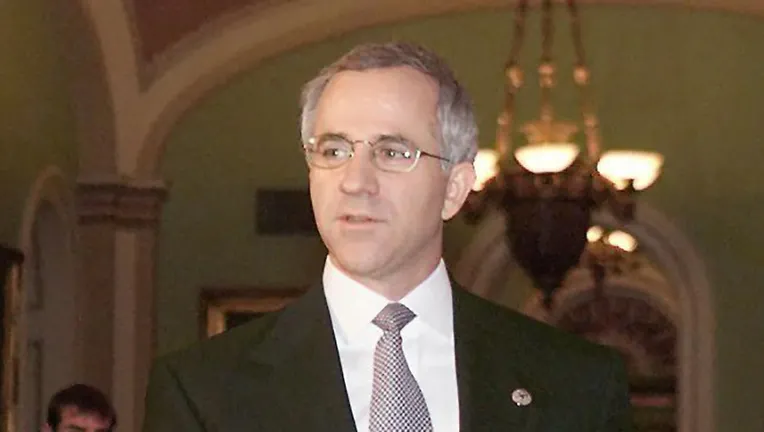
Steve Buyer, a former Indiana Republican congressman, has been granted a full, complete, and unconditional presidential pardon by Donald Trump, marking a dramatic final chapter in a high-profile legal battle over insider trading. The presidential action, dated Thursday, June 4, 2026, and released by the White House late Friday, June 5, 2026, absolves the former lawmaker of his 2023 federal conviction. Steve Buyer, who served nearly two years in prison before being released in 2025, has steadfastly maintained his innocence throughout the proceedings. The pardon follows an intensive lobbying campaign by Republican allies who framed his prosecution as a politically motivated weaponization of the justice system under the Biden administration.
The decision by President Donald Trump to grant clemency comes directly after the highest court in the land declined to review the case. In May 2026, the United States Supreme Court rejected Steve Buyer’s final appeal without comment or noted dissent. This judicial closure left a presidential pardon as the sole mechanism through which Buyer could seek to clear his name and erase the legal consequences of his conviction. In his public statement following the announcement, Buyer expressed deep gratitude, declaring that the pardon “corrects a politically motivated prosecution” and describing it as “horrific to be imprisoned for a crime that I did not commit.” The move has reignited debate over the scope of presidential pardon power and the intersection of political influence and federal prosecution.
Introduction: Steve Buyer Pardoned by Donald Trump
The announcement of a full presidential pardon for Steve Buyer has sent shockwaves through the political and legal landscapes. The timing of the pardon, arriving shortly after the Supreme Court’s refusal to hear his case, underscores a deliberate effort by the executive branch to bypass the traditional judiciary when addressing cases perceived as politically charged. By granting an unconditional pardon, Trump has effectively erased the legal penalties and criminal record of a close political ally who has spent years arguing that his prosecution was a product of executive overreach by the prior administration.
For Steve Buyer, the pardon represents a hard-fought vindication. After his conviction in 2023, his reputation as a respected lawmaker and military veteran was severely tarnished. Although he has already completed his 22-month prison sentence, the pardon restores his full civil liberties, clears his record, and provides a powerful rhetorical tool to combat the stigma of his conviction. As the public dissects the motivations behind this executive order, the case serves as a critical case study in the dynamics of federal white-collar prosecutions and presidential clemency.
A Distinguished Political and Military Career
Stephen Earle Buyer established a long and prominent career in public service before his post-congressional business dealings became the subject of federal scrutiny. Born in Rensselaer, Indiana, Buyer served as a Republican member of the U.S. House of Representatives from 1993 to 2011. Over his nine terms in Congress, representing Indiana’s 5th and 4th districts, he developed a reputation as a staunch conservative and a fierce advocate for military veterans and national defense. He served as the Chairman of the House Veterans’ Affairs Committee from 2005 to 2007, and later as its Ranking Member, working to reform veteran healthcare and enhance information technology security within the Department of Veterans Affairs.
Role in the 1998 Impeachment of Bill Clinton
During his tenure in the House of Representatives, Steve Buyer played a pivotal role in one of the most significant constitutional events of the late 20th century. In 1998, he was selected as one of the 13 House managers—essentially serving as a prosecutor—during the impeachment trial of Democratic President Bill Clinton. This role placed Buyer under an intense national spotlight as he argued the case for Clinton’s removal from office before the United States Senate. His performance during the trial solidified his standing within the national Republican Party as a skilled legal mind and a disciplined advocate, a reputation that would serve him well decades later when rallying political support for his own legal defense.
Decades of Military Service in the Army JAG Corps
Beyond his political career, Buyer’s extensive military record formed a cornerstone of his identity and ultimately played a crucial role in his pardon application. He served for 30 years in the United States Army in both active and reserve components as a Judge Advocate General (JAG) officer, eventually retiring with the rank of Colonel. His service included active duty during the first Persian Gulf War (Operation Desert Storm) in 1990 and 1991. Supporters, including former VA Secretary and Republican National Committee Chairman Robert James Nicholson, heavily emphasized Buyer’s decades of honorable military service as proof of his character. In the pardon proclamation, President Trump cited Buyer’s combined career as a JAG officer and a congressman as “distinguished and highly productive,” highlighting these institutional contributions as primary justifications for granting clemency.
The Insider Trading Conviction Explained
The legal troubles that would eventually lead to Buyer’s imprisonment began after he left Congress in 2011. Following his retirement—which he announced in 2010 to care for his wife after she was diagnosed with an incurable illness—Buyer transitioned into the private sector. He established a corporate consulting firm known as the Steve Buyer Group. The firm leveraged his deep understanding of federal regulatory frameworks and telecommunications policy to advise major corporate clients. However, federal prosecutors and the Securities and Exchange Commission (SEC) argued that Buyer crossed legal boundaries by using material nonpublic information (MNPI) obtained through his consulting work to execute highly profitable stock trades.
The T-Mobile and Sprint Acquisition Tip
The primary scheme identified by federal regulators occurred in 2018 during his tenure as a consultant for T-Mobile US. According to the SEC’s civil complaint and subsequent criminal indictments, Buyer attended a golf outing in March 2018 with a senior T-Mobile executive. During this event, the executive tipped Buyer off to T-Mobile’s highly confidential, pending plans to acquire its rival, Sprint, in a massive $23 billion merger. The very next day, Buyer began purchasing Sprint securities. Over the subsequent weeks, he accumulated approximately $568,000 worth of Sprint common stock across his personal brokerage accounts and a joint account shared with his cousin. When the merger was publicly announced in April 2018, Sprint’s stock price surged, netting Buyer more than $107,000 in immediate, illicit profits.
The Navigant Consulting Stock Trades
The second insider trading scheme took place in 2019 and involved Guidehouse, another prominent consulting client of the Steve Buyer Group. Guidehouse executives informed Buyer of their confidential strategy to acquire a rival consulting firm, Navigant Consulting. Armed with this nonpublic information, Buyer purchased more than $1 million in Navigant shares before the acquisition was publicly disclosed. Following the public announcement, Navigant’s stock rose significantly, allowing Buyer to sell his shares and realize profits exceeding $227,000. Under Section 10(b) of the Securities Exchange Act of 1934 and Rule 10b-5, utilizing such proprietary, nonpublic corporate data for personal financial gain is strictly prohibited. The SEC has long prioritized the prosecution of such violations to maintain market integrity, as detailed in reports from the Associated Press regarding federal white-collar crackdowns.
Legal Battle: Trial, Sentencing, and the Long Appeal Process
In July 2022, federal authorities arrested Steve Buyer, charging him with four counts of securities fraud. The criminal case, prosecuted by the U.S. Attorney’s Office for the Southern District of New York, went to trial in March 2023. Buyer’s defense team, led by attorney Andrew Goldstein, argued that the former congressman’s trades were not the result of inside tips but rather the product of his own rigorous stock market research, public filings, and personal financial strategies. However, federal prosecutors presented a mountain of circumstantial evidence, including detailed phone records, calendar entries, and transactional timelines that showed a direct correlation between his confidential client meetings and immediate, large-scale stock purchases.
The jury rejected Buyer’s defense, finding him guilty on all four counts of securities fraud. During his sentencing hearing in September 2023, U.S. District Judge Richard M. Berman of the Southern District of New York expressed no doubt regarding the verdict. Judge Berman remarked that the jury’s decision was “not a close call” and characterized the evidence presented by the government as “screaming guilty”. Buyer was sentenced to 22 months in federal prison, ordered to forfeit $354,027 (representing the exact amount of his illegal gains), and assessed a $10,000 fine. Buyer surrendered to federal custody and served the custodial portion of his sentence, gaining release from prison in 2025.
Even after his physical release, Buyer pursued all legal channels to overturn the conviction. A federal appeals court upheld the trial court’s decision in 2025, finding no reversible errors in the trial proceedings or the jury’s interpretation of the evidence. Seeking a final judicial remedy, Buyer’s legal team filed a petition for writ of certiorari with the United States Supreme Court. In May 2026, the Supreme Court officially denied the petition without issuing any comment or noting any dissent among the justices, closing the door on the traditional judicial appeals process.
The Path to a Full Presidential Pardon
With judicial avenues fully exhausted, Steve Buyer’s supporters pivoted to political advocacy, focusing on the broad, unilateral executive authority granted to the president under Article II of the United States Constitution.
Letters of Advocacy and High-Profile Backing
The momentum for Buyer’s pardon built publicly when President Donald Trump utilized his Truth Social media platform on May 31, 2026, to share a pair of letters requesting executive clemency. The first letter, authored by former VA Secretary Robert James Nicholson, passionately argued that Buyer was an “extraordinary American” who was being unfairly punished. Nicholson highlighted Buyer’s active service in the Gulf War and his championing of veterans’ health during his tenure as Chairman of the House Veterans’ Affairs Committee. A second letter, signed by five sitting members of Congress, also urged Trump to intervene. This coordinated effort was backed by major Republican establishment figures, including Senator Lindsey Graham of South Carolina, Senator Roger Wicker of Mississippi, and former Speaker of the House John Boehner, all of whom formally supported the pardon application.
Framing the Prosecution as “Politically Motivated”
The core narrative driving the pardon request was the assertion that Steve Buyer was the victim of a “politically weaponized” justice system. Trump’s allies argued that the Department of Justice under the Biden administration had selectively prosecuted Buyer due to his conservative political background, his past role in the Clinton impeachment, and his service on Trump’s 2016 transition team where he focused heavily on veterans’ issues. By framing the prosecution as political persecution, Trump’s supporters successfully aligned Buyer’s case with Trump’s own ongoing critiques of federal law enforcement agencies. In granting the pardon on June 4, 2026, Trump cited Buyer’s long, “distinguished and highly productive” career, validating the argument that his contributions to the nation outweighed the criminal conviction. Buyer himself echoed these sentiments, releasing a statement maintaining his innocence and thanking the President for correcting what he termed a “horrific” and politically motivated injustice.
Key Facts of the Steve Buyer Case
To understand the full scope of the Steve Buyer legal saga, it is helpful to review the critical events, financial metrics, and legal milestones that defined this multi-year case. The table below outlines the essential parameters of the prosecution, conviction, and ultimate presidential pardon.
| Parameter | Details | Significance |
|---|---|---|
| Defendant | Stephen E. Buyer (Steve Buyer) | Former U.S. Representative from Indiana (1993–2011). |
| Primary Offenses | Four counts of securities fraud (Insider Trading) | Related to T-Mobile/Sprint merger and Guidehouse/Navigant acquisition. |
| Sentencing (2023) | 22 months in federal prison, $10,000 fine, $354,027 forfeiture | Handed down by U.S. District Judge Richard M. Berman. |
| Incarceration Period | Served sentence; released in 2025 | Completed the custodial portion of his sentence prior to pardon. |
| Supreme Court Ruling | Petition denied in May 2026 | Exhausted all standard judicial appeals. |
| Pardon Date | June 4, 2026 (Released June 5, 2026) | Full, complete, and unconditional presidential pardon by Donald Trump. |
| Key Supporters | Jim Nicholson, Roger Wicker, Lindsey Graham, John Boehner | Broad backing from Republican establishment and lawmakers. |
The data shows a clear progression from a highly successful post-congressional career to a devastating legal fall, culminating in a rare post-sentence presidential pardon. Unlike many recipients of executive clemency who receive pardons to avoid serving prison time, Buyer had already completed his 22-month custodial sentence by 2025. Therefore, the primary value of the pardon is the restoration of his full civil rights, the potential recovery of forfeited assets or relief from future civil penalties, and the formal executive declaration of his innocence, allowing him to rehabilitate his professional reputation as an attorney and consultant.
Analytical Outlook: The Broader Implications of Trump’s Second-Term Clemency
The presidential pardon of Steve Buyer has significant implications that extend far beyond his individual case, touching on the constitutional balance of power, the integrity of financial markets, and the politicization of the federal justice system.
From a constitutional perspective, Trump’s use of the pardon power in this case reflects a continuing trend of bypassing the traditional Department of Justice pardon process. Typically, pardon requests are routed through the Office of the Pardon Attorney, which conducts a rigorous, multi-year review of an applicant’s post-conviction conduct, rehabilitation, and acceptance of responsibility. By contrast, Trump’s second-term clemency decisions have often been driven by direct advocacy from political allies, lawmakers, and media campaigns. This direct intervention highlights the absolute nature of the president’s pardon power under Article II, Section 2, which is subject to virtually no constitutional limitations or congressional oversight.
Furthermore, the pardon has drawn criticism from legal scholars and advocates for financial regulatory compliance. Detractors argue that pardoning individuals convicted of clear-cut insider trading cases—where the evidence was described by a federal judge as “screaming guilty”—weakens the deterrent effects of federal securities laws. When high-profile political figures are shielded from the long-term consequences of white-collar crimes, it can foster public cynicism regarding the fairness of the financial system and the principle that all citizens are equal under the law.
Conversely, for Trump and his supporters, the pardon of Steve Buyer serves as a powerful symbolic counterweight to what they view as systemic overreach by federal prosecutors. By clearing a veteran, a former congressman, and a transition team member, the administration sends a strong signal to its political allies that loyalty and public service will be defended against perceived judicial weaponization. As the dust settles on this controversial decision, the case of Steve Buyer will remain a landmark example of how political influence, military service, and constitutional authority can intersect to reshape the outcome of a federal criminal prosecution.