Jaylen Brown trade: Celtics deal Finals MVP to rival 76ers
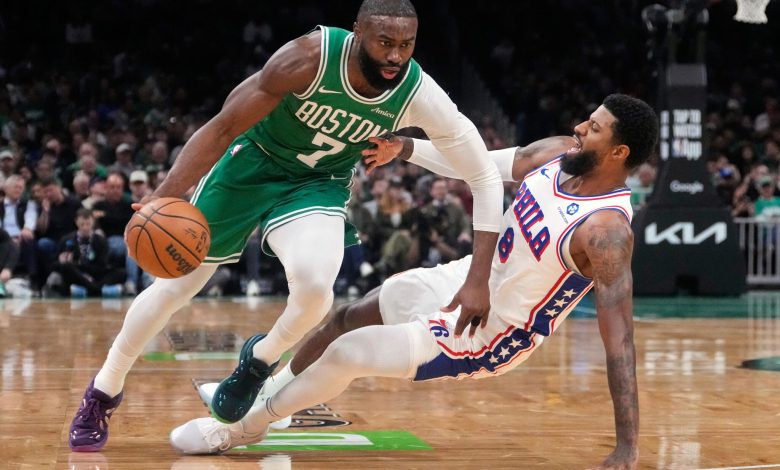
Table of Contents
Jaylen Brown trade agreements of this magnitude do not come around often in the modern NBA, especially when they involve direct transactions between historic, bitter rivals. In a stunning offseason blockbuster that has reverberated across the basketball world, the Boston Celtics have agreed to trade Jaylen Brown—their 2024 NBA Finals MVP, a five-time All-Star, and the league’s fourth-leading scorer this past season—to the Philadelphia 76ers. In exchange, the Celtics will receive veteran forward Paul George alongside a robust suite of draft capital, including two future first-round draft picks and two second-round picks. As news of the trade broke, fans and analysts alike scrambled to make sense of a transaction that alters the power dynamic of the Eastern Conference. The deal, which still awaits formal league approval, represents one of the most audacious gambles in recent sports history, pitting the immediate championship windows of two powerhouse franchises against each other in a dramatic game of high-stakes chess.
Jaylen :Why the Blockbuster Trade Shocked the NBA
The trade of Jaylen Brown to Philadelphia marks a seismic shift in the NBA landscape. For years, the pairing of Brown and Jayson Tatum was considered the premier young duo in the league, culminative in their dominant run to the 2024 NBA championship. Although Tatum missed a significant portion of the most recent campaign due to a severe Achilles injury sustained in the 2025 postseason, Brown rose to the occasion by carrying the Celtics. He posted career-high averages of 28.7 points, 6.9 rebounds, and 5.1 assists per game, asserting himself as a true primary option. Seeing Boston pivot away from a home-grown superstar in his absolute prime to trade him to their primary division rival is a development few could have predicted. The rivalry between Boston and Philadelphia has been defined by classic playoff battles, and transferring an elite asset directly to the Sixers represents an unprecedented competitive exchange.
What makes this exchange even more jaw-dropping is the psychological weight of the Boston-Philadelphia rivalry. Since the days of Bill Russell and Wilt Chamberlain, through the era of Larry Bird and Julius Erving, up to the modern playoff clashes of Joel Embiid and Jayson Tatum, these franchises have represented opposite poles of Eastern Conference supremacy. Trading an active superstar directly to a division rival has historically been an absolute taboo in NBA front offices. By sending the reigning Finals MVP to the Wells Fargo Center, the Celtics have not only strengthened their chief obstacle but have also invited intense, unrelenting scrutiny from their passionate fanbase. It is a decision that could define the legacy of Brad Stevens and either propel the 76ers to their long-awaited championship or go down as a masterclass in front-office overreaction.
Jaylen :Deconstructing the Trade Package: Who Got What?
At its core, this trade is a massive reconfiguration of star power and future assets. Philadelphia receives Jaylen Brown, a 29-year-old wing who is entering the absolute peak of his career. Meanwhile, the Boston Celtics receive Paul George, a 36-year-old veteran wing, but the trade is heavily fortified by draft assets to offset the age gap and developmental trajectories. Boston will receive a 2028 first-round draft pick (which features swap rights in favor of Boston) and a 2031 unprotected first-round pick from the 76ers, alongside two future second-round selections. This draft haul provides Celtics President of Basketball Operations Brad Stevens with the ammunition needed to restructure the roster around Jayson Tatum’s timeline once Tatum returns to full strength, though it raises massive questions about Boston’s immediate competitiveness.
To better understand how this landscape-altering deal is structured, it is helpful to look at the exact details of the assets changing hands. This transaction is not just a direct swap of wing players; it is a calculated bet on the future value of draft assets versus the immediate production of an established superstar.
| Category | Philadelphia 76ers Details | Boston Celtics Details |
|---|---|---|
| Core Player Involved | Acquired Jaylen Brown (29 years old, 2024 Finals MVP) | Acquired Paul George (36 years old, 9-time All-Star) |
| Contract Details | Jaylen Brown: 3 years, $183 million remaining | Paul George: $54.1 million (2026-27) + $56.6 million Player Option |
| Draft Capital Exchanged | Sent two first-round picks (2028 swap, 2031 unprotected) & two second-round picks | Received draft capital package (two first-round, two second-round picks) |
| Previous Season Production | Brown: 28.7 PPG, 6.9 RPG, 5.1 APG (played major load with Tatum injured) | George: Played only 37 games (missed games due to suspension/injuries) |
| Roster Alignment | Pairs Brown with Tyrese Maxey and Joel Embiid | Pairs George with Jayson Tatum and Kristaps Porzingis |
Jaylen :The Burned Bridge: How the Celtics-Brown Relationship Unraveled
To understand how this trade materialized, one must look back at the friction that began building behind closed doors in Boston. Rumors began circulating that the Celtics were actively shopping Jaylen Brown in potential packages to acquire Milwaukee Bucks superstar Giannis Antetokounmpo. While those talks ultimately collapsed, the realization that he was viewed as a trade chip deeply wounded Brown, who had spent his entire career building a legacy in Boston. The relationship was irreparably damaged, and the toothpaste could not be put back in the tube. Brown felt underappreciated despite his heroic efforts in carrying the team during Tatum’s absence. This emotional divide forced Brad Stevens to scour the league for trades, finding a lukewarm market due to Brown’s massive contract under the stringent rules of the new CBA. Ultimately, the 76ers emerged with the most compelling package, forcing Boston’s hand to deal their star to an arch-rival.
In his social media post following the news, Brown did not hide his mixed emotions, expressing both excitement for the next chapter and profound disappointment with how things ended in Boston. He remarked that he had earned his respect in the city and never asked for shortcuts, having put his head down and accepted every challenge. The emotional toll of being shopped after delivering a championship highlights the cold, transactional nature of the modern NBA business. For a player who was so deeply embedded in the Boston community and served as a veteran leader, being discarded in this fashion marks a painful end to a highly decorated era of Celtics basketball.
Jaylen :What Jaylen Brown Brings to the Philadelphia 76ers
For the Philadelphia 76ers, acquiring Jaylen Brown is nothing short of a franchise-altering coup. It represents an immediate upgrade in athletic profile, age, and durability. The Sixers have spent years looking for the perfect perimeter partner to pair with franchise centerpiece Joel Embiid and rising superstar guard Tyrese Maxey. In Brown, they have found an elite two-way force who can anchor their perimeter play for years to come. At just 29, Brown matches the timeline of Maxey perfectly while offering a highly reliable co-star for Embiid’s remaining prime years.
Jaylen :Defensive Versatility and Perimeter Scars
Jaylen Brown has long been recognized as one of the sturdiest perimeter defenders in the NBA. His physical frame, quick feet, and high basketball IQ allow him to guard multiple positions, ranging from speedy point guards to physical power forwards. In Philly, his defensive presence will alleviate the burden on Joel Embiid, allowing the Sixers to employ highly switchable defensive schemes that can match up against the league’s elite offenses. Under defensive-minded schemes, Brown can act as the primary stopper, matching up against the opponent’s best perimeter scorer and neutralizing threat vectors that have historically plagued Philadelphia in deep playoff runs.
Offensive Scoring Punch to Support Joel Embiid
Offensively, Brown’s self-creation and explosive transition game will transform Philadelphia’s offense. With Tyrese Maxey pushing the pace and Embiid drawing double teams in the half-court, Brown will have unprecedented space to operate. His ability to attack closeouts, pull up from mid-range, and hit spot-up three-pointers makes him an ideal offensive hub who can carry the scoring load when Embiid rests or battles injuries. His transition play is particularly lethal; Brown is one of the most devastating open-court finishers in the league, a dimension that will make the 76ers incredibly difficult to contain off defensive rebounds and turnovers.
The Celtics’ Gamble: Paul George and Draft Capital
For Boston, trading away a superstar in his prime for a 36-year-old veteran is an exceptionally risky bet. Paul George remains an elite, highly skilled wing when healthy, but his age and recent availability raise serious red flags. Last season, George appeared in just 37 games for the 76ers, missing significant time due to suspension and lingering physical issues. Despite these concerns, Boston’s front office believed this move was necessary to navigate a delicate transitional phase. By trading Brown, the Celtics have essentially conceded that they needed a different tactical approach to build their roster in the second apron era.
The Financial Relief and Asset Acquisition Strategy
One of the driving factors behind the trade is the collection of future draft capital. The acquisition of Philadelphia’s unprotected 2031 first-round pick and the 2028 swap rights gives Boston high-value trade chips. In the era of the modern CBA, having unencumbered first-round picks is essential for teams looking to navigate trade restrictions and matching salaries. These assets can be used in subsequent deals to build a deeper, more balanced supporting cast around Tatum. With Tatum recovering from a torn Achilles, Boston is taking a long-term view, positioning themselves to reload with younger, cheaper talent in the coming years rather than locking themselves into a massive, inflexible luxury tax bill.
Managing the Aging Curve of Paul George
The short-term success of this trade for Boston relies entirely on Paul George’s health. When on the court, George is an efficient shooter, an elite team defender, and an excellent secondary playmaker. If George can manage his physical load and remain healthy for a deep postseason run alongside a returning Jayson Tatum, the Celtics might still possess enough high-end talent to contend for a title. However, if George’s availability continues to decline, the trade could look incredibly lopsided. The risk is that Boston is trading a reliable, durable 29-year-old star for a player whose best years are undeniably in the rearview mirror, making it a classic high-risk, high-reward scenario.
Winners and Losers: Grading the Trade for Boston and Philly
Evaluating this blockbuster trade reveals distinct trajectories for both franchises. The Philadelphia 76ers emerge as clear winners in terms of talent acquisition, securing a 29-year-old superstar under contract who perfectly fits their championship timeline. According to reporting on Sportsnet, Pennsylvania Governor Josh Shapiro celebrated the move, highlighting that the Sixers got significantly better while simultaneously weakening their chief rival. The addition of Brown completely re-opens Philadelphia’s championship window and provides a hedge against Embiid’s health struggles. On the other hand, the Celtics receive a grade of C- or worse from many national analysts. While they secured draft picks, they gave up a superstar to a direct competitor, receiving an aging, injury-prone Paul George in return. This trade could go down as one of the most uneven division-rival trades in modern basketball history if George does not perform at an All-NBA level.
Salary Cap Implications under the New CBA Apron Rules
The financial landscape of the modern NBA played a massive role in shaping this trade. Under the current CBA, teams operating above the first and second luxury tax aprons face severe restrictions, including the inability to aggregate salaries in trades, limitations on sending cash, and frozen draft picks. Jaylen Brown’s supermax contract extension, which has three years and $183 million remaining, is a massive financial commitment. By swapping Brown for Paul George—who is owed $54.1 million this coming season and holds a player option for $56.6 million the following year—Boston acquires a contract that, while expensive, provides eventual financial flexibility as George nears the end of his career. The Celtics were facing a fiscal crunch that threatened to completely freeze their roster flexibility, and this trade represents a painful escape valve to avoid a total financial logjam.
Looking Ahead: How This Shakes Up the Eastern Conference Hierarchy
As the dust settles, the Eastern Conference hierarchy has been completely redrawn. The Philadelphia 76ers now boast a formidable big three of Joel Embiid, Jaylen Brown, and Tyrese Maxey, establishing themselves as arguably the favorites in the East. Meanwhile, the Celtics must navigate a high-risk transition year as Jayson Tatum recovers from his Achilles tear. The success of Brad Stevens’ vision will ultimately be judged by how well Paul George integrates into the Celtics’ system, and whether the acquired draft capital can be parlayed into the championship pieces needed to support Tatum’s prime in the years to come. For now, the balance of power has shifted slightly southwest down I-95, as Philadelphia celebrates a historic acquisition while Boston begins a complicated and highly scrutinized retooling era.