Malik Beasley Pleads Not Guilty to Federal Betting Charges
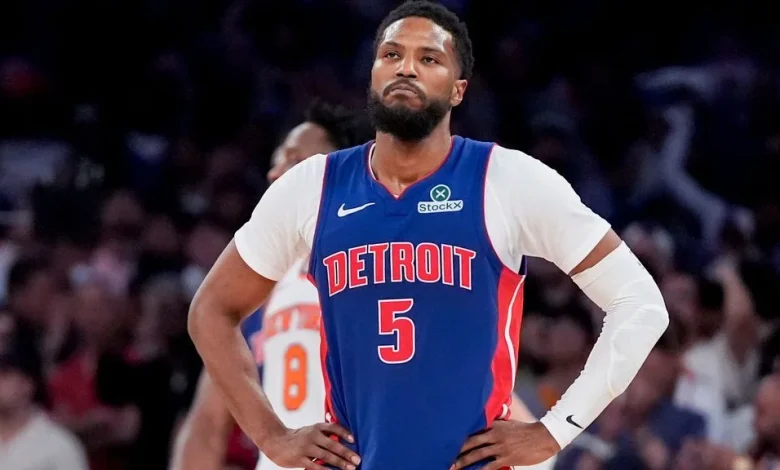
Table of Contents
Malik Beasley, the 29-year-old former NBA shooting guard, entered a plea of not guilty during a brief but highly charged arraignment in Brooklyn federal court on Wednesday, July 1, 2026. Clad in a tailored navy suit, the former professional athlete stood quietly alongside his legal team as the official federal indictment was unsealed and read before the court. Throughout the short proceeding, Beasley spoke only to confirm that he had read the criminal complaint, understood the severe nature of the allegations leveled against him, and concurred with his counsel’s decision. Rather than delivering personal remarks to the court or the waiting media outside, Beasley allowed his defense attorney, Jason Goldman, to enter the not guilty plea on his behalf. The appearance marks the latest milestone in a sprawling, multi-agency investigation that has sent shockwaves through the National Basketball Association and highlighted the growing intersection of professional sports, illicit gambling, and criminal syndicate involvement.
Following the formal plea entry, a federal magistrate judge oversaw the determination of Beasley’s bail conditions. The prosecution did not oppose release, and the court subsequently established a $100,000 bond package. To secure his release, Beasley’s mother and father co-signed the bond agreement, participating in the hearing via a telephonic connection. While Beasley was permitted to return home, his freedom comes with a series of highly restrictive, non-negotiable conditions. The federal judge explicitly prohibited him from engaging in any form of sports wagering, gambling, or betting activities. Furthermore, Beasley is strictly barred from contacting any of his co-defendants, co-conspirators, or prospective witnesses associated with the federal case. This strict no-contact order is designed to preserve the integrity of the ongoing judicial process as federal prosecutors assemble their evidence for the upcoming trial.
The allegations against Beasley stem from a period when he was actively playing for the Milwaukee Bucks during the 2023-24 NBA season. According to the comprehensive indictment filed by the U.S. Attorney’s Office for the Eastern District of New York, Beasley conspired with fellow former NBA player Ed Davis to manipulate his on-court performance. The primary objective of this performance manipulation was to ensure that Beasley’s in-game statistical outputs matched predetermined thresholds, allowing Davis and an organized network of co-conspirators to place highly lucrative, fraudulent wagers on specific player ‘prop’ bets. The case represents one of the most significant and detailed point-shaving and game-fixing indictments in modern professional sports history, raising urgent questions about how easily individual player performances can be compromised in an era of hyper-accessible digital sportsbooks.
The Brooklyn Federal Court Arraignment and Bail Terms
The atmosphere inside and outside the Brooklyn federal courthouse was incredibly tense on Wednesday morning. Dozens of sports journalists, legal analysts, and spectators gathered to witness the arraignment of Malik Beasley. Once celebrated as an elite perimeter shooter who commanded multi-million dollar contracts, Beasley’s current legal reality is a stark contrast to his past achievements. He remained largely stoic, showing little emotion as the magistrate judge detailed the severe criminal charges filed against him. Beasley’s brief verbal exchanges were limited to respectful acknowledgments of the court, replying with ‘yes, your honor’ when questioned about his understanding of the indictment.
His defense attorney, Jason Goldman, spoke aggressively on his client’s behalf outside the courthouse following the arraignment. Goldman emphasized that the legal team is fully prepared to challenge the government’s narrative. ‘Malik looks forward to fighting this case. He has fought every single day of his life, and this challenge is no different,’ Goldman told reporters. ‘He is presumed innocent under the law, and that constitutional presumption has to mean something still. We look forward to presenting the full story when the time comes.’ Despite Goldman’s confident words, the strict terms of Beasley’s $100,000 bond present immediate challenges. The ban on contacting witnesses or co-defendants is particularly impactful, given that many of those indicted are long-time personal friends or former associates within professional basketball circles. The defense must now prepare for a critical status conference scheduled for August 6, 2026, where both sides will map out the schedule for pre-trial discovery and the exchange of evidence.
Anatomy of the Alleged Betting and Bribery Scheme
To understand the mechanics of the federal government’s case, one must examine the specific allegations regarding how Beasley and his co-conspirators executed the sports betting scheme. Federal prosecutors allege that the operation was not a casual or impulsive series of wagers, but rather a structured, highly calculated enterprise designed to exploit the vulnerabilities of modern player-specific ‘prop’ bets. Prop bets, which allow individuals to wager on precise statistical achievements such as the number of three-pointers a player makes or their total rebounds, are far easier for a single athlete to influence than the overall outcome of a game.
According to the indictment, Beasley and Ed Davis became close friends while playing together for the Minnesota Timberwolves during the 2020-21 NBA season. Over the years, their friendship evolved into a business relationship driven by financial necessity and mutual interests. Prosecutors unsealed several incriminating text messages exchanged between the two former players. In one particularly damning message sent approximately a month before the first alleged game-fixing incident, Davis texted Beasley: ‘Only way you can beat Vegas is sports betting. Everything else they got the edge.’ This single communication, prosecutors argue, establishes clear intent and demonstrates that both parties were actively seeking to bypass standard odds through direct, insider manipulation of Beasley’s performance.
The Financial Backstory: Debts, Loans, and “Gatekeeping”
A primary question surrounding this case is why an athlete of Beasley’s caliber, who has earned tens of millions of dollars over a nine-year career spanning multiple franchises, would risk his career and freedom for a sports betting scheme. The federal indictment provides a sobering answer: a severe gambling addiction that resulted in devastating, multi-million dollar losses. As Beasley’s financial debts grew, he became increasingly dependent on external financial assistance, turning to Ed Davis for massive personal loans.
According to federal investigators, Davis provided Beasley with substantial funds to help him manage his outstanding gambling debts. However, these loans were not extended out of pure charity. Instead, Davis allegedly utilized the financial leverage to convince Beasley to participate in the performance-manipulation scheme. Beasley essentially worked off his substantial debts to Davis by agreeing to alter his performance in key games. In this arrangement, Davis acted as a critical ‘gatekeeper,’ bridging the gap between Beasley on the court and a sophisticated circle of high-stakes sports bettors who stood to profit immensely from guaranteed, insider outcomes.
Specific Game-Fixing Allegations and Prop Bet Manipulations
The core of the criminal indictment details at least four specific games during the 2023-24 NBA season in which Beasley allegedly manipulated, or attempted to manipulate, his on-court performance. During this period, Beasley was a key rotational player for the Milwaukee Bucks, meaning his playing time and statistical contributions were highly scrutinized by oddsmakers and bettors alike.
The government claims that prior to three of these four targeted games, Beasley sent direct communications to Davis confirming his plans to intentionally underperform or overperform in specific categories. For instance, in games where the betting syndicate wanted to exploit ‘under’ prop bets, Beasley would reportedly pass up open shooting opportunities, deliberately play with diminished intensity, or make decisions that limited his statistical output. Once Davis received confirmation from Beasley, he relayed the details to co-conspirators who placed massive, coordinated wagers across multiple digital sportsbooks. Because Beasley had complete control over whether he met those statistical lines, the syndicates achieved incredibly high success rates, securing hundreds of thousands of dollars in fraudulent payouts before sports integrity algorithms detected the anomalous betting activity.
Profiles of the Co-Defendants and Co-Conspirators
While Beasley and Davis are the most prominent names in the indictment, the federal investigation has exposed a much wider network of conspirators. In total, six individuals were named in the indictment unsealed in Brooklyn. The group includes professional sports agents and high-stakes gamblers, reflecting the institutional reach of the alleged conspiracy.
Among the co-defendants is Paolo Zamorano, a 39-year-old registered NBA player agent. Zamorano, who previously represented Ed Davis, also appeared in Brooklyn federal court on Wednesday to plead not guilty. He was released on bond under the representation of attorney Kenneth Breen, who stated that his client looks forward to their day in court. The involvement of an active player agent is a particularly damaging development for the NBA, as agents have direct access to locker rooms, player schedules, and highly sensitive insider information. The other three co-defendants—William Brown, Robert Gorodetsky, and Ernesto Plascencia—are alleged to have played major roles in financing and placing the fraudulent wagers. Plascencia, in particular, is described as a close associate of several professional athletes, showcasing how easily high-stakes gambling circles can infiltrate the personal entourages of NBA players.
Comparison of Recent Federal Sports Betting Scandals
The indictment of Beasley and Davis is not an isolated event. It is part of a massive, ongoing federal sweep targeting corruption and illegal sports gambling across professional leagues. To provide context on where this case stands relative to other recent sports betting investigations, the table below outlines the key figures, alleged actions, and legal status of similar high-profile scandals:
| Athlete/Figure | Sport / Role | Key Allegations & Actions | Legal & Disciplinary Status (as of 2026) |
|---|---|---|---|
| Malik Beasley | NBA / Shooting Guard (Milwaukee Bucks) | Manipulated individual stats (points, rebounds) in 2024 to satisfy gambling debts. | Indicted; pleaded not guilty; released on $100,000 bond. |
| Ed Davis | Ex-NBA Player / Broker | Acted as ‘gatekeeper,’ loaned money to Beasley, coordinated prop bets with syndicates. | Indicted; federal case ongoing in the Eastern District of New York. |
| Jontay Porter | NBA / Forward (Toronto Raptors) | Disclosed health status to bettors, exited games early to ensure under-prop bets hit. | Lifetime NBA ban; pleaded guilty to federal conspiracy charges. |
| Terry Rozier | NBA / Guard (Miami Heat) | Conspired with a network of associates to place favorable wagers using insider data. | Arrested and charged in the broader federal gambling sweep. |
| Chauncey Billups | NBA Coach / Hall of Famer | Accused of participating in a conspiracy to manipulate high-stakes poker games. | Arrested and indicted as part of the multi-agency federal investigation. |
This comparison highlights the systemic challenges professional sports leagues face as the legal sports betting market continues to grow. The transition from off-shore, unregulated betting syndicates to highly organized domestic rings using inside access represents a major threat to the integrity of professional athletic competition.
Legal Charges, Maximum Sentences, and Defense Arguments
The legal battle ahead for Beasley and his co-defendants is incredibly serious. The federal government has brought a multi-count indictment that includes some of the most severe white-collar and organized crime charges available under federal law. Specifically, the six defendants have been charged with wire fraud conspiracy, bribery in sporting contests, honest services wire fraud conspiracy, and money laundering conspiracy.
The statutory maximum penalties for these offenses are substantial. If convicted of wire fraud conspiracy, honest services wire fraud conspiracy, or money laundering conspiracy, each defendant faces up to 20 years in federal prison per count. Additionally, the charge of bribery in sports contests carries a maximum sentence of up to 5 years in prison. The combined potential prison time means that Beasley and Davis could face decades behind bars if convicted on all charges at trial.
To counter these severe charges, the defense is expected to challenge the government’s digital and financial evidence. Defense attorney Jason Goldman is likely to argue that Beasley’s sub-par performances in the targeted games were the result of standard athletic variance, slump cycles, or nagging physical injuries rather than intentional manipulation. In professional basketball, even the best shooters experience games where shots do not fall or where defensive game plans limit their opportunities. The defense will also seek to characterize the financial transfers between Ed Davis and Beasley as legitimate personal loans between long-time friends and former teammates, rather than an illicit pay-for-performance bribery scheme.
Beasley’s Unorthodox Career Path Amid the Federal Investigation
The shadow of this federal investigation has already caused massive disruption to Beasley’s professional career. Prior to the unsealing of the indictment, Beasley was a highly sought-after free agent in the NBA. In June 2025, he was on the verge of signing a life-altering three-year, $42 million contract with the Detroit Pistons. However, as rumors and early details of the federal sports gambling probe began to leak, the Pistons immediately withdrew their offer, and other NBA franchises refused to engage with him.
With his NBA career placed on indefinite hold, Beasley was forced to look for playing opportunities overseas. He spent the most recent basketball season playing in Puerto Rico’s Baloncesto Superior Nacional (BSN) league, representing a franchise co-owned by global music superstar Bad Bunny. While playing in Puerto Rico allowed Beasley to maintain his physical conditioning and earn a living, the step down from the global stage of the NBA to international leagues was a stark reminder of his precarious position. Now facing a formal federal trial, his path back to an NBA roster appears highly unlikely, regardless of the ultimate verdict.
The Broader Implications for the NBA and Professional Sports Integrity
The Beasley-Davis indictment comes at a highly delicate time for the NBA and other major sports leagues. Since the Supreme Court struck down the federal ban on sports betting in 2018, leagues have aggressively embraced sportsbooks and gaming operators. Live broadcasts routinely display betting lines, arenas host in-stadium betting lounges, and teams profit directly from lucrative sponsorship deals with gambling platforms.
Critics argue that this rapid commercialization of sports betting has created an environment where corruption is almost inevitable. When betting is integrated so deeply into the fabric of sports culture, players are exposed to constant temptation and potential exploitation by bad actors. To understand the legal and institutional scale of this sweep, the indictment unsealed by federal prosecutors highlights how the FBI and Department of Justice are actively monitoring sports betting transactions to weed out corruption. The NBA, through spokesperson Mike Bass, has expressed its commitment to fully cooperating with federal investigators, stating that ‘the integrity of our game remains our top priority.’ However, as the federal investigation continues to yield more high-profile arrests, the league faces a challenging road ahead to restore complete trust among fans and partners alike.