Lionel Messi Breaks Historical World Cup Records in Arlington 2026
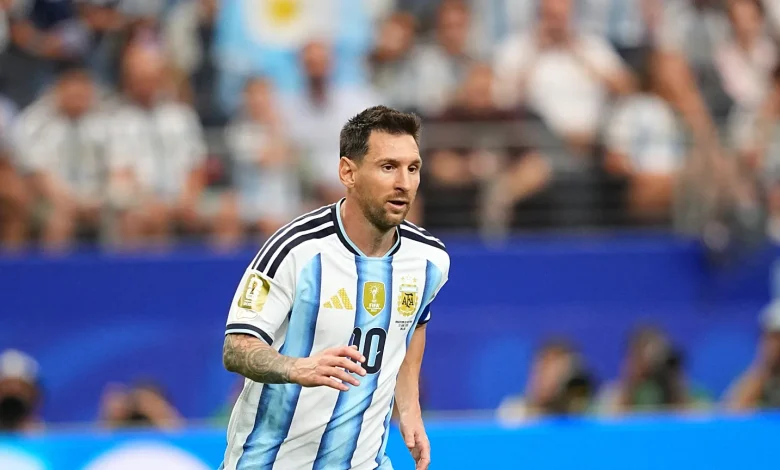
Table of Contents
Lionel Messi did not need a full ninety minutes to redefine soccer history at Dallas Stadium in Arlington, Texas. Entering as a second-half substitute in the 60th minute, the ageless Argentine captain needed only twenty minutes to secure his name in another exclusive chapter of the sport‘s archives. Argentina’s eventual 3-1 victory over Jordan on Saturday night confirmed their absolute dominance in Group J of the 2026 FIFA World Cup. In doing so, Messi not only extended his men’s all-time World Cup scoring record to a breathtaking 19 goals, but he also became the first player in history to score in seven consecutive World Cup matches, breaking a long-standing tie with legendary icons of the game.
The electric atmosphere in North Texas was a testament to the global appeal of the reigning world champions. Over 70,649 fans packed the Arlington arena, creating a sea of light blue and white. Though Lionel Scaloni chose to rest his talismanic forward following a grueling start to the tournament, the script was written for a dramatic insertion. What transpired was a masterclass in efficiency, dramatic tension, and pure technical genius that only one player in the history of football could deliver.
The Magic of Arlington: How the Night Unfolded
Arlington became the epicenter of the sporting world on Saturday night. With Argentina already assured of the top spot in Group J and Jordan facing mathematical elimination, many anticipated a low-intensity training run. However, international football rarely accommodates complacency. The physical, high-pressing approach of Jordan clashed instantly with the smooth, possession-oriented style of a heavily rotated Argentine lineup.
Lionel Scaloni made nine sweeping changes to the team that had defeated Austria 2-0 earlier in the week. Only goalkeeper Emiliano Martinez and defender Marcos Senesi remained in the starting XI. This rotational strategy gave fringe players and rising stars a rare platform to impress on the grandest stage of them all. Despite the unfamiliarity, Argentina’s deep tactical foundation shone through early, orchestrating sequences of neat passing and sharp movement that left the Jordanian defense scrambling from the opening whistle.
First-Half Dominance: Lo Celso and Martinez Strike
The opening forty-five minutes illustrated the terrifying depth of the Argentine squad. Even without their primary playmaker, La Albiceleste dictated the tempo with ease. The deadlock was broken in the 19th minute courtesy of a brilliant piece of individual skill by Giovani Lo Celso. In his first start of this World Cup campaign, the midfielder won a free-kick on the edge of the penalty area. Stepping up with confidence, Lo Celso curled a spectacular, bending left-footed strike over the wall and into the far corner, completely wrong-footing Jordan’s goalkeeper, Yazeed Abulaila.
This goal was historic in its own right: Lo Celso became the first Argentine player other than Lionel Messi to find the back of the net in the 2026 tournament. Building on this momentum, Argentina continued to squeeze the opponent. In the 30th minute, a VAR review determined that Marcos Senesi had been fouled inside the box while attempting to challenge for a header. Lautaro Martinez stepped up to the penalty spot, clinical and unfazed, and buried a low shot in the 31st minute to double the advantage. At 2-0, the match seemed entirely under Argentina’s control as the teams headed into the locker rooms.
Jordan’s Valiant Fightback: Al-Tamari Silences the Crowd
Any thoughts of an easy stroll to victory for Argentina were swiftly dispelled early in the second half. Jordan, playing for pride and determined to leave their first-ever World Cup with a memorable performance, emerged from the break with renewed energy and tactical discipline. They pushed higher up the pitch, looking to force turnovers in vulnerable areas of Argentina’s experimental midfield.
Their persistence was rewarded in the 55th minute. Capitalizing on a momentary lapse in concentration, Ehsan Haddad delivered a pinpoint, low cross from the right flank. Jordan’s star forward, Mousa Al-Tamari, anticipated the delivery beautifully, outpacing his marker to emphatically slot the ball past a helpless Emiliano Martinez. The goal sent shockwaves through Dallas Stadium, sparking ecstatic celebrations from the travelling Jordan supporters. More importantly, it was the very first goal Argentina had conceded in the tournament, making the scoreline a tense 2-1 and setting the stage for Scaloni’s ultimate tactical adjustment.
The 60th-Minute Roar: Lionel Messi Enters the Pitch
Recognizing the shift in momentum and wanting to secure a perfect group stage campaign, Lionel Scaloni turned to his bench. In the 60th minute, the fourth official raised the board, indicating that Lautaro Martinez was making way. The stadium erupted into a deafening roar as the number 10 jersey stepped onto the pitch. Having celebrated his 39th birthday just three days prior on June 24, Messi carried the hopes of tens of thousands of fans who had paid premium prices to witness his magic live.
The introduction of Messi immediately stabilized Argentina’s offensive structure. His presence alone forced Jordan to retract their high defensive line, creating wider pockets of space for Alexis Mac Allister and Julian Alvarez to operate. Despite being heavily marked, Messi’s gravitational pull on the field allowed Argentina to regain their chokehold on possession. The veteran magician began dictating play, orchestrating attacks with his trademark one-touch passing and visionary distribution, waiting for the perfect moment to strike.
A Landmark Free-Kick: The 19th World Cup Goal
That perfect moment arrived in the 80th minute. After being brought down aggressively by a Jordanian defender just yards outside the penalty area, Messi earned a free-kick in prime territory. A tense hush fell over the entire stadium as the legendary number 10 meticulously placed the ball on the grass.
With a brief, calculated run-up, Messi struck a low, deceptive free-kick that flew mere inches above the grass. The ball split two Jordan defenders in the wall and nestled perfectly into the bottom left corner of the net, far beyond the reach of Yazeed Abulaila. It was an astonishing display of precision over power. This majestic strike marked his 6th goal of the 2026 World Cup and his 19th overall in World Cup history. Additionally, it was the 72nd direct free-kick goal of his illustrious career, and his 12th for the national team, further cementing his undisputed status as one of the greatest dead-ball specialists in football history.
Breaking Legends’ Records: Fontaine, Jairzinho, and Beyond
With this goal, Messi didn’t just seal the win; he rewrote the international record books. Prior to this match, Messi had been tied with French striker Just Fontaine and Brazilian icon Jairzinho for the longest consecutive scoring streak in World Cup history, having scored in six straight matches. By finding the net against Jordan, Messi became the sole owner of the all-time record, scoring in seven consecutive World Cup matches.
This remarkable streak spans across two tournaments, demonstrating a level of longevity and consistency that is virtually unprecedented in modern sport. At 39 years old, Messi continues to perform at a level that confounds analysts and rivals alike. His 123 international goals place him second all-time behind Cristiano Ronaldo, but his impact in the world’s most prestigious tournament remains unmatched. Scaloni summed up the feeling of many in his post-match press conference, stating that finding new words to describe Messi’s genius has become an almost impossible task for coaches and journalists alike.
Tactical Masterclass: Scaloni’s Rotation Strategy
While Messi grabbed the headlines, the tactical victory belongs to Lionel Scaloni. Resting nine of his regular starters was a calculated risk, but one that paid massive dividends. By rotating his squad, Scaloni ensured that his key players remain fresh for the grueling knockout stages. Simultaneously, he gained valuable insights into his depth chart, witnessing strong performances from the likes of Lo Celso, Marcos Senesi, and Valentin Barco.
Argentina’s ability to maintain their fluid, dominant style of play despite making nine changes illustrates why they are the favorites to defend their crown. The tactical cohesion embedded within this team means that any player can step in and execute the game plan flawlessly. This squad depth will be critical as the tournament transitions into the single-elimination phase, where fatigue and suspension often dictate the fate of even the strongest teams.
Analyzing the Group J Finale Standings and Stats
Argentina concluded their Group J campaign with a flawless record of three wins from three matches, accumulating a maximum of nine points. They scored a total of eight goals while conceding only one—Al-Tamari’s second-half strike for Jordan. Meanwhile, Austria secured their progression alongside the champions following a thrilling 3-3 draw with Algeria, finishing second with four points. Jordan’s brave maiden World Cup adventure ended with three defeats, but they earned the respect of fans worldwide for their spirited displays.
To understand the full extent of Group J’s final standings, let us examine the statistical breakdown of the group stage:
| Rank | Team | Played | Won | Drawn | Lost | GF | GA | GD | Points |
|---|---|---|---|---|---|---|---|---|---|
| 1 | Argentina | 3 | 3 | 0 | 0 | 8 | 1 | +7 | 9 |
| 2 | Austria | 3 | 1 | 1 | 1 | 6 | 6 | 0 | 4 |
| 3 | Algeria | 3 | 1 | 1 | 1 | 6 | 7 | -1 | 4 |
| 4 | Jordan | 3 | 0 | 0 | 3 | 3 | 9 | -6 | 0 |
For official live brackets, match reports, and complete group statistics, fans can consult the official FIFA tournament website to stay up to date with every development in real time.
Looking Ahead: Argentina’s Path in the Round of 32
With the group stage behind them, Argentina’s focus shifts directly to the knockout rounds. As winners of Group J, they are scheduled to face Cape Verde in the Round of 32. The match will take place at Miami Gardens, Florida, on Friday, July 4, 2026. Cape Verde, ranked 67th in the world, has emerged as one of the tournament’s most heartwarming stories, becoming the smallest nation ever to qualify for the World Cup knockout rounds.
Despite the disparity in ranking and prestige, Argentina will not take their opponents lightly. The single-elimination nature of the knockout phase introduces a level of unpredictability where any mistake can be fatal. However, with Lionel Messi in record-breaking form and a squad brimming with confidence and tactical flexibility, the defending champions look poised to mount a formidable charge toward securing consecutive global titles. The historic night in Arlington was just another step in what Argentina hopes will be another glorious journey to the podium.