Austria and Algeria Draw 3-3 to Secure Knockout Berths
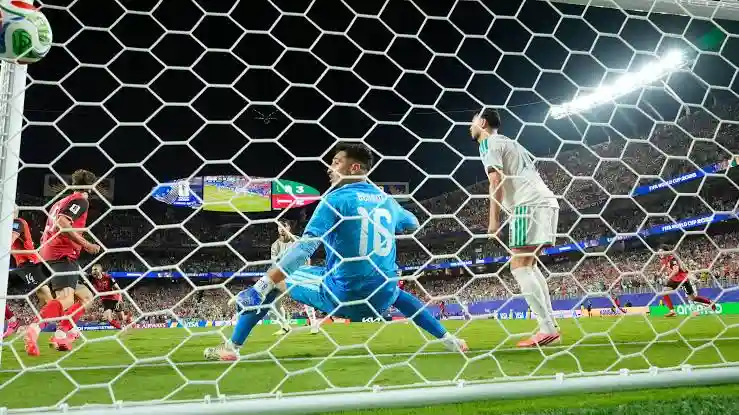
Table of Contents
Austria achieved the unthinkable on a sweltering Saturday night in Kansas City, clawing their way back in the final seconds of stoppage time to rescue a 3-3 draw against Algeria at Kansas City Stadium. This dramatic result was the ultimate win-win scenario for both sides, ensuring they both qualified for the knockout rounds of the 2026 World Cup while simultaneously sealing a devastating exit for Iran. The match, which will go down as one of the most chaotic and thrilling group-stage finales in World Cup history, saw the lead change hands multiple times before a frenetic climax left both sets of fans celebrating together on the pitch.
Austria and Algeria Battle to a Historic 3-3 Draw in Kansas City
The high-stakes clash delivered drama from start to finish, keeping the capacity crowd on the edge of their seats. With tournament progression on the line, both nations knew that a defeat would likely spell the end of their World Cup journey. Instead of playing a cautious, defensive game, both teams displayed outstanding offensive intent. This attacking philosophy resulted in an end-to-end spectacle characterized by clinical finishing, midfield battles, and defensive vulnerabilities that were thoroughly exploited by world-class forwards. Ultimately, the 3-3 scoreline was a fair reflection of a game that neither side deserved to lose.
The Intense Atmosphere at Kansas City Stadium
The spectacular backdrop of Kansas City Stadium, known historically to NFL fans as Arrowhead Stadium, played a massive role in fueling the high-octane performance of both teams. With a capacity crowd of over 70,000 passionate spectators, the venue was divided into a vibrant sea of Austrian red-and-white and Algerian green-and-white. Football fans from across the Midwestern United States and around the world descended upon Kansas City, creating an electric atmosphere that rivaled the traditional football cathedrals of Europe and Africa. The thunderous roar of the crowd resonated throughout the entire stadium complex, amplifying the drama of a match where every single pass had massive global tournament implications.
Tactical Breakdown: How Both Sides Lined Up
Tactically, Austria’s manager Ralf Rangnick deployed his trademark high-intensity, vertical-pressing system, opting for a dynamic 4-2-3-1 formation. This strategy aimed to overwhelm the Algerian midfield early and force turnovers in high-value areas. Christoph Baumgartner and Konrad Laimer were tasked with orchestrating the transition from defense to attack, while the towering presence of forward Sasa Kalajdzic offered a reliable focal point for direct crosses. On the other side, Algeria’s manager lined up in a balanced 4-3-3 shape, relying heavily on the experienced and legendary winger Riyad Mahrez to dictate play from the right flank, supported by the tactical fluidity of Faris Chaïbi and the raw scoring power of Baghdad Bounedjah.
First-Half Action: Austria Starts Strong but Algeria Answers
Austria started the encounter with furious energy, immediately executing their high-press and pushing the Algerian defense deep into their own penalty area. The early pressure paid dividends in the 14th minute when Konrad Laimer intercepted a sloppy pass in the midfield and quickly poked the ball to Christoph Baumgartner. Baumgartner took one touch to settle before firing a precise, low strike past the outstretched arms of the Algerian goalkeeper, sending the Austrian contingent into wild celebrations. The early goal forced Algeria to abandon their conservative approach, and they gradually began to establish possession and assert themselves in the center of the pitch.
Algeria’s response was swift and calculated. Under the peerless guidance of Mahrez, the Fennec Foxes began to exploit the space behind the aggressive Austrian fullbacks. In the 31st minute, their efforts were rewarded. A beautifully delivered corner kick from the left flank found the head of Baghdad Bounedjah, who rose above the Austrian center-backs to power a bullet header into the top corner of the net, leveling the score at 1-1. Shortly before half-time, Algeria took the lead through a brilliant piece of individual play from Riyad Mahrez. The veteran winger received a long diagonal pass, drifted inside his marker, and curled a classic left-footed shot into the far post, making it 2-1 for Algeria at the break.
Second-Half Drama: Algeria Takes Control of the Midfield
The second half began with Rangnick urging his Austrian side to push for an equalizer to keep their qualification hopes alive. They intensified their press, and in the 62nd minute, their persistence was rewarded. Marcel Sabitzer delivered a pinpoint cross into the box, which was expertly controlled by Konrad Laimer before he slotted it home to tie the match at 2-2. With the game leveled, a fascinating tactical phase emerged. A 2-2 draw was a mutually beneficial outcome that would see both Algeria and Austria progress to the Round of 16, rendering Iran’s previous results irrelevant. Sensing this, Algeria appeared content to slow down the tempo and run out the clock, recycling possession in their own half with short, safe passes as the minutes ticked away.
Stoppage-Time Chaos: Riyad Mahrez and Sasa Kalajdzic Trade Blows
However, the script took an unimaginable turn in the final minutes of the match. With just about a minute remaining in stoppage time, a lapse in the Austrian midfield allowed Algeria to launch a lightning-fast counter-attack. The ball was fed to Riyad Mahrez on the edge of the box. Showing no desire to settle for a mere draw, Mahrez unleashed a ferocious strike that nested into the top shelf, scoring his second goal of the night and putting Algeria up 3-2. This sudden development was a catastrophe for Austria. At 3-2, Austria was on the brink of immediate elimination from the World Cup, and Iran was momentarily propelled into the knockout stages.
What happened next will be talked about for generations in Austrian football history. Refusing to yield, Austria launched one final, desperate assault straight from the kickoff. In the 94th minute, Philipp Mwene delivered a soaring, hopeful cross into the heart of the Algerian penalty box. Sasa Kalajdzic, who had been subbed on to provide extra physical presence, rose majestically above a cluster of defenders and guided a powerful header past the desperate dive of the Algerian keeper. The ball hit the back of the net, leveling the score at 3-3 and sending the Austrian players, staff, and fans into absolute delirium. Seconds later, the final whistle blew, sealing a historic draw that allowed both teams to escape the group.
How the Thrilling 3-3 Draw Handed Iran a Heartbreaking Exit
The mathematical consequences of this 3-3 draw were devastating for Iran. Watching the match from their team hotel, the Iranian squad experienced a rollercoaster of emotions, only to be crushed by the final whistle. Iran had completed their group stage games with 4 points, a neutral goal difference of 0, and 4 total goals scored. Had Algeria held onto their 3-2 lead, Austria would have finished with only 3 points, allowing Iran to secure second place and advance. Sasa Kalajdzic’s last-gasp header, however, pushed Austria to 4 points as well, tying them with Iran on point tally and goal difference.
Under the tiebreaker rules of FIFA’s official tournament coverage, the next deciding factor was total goals scored. Austria’s three goals in this match brought their tournament total to 6, surpassing Iran’s 4. Consequently, Austria advanced as the group runner-up, leaving Iran eliminated by the slimmest of margins.
For the Iranian national team, this sudden exit from the global stage adds another layer of somber news to a country currently dealing with intense external pressures. The squad has long been a source of immense national pride and a unifying force back home. However, their campaign took place against a backdrop of severe international challenges, including the complex geopolitics of the breakdown of diplomatic negotiations. Furthermore, domestic anxieties regarding regional security and the unresolved nuclear standoff continue to weigh heavily on the nation. For many passionate fans, a successful run in the tournament would have provided a brief, joyous distraction from the heavy economic and political costs associated with potential regional instability, as highlighted by expert analyses on the prohibitive costs of conflict. Instead, they must now digest a heartbreaking tournament exit decided by a single headed goal in America’s heartland.
Match Statistics and Group Standings
A deeper statistical look at the 90 minutes reveals just how evenly matched these two sides were. Austria dominated the early stages, finishing with 52% possession and registering 14 total shots with 6 on target. Their high-pressing system was highly effective in the opening half-hour but left them vulnerable to Algeria’s swift counter-attacks. Algeria, on the other side, was incredibly efficient, converting 3 of their 5 shots on target. The physical nature of the game was reflected in the 25 total fouls and 5 yellow cards handed out by the referee, as both teams fought tooth and nail for every inch of turf.
| Match Metric | Austria | Algeria |
|---|---|---|
| Goals Scored | 3 | 3 |
| Total Shots (On Target) | 14 (6) | 12 (5) |
| Ball Possession (%) | 52% | 48% |
| Pass Accuracy (%) | 84% | 81% |
| Fouls Committed | 11 | 14 |
| Yellow Cards | 2 | 3 |
| Corners | 6 | 4 |
In addition to the match statistics, the final group standings show the incredibly fine margins that decided which nations advanced to the direct elimination rounds. Algeria successfully topped the group with 5 points, while Austria secured the runner-up position on the goals-scored tiebreaker over Iran.
| Team | Matches Played | Goal Difference | Total Goals Scored | Points | Status |
|---|---|---|---|---|---|
| Algeria | 3 | +1 | 7 | 5 | Qualified (Group Winner) |
| Austria | 3 | 0 | 6 | 4 | Qualified (Runner-up) |
| Iran | 3 | 0 | 4 | 4 | Eliminated |
| Canada | 3 | -1 | 3 | 1 | Eliminated |
Looking Ahead: What Lies Next for Austria and Algeria
In the post-match press conferences, both managers expressed relief and pride, albeit after experiencing an absolute emotional roller-coaster. Austrian manager Ralf Rangnick praised his squad’s refusal to surrender under extreme duress. ‘We knew what was at stake, and when Mahrez scored, it felt like a dagger to the heart,’ Rangnick admitted to reporters. ‘But this team has a unique spirit. We threw everyone forward, and Sasa did what he does best. It is an unbelievable feeling to advance under these circumstances.’
Algerian captain Riyad Mahrez, despite seeing his late game-winner cancelled out, was in high spirits. ‘Of course, we wanted to win the match, but the primary goal was to qualify,’ Mahrez remarked. ‘It was a crazy game, one of the wildest I have ever played in. Credit to Austria for fighting until the very last second. Now, our focus turns entirely to the knockout rounds where the real tournament begins.’
Looking ahead to the Round of 16, both Austria and Algeria must address defensive vulnerabilities if they hope to progress deeper into the bracket. While their attacking play was fluid and highly entertaining for neutral fans, conceding three goals in a single match is a major cause for concern in knockout football. Rangnick’s side will need to find a better balance between their high-pressing aggression and defensive coverage to avoid being punished by elite counter-attacking teams. Algeria, meanwhile, will rely on the tactical acumen and veteran leadership of Mahrez to navigate the high-pressure knockout fixtures. Regardless of how far they go, both nations have already written one of the most memorable chapters of the 2026 World Cup in Kansas City.