Erling Haaland Leads Norway to World Cup Last 32 in Thriller
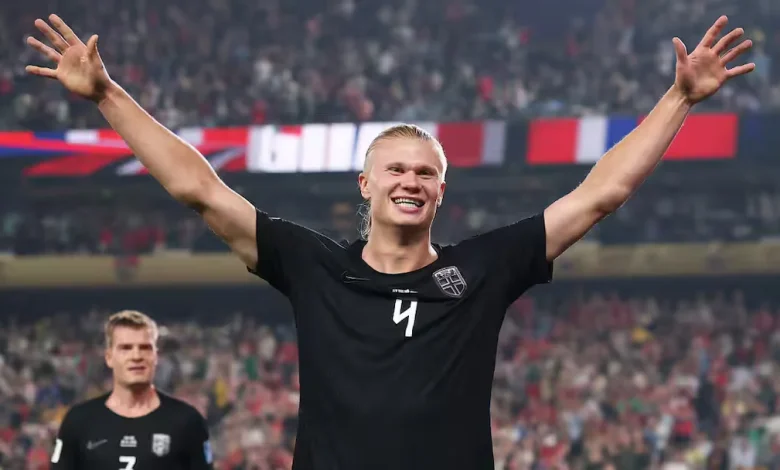
Erling Haaland scored twice to raise his World Cup goals total to four, and the Vikings clinched advancement to the knockout rounds with a 3-2 win over Senegal on Monday night that was more of a slog than a sail. In a rain-swept MetLife Stadium in East Rutherford, New Jersey, the Norwegian national team navigated a turbulent second-half surge from the Lions of Teranga to book their tickets to the Round of 32 of the FIFA World Cup 2026. The high-stakes Group I encounter highlighted both Norway’s lethal offensive transitions and their defensive resilience, cementing their status as one of the tournament’s most captivating stories.
Erling: The MetLife Stadium Showdown: Norway Clinches Knockout Berth
The atmosphere at MetLife Stadium was electric, despite a heavy downpour that threatened to slick the pitch and disrupt the flow of play. Both sides entered this Group I match knowing the severe consequences of a loss. For
Erling,Norway, a victory would guarantee safe passage into the knockout rounds for the first time since France 1998, a historical drought that has weighed heavily on the Scandinavian nation. Senegal, meanwhile, were fighting to rescue their World Cup campaign after a disappointing opening defeat to France.
Norway lined up in their traditional 4-3-3 formation under coach Ståle Solbakken, relying heavily on the creative orchestrations of Arsenal captain Martin Ødegaard and the sheer physical presence of Manchester City’s talismanic forward, Erling Haaland. Senegal, managed by Aliou Cissé, also matched them with a 4-3-3, aiming to exploit the wings with the speed of Sadio Mané and Ismaïla Sarr. The clash of tactical systems promised a high-octane affair, and the match did not disappoint. From the opening whistle, the physical intensity was palpable, with referee Wilton Pereira Sampaio maintaining a strict grip on the game as tackles flew on the wet surface.
Erling:
A Slog Rather Than a Sail Against Senegal
Despite the eventual triumph, the match was far from comfortable for the Norwegians. Solbakken’s squad had to fight for every inch of turf against a resilient Senegal side that refused to fold, even when trailing by two goals. The slippery pitch contributed to a frantic match environment where defensive lapses were quickly punished. For Norway, the game became a gritty test of endurance, characterized by last-ditch tackles, tactical fouls, and high-intensity pressing.
Erling:“It was more of a slog than a sail,” Solbakken conceded during his post-match press conference, echoed by the challenging conditions. The relentless pressure applied by Senegal in the final minutes kept the Norwegian fans on the edge of their seats, as a late goal from Ismaïla Sarr in stoppage time set up an agonizingly tense finish. However, the sheer individual brilliance of Haaland, coupled with a cohesive defensive performance led by Leo Østigård, allowed Norway to weather the storm and emerge victorious.
Erling:
Erling Haaland Continues Unstoppable World Cup Scoring Streak
Erling Haaland remains the focal point of Norway’s national identity on the pitch, and his legendary clinical edge was fully on display on Monday night. With his double against Senegal, Haaland raised his World Cup goals total to four in just two matches. The 25-year-old superstar has established himself as one of the frontrunners for the tournament’s Golden Boot, showcasing a lethal combination of raw power, positioning, and technical prowess.
Erling:“It’s my specialty to score goals,” Haaland remarked with characteristic confidence after the final whistle. “I’m just really good at scoring goals.” The numbers back up his bold claim. Haaland has now scored 24 goals in his last 12 international games, finding the net at least once in every single appearance. His overall international record stands at an astronomical 59 goals in 52 caps for Norway. By scoring twice in each of his first two World Cup matches, Haaland joined England’s Harry Kane (who accomplished the feat in 2018) as the only players in the last 50 years to achieve such a milestone.
Erling:
Breaking Down Haaland’s Two Clinical Finishes
Erling Haaland’s first goal, coming in the 48th minute, was a masterclass in counterattacking football. After Senegal lost possession in the Norwegian half, Martin Ødegaard drove forward before releasing a perfectly weighted pass into Erling Haaland’s path. Showing incredible acceleration, Haaland surged past the Senegalese defense, controlled the ball, and slotted a precise left-footed shot past the outstretched arm of veteran goalkeeper Édouard Mendy to put Norway 2-0 up.
His second goal of the night, coming in the 58th minute, demonstrated his versatility and physical dominance. Patrick Berg floated a delicate pass into the penalty area. Standard strikers might have struggled to control the ball under pressure, but Haaland tunneled through two defenders, leaped, and used his weaker right foot to volley the ball into the net from eight yards out. The crowd erupted as Haaland ran to the corner flag, raising his hand to his ear to bask in the roar of the traveling Norwegian supporters.
Erling:
Match Timeline: How Norway Outlasted the Lions of Teranga
To understand the complexity of the match, one must look at how the tactical battle unfolded chronologically. The first half was a highly tactical, cagey affair marked by physical confrontations and an early setback for Norway. However, the game burst into life just before the interval, setting the stage for a chaotic and thrilling second half.
| Minute | Event | Description |
|---|---|---|
| 13′ | Substitution (Norway) | Julian Ryerson is forced off early with an injury; Marcus Pedersen enters the pitch. |
| 43′ | Goal (Norway) | Marcus Pedersen breaks the deadlock with a brilliant strike to make it 1-0. |
| 48′ | Goal (Norway) | Erling Haaland doubles the lead, assisted by Martin Ødegaard (2-0). |
| 53′ | Goal (Senegal) | Ismaïla Sarr pulls one back for Senegal with an accurate finish (2-1). |
| 58′ | Goal (Norway) | Erling Haaland scores his second of the night via a Patrick Berg assist (3-1). |
| 63′ | Goalkeeper Change (Senegal) | Édouard Mendy is substituted out for Mory Diaw in a tactical adjustment. |
| 90+3′ | Goal (Senegal) | Ismaïla Sarr scores his second to set up a tense final minute (3-2). |
| 90+10′ | Full Time | Norway successfully defends the lead to win 3-2 and qualify for the last 32. |
Erling:
Marcus Pedersen’s Crucial Heroics Off the Bench
Norway’s tactical plans were thrown into disarray in the 13th minute when dependable fullback Julian Ryerson suffered an injury and had to be substituted. Solbakken turned to Marcus Pedersen to fill the void. Pedersen, playing with immense discipline, not only stabilized the right flank defensively but also became an unexpected hero offensively.
In the 43rd minute, with the first half drawing to a close, Pedersen capitalized on a loose ball on the edge of the penalty area. He unleashed a powerful, low drive that bypassed the crowded box and nested in the bottom corner of Mendy’s goal. This breakthrough goal completely altered the momentum of the game, forcing Senegal to play more expansively in the second half, which subsequently opened up the space that Haaland and Ødegaard exploited so ruthlessly.
Ismaïla Sarr Keeps Senegal in the Fight
Senegal’s Ismaïla Sarr put in a tireless shift, proving to be a constant thorn in the side of the Norwegian defense. After Haaland had put Norway 2-0 up, Sarr instantly responded in the 53rd minute, showing great composure to slot home a response and keep the Lions of Teranga in the match. Even after Haaland’s second goal pushed the score to 3-1, Sarr never stopped running.
In the third minute of second-half stoppage time, Sarr struck again, scoring a clinical goal to bring Senegal within one. The late goal resulted in a frantic final few minutes, with Senegal throwing everyone forward, including their goalkeeper, in search of an equalizer. Sarr nearly completed a dramatic hat-trick in the dying seconds, but his close-range header sailed just over the crossbar, allowing Norway to escape with all three points.
Erling:
Inside the Viral “Viking Row” Celebration at MetLife Stadium
As soon as the final whistle blew, the tension evaporated, replaced by absolute jubilation. What followed was one of the most memorable post-match celebrations of the tournament so far. The Norwegian players and staff collapsed onto the wet turf in relief before gathering together inside the penalty area at the north end of MetLife Stadium. Facing their passionate, red-shirted supporters, the team organized themselves into a tight, ten-row formation.
Erling Haaland took his place at the front of the group, while captain Martin Ødegaard set the beat on a bongo drum. The players and fans then synchronized to perform the “Viking Row”—a choreographed celebration where everyone mimicked the motion of oarsmen pulling in unison, accompanied by thunderous chants of “Ro!” (the Norwegian word for row). The spectacle quickly went viral on social media, capturing the unique bond between the squad and their traveling fanbase.
Erling:
Ståle Solbakken and Players React to the Post-Match Gimmick
While the fans and players thoroughly enjoyed the rowing ritual, Norway coach Ståle Solbakken kept a lighthearted perspective on the viral moment. Speaking through an interpreter, Solbakken smiled and shared his thoughts on the team’s choreography. “It was fun for the players to join in,” he remarked. “We will not be rowing after the World Cup, but this will be a gimmick throughout the tournament.”
The celebration highlighted the relaxed, family-like atmosphere within the Norwegian camp. Despite the immense pressure of competing on the world’s biggest stage, the team has managed to maintain a sense of joy and unity. For a squad that is making its first World Cup appearance in nearly three decades, these moments of lighthearted connection are crucial for keeping squad morale high as they head into the high-stress knockout phases.
Erling:
Historical Context: Norway’s Historic World Cup Run
According to match reports from The Guardian, the rain-swept triumph at MetLife Stadium represents a watershed moment for Norwegian football. The country has long produced exceptional individual talents, but turning that talent into tournament success has historically proved elusive. Their qualification for the Round of 32 marks the first time Norway has progressed past the group stage of a World Cup since 1998, when they famously defeated Brazil in the group stage before exiting in the Round of 16.
This current generation, often dubbed Norway’s “Golden Generation,” is built around a world-class spine. With Martin Ødegaard pulling the strings in midfield and Haaland finishing chances with historic efficiency, the team possesses the star power necessary to compete with the world’s elite. However, as demonstrated by the contributions of Marcus Pedersen and the defensive work rate of Patrick Berg, this team is far from a one-man show. They have shown the tactical adaptability and grit required to win matches when their stars are heavily marked.
Group I Standings and What Lies Ahead for both Teams
With two wins from their first two matches, Norway sits comfortably at the top of Group I with six points, alongside European powerhouses France, who also secured their progression to the Round of 32. This setup turns the final group stage match between Norway and France into a highly anticipated battle for top spot in the group, which could yield a more favorable draw in the initial knockout round.
For Senegal, the defeat leaves them on the brink of elimination, having failed to secure a single point from their opening two fixtures. The Lions of Teranga will have to conduct a thorough post-mortem of their defensive organization, which has now conceded six goals across two matches. While their attacking output against Norway was commendable, their inability to contain rapid transitions ultimately proved to be their undoing. They will play their final group game against Iraq, hoping for a dominant win and a highly favorable set of results elsewhere to stand any chance of advancing as one of the best third-placed teams.