Brazil’s World Cup opener: Ancelotti Under Fire After Draw
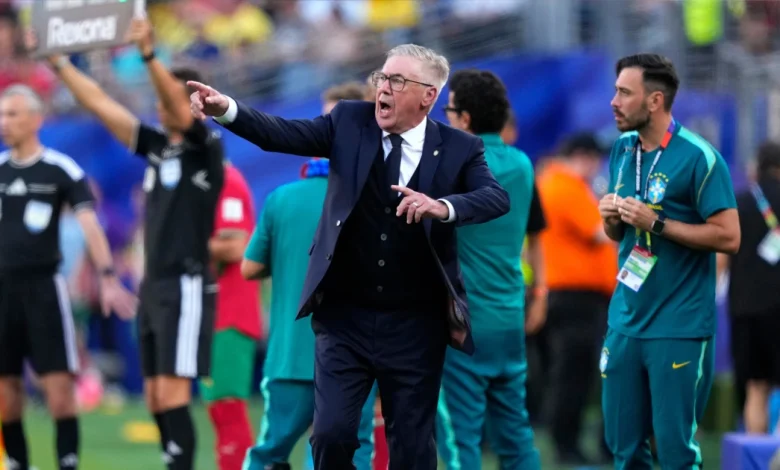
Brazil’s World Cup opener at MetLife Stadium ended in a tense 1-1 draw against a highly resilient Moroccan side, leaving thousands of passionate, yellow-clad fans deeply dissatisfied with the Seleção’s performance. On a sun-drenched Saturday afternoon in East Rutherford, New Jersey, the iconic venue—officially designated as the New York New Jersey Stadium for this tournament—hosted one of the most highly anticipated fixtures of the group stage. Fans from across the globe had descended upon the arena, filling the stands with a sea of highlighter-yellow jerseys, waving flags, and singing rhythmic chants on the transit lines out of Manhattan. However, the pre-match optimism evaporated over ninety grueling minutes as Morocco’s tactical discipline neutralized Brazil’s creative stars, leading to loud post-match grumbles from the fans and an intense, confrontational press conference for Brazil’s veteran manager, Carlo Ancelotti.
Brazil’s World Cup Opener: Expectations Meet Reality in East Rutherford
The immense pressure weighing on the Brazilian national team is nothing new, but the stakes have arguably never been higher than they are in this tournament. It has now been twenty-four years since Brazil last lifted the World Cup trophy in 2002—a drought that represents the joint-longest championship dry spell in the nation’s illustrious footballing history. For a country that measures sporting success solely in gold stars on their chest, entering the tournament as the fifth-ranked team globally following an uncharacteristically unstable qualifying campaign has raised anxieties to a fever pitch. Fans and analysts alike are drawing historical parallels to the 1994 World Cup, which was also hosted on American soil and saw a heavily criticized Brazilian team overcome qualifying struggles to eventually lift the trophy.
Carlo Ancelotti, who left the comfortable confines of Real Madrid to take on what is arguably the most demanding job in international football, was fully aware of the scrutiny awaiting him. Despite his legendary status in club football, the Italian tactician has faced mixed reviews during his early tenure with the Seleção. Critics have pointed to his squad selections and tactical rigidity, accusing him of failing to capture the classic, fluid style of play—known as Samba Football—that fans demand. Against a Moroccan team that historically reached the semi-finals of the 2022 World Cup, any tactical vulnerability was bound to be exploited, and the resulting draw has laid bare the massive gap between Brazil’s lofty expectations and their current on-pitch reality.
The Tactical Clash: Ancelotti’s Selection Under the Microscope
In the lead-up to kickoff, the primary talking point surrounding the Brazilian camp was the fitness of their talismanic playmaker, Neymar. Having sustained a calf injury during training, Neymar was officially ruled out of the opening match, forcing Ancelotti to reconfigure his attacking trident. The Italian opted to deploy young phenom Endrick down the middle, flanked by Vinícius Júnior on the left and Raphinha on the right. In midfield, a trio consisting of Casemiro, Bruno Guimarães, and Lucas Paquetá was tasked with controlling possession and fueling transition play. However, without Neymar’s unique ability to drop deep, draw defenders, and unlock compact low blocks, Brazil’s midfield appeared sluggish and disconnected from the forward line.
Morocco, led by their tactically astute coaching staff, set up in a highly disciplined 4-1-4-1 mid-block designed to compress space in the central corridors. By cutting off passing lanes to Lucas Paquetá and aggressively pressing Bruno Guimarães whenever he turned upfield, the Atlas Lions successfully forced Brazil to play wide, where their wingers were repeatedly doubled-teamed. This structural layout nullified the threat of Vinícius Júnior early on and isolated young Endrick, who struggled to make an impact against the physically imposing central defensive partnership of Romain Saïss and Nayef Aguerd.
High Stakes in Jersey: The Atmosphere at MetLife Stadium
MetLife Stadium, which is slated to host the highly coveted World Cup Final in July, was packed to its absolute capacity of 82,500 spectators. The pre-match atmosphere was a vibrant spectacle of color and sound, dominated by the rhythmic drumming of Brazilian supporter groups and the high-pitched whistles of the traveling Moroccan contingent. The journey to East Rutherford had been a carnival; thousands of fans had boarded the train at New York’s Penn Station, singing and chanting in anticipation of a dominant Brazilian display. Yet, as the match unfolded, the carnival atmosphere slowly transformed into a pressure cooker of collective anxiety.
Every misplaced pass from the Brazilian midfield was met with groans, and Morocco’s physical, no-nonsense defending drew whistles of frustration from the neutral-heavy crowd. The contrast in fan reactions after the final whistle was stark. While the Moroccan supporters celebrated the 1-1 draw as a tactical masterclass and a well-earned point against a footballing giant, the Brazilian faithful left the stadium in a somber, highly critical mood. One fan, speaking to reporters on the platform of the Secaucus Junction train station, summed up the collective frustration: “That was a terrible performance. Terrible! We had no creativity, no passion, and no clear plan. If we play like this against the stronger European teams, we won’t even make it past the round of sixteen.”
Match Summary: How Morocco Stunned the Seleção in the First Half
The match began with Brazil dominating early possession, but it was Morocco who struck the first decisive blow. In the 21st minute, a defensive lapse from Brazil’s backline allowed Morocco to transition rapidly from defense to attack. Midfielder Ismael Saibari found space on the edge of the eighteen-yard box, receiving a crisp pass from Achraf Hakimi before unleashing a low, driven shot that beat a diving Alisson Becker at his near post. The Moroccan supporters erupted in joy, while the Brazilian players exchanged frustrated looks, clearly stunned by the early deficit.
Stung by the goal, Brazil ramped up their offensive intensity, throwing players forward in search of an immediate response. The equalizer came in the 32nd minute through sheer individual brilliance. Vinícius Júnior, receiving the ball wide on the left flank, cut inside his marker with a trademark burst of acceleration. Driving toward the box, he exchanged a quick one-two with Lucas Paquetá before curling an exquisite effort into the far corner of Yassine Bounou’s net. The spectacular strike brought Brazil level and momentarily restored order, but it failed to open the floodgates. The second half proved to be a grueling war of attrition, with Morocco’s defensive structure holding firm under mounting but largely unimaginative Brazilian pressure, ultimately sealing a historic 1-1 draw.
| Match Statistic | Brazil | Morocco |
|---|---|---|
| Goals | 1 (Jose Vinicius Junior 32′) | 1 (Ismael Saibari 21′) |
| Possession (%) | 56% | 44% |
| Goal Attempts | 13 | 12 |
| Shots on Target | 5 | 4 |
| Corners | 6 | 3 |
| Fouls Committed | 11 | 14 |
| Yellow Cards | 2 | 3 |
Player Performances and the Absence of Neymar
The absence of Neymar was arguably the defining narrative of Brazil’s underwhelming performance. Although the veteran forward has faced criticism over his age and physical durability, his unique ability to orchestrate the attack was sorely missed. In his absence, Brazil struggled to find verticality in their passing. Lucas Paquetá, who was expected to step into the playmaker role, was heavily marked and frequently isolated, unable to establish a connection with the front three. This forced Vinícius Júnior to drop deeper to retrieve the ball, which in turn took away his threat in the final third.
Young forward Endrick also endured a frustrating night. Making his highly anticipated World Cup debut, the young prodigy was starved of quality service. He was frequently crowded out by Morocco’s physical defenders and struggled to hold up the ball under pressure. While his work rate was commendable, he lacked the clinical edge and positional awareness required to break down a seasoned international defense. The performance showed that while Endrick possesses immense raw talent, relying on him to lead the line of a World Cup-chasing side in the absence of veteran leadership is a massive gamble.
Vinícius Júnior Rescues a Point for the Favourites
If there was a silver lining for Brazil, it was once again the individual class of Vinícius Júnior. The Real Madrid superstar showed why he is widely regarded as one of the best players in the world, constantly probing the Moroccan defense and scoring a sensational equalizer out of nothing. Even when double-teamed by Achraf Hakimi and Sofyan Amrabat, Vinícius remained a threat, creating several half-chances in the second half that his teammates failed to convert. His performance highlighted a worrying trend for the Seleção: an over-reliance on individual brilliance rather than cohesive tactical play. While Vinícius can rescue points with moments of magic, winning a seven-game tournament requires a structured collective effort that was noticeably absent on Saturday.
Tactical Breakdown of Carlo Ancelotti’s Strategy
Ancelotti’s tactical setup faced immediate backlash from the analytical community following the final whistle. Deploying a traditional 4-3-3 formation, Ancelotti expected his fullbacks, Danilo and Wendell, to provide width while allowing his wingers to cut inside. However, Morocco’s compact defensive shape meant that any crosses delivered into the box were easily dealt with by their towering center-backs. Brazil’s midfield transition was also incredibly slow, allowing Morocco ample time to get ten men behind the ball whenever possession was lost.
Furthermore, Ancelotti’s substitution patterns drew heavy criticism. Despite Brazil’s clear struggle to break down the Moroccan defense in the second half, the Italian manager waited until the 75th minute to make his first changes, introducing Gabriel Martinelli and Rodrygo (who was only fit enough for a brief cameo). Many analysts argued that these changes should have been made much earlier to disrupt Morocco’s defensive rhythm. By delaying his tactical adjustments, Ancelotti allowed Morocco to comfortably see out the match and secure a well-deserved point, leaving his tactical flexibility heavily questioned by the Brazilian press.
Post-Match Reaction: The Press Conference Heat
Shortly after the match, Carlo Ancelotti sat on the press conference stage at MetLife Stadium, facing an exceptionally hostile crowd of Brazilian sports journalists. The media atmosphere in Brazil is notoriously intense, and the reporters did not hold back. They peppered the Italian manager with sharp, direct questions about his starting lineup, his tactical decisions, and his substitution patterns. Every decision, from starting Endrick over more experienced alternatives to his late substitutions, was dissected under the glare of national television cameras.
The tone of the press conference was combative. Journalists demanded to know why Brazil looked so devoid of ideas in the final third and why the team appeared to lack the tactical identity expected of a side managed by one of the most decorated coaches in football history. Ancelotti, known for his calm, unflappable demeanor, attempted to downplay the severity of the result, but the tension in the room was palpable. For a coach accustomed to the structured environments of Europe’s elite clubs, the raw passion and relentless pressure of the Brazilian national media represented a stark and challenging contrast.
Ancelotti Defends His Decisions Under Fire
Responding to the barrage of questions, Ancelotti defended his tactical approach and urged patience from the media and fans alike. “We knew Morocco would be a very difficult opponent,” Ancelotti said calmly, raising his trademark eyebrow. “They are organized, physical, and defend with great intensity. We controlled the possession, but we lacked a bit of precision in the final third. It is the first game of the World Cup, and there are always nerves. We will analyze the match, make the necessary adjustments, and we will be better in the next game.”
When pressed specifically on his late substitutions and the decision to start Endrick, Ancelotti remained firm. “Endrick is a young player with incredible quality, and he worked hard for the team today. The substitutions were made when we felt we needed fresh energy in specific areas. We have a deep squad, and everyone will have a role to play as the tournament progresses. The most important thing is that we did not lose, and we have a solid foundation to build upon.” Despite his reassuring words, the explanation did little to satisfy the skeptical Brazilian media, who remain highly critical of the team’s slow progress under his leadership.
The Broader Economic and Global Context of the 2026 World Cup
Hosting a global tournament of this magnitude in North America comes with immense operational, logistical, and economic challenges. With matches spread across three massive nations, local organizing committees are operating under intense scrutiny to ensure public safety, seamless transportation, and robust health protocols. For example, as hundreds of thousands of international fans travel through major transit hubs in the United States, managing and sharing public health data has become a critical focal point. These logistics are heavily monitored under new international guidelines, addressing administrative challenges similar to those highlighted by experts analyzing WHO data access concerns and global health information gaps.
From an economic standpoint, the 2026 World Cup is a multibillion-dollar commercial engine, expected to inject massive revenue into local economies in New Jersey and New York. This commercial enthusiasm comes at a highly complex fiscal moment for the host nation. While institutional confidence in the U.S. economy remains high—exemplified by major financial moves earlier in the year when BlackRock upgraded U.S. stocks to overweight—underlying fiscal worries continue to simmer. Financial analysts point to massive government expenditures and liquidity measures, drawing parallels to past economic crises and questioning whether the Fed’s Treasury buying reflects echoes of 2008 risks in 2026. The commercial success of the World Cup serves as a critical economic buffer, but it also highlights the delicate financial environment underpinning this sporting spectacle.
What Lies Ahead for Group C
With the 1-1 draw in the books, Group C is now wide open. Morocco’s disciplined display has proved that they are genuine contenders to top the group, challenging the widely held assumption that Brazil would comfortably cruise into the knockout rounds. The Atlas Lions will head into their next fixture with immense confidence, knowing that their defensive solidity can frustrate even the most star-studded attacks. For more context on the tournament’s overall group dynamics, fans can refer to Al Jazeera’s live reporting of the tournament’s opening weekend.
For Brazil, the path forward is clear but fraught with pressure. Their next group-stage match is against Haiti, a fixture where they will be heavily favored but under immense pressure to deliver a dominant, high-scoring performance to appease their demanding fanbase. The potential return of Neymar from his calf injury could provide the creative spark they so desperately lacked on Saturday. However, if Carlo Ancelotti cannot find a way to forge a cohesive collective identity out of his talented squad, the road to the historic sixth title will be an incredibly rocky one, and his tenure in the hot seat of Brazilian football may prove to be short-lived.