Redistricting Battles: Court Rulings Reshape US House Map
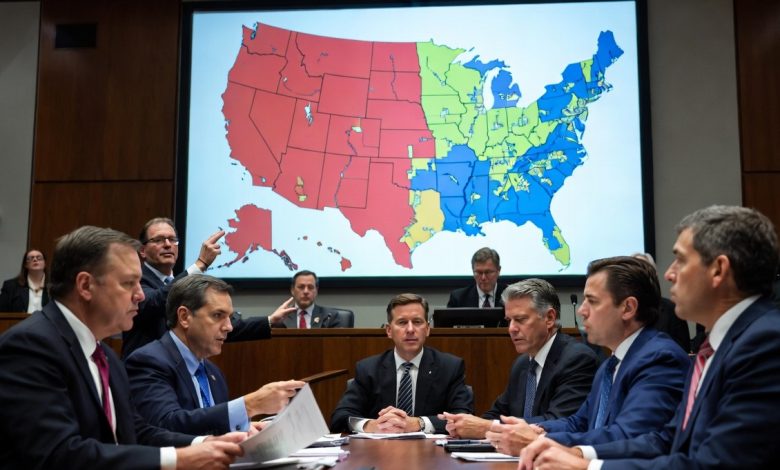
Introduction: A Shifting Redistricting Landscape
Redistricting, the process of redrawing electoral district boundaries, plays a pivotal role in shaping the political landscape of the United States. Following the 2020 census, states across the nation have been engaged in this complex process, often leading to intense partisan battles. The initial outlook favored Democrats, especially after Virginia’s ambitious redistricting plan was narrowly approved by voters. However, a series of recent court rulings and legislative actions have dramatically shifted the balance, giving Republicans a significant advantage as they aim to protect their narrow majority in the U.S. House of Representatives. This article delves into the key events that have reshaped the redistricting landscape, analyzing the implications of these changes for the upcoming elections and the broader political future.
Virginia’s Redistricting Plan Blocked
Just weeks ago, Democrats celebrated a crucial victory in Virginia, where voters narrowly approved their ambitious plan to redraw the state’s congressional map. This victory was seen as a significant step towards leveling the playing field in the national redistricting battle. The proposed map aimed to create more competitive districts, potentially benefiting Democratic candidates and offsetting Republican gains in other states. However, this optimism was short-lived. The Virginia Supreme Court intervened, blocking the implementation of the new map. This decision was a major setback for Democrats, who had hoped to use the new map to gain ground in the highly contested state. The court’s ruling cited concerns about partisan bias and compliance with state constitutional requirements, effectively halting the Democrats’ redistricting efforts in Virginia.
Supreme Court Ruling on Race and Redistricting
Adding to the Democrats’ woes, the U.S. Supreme Court issued a landmark ruling that significantly restricts the use of race in drawing district lines. This decision, stemming from a case in Louisiana, stipulates that states can almost never consider race as the predominant factor when creating congressional districts. The ruling overturned Louisiana’s congressional map and puts at risk numerous majority-minority districts represented by Democrats across the country. These districts, designed to ensure representation for minority communities, are now subject to legal challenges and potential redrawing. The Supreme Court’s decision has far-reaching implications for the balance of power in Congress, potentially diluting the influence of minority voters and jeopardizing the seats held by Democratic representatives in these districts. The legal complexities surrounding race and redistricting are substantial, and this ruling is expected to trigger further litigation and uncertainty in the redistricting process nationwide. Federal court decisions often have impacts far beyond what is originally anticipated.
Florida’s Republican-Led Redistricting
On the same day as the Supreme Court’s ruling, Florida’s Republican-led Legislature finalized and approved a redrawn congressional map designed to significantly favor the Republican Party. This new map aims to allow Republicans to pick up as many as four additional House seats, effectively negating the potential gains Democrats had anticipated in Virginia. The Florida redistricting plan has been criticized for its aggressive gerrymandering, which strategically manipulates district boundaries to concentrate Democratic voters in fewer districts while spreading Republican voters across a larger number of districts. This approach maximizes Republican representation and minimizes Democratic influence in the state’s congressional delegation. The approval of this map represents a major victory for Republicans and a significant blow to Democratic efforts to maintain their position in the House. The Supreme Court has often been the final arbiter in disputes of this nature.
Louisiana’s Redistricting Delay and Supreme Court Action
Following the Supreme Court’s decision on race and redistricting, Republican officials in Louisiana moved swiftly to delay the state’s House primaries, originally scheduled for May 16. This delay was intended to allow state lawmakers time to redraw the congressional map in light of the Supreme Court’s ruling. The goal is to create a new map that targets at least one, if not both, of the state’s Democratic-held districts. The Supreme Court further complicated matters by ruling that its decision on the Louisiana map could take effect immediately. This expedited timeline puts immense pressure on Louisiana lawmakers to act quickly and decisively to redraw the map before the midterm elections. The redrawing of Louisiana’s congressional districts has the potential to significantly alter the state’s political representation and further solidify Republican dominance in the region. The confluence of these events underscores the high stakes and intense partisan maneuvering involved in the redistricting process.
National Impact on the House Majority
The series of events in Virginia, Florida, and Louisiana has had a profound impact on the national redistricting landscape. What initially appeared to be a balanced battleground has now tilted in favor of Republicans. With the Virginia plan blocked, Florida poised to gain seats, and Louisiana potentially redrawing its map to favor Republicans, the party is now in a stronger position to protect and potentially expand its narrow majority in the U.S. House of Representatives. The implications of these redistricting changes extend far beyond individual states. They have the potential to reshape the balance of power in Congress, influencing the outcome of key legislative battles and shaping the direction of national policy. As the midterm elections approach, the effects of these redistricting decisions will be closely watched, and their impact on the composition of the House will be a major factor in determining the future of American politics.
Gerrymandering Strategies and Implications
Gerrymandering, the practice of drawing electoral district boundaries to favor one political party over another, is a central element of the redistricting process. Both Democrats and Republicans have employed gerrymandering strategies to maximize their electoral advantages. However, the recent court rulings and legislative actions have largely benefited Republicans. In Florida, for example, the Republican-led legislature has implemented an aggressive gerrymandering strategy to create districts that heavily favor Republican candidates. This involves concentrating Democratic voters in a smaller number of districts while spreading Republican voters across a larger number of districts, thereby diluting Democratic voting power. The implications of gerrymandering are significant, as it can lead to less competitive elections, reduced voter engagement, and a distorted representation of the electorate’s preferences. The legal and ethical debates surrounding gerrymandering continue to be a major focus of political and legal scholars, with many advocating for reforms to promote fairer and more representative electoral outcomes. The integrity of elections depends greatly on fair districting practices.
Legal Challenges and Future Battles
The redistricting process is often fraught with legal challenges, as various groups and individuals seek to challenge maps they believe are unfair or unconstitutional. The Supreme Court’s recent ruling on race and redistricting is likely to trigger a wave of new legal challenges across the country. Civil rights organizations and Democratic parties are expected to file lawsuits arguing that certain redistricting plans violate the Voting Rights Act or discriminate against minority voters. These legal battles can be protracted and complex, often involving extensive data analysis, expert testimony, and constitutional interpretation. The outcomes of these challenges can have a significant impact on the composition of congressional districts and the balance of power in Congress. As the redistricting process continues, legal challenges are expected to play a crucial role in shaping the final electoral maps and determining the future of American politics.
Political Analysis and Outlook
The shifts in the redistricting landscape have significant implications for the upcoming midterm elections and the broader political outlook. Republicans, having gained a considerable advantage through recent court rulings and legislative actions, are now better positioned to defend their narrow majority in the House of Representatives. The redistricting changes could potentially lead to a net gain of several seats for the Republican Party, further solidifying their control of the House. Democrats, on the other hand, face a challenging environment as they seek to regain lost ground and maintain their position in Congress. The outcome of the midterm elections will depend not only on the redistricting changes but also on a variety of other factors, including voter turnout, economic conditions, and the overall political climate. As the election season progresses, the impact of redistricting will be closely monitored, and its effects on the balance of power in Congress will be closely analyzed.
Redistricting Timeline Summary
To summarize the key events that have shaped the redistricting landscape, the following table provides a timeline of significant actions and rulings:
| Date | Event | Impact |
|---|---|---|
| [Date of Virginia Referendum] | Virginia Voters Approve Democratic Redistricting Plan | Initial boost for Democrats in the redistricting battle. |
| [Date of Supreme Court Ruling] | U.S. Supreme Court Ruling on Race and Redistricting | Restricts the use of race in drawing district lines, impacting majority-minority districts. |
| [Date of Florida Approval] | Florida Legislature Approves Republican-Led Redistricting | Potential gain of up to four House seats for Republicans. |
| [Date of Louisiana Delay] | Louisiana Officials Delay House Primaries | Allows time to redraw the map targeting Democratic-held districts. |
| [Date of Supreme Court Action] | U.S. Supreme Court Allows Immediate Effect of Louisiana Ruling | Accelerates the redrawing of Louisiana’s congressional map. |
Conclusion: The Evolving Map
The redistricting landscape in the United States is constantly evolving, shaped by legal challenges, political maneuvering, and demographic shifts. The recent court rulings and legislative actions in Virginia, Florida, and Louisiana have significantly altered the balance of power, giving Republicans a distinct advantage as they seek to maintain their majority in the U.S. House of Representatives. As the midterm elections approach, the impact of these redistricting changes will be closely watched, and their effects on the composition of Congress will be carefully analyzed. The future of American politics will depend, in part, on the outcomes of these redistricting battles and the broader implications for representation, voter engagement, and the balance of power in government. The Brennan Center for Justice offers further information on redistricting. Redistricting will remain a crucial battleground in the ongoing struggle for political advantage and representation. The political climate can change quickly, and redistricting can exacerbate existing advantages or create opportunities for new ones. The future of elections relies on understanding these shifts.